Table of Contents >> Show >> Hide
- Why “I Hope You Are Doing Well” Can Feel… Meh
- How to Choose a Better Opener in 10 Seconds
- 16 Alternatives to “I Hope You Are Doing Well” (With When-to-Use + Examples)
- 1) “I hope your week is going smoothly.”
- 2) “Hope you’re having a good start to the day.”
- 3) “I hope things are going well on your end.”
- 4) “I hope you’ve had a productive week so far.”
- 5) “I hope you’re settling into the week nicely.”
- 6) “It was great speaking with you earlier.”
- 7) “Thank you again for your time yesterday.”
- 8) “Thanks for your help with [specific thing].”
- 9) “I appreciated your note about [topic].”
- 10) “Congrats on [recent update/achievement]!”
- 11) “I enjoyed your recent [article/talk/post] on [topic].”
- 12) “I’m reaching out regarding [specific subject].”
- 13) “Quick note to share an update on [project].”
- 14) “Just a friendly reminder about [item].”
- 15) “I wanted to follow up on my last message about [topic].”
- 16) “Good morning/afternoonhope this is a good time.”
- Fast “Situational Picks” (So You Don’t Overthink It)
- What to Avoid (Unless You’re Emailing Your Best Friend)
- 3 Quick Templates You Can Copy (And Still Sound Like You)
- Real-World “Experience” Moments ( of Practical, Been-There Energy)
- The “I Need a Reply, but I Refuse to Sound Desperate” Moment
- The Post-Meeting Follow-Up That Actually Gets Read
- The Cold Email Where You Want to Sound Human (Not Like a Robot in a Blazer)
- The Coworker Email That Needs Warmth Without Turning into a Hallmark Card
- The “I’m Sorry to Bother You” Trap (And How to Escape It)
- Conclusion: Make Your Opening Line Earn Its Keep
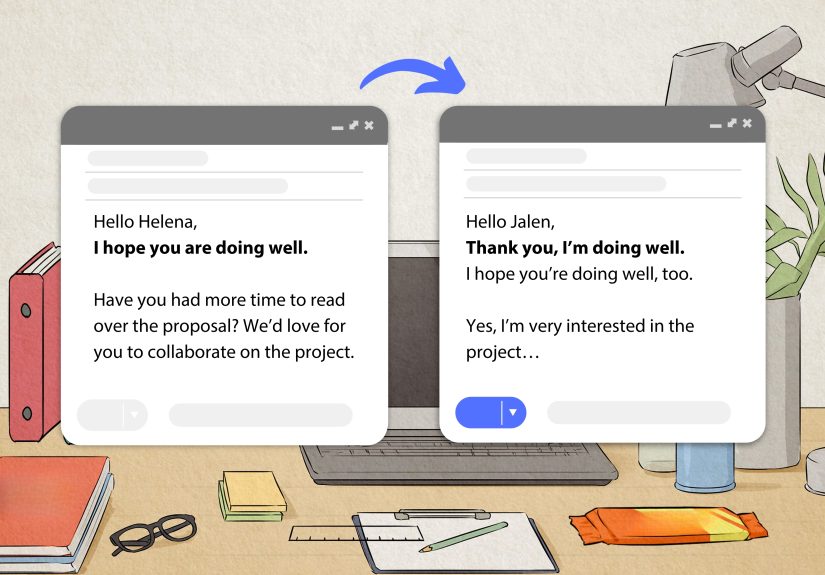
“I hope you are doing well” is the email equivalent of plain toast: polite, familiar, and absolutely not offensive.
It’s also so common that it can feel like you copy-pasted it while your brain was still buffering.
If you’re writing to clients, hiring managers, coworkers, professors, vendors, or that one person who always replies with “Sent from my iPad,”
you don’t need to ban the phrase foreveryou just need options.
A strong professional email opening does three things fast: it sets the tone, signals respect, and gives the reader a reason to keep going.
The best openings sound human (not like a corporate chatbot who drinks printer ink) and match the situation:
a quick follow-up after a meeting should not feel like a Victorian letter delivered by horse.
Why “I Hope You Are Doing Well” Can Feel… Meh
The phrase isn’t wrong. It’s just overused.
When readers see it every day, it stops feeling like a real wish and starts feeling like a speed bump before the actual point.
In busy inboxes, especially for cold outreach or job-related emails, generic openers can read as “template energy.”
And if you’re trying to build trust, the tiny detailslike a more specific greetingcan make you stand out without trying too hard.
How to Choose a Better Opener in 10 Seconds
- Match the relationship: Formal for new contacts; warmer for people you know well.
- Anchor it in reality: Reference a meeting, timeline, deliverable, or shared context when you can.
- Keep it honest: Don’t ask “How are you?” if you’re not prepared for an actual answer.
- Move to the point: A friendly line is nice. A five-line preamble is an inbox crime.
16 Alternatives to “I Hope You Are Doing Well” (With When-to-Use + Examples)
1) “I hope your week is going smoothly.”
Best for: Professional but friendly messages; colleagues, clients, vendors.
Example: I hope your week is going smoothly. I wanted to share the updated timeline for the rollout.
2) “Hope you’re having a good start to the day.”
Best for: Morning sends; casual-professional tone.
Example: Hope you’re having a good start to the day. Quick question about the invoice details.
3) “I hope things are going well on your end.”
Best for: Neutral, flexible opener when you don’t know details about their schedule.
Example: I hope things are going well on your end. I’m reaching out to confirm next steps.
4) “I hope you’ve had a productive week so far.”
Best for: Midweek updates; project-based emails.
Example: I hope you’ve had a productive week so far. Here are the revised notes from Tuesday’s meeting.
5) “I hope you’re settling into the week nicely.”
Best for: Monday/Tuesday emails; friendly tone without being too personal.
Example: I hope you’re settling into the week nicely. Could you review the draft when you get a moment?
6) “It was great speaking with you earlier.”
Best for: Follow-ups after a call, interview, or meeting.
Example: It was great speaking with you earlier. As promised, I’m sending the summary and next steps.
7) “Thank you again for your time yesterday.”
Best for: Interviews, networking chats, sales calls, stakeholder meetings.
Example: Thank you again for your time yesterday. I appreciated your insights on the onboarding process.
8) “Thanks for your help with [specific thing].”
Best for: Building goodwill quicklyespecially when you need something now.
Example: Thanks for your help with the access request. Could you also confirm the permission level for the shared folder?
9) “I appreciated your note about [topic].”
Best for: Replying thoughtfully; showing you actually read their email.
Example: I appreciated your note about the new reporting cadence. Here’s what I can share from our side.
10) “Congrats on [recent update/achievement]!”
Best for: Networking, client relationships, job outreachonly when you have a real reason.
Example: Congrats on the product launch! I’d love to connect about how your team is approaching customer education.
11) “I enjoyed your recent [article/talk/post] on [topic].”
Best for: Cold emails that don’t feel cold; professional outreach.
Example: I enjoyed your recent article on change management. I had a question about the framework you mentioned.
12) “I’m reaching out regarding [specific subject].”
Best for: No-nonsense professional emails where clarity matters more than warmth.
Example: I’m reaching out regarding the contract renewal timeline. Are you available for a quick call this week?
13) “Quick note to share an update on [project].”
Best for: Project updates; stakeholder communications; recurring check-ins.
Example: Quick note to share an update on the migration. We’re on track, and testing begins Friday.
14) “Just a friendly reminder about [item].”
Best for: Follow-ups that aren’t passive-aggressive (the key word is “friendly,” so be friendly).
Example: Just a friendly reminder about the RSVP deadline. Let me know if you need anything from me.
15) “I wanted to follow up on my last message about [topic].”
Best for: Gentle follow-ups; job applications; client approvals.
Example: I wanted to follow up on my last message about the revised proposal. Are there any questions I can answer?
16) “Good morning/afternoonhope this is a good time.”
Best for: Time-sensitive requests; respectful “I know you’re busy” vibe.
Example: Good afternoonhope this is a good time. Could you confirm whether we should proceed with the final version today?
Fast “Situational Picks” (So You Don’t Overthink It)
- Cold outreach: “I enjoyed your recent…” or “I’m reaching out regarding…”
- After a meeting: “It was great speaking with you…” or “Thank you again for your time…”
- Internal team update: “Quick note to share an update…”
- Polite follow-up: “I wanted to follow up on…”
- When you need a reply soon: “Good afternoonhope this is a good time…”
What to Avoid (Unless You’re Emailing Your Best Friend)
- Overly personal check-ins with people you don’t know: “How’s everything in your life?” can feel intrusive.
- Forced cheerleading: “Happy fabulous Friday!!!” is risky unless that’s your workplace culture.
- Weather jokes with strangers. You might accidentally email someone in a blizzard while you’re bragging about sunshine.
- Guilt-tripping follow-ups: “Just bumping this to the top of your inbox” can land as “I’m annoyed.”
- Long warm-ups: Two sentences is plenty. After that, it’s an autobiography.
3 Quick Templates You Can Copy (And Still Sound Like You)
Template A: Client or Vendor Update
I hope your week is going smoothly. Quick note to share an update on [project]we’ve completed [milestone] and the next step is [next step].
Could you confirm [specific request] by [date/time]?
Template B: Interview or Networking Follow-Up
Thank you again for your time yesterday. I appreciated your perspective on [topic].
As a next step, I’m sharing [resource/portfolio/link mention if you include it] and would love to stay in touch.
Template C: Polite Follow-Up on a Pending Item
I wanted to follow up on my last message about [topic].
If helpful, I can resend the details or hop on a quick callwhat works best on your end?
Real-World “Experience” Moments ( of Practical, Been-There Energy)
Let’s talk about what this looks like in real lifebecause choosing an email opener isn’t a philosophical journey.
It’s usually happening at 9:03 a.m., coffee in hand, with seven Slack pings, two calendar alerts, and exactly one functioning brain cell.
Here are common scenarios where swapping out “I hope you are doing well” can make your message feel more specific, more confident,
and (bonus) less like it came from a dusty template folder labeled “EMAILS – DO NOT DELETE.”
The “I Need a Reply, but I Refuse to Sound Desperate” Moment
You sent a proposal. It’s been a week. The silence is so loud you can hear it buffering.
Instead of opening with a generic wellness wish, try: “I wanted to follow up on my last message about the proposal timeline.”
It’s calm, direct, and doesn’t imply the other person has been “doing well” while ignoring you (even if they absolutely have).
Add one helpful line like: “Happy to resend the attachment if it got buried.” That’s polite and practicalan inbox-friendly combo.
The Post-Meeting Follow-Up That Actually Gets Read
After a meeting, people don’t need emotional suspensethey need the recap.
Opening with “It was great speaking with you earlier” signals continuity, then you move straight into action items:
“Here are the decisions we made and who owns what.”
This tiny shift (context-first, then point) makes you sound organized, and organized emails get love.
Or at least they get replies, which is basically love in corporate terms.
The Cold Email Where You Want to Sound Human (Not Like a Robot in a Blazer)
Cold outreach fails when it feels copy-pasted. If you write, “I hope you are doing well,” the reader’s brain might auto-file you under “Mass Email Person.”
A better approach is a real reference: “I enjoyed your recent article on…” or “Congrats on…”
(only if it’s truefake compliments have the shelf life of a banana).
When you anchor the opener in something specific, the rest of your message gets a fairer read.
The Coworker Email That Needs Warmth Without Turning into a Hallmark Card
Internal emails don’t need excessive formality, but they do benefit from a friendly tone.
That’s where “Hope your week is going smoothly” shines.
It’s warm, neutral, and doesn’t demand an emotional update.
Pair it with a clear request: “Could you review the numbers in slide 6 before 2 p.m.?”
Friendly + specific = the workplace equivalent of returning your shopping cart. Small, considerate, heroic.
The “I’m Sorry to Bother You” Trap (And How to Escape It)
People often open emails with apologies: “Sorry to bother you…” “Sorry for the email…” “Sorry for existing…”
Unless you truly messed up, you don’t need to start in a hole and dig upward.
Try “Good afternoonhope this is a good time” instead.
It respects their schedule without shrinking your request.
Confidence is not rudeness; it’s clarity with good manners.
Conclusion: Make Your Opening Line Earn Its Keep
You don’t need to be wildly creative to write a better email openeryou just need to be slightly more specific than autopilot.
The best alternatives to “I hope you are doing well” either (1) fit the moment, (2) acknowledge real context, or (3) move cleanly into the purpose of your message.
Use the options above as a toolkit: pick one that matches your tone, then get to the point like a respectful professional with places to be.






