Table of Contents >> Show >> Hide
- How Designers Make a Paint Color Feel “Calm” (Not Flat)
- Quick Room Match Guide (If You Want to Decide in 60 Seconds)
- The 16 Calming Paint Colors Designers Love
- 1) Chill (Clare Paint)
- 2) Headspace (Clare Paint)
- 3) Imperial Gray 1571 (Benjamin Moore)
- 4) Sea Salt SW 6204 (Sherwin-Williams)
- 5) Feather Down 953 (Benjamin Moore)
- 6) Drop Cloth (Farrow & Ball)
- 7) Cloud White 967 (Benjamin Moore)
- 8) Gray Owl 2137-60 (Benjamin Moore)
- 9) Iceberg 2122-50 (Benjamin Moore)
- 10) Oystershell 864 (Benjamin Moore)
- 11) Lookout Point 1646 (Benjamin Moore)
- 12) Seize the Gray (Clare Paint)
- 13) Pavilion Gray (Farrow & Ball)
- 14) London Fog 1541 (Benjamin Moore)
- 15) Oval Room Blue (Farrow & Ball)
- 16) Naval SW 6244 (Sherwin-Williams)
- How to Keep Calming Colors from Looking “Blah”
- of Real-Life Experience with Calming Paint Colors
- Conclusion
If your home has been feeling a little… loud (and not in a “fun dinner party” way), paint might be the easiest mood reset you can buy in a gallon.
Designers lean on calming paint colors for the same reason we all lean on cozy blankets: they make everyday life feel softer around the edges.
The trick is choosing shades that stay serene in real lifeunder morning sun, afternoon glare, and that one overhead “interrogation” bulb you keep meaning to replace.
Below are 16 designer-loved, calming paint colors that work room-by-room across the whole housesoft blue-greens, gentle neutrals, barely-there blues,
and a couple of bolder blues that still feel grounded instead of chaotic. (Yes, you can paint a room navy and still feel relaxed. Your nervous system just wants it done thoughtfully.)
How Designers Make a Paint Color Feel “Calm” (Not Flat)
1) They chase undertones, not the color name
Two paints can both be called “gray” and behave like totally different roommates. One is chill. One is secretly lavender at sunset.
Calming shades usually have muted saturation (they don’t scream), and their undertones play nicely with wood tones, stone, and fabrics.
2) They test in multiple spotsbecause light is a drama queen
Paint chips are like movie trailers: exciting, edited, and not the full story. Designers test swatches on the wall (or on poster board),
then watch the color through the day. North-facing rooms skew cooler; south-facing rooms warm things up; west-facing rooms turn golden late-day.
3) They pick a calmer sheen
High-gloss reflects light and can add visual “noise.” For a soothing vibe, designers often prefer matte/flat for ceilings and low-traffic walls,
eggshell or satin for most living spaces, and semi-gloss for trim (because fingerprints are real and so are kids).
Quick Room Match Guide (If You Want to Decide in 60 Seconds)
- Bedrooms: Iceberg, Gray Owl, Sea Salt, Headspace
- Bathrooms: Sea Salt, Oval Room Blue (trim/cabinetry), Chill
- Living rooms: London Fog, Feather Down, Imperial Gray, Naval (moody option)
- Kitchens: Drop Cloth (cabinets), Seize the Gray (cabinets), Cloud White (walls)
- Home office: Naval, Pavilion Gray, London Fog
- Hallways/entry: Cloud White, Oyster Shell, Gray Owl
- Ceilings: Lookout Point (yes, really)
The 16 Calming Paint Colors Designers Love
1) Chill (Clare Paint)
Vibe: A soft, cool, barely-there gray with a slight green undertonelike a deep breath in color form.
It reads airy instead of icy, which is harder to pull off than it sounds.
Best rooms: Bedrooms, nurseries, guest rooms, and any space where you want “quiet” without going full white.
It’s also great in a hallway because it doesn’t fight with art.
Designer pairing tip: Warm it up with creamy trim and natural wood; cool it down with brushed nickel and soft blues.
Go eggshell on walls for that calm-but-cleanable sweet spot.
2) Headspace (Clare Paint)
Vibe: A serene light blue-green that feels like sea glasssubtle color, instant exhale.
It’s popular because it behaves like a neutral while still being interesting.
Best rooms: Bathrooms, laundry rooms, bedrooms, and any room that needs a “fresh start” feeling.
If your mornings are chaotic, this color is basically a pep talk in pastel.
Designer pairing tip: Pair with crisp white tile, warm brass, and woven textures.
If you’re nervous about blue-green, use it in a smaller room first (powder room confidence boost!).
3) Imperial Gray 1571 (Benjamin Moore)
Vibe: A sophisticated green-gray blend that reads grounded and nature-adjacent without becoming “forest themed.”
It’s calm because it’s complexmore like a whisper than a statement.
Best rooms: Living rooms, dens, reading nooks, and dining rooms where you want relaxed elegance.
Also gorgeous with built-ins.
Designer pairing tip: Layer it with soft creams, muted tans, and black accents for contrast that still feels restful.
Looks especially good with linen upholstery and warm oak.
4) Sea Salt SW 6204 (Sherwin-Williams)
Vibe: A cool, muted green with blue undertonesspa energy without requiring a robe.
It’s the classic “calm bathroom” choice for a reason.
Best rooms: Bathrooms, bedrooms, and sunlit kitchens.
It’s also lovely in a small office when you want focus without starkness.
Designer pairing tip: White trim makes it look crisp. Warm woods keep it from feeling too coastal.
Choose satin in bathrooms for wipeability, but keep it out of high-gloss territory if you’re chasing calm.
5) Feather Down 953 (Benjamin Moore)
Vibe: An off-white that leans beigecozy, soft, and forgiving.
This is the kind of neutral that makes a room feel like it’s been loved (not like it’s waiting for a furniture showroom photo shoot).
Best rooms: Open-concept living areas, family rooms, kitchens with lots of cabinets, and bedrooms that want warmth.
Designer pairing tip: If your floors are warm (honey oak, walnut), Feather Down helps everything feel cohesive.
Try a slightly brighter white on trim for gentle contrast.
6) Drop Cloth (Farrow & Ball)
Vibe: A gentle mid gray-beigebalanced, earthy, and surprisingly calming.
It’s the neutral equivalent of a good cappuccino: warm, soothing, and somehow makes everything around it look more expensive.
Best rooms: Kitchens (especially cabinetry), mudrooms, pantries, or any hardworking space that still deserves peace.
Designer pairing tip: Pair with creamy whites and unlacquered brass.
If you paint cabinets, use a durable finish and keep walls lighter so the room doesn’t feel heavy.
7) Cloud White 967 (Benjamin Moore)
Vibe: A soft, balanced white with enough warmth to avoid that “clinic hallway” feel.
It brightens, but it doesn’t shout.
Best rooms: Entryways, hallways, kitchens, and anywhere you want a clean backdrop for art, plants, or bold textiles.
It’s also a safe whole-house white if you’re trying to unify spaces.
Designer pairing tip: Use Cloud White on walls and a slightly crisper white on trim for a layered, elevated look.
Matte walls + semi-gloss trim is the classic calm combo.
8) Gray Owl 2137-60 (Benjamin Moore)
Vibe: A use-anywhere light gray with a cool, crisp castcalm, tidy, and subtly modern.
It can read slightly blue in certain light, which is exactly why it feels so serene.
Best rooms: Bedrooms, hallways, living rooms, and spaces with marble or cooler finishes.
Designer pairing tip: If your room faces north (cooler light), warm it up with creamy textiles and brass.
If it’s south-facing (warm light), it stays pleasantly balanced.
9) Iceberg 2122-50 (Benjamin Moore)
Vibe: A beloved light blue-grayfresh, clean, and calming without being babyish.
Think: open sky, clean sheets, and your phone on “Do Not Disturb.”
Best rooms: Bedrooms, bathrooms, and guest rooms.
Great for people who want color but don’t want “color.”
Designer pairing tip: Pair with crisp whites and pale woods for a Scandinavian calm.
Add a darker navy pillow or rug to make it feel intentional, not accidental.
10) Oystershell 864 (Benjamin Moore)
Vibe: An eye-pleasing blue-gray that’s quietly versatile.
It’s soft enough to relax the room, but it won’t disappear into “blah.”
Best rooms: Bedrooms, living rooms, and transitional spaces like stairways and upstairs halls.
Designer pairing tip: It’s excellent with warm whites, creamy trims, and natural stone.
If you like a coastal vibe without literal anchors, this is your paint.
11) Lookout Point 1646 (Benjamin Moore)
Vibe: A soothing blue that captures open-sky calm.
Designers love it because it feels airyespecially when used overhead.
Best rooms: Ceilings in dens, sitting rooms, bedrooms, nurseries, and even porch ceilings if you like that classic soft-blue tradition.
Designer pairing tip: Keep walls light (white, pale greige, or soft green) and let the ceiling be the quiet “wow.”
Use a flat ceiling finish for the smoothest, calmest look.
12) Seize the Gray (Clare Paint)
Vibe: A light, fresh gray with minimal undertonesclean, modern, and easy to live with.
This is the calm neutral you pick when you’re tired of neutrals that secretly turn purple.
Best rooms: Kitchens (cabinetry), laundry rooms, home gyms, and open living spaces that need a tidy backdrop.
Designer pairing tip: It plays well with both warm and cool palettes, so it’s great if you like switching decor seasonally.
Add texture (linen, wool, wood grain) so the calm doesn’t become flat.
13) Pavilion Gray (Farrow & Ball)
Vibe: A cool mid gray with subtle blue undertonessleek, calm, and quietly architectural.
It can make a space feel more spacious and modern.
Best rooms: Bedrooms, offices, living rooms, and hallways where you want a sophisticated neutral with depth.
Designer pairing tip: Pair with crisp whites and black accents for clean contrast, or soften it with warm woods and creamy textiles.
Try matte walls to keep the vibe serene.
14) London Fog 1541 (Benjamin Moore)
Vibe: A neutral with soft gray undertonescozy, grown-up, and quietly luxe.
It’s the color of “calm conversations” and “I definitely have my life together” (even if you don’t).
Best rooms: Living rooms, dining rooms, bedrooms, and anywhere you want warmth without beige overload.
Designer pairing tip: Works beautifully with warm metals (brass, aged bronze), creamy whites, and rich textures like velvet or boucle.
Add layered lighting so it stays inviting at night.
15) Oval Room Blue (Farrow & Ball)
Vibe: A darkened historic blue with an aged, blackened qualitymoody, yes, but still calming.
It’s “library quiet” in paint form.
Best rooms: Primary bathrooms (especially on trim/cabinetry), studies, cozy family rooms, and dramatic powder rooms.
Designer pairing tip: Use it for contrast: dark trim + lighter walls feels tailored and restful.
Add warm light bulbs and soft textiles so it reads enveloping, not gloomy.
16) Naval SW 6244 (Sherwin-Williams)
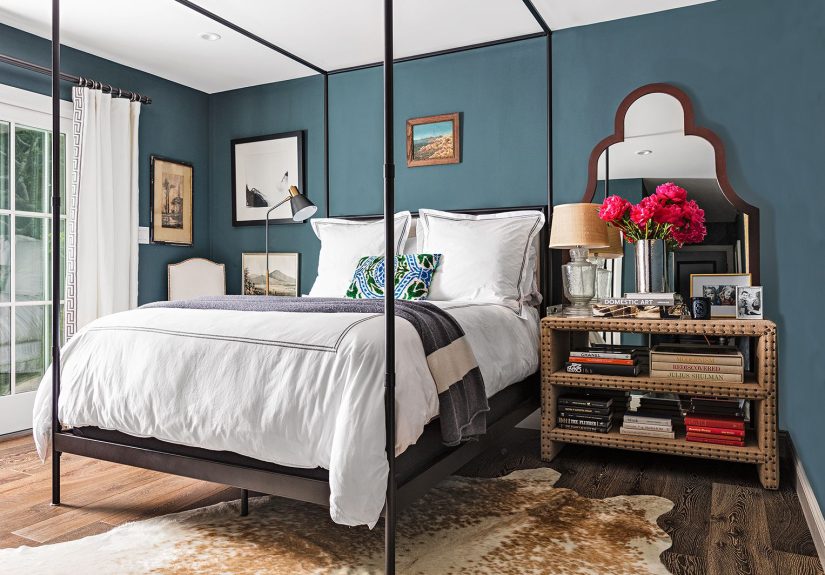
Vibe: A deep navy that feels groundingbold, but meditative.
When used on all four walls (or even the ceiling), it creates a cocoon effect that can be surprisingly soothing.
Best rooms: Bedrooms, offices, media rooms, and dining rooms where you want intimacy and calm.
Designer pairing tip: Naval looks incredible with warm metals (brass, gold), creamy whites, and leather.
If you’re nervous, start with one wall or built-insthen let the compliments bully you into painting the rest.
How to Keep Calming Colors from Looking “Blah”
- Layer tones: Use a slightly deeper shade on trim, built-ins, or an adjacent room for gentle depth.
- Add texture: Think woven shades, chunky knits, linen drapes, plaster finishes, or a nubby rug.
- Balance temperature: If your paint reads cool, add warm woods and brass. If it reads warm, add crisp whites and cooler stone.
- Use lighting on purpose: Warm bulbs (often around 2700K–3000K) keep neutrals cozy and blues/greens less icy.
of Real-Life Experience with Calming Paint Colors
Here’s the part nobody tells you when you’re staring at paint chips in the hardware store: calming colors aren’t just “pretty.” They’re practical.
I’ve watched perfectly nice rooms turn into low-grade stress machines because the wall color was just a little too bright, a little too stark,
or a little too “why is this beige suddenly neon at 4 p.m.?”
The first time I understood the power of a calming paint color was in a bedroom that refused to feel restful. The furniture was fine.
The bedding was fine. The problem was the wall coloran eager, icy gray that looked clean on the sample card but turned cold and metallic when the sun went down.
Swapping it for a softer blue-gray (a shade in the Iceberg/Gray Owl family) changed the whole mood. Suddenly the room felt like a place you could actually sleep,
not a place you could efficiently file paperwork about sleep.
Bathrooms are where calming colors earn their paycheck. Bright white can look fresh, but it can also feel harsh, especially under overhead lighting.
In one small bath, a muted blue-green (think Sea Salt or Headspace) made the space feel larger and quieter. It also made everyday routines feel less rushed.
That’s the magic: calm colors don’t slow the clock, but they can make you feel like you have a little more time.
Kitchens surprised me the most. People think “calm” means “boring,” but a gentle taupe-gray like Drop Cloth on cabinetry can make a busy kitchen feel grounded,
even when someone is hunting for a missing spatula like it’s a national emergency. Pairing it with a balanced white on the walls keeps the room bright,
and the whole space feels intentional instead of frantic. It’s not about making everything neutralit’s about making everything cooperate.
Then there are the “brave calm” colorsNaval and Oval Room Blue. The first time I saw a navy room done right, I expected it to feel heavy.
Instead, it felt like a cozy lounge: intimate, quiet, and oddly comforting. The key was warm lighting, lighter textiles, and contrast (white trim, warm wood, brass).
Without those, dark blue can feel like a cave. With them, it feels like a hug.
The biggest lesson: calming paint colors are less about the exact shade and more about the full setuplight, sheen, and what you pair with it.
Testing is non-negotiable. Put swatches on multiple walls. Watch them in morning light and at night. If you love it only at noon on a sunny day,
you don’t love ityou love noon. Choose the color that feels steady. Calm, in the end, is consistency.
Conclusion
Calming paint colors don’t have to mean playing it safe. The most relaxing homes often use a mix: soft neutrals for flow,
blue-greens for freshness, barely-there blues for airiness, and a bold navy or historic blue for that cocoon-like comfort.
Pick the mood you want for each room, test like a designer, and let the light be your final vote.

![18 Best Types of Charts and Graphs for Data Visualization [+ How to Choose]](https://corkopencoffee.org/wp-content/uploads/2026/05/18-best-types-of-charts-and-graphs-for-data-visualization-how-to-choose-qKM1PBYG-thumb.jpg)