Table of Contents >> Show >> Hide
- Before You Style: The 5-Minute Setup That Makes Everything Easier
- The 19 Effortless Ways (No Fancy Stuff Required)
- 1) Start with a Clean Slate (Yes, Really)
- 2) Choose a Simple Color Palette
- 3) Use the Rule of Three (Because Your Eye Likes It)
- 4) Mix Vertical and Horizontal Book Stacks
- 5) Build a “Zig-Zag” Rhythm Down the Shelves
- 6) Leave Some Breathing Room (Negative Space Is Not “Empty”)
- 7) Give Each Shelf One “Hero” Item
- 8) Vary Height, Shape, and Texture (The “No Same-Same” Rule)
- 9) Layer in Art (Even If You Don’t Want to Hang Anything)
- 10) Add Greenery (Your Shelf Needs a Pulse)
- 11) Corral the Tiny Stuff with Trays and Bowls
- 12) Hide Clutter in Baskets, Boxes, or Bins
- 13) Use Bookends Like Punctuation
- 14) Style by Theme (Tell a Micro-Story)
- 15) Pull Some Books Forward (Depth = Designer Energy)
- 16) Go Big on the Bottom (Ground the Whole Look)
- 17) Add Lighting (The Glow-Up Is Real)
- 18) Upgrade the Back Panel (Paint or Peel-and-Stick Wallpaper)
- 19) Edit Seasonally (The 10-Minute Refresh)
- Common Bookshelf Styling Mistakes (And How to Fix Them Fast)
- Conclusion: Your Shelves, But Make Them Effortless
- Experiences That Make Shelf Styling Actually Stick (The Real-Life 500-Word Add-On)
A bookshelf is basically your home’s handshake. It says, “Hi, I’m interesting,” even if the most interesting thing you did today was reheat coffee three times. The good news: styling shelves doesn’t require a design degree, a shopping spree, or whispering affirmations to your bookends (though I support your journey). With a few simple rulesbalance, variety, and breathing roomyou can make any bookcase look curated instead of “I panicked and put things on flat surfaces.”
These tips are distilled from common guidance used across major U.S. home and design publications and designer playbooks: start with structure, repeat a few visual cues, then edit hard. Your shelves should feel like you live therenot a staged Airbnb that doesn’t allow cooking fish.
Before You Style: The 5-Minute Setup That Makes Everything Easier
- Clear one shelf at a time. You’ll think better when you can actually see the shelf.
- Pick a vibe. Cozy library? Clean minimal? Color-happy? Choose one “north star.”
- Choose a tight palette. 3–5 colors (plus wood/metal/neutral) keeps things calm.
- Keep heavy items low. It looks groundedand your shelves won’t feel top-heavy.
- Safety note: If it’s a tall freestanding unit, anchor it to the wall (especially with kids or pets).
The 19 Effortless Ways (No Fancy Stuff Required)
1) Start with a Clean Slate (Yes, Really)
Styling on top of clutter is like applying perfume after a workout and calling it “fresh.” Pull items off (at least from the section you’re working on), wipe it down, and restart. You’ll instantly see what you actually haveand what you can stop pretending you love.
2) Choose a Simple Color Palette
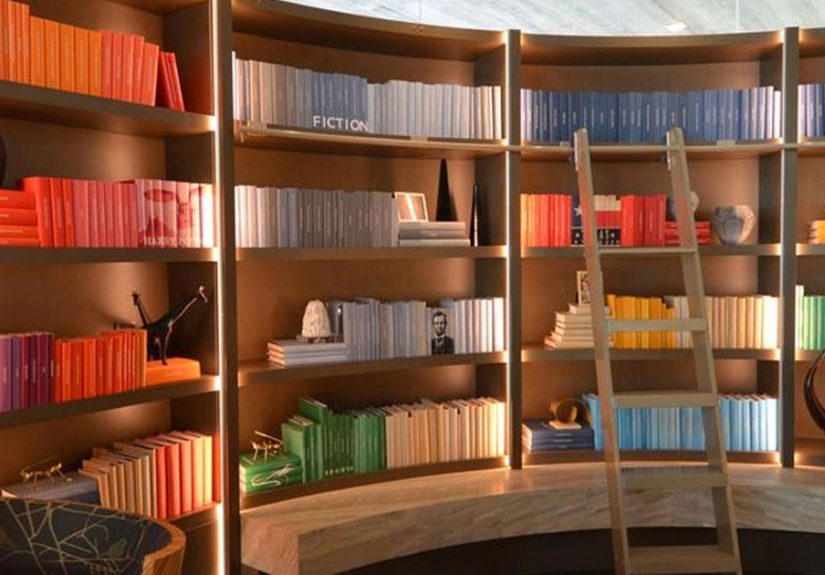
A palette is the cheat code for “intentional.” Pick 3–5 colors that already live in your room (rug, art, pillows), then repeat them on the shelves using book spines, vases, frames, or baskets. Neutrals count. Wood counts. Your shelves don’t have to matchthey just need to relate.
3) Use the Rule of Three (Because Your Eye Likes It)
Odd-number groupings feel more natural than perfect pairs. Try clusters of three items: one tall, one medium, one small. Mix shapes and textures so it doesn’t look like you bought a “Decor Starter Pack” on the same aisle.
4) Mix Vertical and Horizontal Book Stacks
All-vertical books can look like a library (great!)but also a bit stiff. Add a few horizontal stacks to break it up and create platforms for décor. Example: stack 2–4 books horizontally, then place a small bowl, candle, or sculptural object on top for instant polish.
5) Build a “Zig-Zag” Rhythm Down the Shelves
Want a layout that looks designed without measuring anything? Place larger visual anchors (a tall vase, a plant, a framed piece) in a loose zig-zag down the bookshelf. This creates movement and prevents every shelf from feeling like it’s competing for attention.
6) Leave Some Breathing Room (Negative Space Is Not “Empty”)
The fastest way to upgrade shelves is to stop filling every inch. Empty space lets your favorite pieces stand out and keeps the whole thing from looking stressful. Aim for at least a little open area on every shelfeven if you have lots of books.
7) Give Each Shelf One “Hero” Item
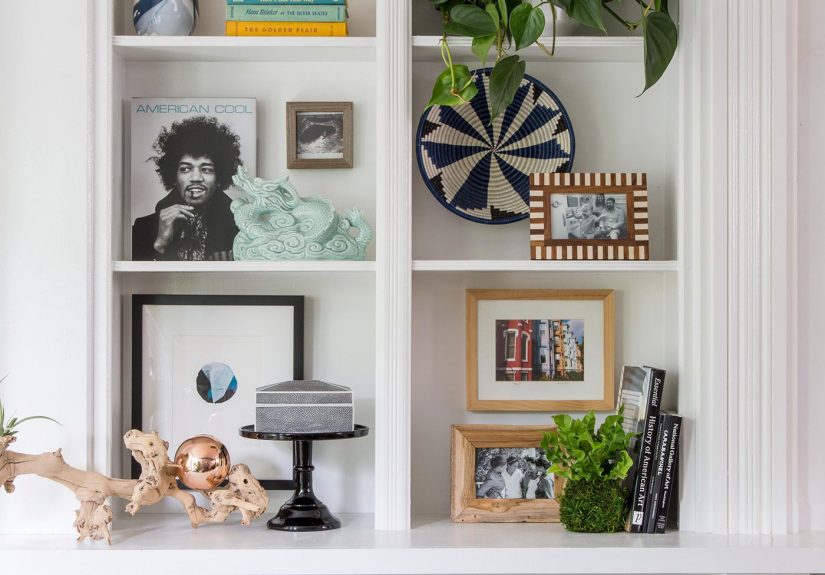
Pick one statement piece per shelf (or per section): a large vase, a bold sculpture, a framed photo, a standout bowl. The hero sets the tone; everything else supports it. This is how you get “curated” instead of “yard sale chic.”
8) Vary Height, Shape, and Texture (The “No Same-Same” Rule)
If everything is the same height and material, your shelf reads flat. Combine tall + short, round + angular, glossy + matte. Think ceramic next to woven, metal next to wood, glass next to linen. Texture is what makes neutral shelves feel rich instead of bland.
9) Layer in Art (Even If You Don’t Want to Hang Anything)
Lean framed art or a small canvas against the back of the shelf to add height and a focal pointno nails required. Layer a smaller frame in front for depth. This works especially well in the center of a bookcase or above horizontal stacks.
10) Add Greenery (Your Shelf Needs a Pulse)
Plants make shelves feel alive and soften all those right angles. Trailing plants add movement; upright plants add height. No green thumb? Use high-quality faux stems or a preserved arrangement. The goal is “fresh,” not “I forgot to water you for a month.”
11) Corral the Tiny Stuff with Trays and Bowls
Small objects can look messy fast. Put them on a tray, in a shallow bowl, or inside a lidded container so they read as one intentional group. Bonus: it makes dusting easier (one lift instead of twelve tiny rescues).
12) Hide Clutter in Baskets, Boxes, or Bins
Not everything needs to be on display. Use lidded boxes or baskets for remotes, cables, kid stuff, extra chargers, and whatever else mysteriously reproduces. Choose containers that match your palette so “storage” also looks like décor.
13) Use Bookends Like Punctuation
Bookends aren’t just functionalthey’re a styling tool. They frame a book section, add sculpture, and give you an excuse to keep books upright without cramming the shelf. Try stone, metal, wood, or playful shapes that nod to your interests.
14) Style by Theme (Tell a Micro-Story)
The easiest way to look intentional is to group items that share a theme: travel souvenirs, vintage cameras, pottery, framed family photos, sports memorabilia, shells, vinyl records, or a mini “coffee-table-book museum.” Theme turns random objects into a personal narrative.
15) Pull Some Books Forward (Depth = Designer Energy)
Don’t keep everything flush with the front edge. Push some books back and bring others forward. Add a small object in front of a recessed row. This creates shadows and depthtwo things that instantly make shelves look more expensive.
16) Go Big on the Bottom (Ground the Whole Look)
Lower shelves are perfect for larger items: big baskets, oversized vases, stacks of art books, or even a small lamp if space allows. Big items low makes the bookcase feel stable and prevents that “top-heavy clutter tower” vibe.
17) Add Lighting (The Glow-Up Is Real)
Lighting makes shelves feel intentional and cozy. Options: picture lights above built-ins, small accent lamps on lower shelves, puck lights, or slim LED strips. A warm glow highlights your favorite objects and makes the whole display feel like a destination, not a storage zone.
18) Upgrade the Back Panel (Paint or Peel-and-Stick Wallpaper)
If you want a major impact with minimal effort, treat the back of the shelves like a feature wall. Paint it a deeper tone than the room, or use removable wallpaper for pattern. Suddenly, even simple objects look like they were “curated.” Because, well, they were.
19) Edit Seasonally (The 10-Minute Refresh)
Great shelves aren’t “set it and forget it.” Swap a couple pieces seasonally: a spring vase, a summer shell bowl, fall pottery, winter candles. Rotate books and objects you already own. It keeps shelves feeling fresh without constant shoppingand your space evolves with you.
Common Bookshelf Styling Mistakes (And How to Fix Them Fast)
- Everything is the same size: Add one tall piece and one low, wide piece to break it up.
- Too many tiny objects: Group them on a tray or remove half. Tiny clutter is still clutter.
- No breathing room: Clear 10–20% of the shelf space. Your eyes will thank you.
- All the color is random: Repeat 2–3 colors more often, and tuck the rest into baskets.
- It feels staged: Add something genuinely personal: a photo, a meaningful object, or a favorite worn paperback.
Conclusion: Your Shelves, But Make Them Effortless
The best-looking bookshelves aren’t the ones with the most stuffthey’re the ones with the clearest point of view. Start with structure (palette, balance, breathing room), mix books with a few meaningful objects, and edit until the shelves feel calm but alive. If you only do three things: mix vertical/horizontal stacks, add one plant, and leave negative space. You’ll be shocked how “designer” it looks.
Experiences That Make Shelf Styling Actually Stick (The Real-Life 500-Word Add-On)
Here’s the part most styling guides skip: shelves don’t exist in a museum. They exist in homes where people snack, lose remote controls, adopt pets who consider décor a personal challenge, and buy books with the optimism of someone who thinks they’ll suddenly have free weekends. In real life, the “perfect” shelf is the one you can maintain without resenting it.
One common experience: people start styling from the top and end up with a bookshelf that feels wobblyvisually and literally. The fix is almost always the same: put heavier, larger items lower. When the bottom shelf has a big basket or a chunky stack of art books, everything above it looks more stable, and you stop feeling like the bookshelf might topple during an enthusiastic sneeze.
Another real-life moment: you realize you own two categories of objectssentimental and “why do I have this?” A shelf can handle both, but not mixed together like a junk drawer with better lighting. People who feel happiest with their shelves usually make a simple decision: sentimental items get prime real estate (eye level), while “miscellaneous” gets corralled into a lidded box. You don’t have to eliminate the random stuff; you just have to give it a container so it reads as intentional.
If you have kids, the “effortless” strategy is to create one low shelf that’s basically a landing zonebaskets for toys, bins for art supplies, sturdy books you don’t mind being read at full speed. Styling becomes easier when you stop fighting gravity and small hands. Then you keep the higher shelves calmer: a few framed photos, one plant, and décor that won’t shatter the first time someone reenacts a superhero landing in the living room.
Renters often feel stuck because they can’t paint built-ins or add lights. The workaround is wonderfully low-commitment: peel-and-stick wallpaper on the back panel, rechargeable puck lights, and a strict palette. Even a plain bookcase from a big-box store looks elevated when the back has subtle texture and the objects repeat a few colors. The shelf stops looking temporary, even if your lease is.
Finally, the most surprising experience people share is how much better shelves look after they “remove just five things.” Not fifty. Five. Editing is less about minimalism and more about letting favorites breathe. Once there’s room around a vase, a framed photo, or a small sculpture, the whole shelf feels like it has confidence. And the best part? Maintenance gets easier. When you love what’s on display, you’re more likely to keep it tidyand less likely to shove mail into the nearest open space and call it “layering.”