Table of Contents >> Show >> Hide
- Why Twist-Ending Comics Work So Well
- 21 Comics With Unpredictable Endings That Poke Fun At Our Society
- 1. The Hustle Culture Comic
- 2. The Corporate Wellness Comic
- 3. The Social Media Authenticity Comic
- 4. The Doomscrolling Comic
- 5. The Dating App Comic
- 6. The Family Phone Comic
- 7. The Self-Care Shopping Comic
- 8. The Climate Guilt Comic
- 9. The AI Office Comic
- 10. The Therapy-Speak Comic
- 11. The Subscription Life Comic
- 12. The Political Tribalism Comic
- 13. The Minimalism Comic
- 14. The Parental Performance Comic
- 15. The Modern Friendship Comic
- 16. The Convenience App Comic
- 17. The Meritocracy Comic
- 18. The News Panel Comic
- 19. The Health Tracking Comic
- 20. The Nostalgia Comic
- 21. The Apocalypse-as-Normal Comic
- What These Comics Really Say About Us
- Reader Experience: Why These Comics Feel So Personal Right Now
Some comics do not just make you laugh. They make you laugh, blink twice, and then stare at the wall like you have just been personally audited by irony. That is the magic of a comic with an unpredictable ending: it sneaks in looking playful, then lands a final-panel twist that exposes something painfully familiar about modern life. One minute you are chuckling at a harmless setup about work, dating, or social media. The next minute, you are realizing the joke is actually about all of us, and wow, that feels a little invasive.
That is also why these comics travel so well online. They are fast, sharp, and weirdly therapeutic. In a few panels, they can do what some think pieces need 2,000 words to explain: reveal how hustle culture drains us, how technology reshapes our relationships, how politics can become performance, and how consumer culture keeps selling us cures for problems it helped create in the first place. In other words, they are tiny mirrors with excellent comedic timing.
Why Twist-Ending Comics Work So Well
The best satirical comics run on misdirection. They build a familiar scene, invite you to relax, and then pull the rug out from under your expectations in the last line or last image. That surprise is not just a laugh mechanism. It is also a truth mechanism. A sudden ending can expose hypocrisy, contradiction, vanity, or cultural nonsense far more effectively than a straight lecture ever could. That is why social satire in comics has lasted for generations, from magazine cartoons and editorial panels to webcomics that go viral before lunch.
In today’s attention economy, that kind of precision matters. Readers want something smart but readable, funny but not empty, and critical without sounding like a sermon in a turtleneck. Comics with unpredictable endings hit that sweet spot. They are compact, shareable, and delightfully rude to the systems that deserve it.
21 Comics With Unpredictable Endings That Poke Fun At Our Society
1. The Hustle Culture Comic
This one starts with a motivational speaker shouting about productivity, discipline, and waking up at 4 a.m. Naturally, the final twist reveals that the only person benefiting from all this “grindset wisdom” is the guy selling the seminar. It is funny because it captures how ambition gets packaged, monetized, and handed back to exhausted people like a luxury candle labeled success.
2. The Corporate Wellness Comic
A manager announces a new mental health initiative, and everyone nods hopefully. Then the last panel shows employees receiving a mindfulness app instead of lighter workloads, better pay, or time off. Surprise: the company wants workers to breathe through the stress rather than remove the cause of it. The joke lands because modern workplaces adore wellness right up until it threatens productivity metrics.
3. The Social Media Authenticity Comic
A creator posts a heartfelt message about being “real” and “unfiltered.” The final panel shows a tripod, ring light, brand contract, and six retakes. These comics roast the performance of authenticity, which is now basically a professional skill. The twist is not that people curate their image. The twist is how eagerly audiences accept staged vulnerability as proof of honesty.
4. The Doomscrolling Comic
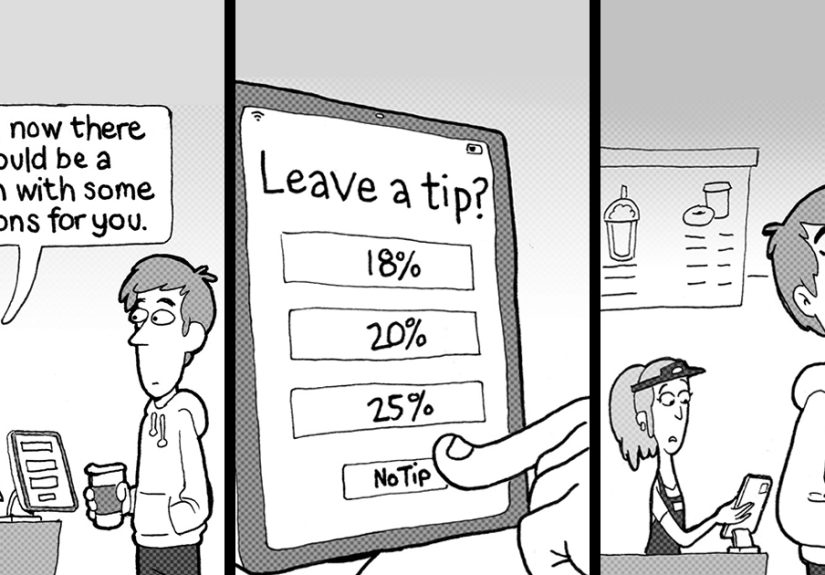
A character says they are just checking the news for five minutes before bed. Cut to sunrise, hollow eyes, and a phone battery gasping for mercy. The final punch might be a notification that says, “Take time to unplug.” That last nudge is what makes it sting. Technology creates the loop and then politely recommends self-control, like an arsonist handing you a tiny water bottle.
5. The Dating App Comic
Two people finally match after months of swiping. There is flirting, optimism, maybe even a coffee plan. Then the closing beat reveals they are both secretly asking an AI assistant how to sound spontaneous. The comic works because modern romance is full of curated profiles, algorithmic sorting, and people trying very hard to seem effortless. Nothing says chemistry like outsourced charm.
6. The Family Phone Comic
A family sits together in the same room, each person buried in a different screen. The joke usually pivots when one of them posts, “Love quality time with my family.” That last line says everything. These comics do not mock technology itself so much as the strange way it allows us to document connection while quietly replacing it.
7. The Self-Care Shopping Comic
A stressed-out person buys a weighted blanket, herbal tea, expensive candles, a journal, supplements, and a skin-care fridge that probably has Wi-Fi for no reason. The final panel shows them too anxious about the credit card bill to relax. It is a perfect skewering of the way self-care can mutate from healing practice into premium lifestyle product.
8. The Climate Guilt Comic
A consumer proudly refuses a plastic straw, recycles a yogurt cup with ceremonial seriousness, and feels briefly heroic. Then the ending zooms out to reveal private jets, industrial waste, or a giant corporate pipeline humming in the background. The comic is not anti-personal responsibility. It is anti-fake proportion. It laughs at how often systemic problems get repackaged as individual shopping choices.
9. The AI Office Comic
An executive promises artificial intelligence will “free employees for more meaningful work.” The last panel reveals the meaningful work is now attending meetings about why fewer employees are needed. That turn feels brutally current because AI satire often lands where tech optimism and labor anxiety meet. The funniest part is not the robot. It is the human phrasing around the robot.
10. The Therapy-Speak Comic
A person delivers a flawless explanation of boundaries, triggers, attachment styles, and emotional regulation. Wonderful vocabulary, terrible behavior. The final twist is that they use therapeutic language not to grow, but to win an argument or dodge accountability. These comics poke at the way psychological insight can become another status language: healthier words, same old nonsense.
11. The Subscription Life Comic
A character signs up for one harmless monthly service. Then another. Then five more. In the last panel, they are surrounded by streaming platforms, meal kits, software charges, and a toothbrush that apparently requires a membership. The ending usually reveals that ownership has quietly left the chat. It is satire for a world where everything is rented, recurring, and mildly threatening.
12. The Political Tribalism Comic
Two people appear to be in a serious policy debate. You expect substance. Instead, the last beat makes it clear they are just auditioning for approval from their own side. That is why these comics hit. They show how politics can become identity theater, where winning applause matters more than understanding an issue. Less deliberation, more merch.
13. The Minimalism Comic
A person proudly declutters their home, keeping only what “sparks joy.” The closing twist reveals they now own seventeen matching storage baskets, three books about minimalism, and a luxury shelf to display their simplicity. This is social satire at its tidiest. The joke is that anti-consumerism, once branded correctly, can become another shopping category.
14. The Parental Performance Comic
A parent says they only want what is best for their child. Sweet enough. Then the comic flips, showing that “what is best” suspiciously resembles a competitive résumé, a curated childhood, and a photo-friendly science fair moment. These comics are less about mocking parents than exposing a culture that turns child-rearing into branding, comparison, and low-grade panic.
15. The Modern Friendship Comic
Friends keep promising to “totally hang out soon.” Calendars are checked, voice notes are exchanged, and emojis do most of the emotional labor. The last panel lands on a five-month-old text reading, “Let’s lock something in.” It is funny because adulthood has turned friendship into a logistics puzzle, and the comic says out loud what everyone already knows but politely ignores.
16. The Convenience App Comic
A service promises to save time by delivering groceries, dinner, medicine, dog food, batteries, and probably your sense of self. The twist is that the user spends all night comparing fees, tips, promotions, delays, and customer service chatbots. Modern convenience often creates its own bureaucracy, and these comics thrive on that contradiction. Efficiency is wonderful until it needs tech support.
17. The Meritocracy Comic
A successful person insists they earned everything through grit alone. In the final panel, a ladder of invisible advantages appears behind them: family money, connections, timing, luck, geography, and systems working exactly as designed. The comic lands because it punctures one of society’s favorite myths. Hard work matters. But pretending it is the whole story is cartoonishly convenient.
18. The News Panel Comic
A group discusses an absurd headline that sounds too ridiculous to be true. Then the last line reveals the most ridiculous part is completely real, while the “normal” detail was the made-up one. These comics flourish in times when reality already feels like satire. They do not exaggerate the world much. They just hold it steady long enough for the absurdity to speak.
19. The Health Tracking Comic
A person uses three apps, two wearables, and one suspiciously judgmental smartwatch to optimize their well-being. The twist, of course, is that all the monitoring makes them less calm, less rested, and more obsessed. The comic is not against health. It is against the fantasy that every human feeling becomes better when converted into a dashboard.
20. The Nostalgia Comic
Someone says they miss the “good old days” when life was simpler. The last panel reveals those days included lead paint, fewer rights, worse medicine, and a lot more public smoking. These comics work because nostalgia is often less history than emotional interior design. We remember vibes, not context, and satire loves that little gap between memory and reality.
21. The Apocalypse-as-Normal Comic
The setup looks ordinary: office small talk, brunch plans, school pickup, or grocery shopping. Then the punch line reveals that everyone is casually adapting to something objectively unhinged, like smoke-filled skies, water shortages, or a market crash. These comics may be the most powerful of the bunch because they show how humans normalize almost anything, provided the Wi-Fi still works.
What These Comics Really Say About Us
Collectively, these comics do more than poke fun at society. They map the pressure points of modern life. They show us a culture obsessed with efficiency but starved for rest, connected to everyone but lonely in strangely specific ways, fluent in self-awareness but still hilariously skilled at self-deception. Their unpredictable endings matter because our era is full of polished narratives begging to be interrupted. The final panel is the interruption. It is the moment when the comic stops being cute and starts being accurate.
That is why readers keep sharing them. A smart satirical comic does not just deliver a joke. It offers recognition. It tells you that your confusion about work, money, technology, politics, identity, and modern manners is not random. It is structural. Then, mercifully, it hands you that insight with a punch line instead of a migraine.
Reader Experience: Why These Comics Feel So Personal Right Now
Reading comics with unpredictable endings can feel weirdly intimate, almost like being roasted by a stranger who somehow knows your browser history, your work calendar, your unread texts, and the exact moment you said, “I’m just going to check one thing,” before losing 90 minutes to nonsense. That is part of their appeal. They compress ordinary experiences into a few panels and expose just how absurd our routines have become. You laugh because the comic is clever. You keep thinking about it because the comic is right.
There is also a special pleasure in how fast these comics work. A novel can explore social hypocrisy. A TV satire can build a whole world around it. But a comic can walk into the room, raise one perfect eyebrow, and leave the furniture emotionally rearranged. That speed makes the experience feel electric. It mirrors the pace of modern life while also critiquing it, which is a neat trick and, frankly, a little rude.
For many readers, the experience is less about discovering something new and more about finally seeing a familiar frustration expressed with precision. Maybe it is the comic about coworkers pretending burnout is a personality trait. Maybe it is the one about trying to buy peace through self-care products and ending up with a lavender-scented budget crisis. Maybe it is the dating comic that captures how romance now involves equal parts hope, branding, and algorithmic weirdness. Whatever the setup, the ending often feels like a tiny emotional click. Yes, exactly that. That is the nonsense I have been trying to describe.
These comics also create a low-pressure way to talk about high-pressure topics. It is easier to send a friend a comic about doomscrolling than to announce, “Hello, I think the internet has permanently changed my nervous system.” A comic about performative wellness can say more in ten seconds than an awkward rant at dinner ever could. In that way, social satire becomes social glue. We share these comics not just because they are funny, but because they help us say, “You see this too, right?”
And then there is the aftereffect. The best ones linger. They sneak back into your brain when you are sitting in a meeting about efficiency, seeing a sponsored post about authenticity, or downloading an app that promises to simplify your life after a brief 14-step setup. Suddenly the comic returns, and now real life is the punch line. That may be the sharpest achievement of all. These comics do not merely reflect society. They train us to notice its contradictions in real time. After enough of them, you start seeing modern life as one long setup waiting for a final panel.

![18 Best Types of Charts and Graphs for Data Visualization [+ How to Choose]](https://corkopencoffee.org/wp-content/uploads/2026/05/18-best-types-of-charts-and-graphs-for-data-visualization-how-to-choose-qKM1PBYG-thumb.jpg)