Table of Contents >> Show >> Hide
- Why a Sectional Works So Well in a Living Room
- 22 Sectional Living Room Ideas to Try at Home
- 1. Tuck It Into the Corner for an Easy Win
- 2. Float the Sectional in the Middle of the Room
- 3. Add a Console Table Behind It
- 4. Pair It With a Round Coffee Table
- 5. Use It to Divide an Open Floor Plan
- 6. Create a Conversation Area, Not Just a TV Zone
- 7. Add a Swivel Chair Across From the Sectional
- 8. Go Low-Profile in a Small Space
- 9. Choose a Modular Sectional for Flexibility
- 10. Make It the Cozy Reading Nook
- 11. Layer in Texture for Depth
- 12. Use a Bench for Extra Flexible Seating
- 13. Try a Curved Sectional for a Softer Look
- 14. Keep the Walkways Clear
- 15. Let the Rug Define the Seating Zone
- 16. Brighten a Large Sectional With Light Neutrals
- 17. Use Bold Artwork to Balance the Sofa
- 18. Choose Durable Fabric for Real Life
- 19. Add Hidden Storage Nearby
- 20. Mix the Sectional With Accent Chairs
- 21. Use the Sectional to Fill a Long, Narrow Room
- 22. Style It Like It Belongs to a Real Human
- How to Choose the Right Sectional for Your Space
- Common Sectional Decorating Mistakes to Avoid
- Real-Life Experiences With Sectional Living Rooms
- Conclusion
- SEO Tags
Note: Clean HTML body content only. No source links included.
A sectional sofa can be a hero piece or a giant upholstered potato. The difference is all in how you use it. When it is chosen well and styled with intention, a sectional can make a living room feel cozy, polished, social, and wonderfully practical. It can define an open-plan space, squeeze extra seating into a compact room, or turn a bland layout into the spot where everyone mysteriously ends up with snacks.
If you have been staring at your sectional wondering whether it belongs in the corner, in the middle of the room, or launched into low Earth orbit, this guide is for you. These sectional living room ideas mix style and function, with simple design moves you can try at home whether your space is tiny, sprawling, formal, family-friendly, or somewhere in between.
Why a Sectional Works So Well in a Living Room
A sectional does more than provide extra seating. It shapes the room. Unlike a standard sofa, it naturally creates a sense of zone and direction. That makes it especially useful in open layouts, family rooms, apartments, and multipurpose spaces where the furniture has to do some heavy lifting. The trick is to balance the size, shape, and styling of the sectional so the room feels inviting rather than overpowered.
22 Sectional Living Room Ideas to Try at Home
1. Tuck It Into the Corner for an Easy Win
If your living room is small or oddly shaped, placing a sectional in the corner is often the simplest and smartest move. It frees up the center of the room, keeps traffic moving, and makes the sofa feel like it belongs there instead of barging in uninvited. This setup works especially well with L-shaped sectionals and apartment-size designs.
2. Float the Sectional in the Middle of the Room
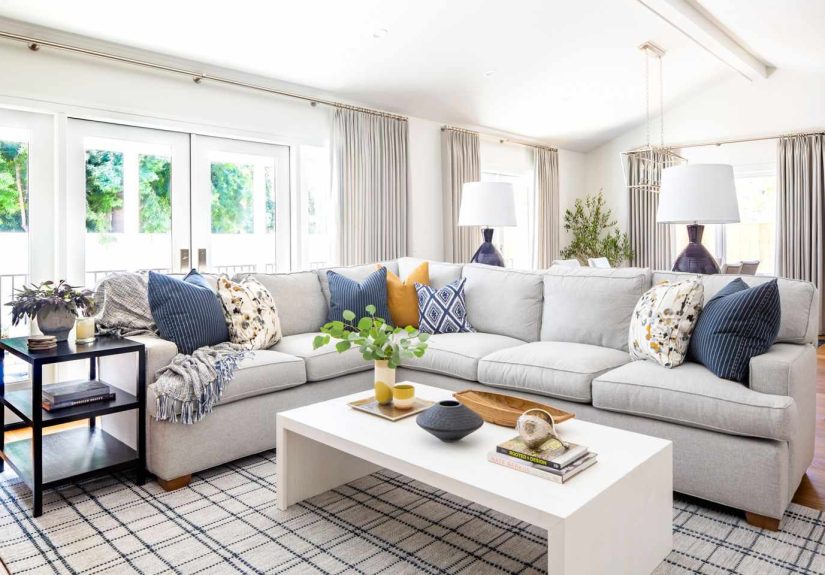
Not every sectional has to hug a wall. In a larger living room or open-concept home, floating the sectional can help define the seating zone beautifully. Use an area rug underneath to anchor the setup, then leave enough walking space around it so the room still feels airy. This arrangement instantly makes a room feel more intentional and designer-like.
3. Add a Console Table Behind It
A console table behind a floating sectional is one of those ideas that looks fancy but is genuinely useful. It gives you a spot for lamps, drinks, books, baskets, or decor, and it makes the back of the sofa look finished. It is also a handy place to stash remotes, chargers, and all the tiny objects that somehow multiply in living rooms.
4. Pair It With a Round Coffee Table
Sectionals often have strong, boxy lines, so a round coffee table can soften the look and improve circulation. It is easier to walk around, less visually harsh, and friendlier on shins. In smaller rooms, a round table also helps reduce that cramped obstacle-course feeling.
5. Use It to Divide an Open Floor Plan
One of the best sectional living room ideas is to let the sofa act as a subtle room divider. In an open-plan home, the back of the sectional can separate the living area from the dining room or kitchen without the need for walls. It keeps the layout connected while still giving each zone a clear identity.
6. Create a Conversation Area, Not Just a TV Zone
Yes, the television exists. No, it does not need to control the whole room. A sectional can create a warm conversation setup when you place it with chairs, ottomans, or side seating that encourage people to face each other. The room will feel more welcoming, and guests will not have to shout across a coffee table like they are in a storm at sea.
7. Add a Swivel Chair Across From the Sectional
If you want the room to feel open but not empty, try placing a swivel chair opposite the sectional. This adds flexible seating without the heaviness of another sofa. Swivel chairs are especially useful in open layouts because they can turn toward the sectional, fireplace, or view as needed. They are basically the social butterflies of living room furniture.
8. Go Low-Profile in a Small Space
In a compact room, a low-profile sectional can make a huge difference. A sofa that sits lower to the ground with slimmer arms looks lighter and less bulky. That helps preserve the feeling of space, especially if your ceilings are not particularly tall. Choose a style with clean lines and visible legs if you want the room to breathe a little more.
9. Choose a Modular Sectional for Flexibility
Modular sectionals are the shape-shifters of the furniture world. They are great for households that move often, rearrange often, or simply refuse to commit. You can reconfigure the pieces for movie night, guests, parties, or future homes. If your living room has to serve multiple purposes, a modular sectional gives you room to adapt.
10. Make It the Cozy Reading Nook
Who says a sectional has to be formal? If you have a bright corner or an underused alcove, turn it into a soft reading retreat with part of the sectional, a floor lamp, and a small side table. Add a throw and a couple of textured pillows, and suddenly the room has a destination that feels delightfully lived in.
11. Layer in Texture for Depth
A sectional can sometimes feel visually heavy, especially in neutral colors. The fix is texture. Mix in boucle, velvet, linen, knit throws, woven baskets, and natural wood tones to keep the room from feeling flat. This is one of the easiest ways to make a large sofa feel rich and inviting instead of plain and puffy.
12. Use a Bench for Extra Flexible Seating
If your sectional already takes up a decent footprint, skip bulky extra chairs and try a bench instead. A bench adds seating without disrupting the flow of the room. It also feels relaxed and casual, which works beautifully in family rooms and open-plan spaces where you want flexibility more than formality.
13. Try a Curved Sectional for a Softer Look
A curved sectional can make a living room feel more sculptural and less predictable. It softens hard architectural lines and can help a large room feel more intimate. Curved furniture also pairs beautifully with round or organic-shaped coffee tables, creating a layout that feels fresh, modern, and a bit more custom.
14. Keep the Walkways Clear
No living room feels good if people have to squeeze sideways to get through it. A sectional should support traffic flow, not sabotage it. Leave clear pathways between entrances, adjacent rooms, and major furniture pieces. This matters even more in homes with kids, pets, or adults carrying drinks they are way too confident about not spilling.
15. Let the Rug Define the Seating Zone
A properly sized rug can make a sectional arrangement look polished in an instant. Ideally, the front legs of the sectional and nearby chairs should sit on the rug. This helps the furniture read as one cohesive group rather than a few unrelated pieces that happen to be in the same zip code.
16. Brighten a Large Sectional With Light Neutrals
If your sectional is big, consider light upholstery such as cream, oat, soft gray, or warm beige to keep it from visually weighing down the room. Lighter tones can help the sofa blend into the space while still feeling elegant. Then bring in personality through artwork, pillows, accent chairs, and smaller decor pieces.
17. Use Bold Artwork to Balance the Sofa
A sectional has presence, so it helps to give it something visually strong nearby. Oversized art, a gallery wall, or a statement mirror can keep the room from feeling furniture-heavy. This is especially useful if the sectional is a neutral color and you want the room to have more personality without swapping the sofa itself.
18. Choose Durable Fabric for Real Life
Looks matter, but so does surviving everyday life. If your sectional lives in a high-traffic family room, choose durable upholstery that can handle spills, pets, kids, and the occasional mystery smudge. Performance fabrics, washable rugs, and easy-clean materials make a big sectional feel like a smart investment instead of a stress test.
19. Add Hidden Storage Nearby
Sectionals are often the center of everyday activity, so the surrounding pieces should work harder too. Think storage ottomans, narrow consoles, nesting tables, or side tables that slide under the sofa edge. Multifunctional furniture keeps clutter under control and helps the living room stay comfortable without looking chaotic.
20. Mix the Sectional With Accent Chairs
A room with only one giant sectional can sometimes feel one-note. Break it up with accent chairs in a contrasting shape or material. Leather, wood-framed, swivel, or upholstered chairs can add balance and make the arrangement feel more layered. This combination also lets the room work better for both lounging and conversation.
21. Use the Sectional to Fill a Long, Narrow Room
Long living rooms can feel awkward fast. A sectional can help by creating a defined lounge zone at one end while leaving the rest of the room open for another function, like reading, dining, or a desk area. The key is not to shove everything against the walls. Floating some pieces or using smaller tables can make the room feel less like a hallway and more like an actual destination.
22. Style It Like It Belongs to a Real Human
The best sectional living room ideas are not just pretty. They feel personal. Add a throw you actually use, pillows that invite people to sit down, a tray for drinks, books you like, and lighting that flatters both the room and your mood. A sectional should make the room feel lived-in, not staged like a showroom where everyone is afraid to wrinkle a cushion.
How to Choose the Right Sectional for Your Space
Before you fall in love with a sectional, measure everything. Measure the room, the wall lengths, the doorway, the elevator if needed, and the path into the home. Then think about how you actually use your living room. Do you host often? Nap frequently? Need room for pets? Want something modular for future rearranging? A small chaise sectional may be enough for one household, while a U-shaped sectional makes more sense for a larger family or frequent entertaining.
Also pay attention to arm shape, seat depth, and frame size. Slim arms can maximize seating without increasing the footprint too much. Lower backs and visible legs feel lighter in small rooms. Deep seats are wonderful for lounging, but they may not be ideal if you prefer a more upright sit for conversation or reading. Style matters, but comfort and practicality win in the long run.
Common Sectional Decorating Mistakes to Avoid
The biggest mistake is choosing a sectional that is too large for the room. It can make everything feel cramped and leave no space for balance. Another common issue is forgetting about scale elsewhere. Tiny side tables next to a huge sectional look accidental, while a giant coffee table can block movement. Finally, do not let the sofa do all the visual work. A sectional needs supporting players such as lighting, art, texture, and flexible seating to help the room feel complete.
Real-Life Experiences With Sectional Living Rooms
Living with a sectional is a little like living with a very large dog. It takes up space, has a strong personality, and becomes the center of household life almost immediately. Once people bring one home, they often realize the sectional changes not just the look of the room, but the way the room is used every day.
In small apartments, a sectional often becomes the solution to multiple problems at once. It can replace both a sofa and extra chairs, which makes the room feel simpler and less cluttered. People who once struggled to seat guests comfortably often discover that one well-sized sectional does the work of several pieces without making the space feel disjointed. The key experience many homeowners describe is relief. The room finally works.
In family homes, sectionals tend to become command central. This is where movie nights happen, where kids sprawl out with blankets, where pets claim suspicious ownership of the corner cushion, and where adults pretend they are only sitting down for five minutes before accidentally starting a full nap. A sectional often makes a living room feel more relaxed and less formal, which is exactly what many households want.
That said, people also learn quickly that layout matters. A sectional that looked perfect in a showroom can feel enormous at home if the rug is too small or the coffee table is too bulky. Many homeowners end up rearranging the room a few times before finding the sweet spot. Often the winning formula includes a smaller or rounder table, one accent chair, better lighting, and a little more breathing room around the sofa than they expected.
Another common experience is how much a sectional influences traffic flow. In open-plan spaces, it can solve the problem of a room feeling undefined by creating a clear living zone. In narrow rooms, it can either be a lifesaver or a giant roadblock depending on placement. Once people start respecting pathways and leave enough room to move comfortably, the sectional usually starts feeling intentional instead of intrusive.
Many people also find that sectionals are surprisingly emotional pieces of furniture. Because they are built for lounging, gathering, and everyday comfort, they tend to collect memories fast. Family photos get taken there. Holiday conversations happen there. Weekend coffee, late-night streaming marathons, and random Tuesday collapses all happen there too. It becomes less about owning a stylish sectional and more about building a room people genuinely want to be in.
The best real-world lesson is simple: sectionals work best when they are treated as part of a full living room plan, not the entire plan by themselves. When the scale is right, the walkways are clear, and the styling feels personal, a sectional does exactly what great living room furniture should do. It makes the home more comfortable, more useful, and a lot more inviting.
Conclusion
The best sectional living room ideas are the ones that make your home feel easier to live in. Maybe that means tucking the sofa neatly into a corner. Maybe it means floating a curved sectional in the middle of an open-plan room like the confident design move it is. Maybe it just means replacing a clunky coffee table and finally giving your knees a fighting chance.
However you style it, a sectional should bring comfort, structure, and personality to the living room. Start with the right scale, think about traffic flow, layer in texture and flexible seating, and let the room reflect the way you actually live. Do that, and your sectional will stop feeling like just another big piece of furniture and start feeling like the best seat in the house.