Table of Contents >> Show >> Hide
- Start With a Simple Lighting Game Plan
- 25 Lighting Ideas That Make Kitchens Look (and Work) Better
- 1) Statement pendants over the island
- 2) A chandelier that breaks the rules (in a good way)
- 3) Recessed lights for clean, even ambient glow
- 4) A flush-mount or semi-flush fixture for lower ceilings
- 5) Under-cabinet LED strips for instant “upgrade energy”
- 6) Under-cabinet puck lights for targeted pools of brightness
- 7) Mount under-cabinet lights toward the front edge
- 8) Toe-kick lighting for “floating cabinets” vibes
- 9) In-cabinet lighting to make glass-front doors shine
- 10) Pantry lighting that turns chaos into competence
- 11) Over-sink lighting that actually helps
- 12) A pair of sconces to frame a focal point
- 13) Plug-in sconces for renters and commitment-phobes
- 14) Picture lights for art, open shelves, or a statement backsplash
- 15) LED strip lighting on open shelving
- 16) Inside-drawer lighting for peak practicality
- 17) Track lighting when you need flexibility
- 18) Directional spotlights to highlight a feature wall
- 19) A layered “ceiling recipe”: recessed + pendants
- 20) Warm metal finishes to add glow (even when lights are off)
- 21) Glass shades to keep sightlines open
- 22) Matte or opaque shades to reduce glare and soften light
- 23) Add a dimmable “late-night mode”
- 24) Bring in daylight: skylights, solar tubes, or bigger windows
- 25) Smart bulbs and scenes for “one-tap” kitchen moods
- Common Kitchen Lighting Mistakes to Avoid
- of Real-World Kitchen Lighting Experiences
- Final Thoughts
Kitchen remodels are a parade of big decisionscabinets, countertops, appliances, tile, hardwareuntil lighting shows up like,
“Hi. I’m the thing you’ll notice every single day, forever.” The good news: a beautiful kitchen lighting plan isn’t complicated.
It’s layered. It’s intentional. And yes, it can be fun (because nothing says “adulting” like celebrating a perfectly lit onion).
Start With a Simple Lighting Game Plan
Think in layers: ambient, task, and accent
The best kitchens don’t rely on a single ceiling light that makes your dinner look like a crime scene. Aim for:
ambient lighting (overall glow), task lighting (bright where you prep and cook), and
accent lighting (sparkle, drama, “ooh, nice backsplash”). Layering also helps reduce shadowsespecially
on countertops where your hands and head love to photobomb the light.
Pick a flattering white light (and keep it consistent)
For most kitchens, a warm-to-neutral white feels inviting while still looking clean. Many homeowners land somewhere around
warm white to neutral white, then keep that tone consistent across fixturesespecially in open-concept homes where the kitchen
flows into living areas. If you want food to look appetizing (and not oddly gray), look for LEDs with strong color quality,
often labeled as higher CRI.
Add control: dimmers, zones, and smart scenes
The secret weapon isn’t “more brightness.” It’s options. Put different groups of lights on separate switches:
island pendants, under-cabinet lights, recessed ceiling lights, and accent lighting. Add dimmers wherever possible. Then you can
go from “morning espresso sprint” to “cozy dinner vibe” without swapping bulbs or performing interpretive dance at the switch plate.
25 Lighting Ideas That Make Kitchens Look (and Work) Better
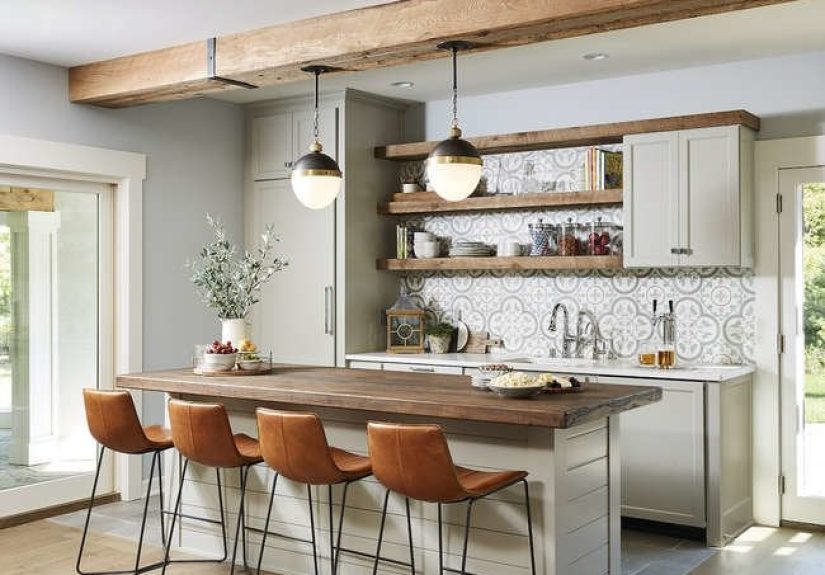
1) Statement pendants over the island
If your island is the kitchen’s stage, pendants are the spotlight. Choose a shape that matches your styleglobes for soft and modern,
cones for focused task lighting, lanterns for farmhouse charm. Bonus: pendants visually “anchor” the island so it feels intentional,
not like a floating slab with snacks.
2) A chandelier that breaks the rules (in a good way)
Kitchens can absolutely handle a chandelierespecially over an eating nook or a large island. The trick is scale: oversized can look
designer, undersized can look accidental. Pick something easy to wipe (kitchens are not a museum; they are a sauce-splatter arena).
3) Recessed lights for clean, even ambient glow
Recessed lighting is the reliable background singer of the lighting world. Use it for overall coverage, but don’t let it be your only
move. Plan placement so light lands on work areasnot just in the middle of walkwaysthen layer in task lighting to prevent shadows.
4) A flush-mount or semi-flush fixture for lower ceilings
If your ceiling height says “no thanks” to big pendants, go flush or semi-flush. You’ll still get a decorative focal point without
the forehead-level obstacle course. Look for a diffuser or shade that spreads light comfortably and minimizes glare.
5) Under-cabinet LED strips for instant “upgrade energy”
Under-cabinet lighting is one of the most dramatic before-and-after changes you can makebecause it lights the place you actually work.
LED strip or tape lighting can create an even line of light across countertops, helping with prep while showing off your backsplash.
6) Under-cabinet puck lights for targeted pools of brightness
Pucks are great for smaller zones or when you want distinct “spots” of light. They can be hardwired, plug-in, or battery-powered
(hello, renters). For the smoothest look, place them strategically so they don’t create scalloped shadows across the counter.
7) Mount under-cabinet lights toward the front edge
A simple placement tweak can reduce glare and improve coverage. Installing lights closer to the cabinet’s front lip helps the beam land
where your hands are working instead of bouncing off the backsplash and shining straight into your soul.
8) Toe-kick lighting for “floating cabinets” vibes
Add LED strips beneath base cabinets to create a subtle glow at floor level. It looks high-end, helps with late-night snack missions,
and can double as gentle night lighting. Consider motion sensors so it turns on when you wander in half-asleep looking for water.
9) In-cabinet lighting to make glass-front doors shine
If you have glass-front cabinets, light them from within. Suddenly, everyday dishes look curated instead of “stacked like we panicked.”
It also helps you find what you need without opening every door like a game show contestant.
10) Pantry lighting that turns chaos into competence
Pantries are infamous for becoming black holes where snacks disappear. Add a bright fixture inside, or use LED bars/strips along shelves.
If wiring is annoying, rechargeable motion-sensor lights can be a surprisingly effective (and satisfying) workaround.
11) Over-sink lighting that actually helps
The sink is a work zone, not just a water feature. Add a small pendant, a mini chandelier, or a recessed spotlight aimed at the basin.
It’s especially useful for evening cleanup when you’re trying to convince yourself that “soaking” counts as washing.
12) A pair of sconces to frame a focal point
Wall sconces can add warmth and a “finished” lookespecially flanking a window, range hood, or open shelving. They also introduce
a softer, more living-room-like layer that makes kitchens feel inviting instead of purely utilitarian.
13) Plug-in sconces for renters and commitment-phobes
Want the charm of sconces without opening walls? Plug-in options can deliver instant ambiance. Hide the cord with paintable channels
or route it behind shelving. The result feels intentionaland your landlord doesn’t need to know your kitchen glow-up plans.
14) Picture lights for art, open shelves, or a statement backsplash
Picture lights aren’t only for galleries. Use one to highlight a piece of art in the kitchen, illuminate a shelf display, or add a
focused beam across a dramatic tile backsplash. It’s a small detail that reads “designer,” not “default builder package.”
15) LED strip lighting on open shelving
If you have open shelves, add a slim LED strip under each shelf to create a warm wash of light. It’s an easy way to highlight ceramics,
cookbooks, or that one fancy olive oil bottle you bought because the label looked expensive.
16) Inside-drawer lighting for peak practicality
Deep drawers are fantastic until you’re searching for a whisk like it’s buried treasure. Drawer lighting (often motion-activated) makes
tools and utensils easier to spot. It’s a small luxury that feels wildly practical once you live with it.
17) Track lighting when you need flexibility
Track lighting lets you aim heads toward key zones: sink, stove, island, pantry. It can be a smart choice for kitchens with tricky layouts
or for homeowners who want adjustable task lighting without adding a ton of recessed cans.
18) Directional spotlights to highlight a feature wall
Got a bold backsplash, a textured plaster hood, or a beautiful piece of cabinetry? Add small directional spots to graze light across it.
Highlighting texture creates depthand your kitchen suddenly looks like it belongs in a “before/after reveal” video.
19) A layered “ceiling recipe”: recessed + pendants
One of the most balanced combinations is recessed lights for general illumination plus pendants for task and style. The recessed lights
handle the whole room, while pendants focus on the island and provide a visual centerpiece. Together, they feel complete.
20) Warm metal finishes to add glow (even when lights are off)
Brass, bronze, copper, and warm gold tones don’t just look pretty; they reflect light in a flattering way. If your kitchen palette is cool
(white, gray, stainless), a warmer finish can keep the space from feeling icylike a science lab that occasionally makes cookies.
21) Glass shades to keep sightlines open
In smaller kitchens, heavy fixtures can visually crowd the space. Clear or lightly frosted glass shades help light travel and keep things airy.
They’re especially great over islands where you want a statement without blocking the view across the room.
22) Matte or opaque shades to reduce glare and soften light
If you hate harsh brightness, go for matte finishes, fabric-like diffusers, or opal glass. These materials spread light more gently and can
make your kitchen feel calmerparticularly at night when you want cozy, not stadium lighting.
23) Add a dimmable “late-night mode”
Set one low-level circuit for evenings: toe-kick lights, under-cabinet lights, or a small lamp on a counter. This creates a soft glow for
winding down (or raiding the fridge) without blasting overhead lights that make midnight feel like noon.
24) Bring in daylight: skylights, solar tubes, or bigger windows
Natural light is the best ambient lightingfree, flattering, and excellent for your mood. If a full skylight is too ambitious, solar tubes
can funnel daylight into darker kitchens. Then layer artificial lighting so the room still feels great after sunset.
25) Smart bulbs and scenes for “one-tap” kitchen moods
Smart lighting can be as simple or as extra as you want. Create scenes like “Prep,” “Dinner,” and “Cleanup” so brightness and color tone
adjust automatically. It’s surprisingly useful in open kitchens where you need lighting to shift with how the space is being used.
Common Kitchen Lighting Mistakes to Avoid
- Relying on one overhead fixture: It creates shadows on work zones and makes the room feel flat.
- Overdoing recessed lights: Too many can feel harsh; balance them with decorative and under-cabinet layers.
- Ignoring color quality: Low-quality light can make food and finishes look dull or “off.”
- Forgetting dimmers and zones: A kitchen should have multiple moodsmorning, cooking, entertaining, late-night.
- Skipping task lighting at the counter: Under-cabinet lighting is a functional upgrade that also looks high-end.
of Real-World Kitchen Lighting Experiences
Here’s what people often notice after upgrading kitchen lightingthings you don’t fully appreciate until you live with it day to day.
First: your kitchen feels bigger. Even without moving a wall, layered lighting (especially under-cabinet strips plus
a clean ambient layer) removes dark corners that visually shrink the room. Homeowners describe it like this: the kitchen stops feeling
like a single “room” and starts feeling like multiple friendly zonesprep space, coffee spot, island hangout, and cleanup station.
Second: cooking gets easier in boring, practical ways. When the countertop is evenly lit, you chop more confidently,
read labels faster, and stop leaning forward like you’re investigating a mystery. Under-cabinet lighting is the most common “why didn’t
we do this sooner?” upgrade because it directly targets where the work happens. People also love toe-kick or low-level lighting for nighttime:
you can grab a glass of water without waking your eyes up like you just stared at the sun.
Third: the kitchen becomes more social. With dimmers and separate switches, the same space can shift from bright task mode
to a softer entertaining modewithout changing anything else. Many homeowners say this is the moment the kitchen starts feeling like the heart
of the home again: friends linger at the island, kids do homework under a pendant pool of light, and the room feels warm instead of “work lit.”
In open-concept layouts, consistent bulb tone matters even more; mismatched whites can make the kitchen feel disconnected from the living area.
Fourth: finishes look more expensive. This surprises people. Lighting can flatter materials the way good photography flatters faces.
A backsplash with texture suddenly has depth when it’s grazed by accent light. Glass-front cabinets look curated with a soft internal glow.
Even standard hardware looks nicer when the light is warm and the shadows are controlled. It’s not “fancy lighting”it’s lighting that understands
what you want people to notice.
Finally: you learn your preferences fast. Some people discover they love a cozy warm tone all day. Others prefer brighter, whiter task
light during cooking but want warmth at night. The happiest kitchens tend to be the ones that offer choice: separate circuits, dimmers, and a few
deliberately placed fixtures that do specific jobs. The best part is that you don’t have to do everything at once. Many real remodel stories start
with one upgrade (often under-cabinet lighting), then expand into pendants, better ambient light, and a couple of accent details once people realize
how much lighting changes the way the entire kitchen feels.
Final Thoughts
Great kitchen lighting isn’t about making everything brighterit’s about making everything better: safer prep, easier cleanup, warmer gatherings,
and a kitchen that looks good at 7 a.m. and 7 p.m. Layer your light, control it with zones and dimmers, and pick fixtures that match your lifestyle
(and your tolerance for wiping fingerprints). Your countertopsand your eyeballswill thank you.