Table of Contents >> Show >> Hide
- How to Build a Butterfly Garden That Actually Works
- 27 Colorful Butterfly Plants
- 1) Butterfly Weed (Asclepias tuberosa)
- 2) Swamp Milkweed (Asclepias incarnata)
- 3) Common Milkweed (Asclepias syriaca)
- 4) Purple Coneflower (Echinacea purpurea)
- 5) Blazing Star (Liatris spp.)
- 6) Bee Balm (Monarda spp.)
- 7) Joe-Pye Weed (Eutrochium spp.)
- 8) Ironweed (Vernonia spp.)
- 9) New England Aster (Symphyotrichum novae-angliae)
- 10) Goldenrod (Solidago spp.)
- 11) Zinnia (Zinnia elegans)
- 12) Mexican Sunflower (Tithonia rotundifolia)
- 13) Lantana (Lantana camara)
- 14) Purpletop Verbena (Verbena bonariensis)
- 15) Blue Sage / Salvias (Salvia spp.)
- 16) Garden Phlox (Phlox paniculata)
- 17) Cardinal Flower (Lobelia cardinalis)
- 18) Coreopsis (Coreopsis spp.)
- 19) Black-Eyed Susan (Rudbeckia hirta)
- 20) Blanket Flower (Gaillardia spp.)
- 21) Stonecrop / Sedum (Hylotelephium spp.)
- 22) Sunflower (Helianthus spp.)
- 23) Cosmos (Cosmos bipinnatus)
- 24) Pentas / Egyptian Star Flower (Pentas lanceolata)
- 25) Passionflower Vine (Passiflora incarnata)
- 26) Fennel / Dill / Parsley (Swallowtail host plants)
- 27) Pipevine (Aristolochia spp.)
- Planting Layout Ideas That Make Butterflies Stick Around
- Common Butterfly-Garden Mistakes (And How to Avoid Them)
- Garden Experiences: What It’s Like When You Start Planting for Butterflies ()
- Conclusion
- SEO Tags
Butterflies are basically living confetti with wingsbeautiful, a little dramatic, and extremely picky about lunch.
The good news: you don’t need a botanical PhD (or a butterfly butler) to get them to show up. You just need the
right mix of plants that provide nectar for adults and host leaves for caterpillars,
plus a garden setup that doesn’t feel like a wind tunnel or a pesticide parade.
How to Build a Butterfly Garden That Actually Works
1) Think “life cycle,” not just “pretty flowers”
Adult butterflies sip nectar, but their babies (caterpillars) eat leavesand they’re not exactly flexible eaters.
If you only plant nectar flowers, you’ll get quick visits. If you include host plants, you’ll get the full story:
eggs, caterpillars, chrysalises, and that “wait… was that a monarch?” moment that makes your whole week.
2) Sun is the secret sauce
Most butterflies love warmth and bright light. Aim for 6+ hours of sun in your main planting area.
Add a few flat rocks in a sunny spot and you may see butterflies “basking” like tiny, glamorous solar panels.
3) Plant in clumps, not single lonely flowers
Butterflies aren’t touring your garden for variety like they’re judging a cooking show. They want efficient feeding.
Plant the same flower in drifts or clumps so they can hop from bloom to bloom without burning wing calories.
4) Keep the buffet open all season
The trick is continuous bloom: spring, summer, and especially late summer into fall when many butterflies
are still active. Mix early bloomers with midseason stars and late-season powerhouses like asters and goldenrod.
5) Skip pesticides (yes, even “just a little”)
Butterfly gardens and broad-spectrum insecticides go together like sunscreen and sandpaper. If you need pest control,
try physical barriers, hand-picking, or targeted methodsand accept that caterpillars eating “their” host plants is
not a crisis, it’s the point.
27 Colorful Butterfly Plants
Below are 27 reliable butterfly-attracting plantsmany are native to parts of the U.S., and several are famous
host plants for caterpillars. Choose what fits your region, sun, and soil, and you’ll be on your way to turning
your yard into a five-star butterfly diner (with zero reservations required).
1) Butterfly Weed (Asclepias tuberosa)
Bright orange blooms that scream “nectar here!” and a key milkweed for monarch caterpillars. It’s drought-tolerant
once established and loves full sun. Bonus: it’s one of those plants that looks fancy while quietly being tough.
2) Swamp Milkweed (Asclepias incarnata)
A monarch favorite with pink flower clusters and a preference for moist soil (but it can handle average garden
conditions once settled in). Plant it where water lingers a bitrain garden edges are prime real estate.
3) Common Milkweed (Asclepias syriaca)
The classic monarch host plant with fragrant pinkish blooms. It can spread enthusiastically, so give it space
or corral it in a dedicated bed. If you want monarch caterpillars, this plant is basically an RSVP card.
4) Purple Coneflower (Echinacea purpurea)
A pollinator superstar with bold pink-purple petals and a generous nectar supply. Butterflies love the open shape,
and birds later appreciate the seed heads. Plant in sun, don’t overwater, and let it do its thing.
5) Blazing Star (Liatris spp.)
Purple bottlebrush spikes that attract butterflies like a neon sign on a road trip. Great in sunny borders and
prairie-style plantings. Stagger a couple varieties for a longer bloom windowand more “whoa, look at that!” moments.
6) Bee Balm (Monarda spp.)
Firework-like flowers in red, pink, or purple. Butterflies and hummingbirds both show up, which feels like winning twice.
Give it sun to part shade and decent airflow (it can get powdery mildew if it’s too crowded).
7) Joe-Pye Weed (Eutrochium spp.)
Tall, confident, and covered in mauve-pink flower clusters in late summerexactly when butterflies need fuel.
It likes moisture, but many gardens do fine if you mulch and water during dry spells. If you have room, it’s a showstopper.
8) Ironweed (Vernonia spp.)
Deep purple blooms that pop in late summer and attract a parade of butterflies. It’s a strong native in many regions,
often thriving in sun with moderate moisture. Think of it as the “dramatic purple cape” of your butterfly border.
9) New England Aster (Symphyotrichum novae-angliae)
A late-season nectar jackpot with purple (sometimes pink) daisy-like flowers. It’s especially valuable heading into fall.
Pinch stems back in early summer for bushier growth and more bloomsmore flowers, more butterflies, more bragging rights.
10) Goldenrod (Solidago spp.)
Goldenrod gets blamed for allergies (it’s usually ragweed’s fault), but butterflies adore it. Its yellow blooms provide
crucial late-season nectar. Pair it with asters for a classic fall combo that looks intentional and feeds everybody.
11) Zinnia (Zinnia elegans)
If butterflies had a group chat, zinnias would be pinned messages. They bloom nonstop in summer, come in almost every color,
and have easy landing pads. Deadhead for more flowers and you’ll get repeat customers.
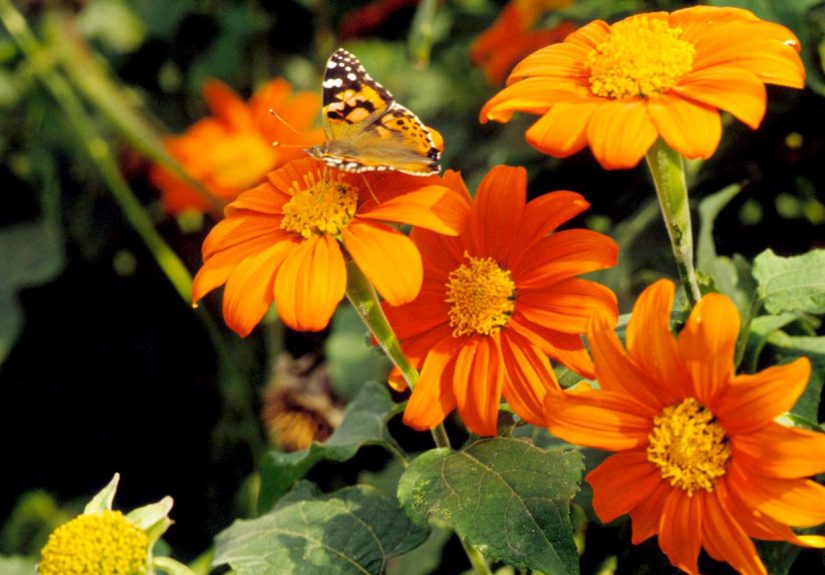
12) Mexican Sunflower (Tithonia rotundifolia)
Big, bold orange-red blooms that act like nectar billboards. This annual loves heat and full sun and can get tall, so give
it space (or stake it). Perfect for late summer color when butterflies are still busy.
13) Lantana (Lantana camara)
Clusters of tiny flowers in warm sunset colors. It’s a butterfly magnet in hot climates and a great container plant elsewhere.
Keep it in sun, don’t baby it too much, and it will bloom like it’s being paid.
14) Purpletop Verbena (Verbena bonariensis)
Airy purple flower heads that butterflies can’t resist, floating above the garden like tiny lollipops on sticks.
It handles heat well, adds movement, and plays nicely with other plants. Great for that “wild-but-still-on-purpose” look.
15) Blue Sage / Salvias (Salvia spp.)
Salvias bring blue and purple spikes that keep nectar flowing. They’re generally sun lovers and tend to bloom heavily with
regular trimming. If you want more butterfly traffic, plant salvias like you’re opening a popular café.
16) Garden Phlox (Phlox paniculata)
Fragrant flower clusters in pink, purple, or white that draw butterflies in midsummer. It prefers sun with consistent moisture.
Choose mildew-resistant varieties if your summers are humid, and give it airflow so it stays happy.
17) Cardinal Flower (Lobelia cardinalis)
Vivid red spikes that look like they were designed by a paint company. It thrives in moist soil and partial sun to sun,
making it a great pick for wetter spots. Butterflies visit, and hummingbirds absolutely lose their minds over it.
18) Coreopsis (Coreopsis spp.)
Sunshine-yellow (and sometimes red or bicolor) blooms that keep coming through summer. Many varieties are drought-tolerant
once established. It’s easy, cheerful, and reliablebasically the golden retriever of garden flowers.
19) Black-Eyed Susan (Rudbeckia hirta)
Golden petals with a dark centerclassic, sturdy, and great for nectar. It blooms for a long stretch and pairs beautifully
with purple plants like liatris and asters. Low fuss, high payoff.
20) Blanket Flower (Gaillardia spp.)
Warm-toned blooms (red, orange, yellow) that thrive in sun and lean soil. It’s a strong choice for hot, dry gardens and
keeps the color going for months. Butterflies love the steady nectar supply.
21) Stonecrop / Sedum (Hylotelephium spp.)
Late-summer clusters that shift from pink to rusty tones as they ageright when butterflies are hunting for reliable nectar.
Drought-tolerant and great in sunny borders. It’s also excellent for gardeners who occasionally… forget to water.
22) Sunflower (Helianthus spp.)
Not just for postcards and baseball fieldssunflowers can be outstanding for pollinators. Choose branching types for more blooms.
Butterflies visit for nectar; later, birds appreciate the seeds. It’s a full-service plant.
23) Cosmos (Cosmos bipinnatus)
Light, airy flowers in pinks, whites, and magentas that bloom for ages in full sun. Cosmos are easy from seed and excellent for
filling gaps. They create that cottage-garden vibe that butterflies seem to approve of.
24) Pentas / Egyptian Star Flower (Pentas lanceolata)
Starry clusters in red, pink, purple, or whitefantastic for butterflies and a great option for containers. In warm regions it can
be perennial; elsewhere it shines as an annual. Keep it sunny and it will keep flowering.
25) Passionflower Vine (Passiflora incarnata)
A wild, wonderful purple bloom that looks like nature got fancy on purpose. It’s also a host plant for certain fritillary butterflies.
Give it a trellis or fence, sun to part sun, and a little patienceit likes to settle in before it shows off.
26) Fennel / Dill / Parsley (Swallowtail host plants)
These kitchen staples double as caterpillar nurseries for swallowtails (especially black swallowtails). Their yellow umbels also provide
nectar for small pollinators. Plant extra, because the caterpillars will not ask politely before snacking.
27) Pipevine (Aristolochia spp.)
A host plant for pipevine swallowtails, with unusual, conversation-starting flowers. Choose a species native to your region when possible.
This is a “plant for the next generation” move: it’s about supporting caterpillars as much as attracting adults.
Planting Layout Ideas That Make Butterflies Stick Around
- Go for layers: low flowers (zinnias), mid-height perennials (coneflower), and tall anchors (Joe-Pye weed, ironweed).
- Build color “runways”: plant repeats of purple and gold (asters + goldenrod) so butterflies can forage efficiently.
- Add a puddling spot: a shallow dish or saucer with moist sand can provide minerals butterflies seek.
- Include shelter: nearby shrubs, ornamental grasses, or a fence break the wind and create a safer feeding zone.
Common Butterfly-Garden Mistakes (And How to Avoid Them)
- Only planting nectar flowers: add at least a couple host plants (milkweeds, parsley-family herbs, passionflower, pipevine).
- Planting “one of everything”: butterflies prefer clumpsrepeat your best performers.
- Cleaning up too aggressively in fall: many butterflies overwinter in leaf litter or stems. Leave some mess. Nature likes it.
- Forgetting late-season bloom: asters, goldenrod, sedum, Joe-Pye weed, and ironweed keep the pantry stocked into fall.
- Ignoring invasiveness: some popular butterfly plants (like certain butterfly bushes) can be invasive in parts of the U.S.
If you want one, look for regionally recommended or sterile cultivarsor choose native alternatives like liatris, Joe-Pye weed, or asters.
Garden Experiences: What It’s Like When You Start Planting for Butterflies ()
Most people start a butterfly garden with a perfectly reasonable goal: “I’d like to see more butterflies.”
Then a funny thing happensyou begin noticing details you never cared about before. For example, you’ll catch yourself
saying sentences like, “That swallowtail is really committing to the verbena today,” as if you’re hosting a tiny winged dinner party.
In the early weeks, the change feels subtle. You plant a few zinnias and maybe a coneflower or two, and you get the occasional flutter-by.
It’s nice, but it’s also the garden equivalent of a “seen” text message: butterflies noticed, but they didn’t stick around.
The real shift happens when blooms start overlapping and you’ve got clusters of color instead of scattered singles.
Suddenly you’re not offering snacksyou’re offering a cafeteria line.
Gardeners often report that the first “wow” moment comes in midsummer when zinnias and cosmos are pumping out flowers daily.
Butterflies show up and behave like regulars: they land, they feed, they move three inches to the next bloom like they’ve done it a thousand times.
If you add lantana in a pot near a sunny patio, you may find yourself drinking coffee beside a butterfly without either of you feeling awkward about it.
(This is the kind of low-stakes friendship many of us need.)
Then comes the host-plant chapterthe part that turns a butterfly garden from “pretty” into “meaningful.”
Milkweed is the classic example. When monarchs find it, the experience can be almost comical: one day it’s a normal plant,
the next day you’re staring at leaves thinking, “Who chewed you?” and realizing the answer is “the guest of honor.”
Parsley, dill, and fennel bring similar drama with swallowtail caterpillarsbright, obvious, and unapologetically hungry.
The first time you see a caterpillar, you may feel protective… until you remember you planted this as a baby buffet on purpose.
Late summer and early fall are when butterfly gardens often feel most alive. Joe-Pye weed, ironweed, sedum, asters, and goldenrod
turn into fueling stations. Gardeners frequently notice more varied species during this windowespecially when nights cool down and nectar matters.
It’s also when small tweaks pay off: a shallow saucer with moist sand can attract “puddling” butterflies, and a windbreak can turn a choppy yard
into a calm feeding zone.
The final experience, surprisingly, is learning to relax your standards. A butterfly garden is not a museum display.
Leaves get nibbled. Stems lean. Seed heads turn brown. And if you leave some stems and leaf litter through winter,
you’ll feel like you’re breaking the rulesuntil spring arrives and your garden wakes up with the quiet satisfaction of having helped something survive.
That’s the moment many gardeners realize the real reward isn’t just seeing butterflies. It’s knowing your yard became a habitat, not just landscaping.
Conclusion
If you want more butterflies, plant like you mean it: clumps of nectar-rich flowers, a few key host plants, and blooms that span the seasons.
Start with reliable classics (zinnias, coneflower, liatris), add habitat heroes (milkweeds, passionflower, pipevine), and let late-season plants
(asters, goldenrod, sedum) keep the party going. With a little sun and a lot less fussing, your garden can become a colorful, fluttering hotspot
that supports butterflies at every life stage.