Table of Contents >> Show >> Hide
- Why Student Experiences Matter in Elementary Math
- Way 1: Start With Real-Life Contexts Students Actually Recognize
- Way 2: Invite Student Voice Through Math Stories, Questions, and Choices
- Way 3: Design Projects That Connect Math to Identity, Community, and Problem-Solving
- How Teachers Can Plan Experience-Based Math Lessons
- Common Mistakes to Avoid
- Additional Experiences Related to Integrating Student Experiences in Elementary Math
- Conclusion
Elementary math can feel magical when students see themselves inside the numbers. A lesson about fractions becomes more interesting when it uses pizza slices from a birthday party. Measurement suddenly matters when students compare the height of classroom plants. Data feels less like a worksheet and more like detective work when children survey their classmates about favorite recess games. In other words, math becomes stickier when it stops floating in the clouds and lands right in the middle of students’ real lives.
Integrating student experiences in elementary math does not mean turning every lesson into a giant craft project, although nobody is judging a well-timed construction-paper pie chart. It means using children’s backgrounds, interests, routines, languages, questions, communities, and prior knowledge as bridges to mathematical understanding. When students recognize the context, they are more likely to talk, reason, explain, test ideas, and take intellectual risks.
Strong elementary math instruction still needs clear goals, accurate vocabulary, practice, feedback, and conceptual development. But those essentials become more powerful when teachers connect them to what students already know. Below are three practical ways to integrate student experiences in elementary math while keeping lessons rigorous, inclusive, and wonderfully alive.
Why Student Experiences Matter in Elementary Math
Young learners are not empty backpacks waiting to be filled with multiplication facts. They arrive with stories, habits, home languages, neighborhood knowledge, family routines, favorite games, shopping experiences, sports interests, art skills, cooking memories, and plenty of opinions about snacks. These experiences can become meaningful entry points into math concepts.
When teachers connect math to student experiences, they support three important classroom goals. First, students see math as useful instead of mysterious. Second, students feel that their ideas belong in the classroom. Third, teachers get better insight into how children think, which makes instruction more responsive. A child who explains subtraction through sharing marbles with a cousin is revealing both mathematical reasoning and personal context.
This approach is especially helpful in elementary school because children are building their mathematical identities. A student who repeatedly thinks, “Math has nothing to do with me,” may become quiet, anxious, or disengaged. A student who thinks, “I can use math to understand my world,” is more likely to participate. That shift may sound small, but in a math classroom, it is basically a superhero cape.
Way 1: Start With Real-Life Contexts Students Actually Recognize
The first way to integrate student experiences in elementary math is to build lessons around familiar situations. Real-life math contexts help students understand why a skill matters before they are asked to practice it. Instead of beginning with abstract numbers alone, teachers can begin with a situation students can picture, discuss, and solve.
Use Everyday Routines as Math Launchpads
Elementary classrooms are full of math-rich routines. Attendance involves counting, comparing, and finding differences. Lunch choices create data sets. Classroom jobs involve schedules, rotations, and patterns. Lining up can introduce ordinal numbers, equal groups, and estimation. Even sharpening pencils can become a lesson in supply management, though teachers may prefer not to encourage a pencil-sharpening stampede.
For example, a second-grade teacher introducing subtraction could ask, “There were 23 students here yesterday. Today, 19 students are here. How many fewer students are in class today?” This problem uses the same operation as a textbook exercise, but students understand the situation instantly. They can model it with counters, draw it, or explain it verbally.
In third grade, multiplication can begin with classroom realities such as table groups, book bins, or art supplies. “Each table has 4 glue sticks. We have 6 tables. How many glue sticks are there altogether?” Students are not just solving 6 × 4; they are mathematizing a space they know.
Connect Math to Home, Community, and Play
Student experiences extend beyond the classroom. Teachers can invite examples from home routines, neighborhood landmarks, family traditions, playground games, sports, music, cooking, shopping, and transportation. These contexts can support word problems, estimation tasks, data collection, measurement activities, and geometry lessons.
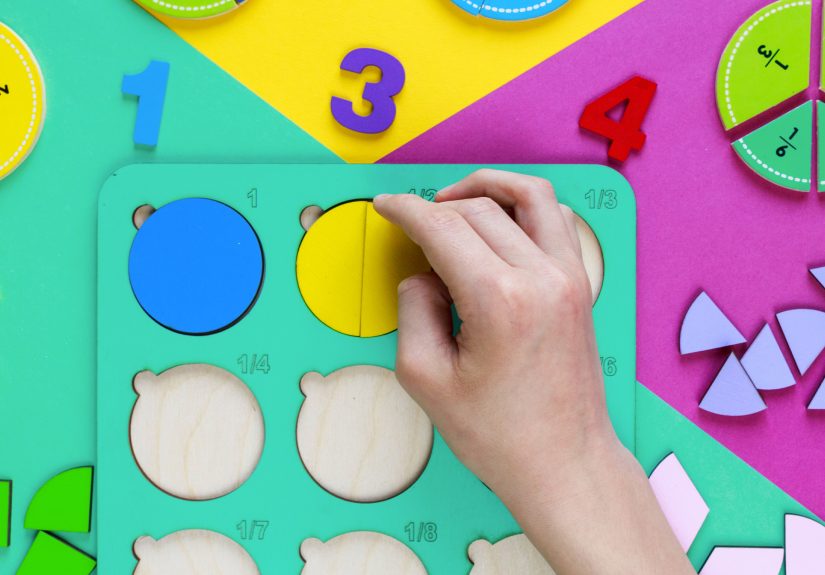
For a fractions lesson, students might discuss foods that are divided into equal parts: oranges, sandwiches, pies, tortillas, waffles, or sheet cakes. For measurement, they might compare the length of a soccer field, a hallway, a jump rope, or a favorite stuffed animal. For money, students can plan a pretend classroom store using prices that make sense for pencils, stickers, bookmarks, or erasers.
The key is authenticity. A word problem about “buying 47 watermelons for a pet dragon” might be fun, but it does not necessarily connect to student experience unless the class has a strong dragon economy. Real-life contexts work best when students can say, “Oh, I know what that is.”
Keep the Math Goal Clear
Real-world contexts should serve the math, not bury it under decorative confetti. A strong experience-based lesson still needs a clear learning target. If the goal is comparing fractions, the activity should help students compare fractions. If the goal is understanding place value, the context should highlight tens, hundreds, grouping, and regrouping.
A useful planning question is: “What mathematical idea will students understand better because this context is familiar?” If the answer is clear, the context is doing its job. If the context is interesting but mathematically distracting, save it for another day, possibly during indoor recess when everyone needs a little sparkle.
Way 2: Invite Student Voice Through Math Stories, Questions, and Choices
The second way to integrate student experiences in elementary math is to let students contribute to the lesson. Student voice helps children move from passive answer-finders to active mathematical thinkers. When students create problems, ask questions, explain strategies, and choose representations, their experiences become part of the learning process.
Let Students Create Their Own Word Problems
Student-generated word problems are a simple but powerful strategy. After learning a new operation or concept, students can write problems based on their own interests. A child who loves basketball might write about points scored in a game. A student who enjoys drawing might write about sharing markers. Another might create a problem about shells collected at the beach, books read in a series, or dumplings arranged on plates.
For example, after practicing addition within 1,000, students might write a problem using something they collect, count, or notice. One student may write, “My family made 248 cookies for a party and 175 more for neighbors. How many cookies did we make?” Another might write, “There are 326 red bricks and 189 gray bricks in my building set. How many bricks are there?” These problems show the teacher what students understand about addition, place value, and context.
Teachers can make the activity stronger by asking students to solve a partner’s problem and then discuss whether the story matches the equation. This encourages precision. It also prevents the classic student-written math problem that begins with three apples and somehow ends with a spaceship.
Use Math Discussions That Honor Different Strategies
Students bring different ways of seeing numbers. One child may solve 48 + 27 by adding tens and ones. Another may make a friendly number by turning 48 into 50. Another may draw base-ten blocks. When teachers invite multiple strategies, students learn that math is not only about getting the answer; it is also about understanding the path.
Math talks, number talks, and strategy-sharing routines help students explain their reasoning in their own words. A teacher might ask, “How did you see it?” or “Who solved it a different way?” These questions show students that their thinking matters. They also help classmates hear ideas that may connect to their own experiences.
This is especially important for multilingual learners and students who may not always feel confident in math. Visual models, gestures, drawings, partner talk, and sentence frames can help more students participate. A student may not yet have perfect academic language, but they may still have excellent mathematical reasoning. The classroom should make room for both growth and brilliance.
Offer Meaningful Choices
Choice is another way to bring student experience into elementary math. Students can choose the context of a problem, the tool they use to model thinking, the data question they want to investigate, or the way they present a solution.
For example, during a graphing unit, students might choose from survey questions such as favorite fruit, favorite school subject, favorite outdoor activity, or preferred type of book. During a geometry unit, students might search for shapes in classroom objects, playground equipment, home items, or local buildings. During a measurement unit, they might choose whether to measure hand spans, desk lengths, plant growth, or paper airplane flight distances.
Choice does not mean chaos. Teachers can provide structured options that all support the same math goal. Think of it as a menu, not a food fight. Students feel ownership, while the teacher keeps instruction focused.
Way 3: Design Projects That Connect Math to Identity, Community, and Problem-Solving
The third way to integrate student experiences in elementary math is through small, purposeful projects. Projects give students time to apply math to meaningful questions. They can connect numbers to identity, classroom community, local issues, and practical decision-making.
Create Classroom Data Projects
Data is one of the easiest math areas to connect to student experience. Children naturally enjoy asking questions, voting, comparing, and discovering patterns. A class can collect data about favorite recess activities, pets, reading habits, weather observations, walking distances, lunch choices, or how many languages students hear in their community.
A first-grade class might create a picture graph of favorite fruits. A second-grade class might make bar graphs from survey results. A third-grade class might analyze how many minutes students spend reading each week. A fourth- or fifth-grade class might compare data sets, find differences, calculate totals, or discuss what the data suggests.
The best part is that data projects make students curious. They do not just ask, “What is the answer?” They ask, “What does this mean?” That question opens the door to mathematical reasoning, communication, and critical thinking.
Use Math to Explore Fairness and Decision-Making
Elementary students have a finely tuned fairness radar. Anyone who has divided cupcakes among children knows this. Teachers can use that natural interest to explore equal groups, fractions, division, ratios, measurement, and data.
For example, students might plan how to divide art supplies fairly among table groups. They might determine whether a game’s scoring system is balanced. They might compare playground time across different classes or analyze whether a classroom library has enough books in different categories. These tasks connect math to real decisions students understand.
Fairness-based math tasks also encourage students to justify their thinking. “Is this equal?” “Is this reasonable?” “What evidence supports your answer?” These questions help students see math as a tool for explaining and improving situations, not just completing worksheets.
Build Mini Projects Around Local and Personal Connections
Projects do not need to be enormous. A strong elementary math project can take one class period or stretch across a week. The goal is to give students a meaningful problem and enough structure to use math effectively.
Here are a few examples:
- Classroom Garden Measurement: Students measure plant growth, compare heights, create line plots, and predict future growth.
- Dream Playground Design: Students use area, perimeter, shapes, and measurement to design a playground layout.
- Family Recipe Math: Students double or halve simple recipes to practice fractions, multiplication, and division.
- Community Map Geometry: Students identify shapes, angles, lines, and distances using a simple map of familiar places.
- Class Store Budget: Students use addition, subtraction, money, and comparison to plan purchases within a budget.
These projects integrate elementary math with student experience because they begin with something students can imagine. They also encourage collaboration, communication, and problem-solving. The teacher’s role is to guide the math conversation so students connect their project decisions to accurate mathematical thinking.
How Teachers Can Plan Experience-Based Math Lessons
Integrating student experiences in elementary math works best when it is intentional. Teachers do not need to redesign an entire curriculum overnight. They can start with small adjustments that make lessons more relevant and responsive.
Ask Three Planning Questions
Before teaching a lesson, teachers can ask:
- What do my students already know from life, play, family, community, or previous lessons that connects to this concept?
- How can students share their thinking, stories, examples, or questions during the lesson?
- What representation, tool, or context will help more students access the math?
These questions keep the focus on both student experience and mathematical purpose. They also help teachers avoid shallow connections. A culturally responsive or student-centered lesson is not just a worksheet with different names added. It is a lesson that genuinely uses student knowledge as a resource.
Use Multiple Representations
Students experience math in different ways. Some need to touch objects. Some need to draw. Some need to talk. Some need to see symbols after they understand the story. Multiple representations help students connect concrete experience to abstract math.
For example, when teaching multiplication, students can begin with equal groups of classroom objects, draw arrays, write repeated addition, and then connect those representations to multiplication equations. When teaching fractions, students can fold paper, use fraction strips, draw number lines, and explain real sharing situations.
Multiple representations also support inclusion. They give students more than one doorway into the same concept. And in elementary math, more doorways are usually better than one tiny window with a confusing latch.
Assess Understanding Through Student Explanations
Experience-based math lessons give teachers rich opportunities to assess understanding. Instead of only checking final answers, teachers can listen to explanations, review drawings, observe tool use, and ask students to connect the context to the math.
A student who gets the right answer but cannot explain it may need deeper conceptual support. A student who makes a small calculation error but uses a strong model may understand more than the answer suggests. Looking at student thinking helps teachers respond more accurately.
Common Mistakes to Avoid
Bringing student experiences into math is powerful, but it needs thoughtful execution. One common mistake is using contexts that are supposedly “real life” but not actually familiar to students. A problem about calculating mortgage interest may be real life for adults, but for third graders, it might as well be written in wizard code.
Another mistake is letting the context overpower the math. If students spend forty minutes decorating a restaurant menu but only three minutes adding prices, the lesson may be more art project than math project. Creativity is wonderful, but the mathematical goal should stay visible.
A third mistake is assuming all students share the same experiences. Not every child has the same family structure, technology access, travel history, sports knowledge, or food traditions. Teachers should offer varied contexts and allow students to contribute their own examples. This makes the classroom more inclusive and prevents one narrow version of “normal” from taking over.
Additional Experiences Related to Integrating Student Experiences in Elementary Math
One of the most memorable ways to integrate student experiences in elementary math is to treat children’s everyday observations as serious mathematical material. In many classrooms, students already notice quantities, patterns, and comparisons long before teachers name them as math. A child may say, “The lunch line is longer today,” or “My tower is taller than yours,” or “We need two more chairs.” These comments are not interruptions from the math lesson. They are invitations into it.
For example, a teacher might begin the day with a simple question: “Where did you use math yesterday?” At first, students may say, “Nowhere,” because they think math only counts if it comes with a worksheet and a slightly dramatic pencil sigh. But with modeling, they begin to notice math everywhere. One student helped measure rice for dinner. Another counted coins at a store. Someone divided game cards equally with a sibling. Another checked the time before soccer practice. These experiences can be collected on a classroom chart called “Math We Found in the Wild.” Over time, students start hunting for math outside school, which builds relevance and curiosity.
Teachers can also use personal timelines to teach sequencing, elapsed time, and measurement. Students might create a timeline of a typical morning: wake up, eat breakfast, travel to school, unpack, and begin class. They can compare how long different routines take, round times to the nearest five minutes, or create word problems from their schedules. This type of activity respects student experience while giving teachers a practical way to teach time, order, and comparison.
Another useful experience-based activity is a classroom “math museum.” Students bring or draw an object that shows math in their life: a sports jersey with a number, a bus schedule, a recipe card, a patterned fabric, a building photo, a grocery receipt, a toy with wheels, or a board game. The class then labels the math they notice: shapes, symmetry, numbers, measurement, addition, multiplication, fractions, or patterns. This activity helps students understand that math is not trapped in a textbook. It is hiding in plain sight, sometimes under a couch cushion next to a missing crayon.
Student experiences can also support problem-solving stamina. When children work on problems connected to their lives, they are often more willing to revise their thinking. A student designing a dream bedroom with area and perimeter may care enough to fix a measurement mistake. A group planning equal snack bags may naturally debate division and remainders. A class analyzing survey data about favorite books may want to make the graph accurate because the results represent them. Personal investment does not replace instruction, but it gives students a reason to stay with the task.
Teachers can strengthen these activities by building reflection into the end of each lesson. Students might answer questions such as, “How did your experience help you understand the math?” “What strategy did you use?” “Where else could this math be useful?” Reflection turns activity into learning. It also helps students build a healthy mathematical identity: “I have ideas. My life connects to math. I can solve problems.” That belief is one of the best outcomes an elementary math classroom can produce.
Conclusion
Integrating student experiences in elementary math is not a trendy extra or a cute classroom bonus. It is a practical way to make math more meaningful, accessible, and memorable. When teachers use real-life contexts, invite student voice, and design projects connected to identity and community, students begin to see math as something they can use, discuss, question, and own.
The best math classrooms do more than teach procedures. They help students recognize patterns in their world, explain their reasoning, solve real problems, and feel confident enough to try. That confidence often begins with a simple connection: “This math has something to do with me.” Once students believe that, numbers become less intimidating, lessons become more engaging, and the classroom becomes a place where mathematical thinking feels alive.
Note: This article is written for web publishing and synthesizes widely accepted U.S. elementary math teaching practices, including real-world problem solving, student voice, culturally responsive instruction, developmentally appropriate practice, mathematical discourse, and inclusive lesson design.