Table of Contents >> Show >> Hide
- What Is a Silk Screen Stencil, Exactly?
- Method 1: Make a Cut Paper or Adhesive Vinyl Stencil
- Method 2: Use Drawing Fluid and Screen Filler
- Method 3: Make a Photo Emulsion Stencil
- Which Silk Screen Stencil Method Should You Choose?
- Common Mistakes That Wreck Silk Screen Stencils
- Tips for Better Results Every Time
- Final Thoughts
- Experience Notes: What Making Silk Screen Stencils Actually Feels Like
If you have ever looked at a custom T-shirt, tote bag, poster, or pillow cover and thought, “I could make that,” good news: you absolutely can. The magic behind screen printing is the stencil. Once you understand how to make a silk screen stencil, the whole process starts to feel less like mysterious art-school wizardry and more like a very satisfying weekend project with ink on your hands and a grin on your face.
The best part is that there is no single “correct” way to make a stencil. Some methods are fast, cheap, and beginner-friendly. Others take more setup but reward you with crisp lines, tiny details, and repeatable prints that look impressively professional. In this guide, we’ll walk through three ways to make silk screen stencils: a cut stencil method, a drawing fluid and screen filler method, and the classic photo emulsion method.
By the end, you’ll know which screen printing stencil technique fits your design, your budget, and your patience level. Because let’s be honest: some days you want a clean graphic print, and some days you want to fight with emulsion like a dramatic artist in a garage studio. Both are valid.
What Is a Silk Screen Stencil, Exactly?
A silk screen stencil is the image barrier that controls where ink passes through the mesh and where it does not. Open areas in the screen let ink through. Blocked areas stop it. That’s the entire trick. Whether you cut the design by hand, paint it into the screen, or expose it with light, you are doing the same basic thing: creating a selective gate for ink.
The right stencil method depends on the kind of design you want to print. Big bold shapes? Easy. Painterly brushwork? Also possible. Tiny lettering and detailed artwork? That usually calls for photo emulsion and a bit more care. Before you start, think about your image first. Your stencil should fit the job, not the other way around.
Method 1: Make a Cut Paper or Adhesive Vinyl Stencil
Best for
Simple shapes, bold graphics, beginner projects, quick one-color prints, and people who would like results today instead of “after a full darkroom learning journey.”
What you’ll need
- A screen and squeegee
- Thin paper, stencil film, contact paper, or adhesive vinyl
- A craft knife or precision blade
- Screen printing ink
- Your print surface, such as fabric or paper
How it works
This is the most straightforward way to create a screen printing stencil. You draw or trace your design onto paper or adhesive vinyl, cut out the parts that should print, and place the stencil on the print side of the screen. Ink passes through the cut openings and leaves your design behind.
If you use contact paper or adhesive vinyl, the stencil sticks to the screen and usually behaves better than loose paper. That makes it a favorite for home crafters, Cricut users, and anyone who likes clean edges without learning a whole chemistry set. The catch is that this method works best for low-detail images. Tiny text, delicate line art, and complicated interior shapes can turn into a mutiny.
Step-by-step
- Choose a bold design with clear shapes and not too many tiny details.
- Draw or trace the design onto your paper or vinyl. If your design includes text, reverse it before cutting.
- Use a sharp craft knife to cut out the printable areas cleanly.
- Attach the stencil to the bottom, print side of the screen. Make sure it lies flat with no bubbles or loose edges.
- Place the screen on your fabric or paper, add ink, and pull the squeegee in one smooth pass.
- Lift carefully and admire your work like you’ve just invented printmaking.
Why people love this method
It is fast, cheap, and forgiving. You can go from idea to print in a short afternoon. It is especially useful for party shirts, simple tote bags, kids’ art, signage, and practice runs. If your design is bold and graphic, a cut stencil can look fantastic.
Where it struggles
The main downside is durability and detail. Paper stencils shift, wrinkle, or soften. Adhesive vinyl lasts longer, but it still is not the best option for very long print runs or extremely intricate images. Think of this method as the quick-and-clever solution, not the one that wants a museum retrospective.
Method 2: Use Drawing Fluid and Screen Filler
Best for
Hand-drawn artwork, brushy edges, painterly lines, medium-detail designs, and makers who want more control without jumping straight into photo emulsion.
What you’ll need
- A screen and squeegee
- Drawing fluid
- Screen filler
- Paintbrushes
- Cold or room-temperature water
- Ink and your print surface
How it works
This method feels delightfully backwards at first. You paint your design onto the screen using drawing fluid. Then you coat the screen with screen filler. Once the filler dries, you rinse out the drawing fluid, and the image opens back up as your printable stencil. It is clever, slightly magical, and oddly satisfying.
The big advantage here is control. You can paint organic lines, hand-lettered shapes, or expressive marks directly into the stencil. Compared with a hand-cut stencil, it gives you more detail and fewer limitations. Compared with photo emulsion, it is simpler and more approachable for artists who like working by hand.
Step-by-step
- Sketch your image lightly or place your reference under the screen if you want to trace it.
- Paint the design onto the screen with drawing fluid. Anything you paint will become the printed area later.
- Let the drawing fluid dry fully.
- Spread screen filler over the entire area with a squeegee or flat-edge tool. Do not overwork it, or you can disturb the drawing fluid underneath.
- Let the screen filler dry completely.
- Rinse both sides of the screen with cool or room-temperature water until the drawing fluid washes out and your image opens up.
- Let the screen dry again, then print as usual.
Why this method is so fun
It lets your design keep some personality. A hand-cut stencil can feel rigid. A drawing fluid and screen filler stencil can feel lively, expressive, and handmade in the best way. If you want a print that looks like it came from a real person rather than a suspiciously perfect machine, this method has charm for days.
Common mistakes
The two big ones are rushing the dry time and being too aggressive with the screen filler. If the fluid is not dry, or if you smear filler around like you’re frosting a wedding cake in a panic, the image can soften or break down. Slow, even, patient work wins here.
Method 3: Make a Photo Emulsion Stencil
Best for
Detailed artwork, small text, sharp edges, repeat printing, professional-looking results, and people who enjoy precision more than chaos.
What you’ll need
- A screen with clean mesh
- Photo emulsion and sensitizer, if required by your system
- A scoop coater or squeegee for coating
- A dark or low-light drying area
- A black-and-white transparency or film positive
- A light source for exposure
- Water for washout
How it works
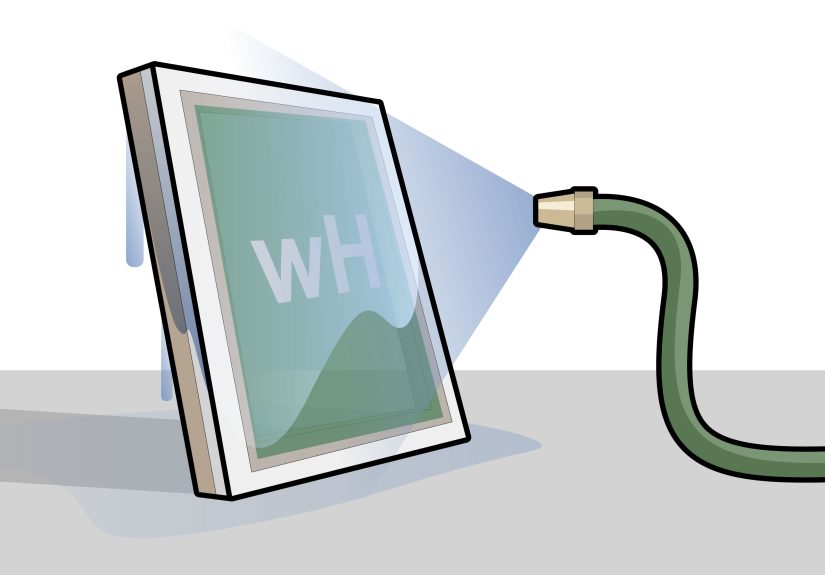
This is the classic stencil method and the one most people picture when they think of professional screen printing. You coat the screen with light-sensitive emulsion, let it dry, place a dark artwork positive against it, and expose it to light. The emulsion hardens where the light hits. The covered image area stays soft and washes out, leaving your stencil behind.
When it works, it works beautifully. You can capture fine lines, sharp corners, detailed illustrations, and clean lettering that would make a cut stencil cry in the supply drawer.
Step-by-step
- Clean and fully dry the screen before coating. Dust, oils, and moisture can sabotage adhesion.
- Mix and apply the photo emulsion according to the product directions.
- Coat the screen evenly with a thin layer. Thin coatings generally help preserve detail and make exposure easier to control.
- Let the coated screen dry in a dim area away from direct light.
- Print or prepare a dark, high-contrast artwork positive on transparency film.
- Place the artwork tightly against the screen and expose it to light for the proper time.
- Wash out the unexposed image area with cool water until the stencil opens.
- Dry the screen completely before printing.
Why this method is worth learning
If you want crisp results and repeatability, photo emulsion is the heavyweight champion. It is ideal for selling printed goods, making editioned art prints, producing cleaner logos, and printing multiple copies without constantly rebuilding your stencil.
What makes people yell at the garage wall
Exposure issues. Underexpose it, and the stencil can wash away too easily. Overexpose it, and the image can be stubborn and refuse to rinse out. Your film positive also needs to be dark and opaque enough. This method rewards testing, note-taking, and the emotional maturity to admit that your first attempt may become “a valuable learning experience.”
Which Silk Screen Stencil Method Should You Choose?
- Choose a cut paper or vinyl stencil if you are new, printing a simple design, or want the quickest route from idea to ink.
- Choose drawing fluid and screen filler if you want more artistic control, hand-drawn charm, and medium-level detail.
- Choose photo emulsion if you need fine detail, repeated prints, or a more polished, professional result.
In plain English: go simple first if your design is simple. Do not use a bazooka to open a soup can. But if your artwork includes tiny lettering, intricate lines, or multiple repeat prints, skip the shortcut and go straight to emulsion.
Common Mistakes That Wreck Silk Screen Stencils
Using a design that is too detailed for the method
A bold shape prints beautifully with vinyl. A delicate serif font the size of an ant’s résumé does not. Match the method to the artwork.
Not cleaning the screen well enough
Dust, oil, and leftover residue can ruin adhesion and shorten stencil life. Clean screens are boring until they save your print.
Rushing dry time
In stencil-making, impatience is a tax you pay in failed prints. Let layers dry fully. Then let them dry a bit more just to be safe.
Using too much pressure
Heavy-handed squeegee pressure can force ink where it should not go, especially with weaker or temporary stencils. Smooth and controlled beats heroic and messy.
Ignoring test prints
One scrap print can save an entire shirt stack. Test first, celebrate later.
Tips for Better Results Every Time
- Start with bold, high-contrast artwork.
- Keep the screen flat and properly registered before printing multiples.
- Use the right ink for the material you are printing.
- Do not let ink dry in the mesh during long pauses.
- For fabric projects, heat set the ink if the manufacturer calls for it.
- Write down what worked, especially with emulsion exposure times.
That last tip is not glamorous, but it matters. Screen printing gets dramatically easier when you stop relying on memory and start keeping notes like a mildly obsessive genius.
Final Thoughts
Learning how to make silk screen stencils opens the door to a lot more than custom shirts. It gives you a flexible way to decorate fabric, print artwork, build a small handmade business, or simply make cool things that did not exist before lunch. And while each method has its own personality, none of them are off-limits to beginners.
Start with the design you want to print, pick the stencil method that matches it, and give yourself room to experiment. The first stencil may not be perfect. That is normal. The second one will be smarter. The third one will make you start pricing blank tote bags in bulk. That is how it begins.
Experience Notes: What Making Silk Screen Stencils Actually Feels Like
The first time most people try to make a silk screen stencil, they imagine something between fine art and industrial manufacturing. In reality, it often feels more like crafting with consequences. You line everything up, take a deep breath, pull ink across the screen, and then lift it like you are opening a mystery box. Sometimes the result is gorgeous. Sometimes it looks like your design had a stressful day. Either way, the learning curve is part of the fun.
Beginners usually have the most immediate success with a cut vinyl stencil because it gives quick feedback. You cut, stick, print, and instantly understand what the screen is doing. That fast success matters. It teaches you how much ink to use, how firm the squeegee stroke should be, and how the image transfers through the mesh. It also teaches a humbling lesson: if the stencil is not stuck down well, ink will absolutely find that weakness and exploit it like a tiny liquid criminal.
Working with drawing fluid and screen filler feels more artistic. People who like painting, lettering, or loose illustration often love this method because the stencil starts to feel handmade in a very personal way. There is a little suspense in washing the drawing fluid out and seeing the image appear. It is one of those craft moments that never gets old. You also start to understand how much drying time matters. Rush the process, and the screen punishes your optimism. Be patient, and the result can look wonderfully expressive and alive.
Photo emulsion is where many hobbyists level up. It can also be where they briefly question their life choices. The first few tries often involve troubleshooting exposure time, washout pressure, film density, and whether the screen truly dried the way you thought it did. But once it clicks, it feels like unlocking a new category of work. Fine lines hold. Small text looks clean. Repeats become easier. You stop making “pretty good for homemade” prints and start making prints that look intentional and polished.
Another real-world lesson is that workspace matters more than people expect. A clean table, a place for wet prints to dry, decent lighting, scrap paper for testing, and a plan for cleanup make the whole experience smoother. Screen printing is not impossible in a tiny space, but it does reward organization. If your ink, tape, test fabric, and squeegee are scattered like an archaeological dig, the process gets chaotic fast.
Perhaps the most satisfying part of making your own silk screen stencils is the control it gives you. You are not just choosing a design; you are choosing texture, edge quality, repeatability, and mood. A rough cut stencil has a different voice than a painterly filler stencil. A photo emulsion print has a different personality than a hand-cut one. Over time, you stop asking, “How do I make this stencil?” and start asking, “What kind of print do I want this to become?” That is when the craft gets really interesting.
And yes, mistakes still happen. Ink gets where it should not. Screens clog. Registration drifts. A beautiful stencil sometimes fails for reasons that feel personally insulting. But those moments are not wasted. They build the instincts that make later prints better. In screen printing, experience is not just practice. It is a pile of solved little disasters. Once you accept that, the process becomes a lot more enjoyable and a lot less intimidating.