Table of Contents >> Show >> Hide
- Why This Viral Collection Hits So Hard
- Why English Keeps Ending Up on T-Shirts Worldwide
- The Funniest Types of English T-Shirt Fails in the Roundup
- Why The Internet Never Gets Tired of These Shirts
- Are These Shirts Always Mistakes? Not Necessarily
- What Brands, Designers, and Sellers Should Learn
- Why We Laugh, Even When the Joke Is Small
- Everyday Experiences With Lost-in-Translation Fashion
- Conclusion
There are ordinary graphic tees, there are slogan tees, and then there are the glorious little cotton mysteries that make you stop mid-scroll and whisper, “Who approved this?” That is the strange, beautiful territory of lost in translation T-shirts: shirts printed with English words that are almost right, wildly wrong, accidentally profound, or so chaotic they loop back around to genius.
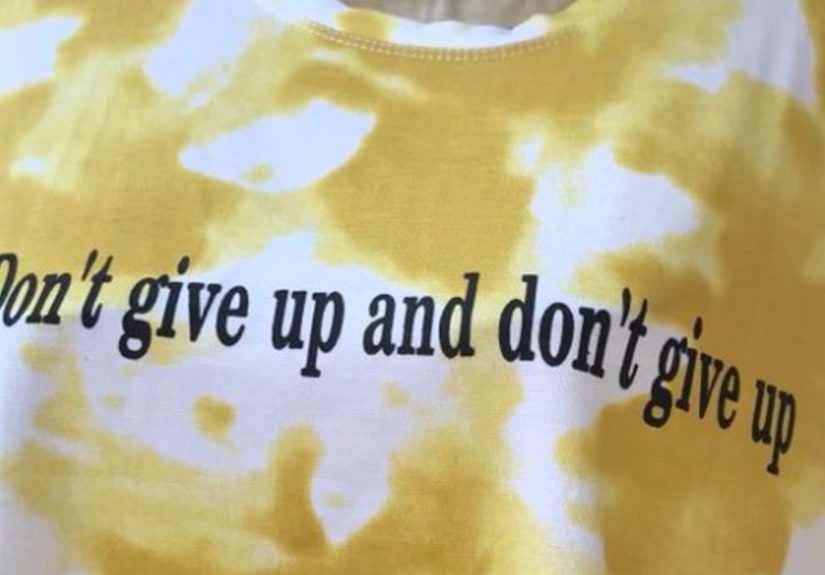
The viral collection “Lost In Translation”: 80 Ridiculous And Funny English T-Shirts Found Across The Entire World taps into something the internet will never stop loving: funny English T-shirts that look like they were designed by a sleep-deprived poet, a bargain-bin branding team, and an overconfident translation tool working together at 2 a.m. The results are unforgettable. One shirt turns a familiar sci-fi riff into “The Darth Face.” Another offers the oddly commanding “Just Do Not.” Others swing between fake luxury, broken motivation, accidental heartbreak, and grammar that seems to have been assembled with oven mitts.
But these poorly translated shirts are more than cheap laughs. They sit at the intersection of globalization, fashion, branding, internet culture, and the worldwide prestige of English. In other words, yes, they are hilarious. They are also tiny case studies in how language travels, mutates, and sometimes face-plants onto a hoodie.
Why This Viral Collection Hits So Hard
The magic of these shirts is not just that the English is wrong. It is that the English is wrong in a very specific way. Most of the best examples feel like they almost mean something. Your brain gets halfway through decoding the message before it slips on a banana peel. That delay is what makes many translation fails on clothing funnier than an ordinary typo.
Take a few examples that have circulated widely online: “He Who Must Not Be Worn,” “Lonely Teens,” “No Women No Cry, No Whiskey I’m Die,” and “The Darth Face.” These are not flat mistakes. They are near-misses. They resemble real slogans, real pop culture references, or real emotional statements, but only enough to create confusion, not enough to restore order. That gap between intention and result is comedy gold.
There is also a visual factor. A weird phrase printed in plain text is one thing. A weird phrase printed in bold, confident typography on a shirt being sold as a fashion item is something else entirely. Clothing carries authority. If a shirt says it, somebody, somewhere, decided it should be worn in public. That turns a normal error into a fully committed performance.
Why English Keeps Ending Up on T-Shirts Worldwide
English works as style, not just language
One reason these shirts exist everywhere is simple: English has global cultural cachet. In many markets, English is associated with modernity, pop culture, music, streetwear, travel, youth identity, and international cool. That means English on a shirt does not always need to communicate a precise message. Sometimes it is there to create a vibe.
That helps explain why so many graphic tees use English even when the seller, maker, or buyer is not focused on perfect grammar. The words are serving as design. They act like visual texture, not just information. A phrase can look stylish, aspirational, rebellious, or edgy even if the literal meaning is fuzzy. Fashion has never been shy about choosing mood over clarity.
Cheap production makes strange language even stranger
Then comes the manufacturing reality. In fast-moving, low-cost apparel markets, slogan creation can be rushed, copied, altered, mistranslated, or pulled from random sources. A designer may borrow a phrase from social media, a reference image, a song lyric, or another shirt, then change a word, miss a reference, or run it through a bad translation workflow. Add limited quality control, weak cultural review, and a desire to make something “international,” and you get the recipe for some very confident nonsense.
That is also why many of these shirts feel half-branded. They borrow familiar style cues from major fashion labels, sportswear slogans, or pop culture franchises, but the final text lands somewhere between tribute, knockoff, and fever dream. The result is often funnier than a deliberate joke because it is not trying to be funny at all.
The Funniest Types of English T-Shirt Fails in the Roundup
1. The almost-famous reference
These are the shirts that lean on cultural recognition but miss the landing by one dramatic inch. “The Darth Face” is hilarious because your brain immediately sees the intended reference, then notices the derailment. “He Who Must Not Be Worn” works the same way. It sounds clever, cursed, and strangely wearable all at once. These shirts are pop culture with one bolt loose.
2. The accidental anti-motivation tee
“Just Do Not” deserves a place in the comedy hall of fame because it transforms a famously energetic sports slogan into the emotional support shirt for people who have had enough. This kind of mistranslation often becomes funny because it flips the original intention. Motivation becomes refusal. Confidence becomes fatigue. Empowerment becomes a nap request.
3. The emotional overshare nobody ordered
Then there are shirts that sound like diary entries from a deeply confusing afternoon. “Lonely Teens” is funny not because the words are impossible to understand, but because they are too understandable in a completely bizarre fashion context. It is not a slogan. It is a mood, a support group, and possibly an indie band name.
4. The poetic nonsense masterpiece
Some shirts go beyond bad translation and enter accidental literature. These are the garments with phrases that feel like they were generated by a refrigerator magnet set after a minor electrical event. They are not grammatical, but they can be weirdly lyrical. Fashion sometimes rewards this kind of nonsense because mystery itself can look expensive. A shirt that means nothing can still look intentional if the typography is strong and the wearer has excellent sunglasses.
5. The broken tough-guy or party message
One of the funniest subcategories in the roundup involves shirts trying to sound bold, sexy, rebellious, or hard-partying and accidentally turning into nonsense. “No Women No Cry, No Whiskey I’m Die” is a perfect example. It wants to be dramatic. It achieves dramatic confusion. That is why these translation fails spread so quickly online: they aim for swagger and arrive at absurdity.
Why The Internet Never Gets Tired of These Shirts
The appeal is bigger than grammar-snob entertainment. These shirts are intensely shareable because they combine fashion, language, and visual humor in one instant package. You do not need a long setup. You just look, process, laugh, and send it to somebody with the message, “Explain this immediately.”
They also work across cultures because the joke is layered. Native English speakers laugh at the linguistic collision. Non-native speakers often laugh at the obvious weirdness, the misplaced confidence, or the bizarre mood of the phrase. Even people who do not catch every error can sense that something has gone delightfully off the rails.
In the age of memes, this matters. A shirt no longer has to succeed in a store to succeed online. Sometimes a badly translated slogan tee becomes more valuable as content than as clothing. The shirt may be cheap, but the screenshot is premium internet material.
Are These Shirts Always Mistakes? Not Necessarily
Here is where things get more interesting. Not every bizarre English T-shirt is a pure error. Some are intentional. Some are ironic. Some are designed by people who know the phrase is weird but understand that weird sells. Fashion has long loved slogans, from political statements to cheeky celebrity tees to luxury wordplay. In that context, nonsense can function as an aesthetic choice.
That means a few shirts in collections like this may be less “translation disaster” and more “chaotic design strategy.” The point may not be to communicate clearly. The point may be to look international, rebellious, funny, or random in a way that feels current. Once irony enters the room, certainty leaves through the window.
And honestly, that ambiguity is part of the fun. Sometimes you are laughing at the shirt. Sometimes you are laughing with the shirt. Sometimes you start by laughing at it and end by wanting one for yourself.
What Brands, Designers, and Sellers Should Learn
If you are selling apparel across borders, these shirts are a master class in what not to do. Word-for-word translation is risky. Context matters. Pop culture references do not always travel. Idioms can break. Tone can vanish. A slogan that sounds witty in one language can sound robotic, rude, or totally meaningless in another.
But the lesson is not just “hire a translator.” It is “respect localization.” A good slogan tee depends on brevity, rhythm, tone, and cultural fit. That is hard even in one language. In multiple languages, it becomes much harder. The most successful slogan T-shirts are short, memorable, and emotionally clear. The worst ones sound like somebody translated vibes without translating meaning.
And yet, there is a funny twist: the exact qualities that make a shirt bad for brand integrity can make it perfect for virality. A major label would not want “Just Do Not” printed beside a familiar swoosh-like design. The internet, however, absolutely does.
Why We Laugh, Even When the Joke Is Small
There is something almost charming about these shirts because they reveal how messy global language really is. English is everywhere, but it is not everywhere in the same form. It gets borrowed, stylized, chopped up, remixed, and turned into decoration. That process can produce cringe, comedy, and creativity at the same time.
So while the viral roundup is full of ridiculous English T-shirts, it also shows something bigger: language does not move around the world in a neat, academic way. It bounces. It mutates. It gets printed on cotton and sold under fluorescent lights. Sometimes it becomes a meaningful slogan. Sometimes it becomes “Lonely Teens.” Both, somehow, tell us something real about the world we live in.
Everyday Experiences With Lost-in-Translation Fashion
One reason this topic feels so relatable is that a huge number of people have had some version of the same experience. You are walking through a street market, browsing a thrift shop, killing time in a mall, or standing in line for coffee when a shirt in the distance suddenly yanks your attention like a comedy magnet. You read it once. Then again. Then you tilt your head because surely your eyes have betrayed you. But no. The shirt really does say something like a motivational quote written by a malfunctioning wizard.
Travelers talk about this all the time. Teachers abroad notice it in classrooms. Expats see it on buses, in train stations, and in family photos from vacation. Shoppers spot it while flipping through discount racks and end up laughing so hard they forget what they came to buy. The best part is usually the total seriousness of the setting. Nobody around you is reacting. The cashier is calm. The store playlist is normal. Meanwhile, you are standing there in emotional ruins because a sweatshirt appears to be threatening you with friendship.
There is also the strange personal debate that follows. Do you laugh and move on? Do you buy the shirt as a souvenir? Do you take a photo? Do you text your friend immediately with, “I found the greatest shirt ever made, and it says ‘Just Do Not’”? For many people, the answer is yes to all of the above. These shirts are the rare shopping item that doubles as a story before you even get home.
Another familiar experience is realizing that people often wear these shirts with complete confidence, and that confidence somehow improves the joke. A nonsense slogan on a hanger is funny. A nonsense slogan worn with excellent sneakers, great hair, and zero hesitation becomes art. It reminds you that fashion is not only about literal meaning. It is also about attitude. Half the humor comes from the gap between the message and the wearer’s utterly unbothered energy.
Then there are the conversations these shirts start. Friends try to decode them. Strangers laugh together. Social media comments pile up with alternate interpretations, accidental poetry readings, and people insisting they would absolutely wear the shirt on purpose. In a surprisingly wholesome way, badly translated clothing often creates connection. It gives people a tiny shared moment of confusion and delight.
That may be why the phenomenon keeps surviving, even as translation tools get better. The world is more connected than ever, but connection does not erase weirdness. It just makes weirdness easier to photograph. And honestly, maybe that is for the best. A perfectly localized shirt might be correct, polished, and forgettable. A gloriously wrong one becomes a travel memory, a group chat legend, and sometimes a prized possession. Long after people forget what store they were in, they remember the shirt that made absolutely no sense and somehow made perfect sense at the same time.
Conclusion
The runaway appeal of funny English T-shirts is not hard to understand. They are visual, immediate, ridiculous, and strangely revealing. The viral collection of 80 shirts works because it captures what happens when global English collides with fashion trends, low-cost design, half-baked localization, meme culture, and a universal human love of nonsense.
Some of these shirts are genuine mistakes. Some are design shortcuts. Some may be deliberate chaos dressed up as streetwear. But all of them prove the same thing: a T-shirt does not need perfect grammar to make a statement. Sometimes it just needs enough broken English to become unforgettable.