Table of Contents >> Show >> Hide
- What “Productive” Actually Means During the Holidays
- Way 1: Do a Year-End Reset (The Kind That Makes January Kinder)
- Way 2: Learn Something Small (And Make It Useful Immediately)
- Way 3: Give Back and Connect on Purpose (The Most Underrated Productivity Hack)
- A Quick Holiday Productivity Plan You Can Actually Follow
- Conclusion: Productive Holidays Are About the Right Kind of “More”
- Experience Notes: What This Looks Like in Real Life (500+ Words)
The holidays have a funny way of doing two things at once: making time feel magically slower (hello, second helping)
and somehow faster (waithow is it already January?). If you’ve ever arrived at the end of the season wondering where
your “break” went, you’re not alone.
Here’s the good news: spending the holidays productively doesn’t mean turning your living room into a
coworking space or speed-running self-improvement like it’s an Olympic sport. It means using the natural pause in the
calendar to do a few high-impact things that make life easier, clearer, and kinderwithout sacrificing joy.
Below are three practical, realistic ways to have a productive holiday season, plus a set of experience
snapshots at the end to help you picture how this works in real life. No guilt, no hustle cosplayjust smart choices
with a side of festive snacks.
What “Productive” Actually Means During the Holidays
Productivity gets a bad reputation this time of year because people confuse it with “doing more.” In reality, the most
productive holiday moves tend to be the ones that reduce future stress:
- Clarifying what matters (so you stop saying yes to everything).
- Cleaning up small messes (physical, digital, financial, emotional).
- Creating momentum (so January doesn’t feel like a treadmill that starts at full speed).
Think of this as “setting up Future You” like you’d set up a friend you actually like.
Way 1: Do a Year-End Reset (The Kind That Makes January Kinder)
The year-end reset is the MVP of holiday productivity tips because it turns vague “new year energy” into something
you can actually use. The trick is to keep it light and specifica few focused actions beat a 47-item
master plan you’ll avoid like the fruitcake.
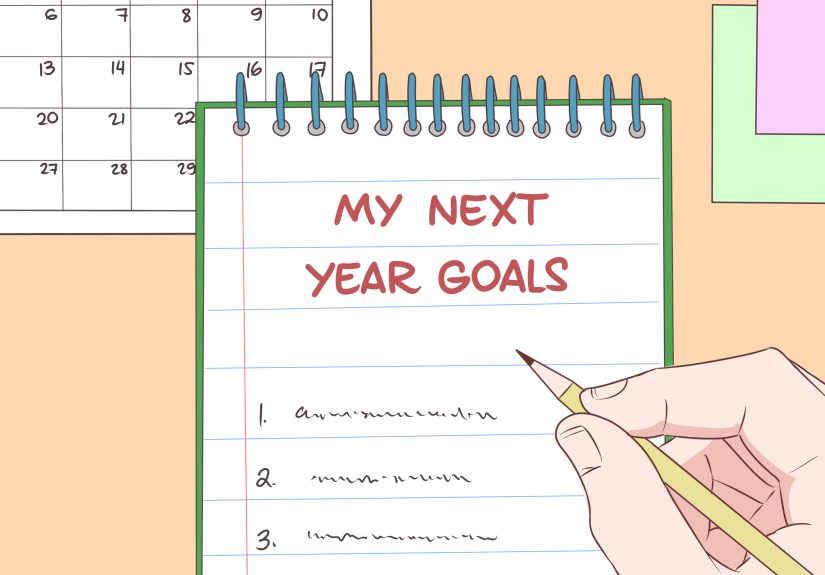
1) Run a 60-minute “Year in Review” (No Vision Board Glue Required)
You don’t need a dramatic life overhaul. You need a quick, honest review that answers three questions:
- What worked? (Habits, friendships, routines, projectsanything that helped.)
- What didn’t? (Patterns that drained you, commitments that weren’t worth it.)
- What’s one change I’ll try next? (Just one. You’re not a smartphone update.)
Example: If you realized you felt better on days you walked after dinner, your “next” might be:
“Three evenings a week, 15 minutes after dinner.” Small. Specific. Doable.
2) Declutter One “Friction Zone” That Steals Your Time
A friction zone is any area that repeatedly wastes your minutes: the entryway that eats keys, the kitchen drawer
that’s 90% twist ties, the phone that’s basically a junk drawer with Wi-Fi.
Pick one zone and do a simple sweep:
- Remove what doesn’t belong there.
- Reduce duplicates (you do not need eight tape measures, Jerry).
- Reset with a “home base” for essentials.
Quick wins that feel amazing in January: clearing holiday packaging, organizing gift wrap supplies, cleaning out the
fridge, or doing a fast digital purge (old screenshots, unused apps, email subscriptions you never opened).
3) Do a Calm Money Check So the Holidays Don’t Follow You Into February
A productive holiday season includes financial sanity. You don’t have to become a budgeting wizard
just do a short money check that prevents “surprise” bills (which are never actually surprising).
Try this simple approach:
- List remaining holiday costs (travel, gifts, hosting, tipping, shipping).
- Set a cap for the rest of the season.
- Choose a trade-off you’re okay with (fewer gifts, simpler menu, fewer last-minute add-ons).
Example: If you’re hosting, swap a complicated “Pinterest feast” for a potluck plus one signature dish.
You’re still the herojust with fewer pans to scrub while everyone else watches a movie.
Mini checklist: If you only have one afternoon, do: (1) a 30-minute review, (2) a 20-minute declutter,
(3) a 10-minute money check. That’s a reset you’ll actually feel.
Way 2: Learn Something Small (And Make It Useful Immediately)
Holidays are sneaky-good for learning because your brain finally gets space. The mistake people make is picking a goal
that’s too big: “Become fluent in Spanish” is how you end up stress-eating peppermint bark while staring at a grammar app.
A better strategy: choose a skill you can practice in micro-sessions and apply right away. Think
“useful and satisfying,” not “impress strangers on the internet.”
1) Pick a Skill With a Clear Payoff
Look for skills that save time, save money, or reduce stress in the first month:
- Work skills: Excel shortcuts, presentation structure, email clarity, basic automation.
- Life skills: meal planning, simple home maintenance, decluttering systems.
- Health routines: stretching, walking habit, better sleep setup, basic cooking skills.
Example: Learn three spreadsheet formulas you’ll actually use: SUM, IF, and VLOOKUP/XLOOKUP. That’s
not glamorousbut it is powerful, like a sensible superhero with a calendar.
2) Build a “Holiday Syllabus” of 10–15 Minute Sessions
Instead of long study blocks, set up tiny sessions you can do even on busy days. A simple structure:
- Day 1–2: watch a short lesson and take notes (yes, notesyour brain loves receipts).
- Day 3–4: practice with a small exercise.
- Day 5: apply it to something real in your life.
This keeps learning from becoming “a thing you meant to do,” which is the holiday version of “I’ll start Monday.”
3) Turn Learning Into a Tiny Output
The fastest way to make learning stick is to produce something small:
- A one-page resume refresh.
- A cleaned-up budget sheet.
- A simple workout plan you’ll actually follow.
- A “household binder” with warranty info and emergency numbers.
Example: If you’re learning cooking, pick one “anchor recipe” you can repeat (like sheet-pan chicken
and veggies) and tweak each week. That’s skill-building and future you saying, “Thanks for feeding me.”
Way 3: Give Back and Connect on Purpose (The Most Underrated Productivity Hack)
If “productive” only means personal achievement, it’s incomplete. The holidays are also about relationshipsand
strong relationships are one of the most practical assets you can build. Giving back (and connecting intentionally)
can be both meaningful and surprisingly energizing.
1) Choose High-Impact Volunteering That Fits Your Real Life
The most sustainable generosity is the kind you can actually do. Pick something that matches your time and energy:
- One-time: serve a community meal, pack food boxes, help at a donation drive.
- Low-lift: organize a small clothing or coat drive with friends or coworkers.
- Skill-based: help someone with a resume, a mock interview, or basic tech support.
Example: Turn a family gathering into a “bring one warm item” moment (socks, gloves, coats) and drop
it at a local organization the next day. It’s simple, and it teaches generosity without turning it into a performance.
2) Make Your Giving Sustainable (So It Doesn’t End With the Decorations)
If you want your holiday productivity to echo into the new year, build a tiny habit:
- Set one monthly reminder to donate a small amount or a bag of pantry staples.
- Choose one organization and learn what they actually need (often money or specific supplies, not random stuff).
- Commit to one recurring volunteer slot if your schedule allows.
Sustainable giving keeps the holiday spirit from becoming a seasonal costume you hang up in January.
3) Make Connection More Meaningful (And Less “We Should Totally Hang Out”)
Productive connection is relationship maintenance that reduces loneliness and misunderstandings later. Try:
- One meaningful question at dinner (“What are you excited about next year?” beats “So… work?”).
- A short walk with a relative or friendmovement makes conversation easier.
- A follow-up plan before people leave (“Let’s do coffee the second week of Januarypick a day now.”).
You’re not scheduling fun like a dentist appointmentyou’re protecting it from disappearing.
A Quick Holiday Productivity Plan You Can Actually Follow
If you like structure but hate feeling trapped by it, here’s a flexible plan:
The “One-Day Reset” (90 minutes total)
- 30 minutes: Year in review (wins, lessons, one next step).
- 30 minutes: Declutter one friction zone.
- 30 minutes: Learn a small skill (or practice one).
The “Three-Day Boost” (30–45 minutes per day)
- Day 1: review + choose one goal for January.
- Day 2: declutter + set up a simple system (hooks, bins, folders).
- Day 3: volunteer or do a kindness task + schedule one follow-up hangout.
The “One-Week Glow-Up” (15–20 minutes daily)
- Rotate: learning session, declutter sweep, relationship check-in, money check, planning.
- Keep it small enough that you can do it even with travel, guests, and leftover pie.
Conclusion: Productive Holidays Are About the Right Kind of “More”
The goal isn’t to squeeze every ounce of output from your time off. The goal is to spend the holidays productively by
doing a few things that make your life smoother, your mind clearer, and your relationships stronger.
Reset a little. Learn a little. Give a little. Rest a little, toobecause rest is not a reward you earn. It’s a resource
you protect.
Experience Notes: What This Looks Like in Real Life (500+ Words)
Below are three experience-style snapshotscomposite scenarios based on common holiday patternsto show how these
strategies can play out without turning the season into a productivity bootcamp.
Experience 1: The “I Blinked and the Break Was Over” Reset
Imagine Taylor, who took a week off and fully intended to “get organized.” Day one: travel. Day two: family stuff.
Day three: snacks, naps, and a movie marathon that somehow required two separate bowls of popcorn. By day four, Taylor
felt the creeping dread of “I wasted my time off,” which is a classic holiday mood.
Instead of panicking, Taylor tried a 90-minute reset. First came a quick year review: wrote down three wins (a work
project that went well, a health habit that improved, and one friendship that got stronger). Then Taylor listed one
lesson: saying yes to too many weekend obligations created low-grade stress all year. The “one next step” was simple:
set a monthly “open weekend” on the calendarno plans allowed.
Next, Taylor tackled one friction zone: the entryway. Keys were always missing. Shoes migrated like penguins. In 30
minutes, Taylor added a hook strip, a small tray, and a donation bag for clutter. Suddenly, mornings felt calmer.
That night, Taylor did a short money checkno spreadsheets, just a list of remaining holiday expenses and a cap.
January didn’t magically become perfect, but it became lighter. That’s real productivity.
Experience 2: The Micro-Learning Win That Actually Stuck
Now picture Sam, who wanted to “learn something new” over the holidaysthen immediately tried to learn everything.
A language app, a coding tutorial, and a home workout plan all at once. By day two, Sam had seven tabs open and zero
confidence. So Sam switched tactics: one skill, micro-sessions, tiny output.
Sam chose a practical skill: making a clean weekly plan and tracking tasks without overwhelm. The “holiday syllabus”
was 15 minutes a day. Day one: learn a simple planning method (daily top three + time blocks). Day two: try it.
Day three: adjust it. Day four: create a template. Day five: apply it to January’s first week.
The tiny output was a one-page weekly plan template that Sam could reuse forever. It wasn’t flashy, but it worked.
And because it was small and repeatable, it didn’t get abandoned the moment real life returned. Sam didn’t “transform”
over the holidaysSam built a tool that made life easier. That’s the kind of skill-building that survives New Year’s.
Experience 3: The “Giving Back Without Burning Out” Holiday
Finally, think of Alex, who loves the idea of giving back but tends to overcommit. One year, Alex signed up for
multiple volunteer events, hosted a party, traveled, and tried to do elaborate homemade gifts. Alex ended the season
exhausted and slightly resentfullike a cheerful snowman melting in real time.
This time, Alex picked one high-impact volunteer activity: a food-packing shift with a friend. It was scheduled early
in the season, not squeezed into the last frantic week. Alex also organized a small coat-and-glove collection at work:
one box, one week, one drop-off. No complicated logistics.
The best part wasn’t just the givingit was the connection. Volunteering created a shared experience that felt more
meaningful than another gift exchange. Alex ended the season proud, not depleted. And because it was sustainable,
Alex set a simple reminder to do one small act of giving each month. The holidays became the start of a habitnot the
only time generosity showed up.
These experiences have a theme: the most productive holiday choices are the ones that are realistic, specific, and
kindto you and to other people. You don’t need a perfect plan. You need a few smart moves that help you start the new
year feeling supported instead of scrambled.