Table of Contents >> Show >> Hide
- Quick Map: 30 Popular Cat Breeds and Where They Started
- Why Origins Matter (Even If Your Cat Thinks It’s Above History)
- 30 Popular Cat Breeds And Their Origins
- 1) Maine Coon (United States)
- 2) Ragdoll (United States)
- 3) American Shorthair (United States)
- 4) American Curl (United States)
- 5) Bombay (United States)
- 6) Bengal (United States)
- 7) Savannah (United States)
- 8) Persian (Iran/Persia → Europe)
- 9) Exotic Shorthair (United States)
- 10) Himalayan (United States / United Kingdom)
- 11) British Shorthair (United Kingdom)
- 12) Scottish Fold (Scotland)
- 13) Chartreux (France)
- 14) Russian Blue (Russia)
- 15) Siberian (Russia)
- 16) Norwegian Forest Cat (Norway)
- 17) Manx (Isle of Man)
- 18) Devon Rex (England)
- 19) Cornish Rex (England)
- 20) Siamese (Thailand)
- 21) Balinese (United States)
- 22) Oriental Shorthair (England)
- 23) Burmese (Myanmar/Burma → United States)
- 24) Tonkinese (United States)
- 25) Birman (France, with Burmese lore)
- 26) Turkish Angora (Turkey)
- 27) Turkish Van (Turkey)
- 28) Egyptian Mau (Egypt → United States, modern line)
- 29) Japanese Bobtail (Japan)
- 30) Sphynx (Canada / United States)
- Conclusion: Picking the Right Breed (and Respecting the Cat’s Ego)
- Practical Experiences: What Living With These Breeds Often Feels Like (About )
Cats have two great talents: (1) looking like tiny, sophisticated roommates, and (2) acting like they pay the mortgage.
But underneath that “I woke up flawless” attitude is a surprisingly global backstory. Many of today’s popular cat breeds
trace their roots to snowy forests, royal courts, working farms, andoccasionallysomeone in the 1960s saying,
“What if we made a cat that looks like a mini panther?”
In this guide to cat breed origins, we’ll tour 30 of the most popular cat breeds,
where they came from, and what their origin story can hint about personality, coat, and care.
Consider it a feline passport stamp collectionminus the airline fees, plus more whiskers.
Quick Map: 30 Popular Cat Breeds and Where They Started
Popularity can vary by registry, region, and year, but the breeds below are widely recognized and commonly searched,
owned, or registered across the U.S. and beyond.
| Breed | Origin (Region) | How It Happened |
|---|---|---|
| Maine Coon | United States (Maine) | Natural breed / working cat |
| Ragdoll | United States (California) | Planned breeding |
| American Shorthair | United States | Working cats refined into a breed |
| American Curl | United States (California) | Spontaneous mutation refined |
| Bombay | United States (Kentucky) | Planned breeding (“mini panther” goal) |
| Bengal | United States | Hybrid development (wild look, domestic life) |
| Savannah | United States | Hybrid development (serval cross) |
| Persian | Iran/Persia → Europe | Longhair refined via selective breeding |
| Exotic Shorthair | United States | Persian “look,” short coat |
| Himalayan | United States / United Kingdom | Persian + Siamese colorpoint |
| British Shorthair | United Kingdom | Ancient landrace refined |
| Scottish Fold | Scotland | Mutation refined (folded ears) |
| Chartreux | France | Natural French blue cats refined |
| Russian Blue | Russia | Natural landrace refined |
| Siberian | Russia | Natural forest cat refined |
| Norwegian Forest Cat | Norway | Natural forest cat refined |
| Manx | Isle of Man | Mutation (tail) in island population |
| Devon Rex | England (Devon) | Mutation refined (curly coat) |
| Cornish Rex | England (Cornwall) | Mutation refined (curly coat) |
| Siamese | Thailand (Siam) | Ancient type refined |
| Balinese | United States | Longhair Siamese variant |
| Oriental Shorthair | England | Siamese-type rebuild via crosses |
| Burmese | Myanmar/Burma → United States | Breed foundation in the U.S. |
| Tonkinese | United States | Siamese + Burmese blend |
| Birman | France (with Burmese lore) | Modern breed shaped in Europe |
| Turkish Angora | Turkey | Ancient natural breed |
| Turkish Van | Turkey (Lake Van region) | Regional natural breed |
| Egyptian Mau | Egypt → United States (modern line) | Imported foundation cats refined |
| Japanese Bobtail | Japan | Ancient type refined |
| Sphynx | Canada / United States | Mutation refined (hairless) |
Why Origins Matter (Even If Your Cat Thinks It’s Above History)
A breed’s origin story often explains its “default settings.” Farm cats tend to be sturdy, curious mousers.
Cold-climate cats usually arrive in winter coats thick enough to qualify as personal insulation.
Courtly and show-bred cats may lean toward calm companionshipbasically a living throw pillow with opinions.
It also helps you read the fine print: some breeds carry known inherited issues, especially when a look (flat faces,
folded ears) is tied to genetics. Understanding cat breed history isn’t just triviait’s a shortcut to smarter
choices about grooming, enrichment, and vet care. (And yes, it’s also excellent dinner-party content, if your friends
are the “tell me more about whiskers” type.)
30 Popular Cat Breeds And Their Origins
1) Maine Coon (United States)
Often called America’s gentle giant, the Maine Coon developed in New England as a hardy working catbuilt for weather,
barns, and the occasional dramatic pose on your kitchen counter. Folklore gets wild (no, raccoon ancestry isn’t a thing),
but the core story is simple: tough local cats + selective breeding into today’s fluffy legend.
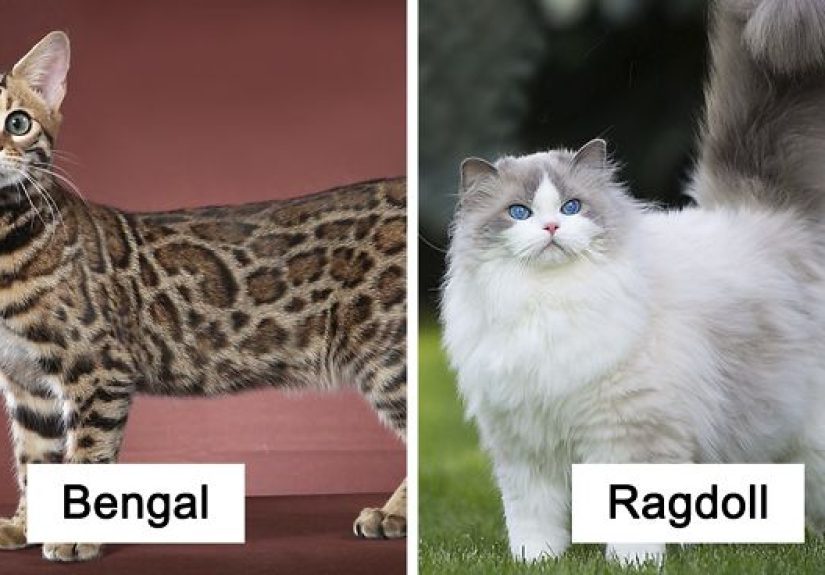
2) Ragdoll (United States)
The Ragdoll’s origin is unusually well documented: it was developed in California in the early 1960s, with foundation cats
selected for calm temperament and striking blue eyes. The name fitsmany go relaxed when heldlike a plush toy that
suddenly learned to judge your life choices.
3) American Shorthair (United States)
Descended from ship-and-farm mousers brought by early settlers, the American Shorthair became a “working classic,” later
refined into a pedigreed breed. Think of it as the all-American cat: adaptable, sturdy, and quietly competentlike a
multitool with whiskers.
4) American Curl (United States)
This breed began with a stray cat in California in 1981 whose ears curled backward due to a natural mutation. Breeders
built a healthy line while keeping that signature “surprised forever” ear shape. Great choice if you like cats that look
permanently intrigued by your snacks.
5) Bombay (United States)
Developed in Kentucky in the 1960s, the Bombay was intentionally bred to resemble a miniature black panthersleek coat,
copper eyes, and a confident swagger. Underneath the dramatic look: a social, people-friendly cat that may follow you
around like a tiny velvet shadow.
6) Bengal (United States)
Bengals were developed in the U.S. from crosses involving the Asian leopard cat and domestic cats, with later generations
selected for a reliable companion temperament. The result is a “wild look, couch-life reality” catathletic, bright, and
often convinced your home is an indoor jungle gym.
7) Savannah (United States)
The Savannah traces back to a documented serval-to-domestic cross in 1986, later developed into a recognized hybrid breed.
They’re known for height, energy, and a curious streak that can border on “helpful project manager.” (Read: nothing is safe,
including cabinet doors.)
8) Persian (Iran/Persia → Europe)
Persians are among the best-known longhairs, historically associated with Persia (Iran) and later shaped heavily through
selective breeding in Europe and the U.S. Their modern look leans ultra-plush and flat-faced, and their vibe is usually
calm, indoor, and luxuriouslike a living, purring bathrobe.
9) Exotic Shorthair (United States)
Created in the mid-20th century by crossing Persians with shorthaired cats (including American Shorthairs), the Exotic
was designed to keep the Persian “doll face” look with a simpler coat. It’s often nicknamed “the lazy person’s Persian,”
which is rudebut also kind of accurate.
10) Himalayan (United States / United Kingdom)
Developed by combining Persian type with Siamese-style point coloration, Himalayans became popular for dramatic colorpoints
paired with a big, plush coat. Some registries treat them as a Persian variety, but fans don’t carebecause the look says,
“I am elegance,” while the shedding says, “You are my lint roller.”
11) British Shorthair (United Kingdom)
Often described as the modern embodiment of ancient British cats (with Roman-era echoes), the British Shorthair became a
show favorite in the late 1800s and was rebuilt after the World Wars. Famous for teddy-bear cheeks and calm confidence,
it’s basically a polite loaf with impeccable posture.
12) Scottish Fold (Scotland)
This breed traces to a folded-eared farm cat discovered in Scotland in 1961. The folded ear trait is geneticand linked
to cartilage and bone issuesso ethical breeding and informed ownership matter a lot here. The look is adorable; the
responsibility is real.
13) Chartreux (France)
The Chartreux is a historic French blue cat, with modern selective breeding beginning in the 1920s. Known for a plush coat,
copper eyes, and a “smiling” expression, it’s a quietly athletic companionlike a mime who can also catch a mouse.
14) Russian Blue (Russia)
Thought to have originated around northern Russia (often linked to the Arkhangelsk region), Russian Blues were refined in
Europe and became beloved for their silvery coats and gentle, observant nature. They’re often affectionate with “their”
people and politely skeptical of everyone else. Fair.
15) Siberian (Russia)
A natural forest cat from Russia, the Siberian is built for brutal winters: powerful body, thick coat, and surprising
agility. In cat terms, it’s a friendly snow beastbig-hearted, playful, and absolutely capable of clearing a bookshelf
in one enthusiastic leap.
16) Norwegian Forest Cat (Norway)
Another cold-climate legend, the Norwegian Forest Cat (the “skogkatt”) is tied to Scandinavian farm life and folklore.
The modern breed was preserved and standardized in the 20th century. Expect a rugged coat, climbing talent, and a “I’ll
cuddle… on my schedule” approach to affection.
17) Manx (Isle of Man)
Originating on the Isle of Man, the Manx is famous for taillessness (or near-taillessness) from a genetic mutation
concentrated in an island population. The myth says Noah’s Ark door did it; genetics says otherwise. Either way, it’s a
rounded, athletic cat with a rabbit-like hop in the back end.
18) Devon Rex (England)
The Devon Rex began with a curly-coated kitten found in Devon, England, in 1959. With huge ears, a pixie face, and a soft
wave coat, it’s often described as mischievous and people-focusedbasically a tiny comedian who moved into your home and
now owns your lap.
19) Cornish Rex (England)
Originating from a natural mutation in Cornwall in the 1950s, Cornish Rex cats have an ultra-short, rippled coat and a
sleek, sprinty build. They’re warm to the touch, fast on their feet, and sometimes so playful you’ll wonder if they run on
espresso.
20) Siamese (Thailand)
The Siamese is one of the most iconic Asian-origin breeds, historically documented in Thailand and introduced to the West
in the 19th century. Known for point coloration, blue eyes, and big opinions, Siamese cats are famously vocallike they’re
narrating your day in real time.
21) Balinese (United States)
Despite the name, the Balinese is essentially a longhaired Siamese variety, developed and refined in the U.S. It keeps the
Siamese personalitysmart, social, expressivewhile adding a silky coat and plumed tail. Think “dramatic poet,” but in a
feather boa.
22) Oriental Shorthair (England)
Created in post–World War II England, Orientals were developed by crossing Siamese-type cats with other breeds, producing
the same elegant body with a rainbow of colors and patterns. They’re curious, interactive, and not shy about participating
in every household meetingespecially the ones involving food.
23) Burmese (Myanmar/Burma → United States)
Modern Burmese lines trace strongly to a foundation cat named Wong Mau, brought to the U.S. in 1930 and bred into a
distinct type. Burmese cats are known for rich, glossy coats and affectionate “Velcro cat” behavior. If you want personal
space, this may not be your breed.
24) Tonkinese (United States)
The Tonkinese blends Siamese and Burmese heritageoften aiming for a middle ground in look, voice, and temperament.
Some historical “mink” cats appear in early foundation stories, but the modern breed was developed in North America.
Expect sociability and a soft, friendly curiosity that rarely turns off.
25) Birman (France, with Burmese lore)
Birmans come with temple legends of Burma, but the modern breed was established and refined in Europe, particularly France.
They’re known for deep blue eyes, colorpoint coats, and distinctive white “gloves” on the pawslike they showed up dressed
for a formal event and never took the outfit off.
26) Turkish Angora (Turkey)
Originating in Turkey (historically linked to the Ankara region), the Turkish Angora is an ancient natural breed with a
silky coat and lively personality. Elegant? Yes. Delicate? Not necessarily. Many are energetic, clever, and very good at
finding the one object you didn’t want knocked off the shelf.
27) Turkish Van (Turkey)
Developed in the Lake Van region of Turkey, the Turkish Van is a distinct natural breedoften associated with an unusual
comfort around water (not a guarantee, but the reputation is real). It’s robust, athletic, and frequently acts like it has
a part-time job as a parkour instructor.
28) Egyptian Mau (Egypt → United States, modern line)
The Egyptian Mau is famous for its naturally spotted coat and ancient aesthetic. The modern U.S. breeding story is tied to
imports in the 1950s, including cats brought over by Russian Princess Nathalie Troubetskoy in 1956. Maus are fast, alert,
and often deeply bondedlike a devoted athlete with a soft side.
29) Japanese Bobtail (Japan)
A centuries-old type in Japan, the Japanese Bobtail is known for its pom-pom tail and frequent appearance in folklore and
art. Imported lines helped establish the breed in the U.S. beginning in the late 1960s. These cats often have a bright,
playful vibelike they’re always auditioning for a feel-good commercial.
30) Sphynx (Canada / United States)
The Sphynx developed from naturally hairless kittens, with early roots in Canada and additional foundation cats in the U.S.
Breed programs incorporated other cats to build health and stability. They’re warm, extroverted, and attention-lovinglike
a tiny space heater that also demands compliments.
Conclusion: Picking the Right Breed (and Respecting the Cat’s Ego)
The best “most popular” breed is the one that matches your real lifeyour schedule, your grooming tolerance, your noise
sensitivity, and your willingness to provide enrichment. A high-energy breed in a low-stimulation home can turn into a
bored chaos artist. A heavy-shedding longhair without regular grooming becomes a walking felt project.
If you’re drawn to purebreds, research health tendencies and choose ethical breeders who prioritize well-being, not just
aesthetics. And if you’re open to it, shelters and rescues are full of incredible catsmany with breed-like traits and
100% authentic “I chose you” energy.
Practical Experiences: What Living With These Breeds Often Feels Like (About )
Reading about popular cat breeds is fun; living with them is where the origin story really shows up in your day-to-day.
Owners of cold-climate cats like the Maine Coon, Siberian, and Norwegian Forest Cat often describe a funny mismatch:
you adopt a “forest beast,” and it becomes a polite indoor roommate who still insists on supervising every room you enter.
The thick coat can be a joy to pet, but it’s also a commitmentseasonal shedding can feel like your cat is quietly knitting
a second cat out of spare fur behind the couch.
People who choose conversation-forward breedshello, Siamese, Oriental Shorthair, and sometimes Tonkinesefrequently report
that the cat doesn’t just meow; it negotiates. You’ll hear “good morning,” “where were you,” and “I see you’re in the bathroom,
which is obviously a group activity now.” The upside is intense companionship. The tradeoff is that quiet time may require
closing a door… and accepting the dramatic monologue on the other side.
With ultra-affectionate breeds like the Ragdoll and Burmese, many households discover they’ve adopted a shadow.
These cats often want proximity more than constant playfollowing from room to room, flopping nearby, and offering a slow blink
that feels suspiciously like emotional support. Great for people who want a constant buddy. Less great if you were hoping your
cat would be “independent” in the way a teenager is independent (visible only at meal times).
Breed origins also show up in play style. Bengals and Savannahsboth developed with a “wild look” goalare frequently described
as smart, athletic, and busy. Owners often have the best results when they treat enrichment like a daily routine: climbing
space, puzzle feeders, wand-toy sessions, and rotating toys so everything feels “new.” Without that, these cats may invent their
own entertainment. Spoiler: their hobbies tend to include “gravity experiments” with your belongings.
Grooming is where some origin stories become very real. Persians and Himalayans can be sweet, calm companions,
but their coats and facial structure can demand extra caredaily brushing, managing mats, and sometimes cleaning tear staining.
Meanwhile, Sphynx households often find the opposite surprise: “No fur” doesn’t mean “no maintenance.” Many owners learn to
handle skin care and occasional baths to manage oils, plus warmth considerations in cooler homes.
Finally, experienced cat people often say the same thing across breeds: the individual matters. Even within a breed, you’ll find
bold extroverts, shy observers, lap-cats, and “I love you from three feet away” types. Use breed history as a helpful compass
then let the cat’s actual personality be the final vote. The cat will insist on that anyway.