Table of Contents >> Show >> Hide
- Start Here: The 15-Minute Plan That Saves You Hours
- 33 Clever Small Walk-In Closet Ideas
- 1) Use a “three-wall rule” layout
- 2) Put drawers and shelves on the back wall
- 3) Add double hanging rods for short garments
- 4) Reserve one “long-hang” lane
- 5) Go modular with a closet system (even in a tiny space)
- 6) Try a wardrobe-wall approach with IKEA-style frames
- 7) Use the highest shelf for off-season bins (not daily stuff)
- 8) Add a slim rolling cart as a “closet island” alternative
- 9) Install a valet hook/rod for outfit planning
- 10) Use slim, matching hangers to gain instant space
- 11) Sort hanging clothes by type first, then color
- 12) Use shelf dividers to stop leaning stacks
- 13) Add under-shelf baskets for “bonus drawers”
- 14) Give shoes a dedicated zone (and keep it visible)
- 15) Store special-occasion shoes up high, daily shoes down low
- 16) Use clear bins for handbags and small accessories
- 17) Add hooks for bags, hats, and frequently grabbed items
- 18) Create a jewelry “landing strip” with trays
- 19) Use a belt/tie rack (or a simple row of S-hooks)
- 20) Put a mirror on the door or inside wall
- 21) Swap a swing door for a pocket or sliding door (if possible)
- 22) Paint it light, or go high-gloss to bounce light
- 23) Upgrade lighting to LED (cooler, brighter, safer)
- 24) Add motion-sensor lights for instant visibility
- 25) Layer your lighting: overhead + task lighting
- 26) Add a small bench or perch (even a wall-mounted flip seat)
- 27) Put a hamper where it can’t sabotage your floor
- 28) Use drawer dividers to keep small items from drifting
- 29) Label bins and shelves (yes, even if you live alone)
- 30) Try seasonal rotation to protect prime real estate
- 31) Use a “reverse hanger” check to declutter honestly
- 32) Build a “getting-ready station” with a tiny vanity shelf
- 33) Add one design moment (rug, wallpaper, or art) to make it feel intentional
- of Real-World Closet “Experience” (What People Actually Learn)
- Conclusion: Small Closet, Big Win
A small walk-in closet is basically a tiny backstage dressing roomexcept the star (you) is also the stagehand (also you),
and the props (your shoes) are definitely plotting against you. The good news? You don’t need a mansion-sized closet to get
that “everything has a home” feeling. You need strategy: better zones, smarter storage, and lighting that doesn’t make your
black sweater look navy.
Below are 33 clever small walk-in closet ideas that combine layout tricks, organization moves, and a few design upgrades.
They’re practical enough for real life, pretty enough to feel like an upgrade, and flexible enough to work whether you’re
building a custom closet system or just trying to stop the floor from becoming a laundry museum.
Start Here: The 15-Minute Plan That Saves You Hours
Measure like you mean it
Grab a tape measure and note the width of each wall, ceiling height, door swing, and anything that steals space (outlets,
vents, baseboards). Small walk-ins are won or lost by inchesespecially if you want drawers to open cleanly or a hamper to
slide into place.
Decide your “closet personality”
Are you a “hang everything” person, a “fold it neatly” person, or a “I promise I’ll fold it” person? The best layout matches
how you actually get dressed. If 70% of your wardrobe hangs, build around hanging zones. If you live in knits, drawers and
shelves earn the prime real estate.
Make zones (so the closet works on autopilot)
Think in categories: daily clothes at eye level, occasional pieces higher, shoes where you can see them, accessories where
you can grab them without starting a domino effect. Zoning is how a small walk-in feels calm even when your schedule isn’t.
33 Clever Small Walk-In Closet Ideas
1) Use a “three-wall rule” layout
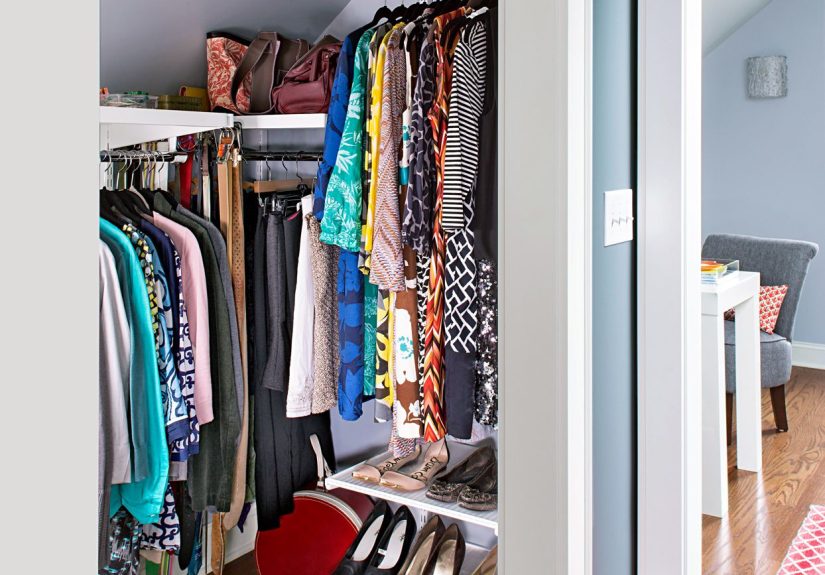
If your walk-in is small, treat it like a U-shape when possible: storage on three sides, a clear path in the middle.
Even shallow shelving on one wall can dramatically reduce clutter elsewhere.
2) Put drawers and shelves on the back wall
The back wall is prime territory for tall shelves and drawers because it’s visually centered and easy to access.
Use it for folded stacks, denim, bags, and “in-between season” items you still want nearby.
3) Add double hanging rods for short garments
Shirts, blouses, skirts, and many kids’ items don’t need full-height hanging space. A double-rod setup stacks hanging space
vertically so you get more capacity without widening the closet.
4) Reserve one “long-hang” lane
Dresses, coats, and jumpsuits need a dedicated spot. Give them one section so they don’t bully everything else off the rod.
If you rarely wear long items, keep this zone narrow and prioritize daily storage elsewhere.
5) Go modular with a closet system (even in a tiny space)
Modular systems (think adjustable standards, shelves, and drawers) let you fine-tune heights as your wardrobe changes.
This is especially helpful if your closet has awkward dimensions or you want to evolve from “storage” to “boutique.”
6) Try a wardrobe-wall approach with IKEA-style frames
If your walk-in is more “nook” than “room,” floor-to-ceiling wardrobe frames can create a clean, built-in feel.
Use a mix of rails, pull-out trays, and drawers so every category has a dedicated home.
7) Use the highest shelf for off-season bins (not daily stuff)
The top shelf is for what you don’t need every day: beach towels, winter accessories, formalwear, or memorabilia.
Put it in labeled bins so the shelf doesn’t become a mystery pile with a sequel.
8) Add a slim rolling cart as a “closet island” alternative
Full islands are usually too bulky for small walk-ins, but a narrow rolling cart can hold accessories, fragrance, lint rollers,
and the little chaos-makers. Bonus: it can move when you need floor space.
9) Install a valet hook/rod for outfit planning
A foldaway valet rod or hook is tiny but life-changing. Hang tomorrow’s outfit, steam a shirt, or stage pieces for travel.
This is the “I have my life together” feature you’ll actually use.
10) Use slim, matching hangers to gain instant space
Bulky mismatched hangers waste inches and invite clothing avalanches. Slim velvet or rubberized hangers take less room,
help items stay put, and visually calm the whole closet in about five minutes.
11) Sort hanging clothes by type first, then color
Color-coding looks nice, but category comes first for speed: shirts with shirts, pants with pants, jackets with jackets.
Then color within each group so you can find what you need without scanning the entire rainbow.
12) Use shelf dividers to stop leaning stacks
Sweaters and jeans like to slouch into messy towers. Shelf dividers keep stacks upright and make it easier to pull one item
without disturbing the entire folded ecosystem.
13) Add under-shelf baskets for “bonus drawers”
Under-shelf baskets turn dead space into storage for tees, workout gear, scarves, or clutches. They’re renter-friendly,
inexpensive, and shockingly effective in small closets.
14) Give shoes a dedicated zone (and keep it visible)
Shoes scattered on the floor make any closet feel smaller. Use angled shelves, cubbies, or clear boxeswhatever helps you see
what you own so you don’t buy the same white sneakers again “by accident.”
15) Store special-occasion shoes up high, daily shoes down low
Keep frequently worn shoes at the easiest reach. Move heels, snow boots, or formal pairs to higher shelves or labeled boxes.
This keeps the “daily lane” clear and speeds up mornings.
16) Use clear bins for handbags and small accessories
Clear containers reduce visual clutter while still letting you identify what’s inside. They’re great for purses, belts,
hair tools, and “where did that go?” items.
17) Add hooks for bags, hats, and frequently grabbed items
Hooks are the Swiss Army knife of closet organization. Put them at eye level for your everyday bag and hat, and higher up
for occasional items. If you can hang it, you can save shelf space.
18) Create a jewelry “landing strip” with trays
Small trays inside a drawer or on a shelf prevent tangled necklaces and missing earrings. If you don’t have drawers,
use stackable organizers so everything stays separated and easy to grab.
19) Use a belt/tie rack (or a simple row of S-hooks)
Belts and ties don’t need a whole shelf. A pull-out rack is great, but even S-hooks on a rod can keep them visible and tidy.
The goal: no more belt pile that looks like a fashion-themed spaghetti bowl.
20) Put a mirror on the door or inside wall
Mirrors make a small walk-in feel larger and brighter. A full-length mirror also turns the closet into a functional dressing
zone without needing extra room elsewhere.
21) Swap a swing door for a pocket or sliding door (if possible)
Door swing steals precious floor space. If a remodel is on the table, a pocket or sliding door can make the closet easier to
enter, navigate, and organizeespecially in narrow layouts.
22) Paint it light, or go high-gloss to bounce light
Light colors help a small space feel open. In very tight closets, a slightly glossier finish on walls or cabinetry can reflect
light and reduce the cave effectwithout adding a single inch.
23) Upgrade lighting to LED (cooler, brighter, safer)
Closets do best with lighting that runs cool and bright. LED strips, puck lights, and modern flush mounts make it easier to
see what you own and avoid the “why does everything look gray in here?” problem.
24) Add motion-sensor lights for instant visibility
Motion-sensor lighting is practical in small walk-ins where switches are awkward. It also saves energy because the light
turns off automaticallyideal for anyone who has ever left the closet light on for, say, three days.
25) Layer your lighting: overhead + task lighting
Overhead lighting sets the baseline. Task lighting (like strips under shelves or inside cabinets) eliminates shadows and
makes it easier to pick outfits and find small items. Layering is the difference between “storage” and “showroom.”
26) Add a small bench or perch (even a wall-mounted flip seat)
A bench helps with shoes and gives the closet a dressing-room vibe. If floor space is tight, consider a narrow perch or a
wall-mounted fold-down option so you get function without crowding the walkway.
27) Put a hamper where it can’t sabotage your floor
A slim hamper tucked under hanging clothes, inside a cabinet, or in a corner keeps laundry contained. The trick is choosing
a shape that fits your layout so dirty clothes don’t migrate into the walking path.
28) Use drawer dividers to keep small items from drifting
Socks, underwear, gym accessories, and tees love to blend into one confusing category: “stuff.” Dividers keep items separated,
so you can find what you need without re-folding half the drawer.
29) Label bins and shelves (yes, even if you live alone)
Labels reduce decision fatigue. They also make it easier to maintain the system because everything has a clearly defined
“home base.” Your future self will thank you.
30) Try seasonal rotation to protect prime real estate
If you’re not wearing it this season, it doesn’t need the best shelf. Rotate off-season clothing into labeled bins, garment
bags, or vacuum storage. It’s a simple way to make a small closet feel bigger overnight.
31) Use a “reverse hanger” check to declutter honestly
Flip all hangers backward, then turn them forward only when you wear something. After a set period (a month, a season, or
six months), the untouched items reveal themselves. It’s datano drama.
32) Build a “getting-ready station” with a tiny vanity shelf
Even a narrow floating shelf can become a mini vanity for fragrance, jewelry, or skincare. If you have space for a compact
stool, your closet can double as a quiet dressing nook.
33) Add one design moment (rug, wallpaper, or art) to make it feel intentional
A small walk-in can still feel special. A washable runner, peel-and-stick wallpaper, or a framed print turns “storage room”
into “my space.” The best part: when it looks good, you’re more likely to keep it organized.
of Real-World Closet “Experience” (What People Actually Learn)
The most common experience with a small walk-in closet is realizing that the closet isn’t the problemyour system is.
People often start by blaming the square footage (“It’s tiny!”), but the real frustration usually comes from two things:
poor visibility and unclear categories. When you can’t see what you own, you overbuy duplicates, and the closet fills up
faster than your patience. When categories aren’t defined, everything becomes a floating “miscellaneous” pile, and the floor
turns into a shortcut storage solution.
Another shared experience: the first organizing attempt often fails because it’s too idealistic. Many people set up a closet
that looks great for photos but doesn’t match their daily routine. For example, storing gym gear in a pretty bin on the top
shelf seems fineuntil you’re running late and you can’t reach it without a step stool. Or hanging all shirts by color looks
satisfyinguntil you realize you dress by activity (work, errands, workouts) and not by rainbow order. The closets that stay
tidy are the ones designed around “how I get dressed,” not “how closets are supposed to look.”
Lighting is another big “aha” moment. People are surprised by how much better a closet functions when the lighting improves.
In small spaces, shadows hide items, and hidden items become forgotten items. That’s why LED strips under shelves or along
rods can feel like a transformation even if you don’t change a single shelf. You stop squinting, you stop rummaging, and
suddenly your closet feels more spacious because your brain isn’t working overtime.
There’s also a predictable turning point with storage: once someone switches to slim hangers, adds drawer dividers, and gives
shoes a dedicated zone, the closet begins to “reset” itself naturally. Instead of needing a big cleanout every month, small
maintenance habits keep it functional. People who succeed tend to adopt one or two simple rules, like: “one in, one out,”
or “nothing lives on the floor,” or “seasonal items rotate.” These rules work because they reduce choices. When your closet
has fewer decision points, it stays calmer.
Finally, many discover that the most motivating upgrade is a tiny bit of comfort: a mirror, a small rug, a hook for tomorrow’s
outfit, or a perch to put on shoes. These aren’t just “decor.” They make the closet feel like a place you want to useso you
treat it with more care. The experience is consistent: when a small walk-in closet becomes easier and more pleasant, it stops
being a storage struggle and starts acting like a personal tool that saves time every single day.
Conclusion: Small Closet, Big Win
A small walk-in closet doesn’t need miraclesit needs clear zones, vertical thinking, and a few upgrades that improve daily
flow. Start with layout and lighting, then add storage that matches how you live. Once you can see what you own and everything
has a home, your closet stops feeling cramped and starts feeling… oddly relaxing. (Yes, a closet can do that. Who knew?)