Table of Contents >> Show >> Hide
Fall is the one season that practically begs you to decorate. The air gets crisp, the light turns golden, and suddenly your front door looks like it wants its own magazine cover. (Or at least a flattering selfie.) The fastest way to level up your entrywaywithout repainting the house or adopting a power washer lifestyleis a pair of fall planters.
The trick is to build porch pots that look intentional, last through chilly nights, and don’t collapse into a sad salad the minute the weather changes. Below you’ll find 36 fall planter ideasranging from classic harvest vibes to modern, moody arrangementsplus practical tips to keep everything looking fresh from early autumn through the first frosts.
How to Build a Fall Planter That Looks Designer (Not “Garden Center Grab Bag”)
1) Pick a color story first (then shop)
When fall planters look “off,” it’s usually not the plantsit’s the color chaos. Decide on one main palette, then add one accent color. Easy wins:
burnt orange + cream + deep green, plum + chartreuse, copper + burgundy, or white + sage + black.
2) Use the “height + body + drape” formula
You’ll hear it called “thriller, filler, spiller,” but the idea is simple: something tall for drama, something full for shape, and something trailing to soften the edge. It works because it mimics how the eye reads a landscape: background, midground, foreground.
3) Design for your light and your forecast
Full sun pots can handle mums, asters, ornamental peppers, and grasses. Shadier stoops do better with heuchera (coral bells), ferns, ivy, and cyclamen.
For long-lasting fall container gardens, prioritize cool-weather plants that tolerate light froststhen use pumpkins, branches, and seed pods for extra “season” without extra fragility.
36 Fall Planter Ideas for Instant Curb Appeal
Classic Harvest Color Combos
-
The “Welcome Home” Mum Mix:
One big bronze or rust mum in the center, surrounded by pansies in cream and purple, finished with trailing ivy. -
Ornamental Kale Crown:
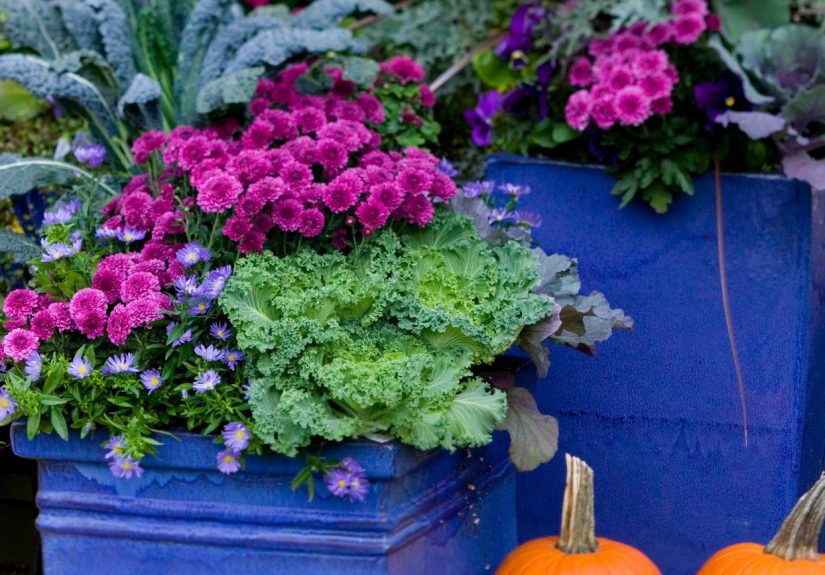
Put a bold ornamental kale or cabbage in the middle, ring it with violas, and tuck mini gourds along the soil line for texture. -
Pumpkin + Planter Pairing:
Keep the planter simple (mums + creeping Jenny), then stack pumpkins beside it. The pumpkins do the heavy decorating so your plants don’t have to. -
Golden Hour Planter:
Yellow mums, orange marigolds, and a tuft of ornamental grass for movement. It glows at sunsetlike your porch is wearing a filter. -
Corn Silk Neutrals:
White mums, pale pumpkins, and a soft grass (like a fountain grass type) for a creamy, modern harvest look. -
Aster Party Pot:
Purple asters as the star, a chartreuse foliage plant as contrast, and a trailing plant to spill over the edge. Pollinators love asters when many other flowers fade. -
Harvest Reds & Golds:
Mix deep red mums with golden rudbeckia (black-eyed Susan) and add dark foliage (heuchera or similar) to ground the brightness. -
Apple Orchard Vibes:
Red pansies, ornamental cabbage, and twiggy branches (birch or dogwood) for heightlike a little orchard scene in a pot. -
Mini Pumpkin “Nest”:
Use low growers (violas + creeping Jenny) and nest a few mini pumpkins right on top of the soil for a playful, kid-friendly look. -
Rust + Cream “Old Money” Pot:
Cream mums, copper-toned sedum, and a grass with tan seed heads. Understated, elegant, and very “I totally meant to do that.”
Moody, Modern, and a Little Dramatic
-
Black + Burgundy Statement:
Pair a burgundy mum with dark foliage (deep purple heuchera) and add one tall, dark grass. Finish with a matte-black container if you have it. -
Plum + Chartreuse Pop:
Purple pansies, chartreuse trailing foliage, and ornamental kale with purple centers. High contrast, high impact. -
Monochrome White Planter:
White mums, silvery foliage, and pale ornamental cabbage. Add white pumpkins nearby for a clean, editorial feel. -
“Spooky But Make It Chic”:
Orange mums + black ornamental pepper (or deep purple foliage), plus dark branches. Halloween energy without plastic spiders. -
Textural Grass-Forward Pot:
Make ornamental grasses the main event (tall in the center, shorter around it), then add a few pansies for color punctuation. -
Berry & Evergreen Mix:
Use a small evergreen (dwarf conifer look) as the focal point, add wintergreen-style color with berries if available, and soften with trailing greenery. -
Modern Minimal “Three Plants Only” Rule:
Choose one tall grass, one flowering plant (mums or asters), and one spiller. Limit colors to two for instant designer calm. -
Brassica Sculpture:
Go all-in on ornamental kale/cabbage (multiple plants in one pot) for a sculptural, ruffled look that often intensifies as temperatures drop.
Cottage, Farmhouse, and Cozy Porch Energy
-
Galvanized Tub Garden:
One big mum, ornamental cabbage, and a tall grass in a metal tub. Rustic, relaxed, and forgiving if you’re not into “perfect.” -
Hay Bale Helper Planter:
Set your pots on either side of a door, then add a small hay bale and pumpkins between them. The planters frame; the props tell the story. -
Woodland Basket Pot:
Use a basket-style container liner and plant ferns (shade), heuchera, and ivy. Add pinecones or seed pods for woodland texture. -
Heirloom Pumpkin Palette:
Plants in muted tonescream pansies, dusty purple foliage, and soft grassespaired with blue/green heirloom pumpkins nearby. -
Sunflower “Late Summer to Fall” Bridge:
Keep one leftover summer plant if it’s still thriving, then swap in fall blooms and add a sunflower accent (real or decorative) for a seamless transition. -
Country Porch Classic:
Orange mums, ornamental corn tucked at the back, and trailing greenery. It’s the fall equivalent of comfort food.
Shade-Friendly & Small-Space Solutions
-
Porch Shade Power Pot:
Coral bells (for colorful leaves), evergreen-ish ferns, and ivy. Add a few mini white pumpkins on the steps for seasonal punch. -
Cyclamen + Greenery (Cool, Shady Spots):
Cyclamen adds bright blooms in cool weather; surround it with deep green foliage and a trailing plant for softness. -
Window Box “Jewel Tones”:
Pansies in purple and gold, ornamental kale as the centerpiece, and trailing greenery spilling over the front edge. -
Front-Door Duo, Small But Mighty:
Two medium pots look more intentional than one giant pot. Mirror the same plant mix on both sides for clean symmetry. -
Stooped-Entry “Vertical” Planter:
Add height with branches or a tall grass so your planter reads from the streeteven if your front step is tiny. -
Low-Maintenance Foliage-Only Pot:
Skip flowers entirely. Use ornamental kale/cabbage + heuchera + trailing ivy. It’s mostly texture, and it holds up well in cool weather.
Late-Fall to Early-Winter Planters (The Ones That Don’t Quit Early)
-
“Frost Makes It Better” Brassica Pot:
Ornamental kale/cabbage can look even richer after cool nights. Pair with pansies and a dark grass for contrast. -
Evergreen Anchor Planter:
Plant a small evergreen as your centerpiece now, then swap the surrounding plants as fall progresses. It’s a reusable base for seasons. -
Seed Head & Branch Arrangement:
Use grasses with showy seed heads and add dogwood/birch branches for height. Great when blooms are fading but you still want structure. -
Rosemary-as-a-Thriller Pot:
In milder climates, rosemary can be a fragrant centerpiece. Surround with pansies and trailing thyme-style greenery for a porch that smells amazing. -
Winter-Transition “Green + Gold”:
Start with fall golds (mums or pansies), then as temps drop, remove tender plants and tuck evergreen boughs into the soil line. -
The “I’m Not Done Decorating Yet” Planter:
Keep a sturdy base: grasses + evergreens + foliage. Add removable accents (pumpkins now, lanterns later) so the planter evolves without replanting.
Care Tips to Keep Your Fall Porch Planters Looking Fresh
Water smarter, not harder
Cooler weather reduces evaporation, but containers still dry outespecially in wind and sun. Water deeply so moisture reaches the whole root zone, then let the top inch dry slightly before watering again. (A pot that “looks fine” can still be dry insidesneaky, right?)
Skip the gravel trickuse good potting mix instead
For containers, use a quality potting mix (not garden soil). Avoid adding gravel at the bottom “for drainage”it doesn’t improve drainage the way many people think. A uniform potting mix and a drainage hole do the job better.
Frost strategy: prepare, don’t panic
If a light freeze is coming, water earlier in the day so plants aren’t stressed. For a surprise cold night, a simple cover (like a sheet) can help protect blooms and extend the season.
Fertilizer is usually unnecessary in fall
Many cool-season porch pots aren’t growing aggressively enough to need feeding, and slow-release fertilizers can be less effective in colder temperatures. If anything looks hungry, a light water-soluble feeding is more useful than a heavy, slow-release approach.
Bonus: make next year easier
If you used perennials (like coral bells, sedum, or some grasses), you may be able to transplant them into the garden later. Treat seasonal annuals like mums and pansies as “temporary porch glam” unless you plan to protect them long-term.
Conclusion
A front door planter is basically an instant greeting: it sets the mood before anyone knocks. Whether you go classic with mums and pumpkins or modern with moody foliage and grasses, the best fall planter ideas follow the same formulastrong structure, cohesive color, and plants that actually like cool weather. Build one great pot (or two for symmetry), add a few seasonal accents, and your doorstep will look like autumn moved in and started paying rent.
Real-World Experiences: What People Learn After Building Fall Porch Pots (About )
One of the most common “aha” moments with fall planters is realizing that bigger containers are usually easiernot harder. In real homes, a small pot dries out faster, tips over more easily, and looks skimpy from the street. A larger planter holds moisture longer, buffers temperature swings better, and lets you create that layered look without cramming plants together like they’re sharing a studio apartment.
People also tend to underestimate wind. A front stoop might feel calm when you’re standing there, but wind tunnels happen around corners, railings, and open walkways. That’s why grasses can be both a blessing and a headache: they add gorgeous movement, but they also act like little flags announcing, “Hello, I’m in a windy spot.” In breezy entries, sturdier grasses or branch-based height (like dogwood twigs) often hold their shape better than anything too feathery.
Another real-life lesson: fall color isn’t only flowers. Many porch pots look best when foliage does most of the workornamental kale/cabbage for ruffles, coral bells for deep burgundy or caramel leaves, and trailing ivy for softness. Blooms can be the “sparkle,” but foliage is the outfit. When a cold snap browns a few flowers, the planter still looks styled because the leaves and structure remain.
There’s also a very practical discovery people make after the first week: you need a watering routine that matches your actual life. Fall containers can lull you into forgetting water because it’s not hot anymore. Then you notice pansies looking cranky, or mums fading early, and you realize the pot dried out in two windy afternoons. Many gardeners end up doing a quick check every couple of dayshand on the soil, water only when neededrather than watering on a rigid schedule.
A surprisingly fun “experience upgrade” is treating pumpkins and gourds like accessories instead of permanent fixtures. Folks often start with a clean planter design, then rotate the extras: mini pumpkins on the soil line for early fall, bigger pumpkins stacked beside the pot for peak season, and later a lantern or seasonal sign when Halloween is done. The planter stays planted; the look keeps evolving. That approach also helps when squirrels or curious pets decide a gourd is a toybecause in many households, they absolutely will.
Finally, many people find that symmetry is the fastest shortcut to “professional.” Even if the plant mix is simple, two matching planters flanking the door instantly feels intentional. And if the budget is tight, matching doesn’t mean identical plantsit can mean repeating the same colors, textures, or shapes on both sides. The result is an entryway that looks thoughtfully designed, even if it came together in one trip to the garden center and a second trip because someone forgot potting mix.