Table of Contents >> Show >> Hide
- 1. Treat Your Hardware and Faucet Like Jewelry
- 2. Layer Your Lighting Like a Designer, Not a Waiting Room
- 3. Use Paint, Trim, and Color Cohesion to Fake a Custom Kitchen
- 4. Give One Surface the Star Treatment
- 5. Edit Ruthlessly and Style Like You Mean It
- Designer Mistakes to Avoid on a Budget
- What an Expensive-Looking Kitchen Actually Feels Like
- Extra Experience-Based Insights: What Homeowners Usually Notice First
- Conclusion
If your kitchen currently gives off “microwave popcorn and unpaid bills” energy, take heart: you do not need a six-figure renovation to make it feel more polished. According to designers, the secret to an expensive-looking kitchen is rarely about spending wildly. It is about making a few smart, high-impact choices that create cohesion, warmth, and a sense of intention.
That is great news for anyone working with builder-grade cabinets, older finishes, or a budget that says “champagne taste, sparkling-water wallet.” The best affordable kitchen ideas are less about ripping everything out and more about choosing the upgrades that visually punch above their price. Think better cabinet hardware, layered kitchen lighting, a cleaner color palette, and styling that looks curated instead of chaotic.
Below are five budget kitchen upgrades designers love because they make a kitchen look expensive without requiring a full remodel. These ideas are practical, realistic, and friendly to both weekend DIYers and people whose toolbox contains one lonely screwdriver and a lot of optimism.
1. Treat Your Hardware and Faucet Like Jewelry
If cabinets are the suit, then hardware is the cuff links. It may sound like a tiny detail, but cabinet pulls, knobs, and the kitchen faucet are often the first things your eye notices. Cheap, dated hardware can make the whole room feel tired. Swap those pieces for more intentional finishes and shapes, and suddenly the space looks more tailored.
Designers consistently point to upgraded cabinet hardware as one of the fastest ways to make a kitchen look expensive. Why? Because it adds shine, contrast, texture, and personality without changing the bones of the room. A plain shaker cabinet can look dramatically more refined with solid-feeling brass pulls, matte black handles, or brushed nickel knobs that actually look like someone chose them on purpose instead of accepting whatever the builder tossed in.
What to look for
Choose hardware that feels weighty and visually clean. Long bar pulls can give basic cabinets a more modern look, while unlacquered brass or warm bronze adds richness. If your style leans traditional, bin pulls or bridge-style faucet shapes can bring in that classic “this kitchen definitely has a pastry recipe binder somewhere” charm.
Budget-friendly strategy
You do not have to replace every metal detail at once. Start with the cabinet hardware you touch most often, then match or complement it with a new faucet. That pair alone can create a high-end, cohesive effect. If you are shopping on a budget, skip flimsy finishes that chip quickly and instead look for simple, timeless shapes in one consistent finish.
The trick is coordination. When the faucet, cabinet pulls, and even a few accessories share a common finish family, the kitchen looks styled instead of pieced together over several mildly regrettable shopping trips.
2. Layer Your Lighting Like a Designer, Not a Waiting Room
Nothing says “budget kitchen” quite like a single overhead light trying to do the emotional and practical labor of an entire lighting plan. One bright fixture in the center of the ceiling can make a kitchen feel flat, clinical, and about as glamorous as a dentist’s office. Designers, on the other hand, swear by layered lighting.
If you want an expensive-looking kitchen, focus on lighting that creates dimension. Statement pendants over an island or sink add visual drama. Under-cabinet lighting adds glow and improves function. Even warm bulbs can make a kitchen feel more inviting and upscale.
Why lighting matters so much
Luxury kitchens do not just look good in daylight. They feel good at 7:15 p.m. when the dishwasher is humming, the counters are wiped down, and the room has that warm, flattering glow that makes takeout look like a lifestyle choice rather than a coping mechanism. Good lighting highlights surfaces, softens hard edges, and gives the room atmosphere.
Affordable ways to get the look
Battery-powered or plug-in under-cabinet lights are a favorite low-cost upgrade because they mimic the effect of hardwired lighting without the electrical bill or the wall surgery. Swap a generic flush mount for an oversized pendant or semi-flush fixture with character. If you already have pendants, replacing dated shades can also work wonders.
When possible, choose warmer bulbs rather than overly cool daylight tones. Warm light tends to make finishes, woods, and paint colors look richer. It is one of the simplest designer kitchen tips out there, and it changes the mood of the entire room almost instantly.
3. Use Paint, Trim, and Color Cohesion to Fake a Custom Kitchen
Paint remains the reigning champion of affordable transformation. A fresh coat can rescue worn cabinets, brighten dark corners, and make old finishes look intentional again. And when designers talk about making a kitchen look expensive on a budget, they often talk about color cohesion just as much as color itself.
In plain English: the room should not feel like it was assembled by three different people during a mild emergency.
Cabinet paint is powerful
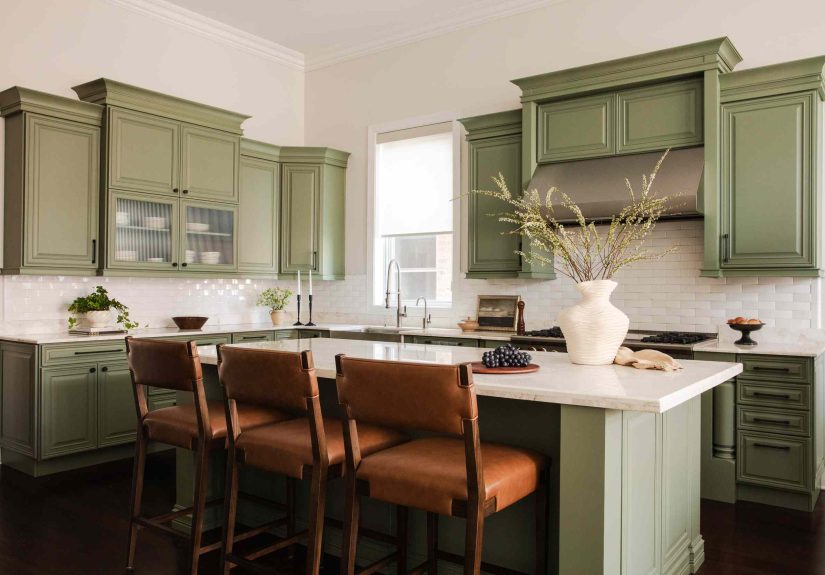
Painting cabinets is far less expensive than replacing them, but the visual payoff can be major. Soft whites, warm greiges, muted greens, navy, charcoal, and mushroom tones all have enduring appeal because they read classic rather than trendy. Lighter shades can make a small kitchen feel bigger, while darker shades can look wonderfully sophisticated when balanced with the right lighting and hardware.
Add trim for a custom feel
If your cabinets feel a little plain, adding trim or molding can help them look more built-in. Crown molding at the top of cabinetry, simple applied molding on flat cabinet fronts, or a finished panel on the side of an island can all create that tailored, higher-end appearance people usually associate with custom millwork.
Keep the palette disciplined
One of the easiest ways to make a kitchen look expensive is to reduce visual noise. Limit your palette to a few tones that work together: for example, creamy white, warm wood, and brass; or soft taupe, matte black, and stone. When the colors, metals, and materials feel related, even modest finishes look more expensive.
This is especially helpful in older kitchens. You may not be able to replace every element, but you can use paint and finish choices to make the room feel more unified. And unified almost always reads as higher-end.
4. Give One Surface the Star Treatment
Not every surface in your kitchen needs to be fancy. In fact, designers often recommend choosing one area to elevate and letting it steal the show. That could be the backsplash, the island countertop, a range hood surround, or even a small open shelf vignette. The point is to create one memorable focal point rather than spreading your budget so thin that nothing really lands.
A backsplash is small but mighty
A backsplash is often a relatively small area, which means you can sometimes afford a nicer tile than you would for a full-scale renovation. That is the beauty of the “small but special” approach. Handmade-look tile, zellige-inspired options, vertical stack layouts, or even a classic subway tile installed in an unexpected pattern can instantly make the kitchen feel more custom.
If your square footage is limited, splurging modestly on backsplash tile may have a bigger impact than spending the same amount on random decor that will eventually collect dust and guilt.
Try a partial upgrade
You do not need brand-new stone counters everywhere to create a luxe impression. Designers often recommend upgrading just the island top, choosing butcher block for warmth, or refreshing a small stretch of wall tile. Even a single improved surface can create contrast and make the rest of the room feel more deliberate.
Another smart move is taking the backsplash a bit higher than expected, especially behind a range or between floating shelves. That little bit of vertical drama makes the kitchen feel more architectural, and architectural details are the very stuff of expensive-looking kitchens.
5. Edit Ruthlessly and Style Like You Mean It
Here is the uncomfortable truth no one wants to hear while standing next to a counter crowded with air fryers, vitamin bottles, mail, and a decorative rooster: clutter is one of the fastest ways to make a kitchen look cheap. You can buy beautiful hardware and fabulous pendants, but if the counters look like a yard sale in progress, the luxe effect disappears.
Designers repeatedly emphasize that an elevated kitchen is an edited kitchen. That does not mean sterile or joyless. It means the visible items look useful, attractive, and intentional.
What to keep out
Store duplicate gadgets, random packaging, paper clutter, and anything that does not need to live on the countertop. Keep only the daily essentials out, and make those essentials look good together. A wooden cutting board, a ceramic utensil crock, a tray with olive oil and salt, and maybe one handsome coffee setup can be enough.
What to add
To make a kitchen look expensive, bring in texture and life. A small lamp if you have space. A bowl of lemons. A potted herb on the sill. A framed print leaning on a shelf. Handmade ceramics. A woven basket for fruit. These touches work because they soften the room and make it feel collected, not catalog-perfect.
The best kitchen styling ideas are simple: fewer objects, better objects, and more breathing room between them. That breathing room is doing a lot of heavy lifting. It tells the eye, “Yes, this kitchen has standards.”
Designer Mistakes to Avoid on a Budget
Trying to create a high-end kitchen without overspending is smart. Accidentally making it look more chaotic in the process is less smart. Here are a few mistakes to sidestep:
- Mixing too many finishes. Pick metals and stick with a clear direction.
- Choosing trend overload. One trendy detail is fun. Seven can age badly.
- Ignoring scale. Tiny fixtures can make the whole room feel less substantial.
- Overdecorating open shelves. A few beautiful items look curated; too many look dusty.
- Using harsh cool lighting. It makes even gorgeous materials feel flat.
- Buying “luxury” lookalikes that feel flimsy. Better to buy fewer, better pieces.
What an Expensive-Looking Kitchen Actually Feels Like
The nicest kitchens are not necessarily the ones with the highest price tags. They are the ones that feel calm, layered, and intentional. They have enough light. The finishes make sense together. The counters are not fighting for their lives. There is a point of view.
That is the real lesson behind these affordable kitchen ideas. Expensive-looking design is often about restraint. Instead of changing everything, change the things that get noticed most: the lighting, the cabinet hardware, the faucet, the focal surface, and the visual clutter. Those five moves can shift the entire personality of the room.
Extra Experience-Based Insights: What Homeowners Usually Notice First
In real homes, the transformation often feels bigger than the price tag suggests. Many people expect a budget kitchen upgrade to look obviously “budget,” but the opposite often happens when the changes solve the right problems. For example, replacing old, shiny brass hardware from the 1990s with a simple aged-bronze pull can make cabinets feel new, even if the cabinet boxes themselves have not changed at all. The kitchen suddenly reads cleaner and more current, and that first impression matters.
Lighting has a similar effect. Homeowners often do not realize how much one harsh ceiling fixture is hurting the room until they add under-cabinet lighting or a more interesting pendant. The kitchen becomes more flattering, more functional, and more comfortable to spend time in. Evening meals feel cozier. Early-morning coffee feels less like a fluorescent interrogation. A space that once felt purely utilitarian starts acting like the heart of the home again.
Painting cabinets is another upgrade people tend to underestimate. On paper, it sounds like a cosmetic change. In practice, it can totally alter how old cabinetry is perceived. A dated oak finish may feel heavy and tired, while a fresh mushroom, soft white, or muted olive paint can make the same footprint feel stylish and thoughtfully updated. Add matching hardware and suddenly the room looks designed rather than inherited.
There is also the emotional side of decluttering and styling. Homeowners regularly discover that once the counters are cleared and only a few attractive pieces remain, the room looks larger, cleaner, and far more expensive. It is not because empty counters are magical; it is because they allow the eye to notice the good parts of the kitchen instead of the visual noise. A pretty backsplash, warm wood accents, or a sculptural faucet can finally do their job.
Perhaps the most useful real-world takeaway is this: affordable upgrades work best when they are layered. One change helps. Two coordinated changes help more. But when you pair cleaner counters with upgraded hardware, warmer lighting, and a more cohesive palette, the room starts to feel transformed. That is when guests assume you spent a fortune and you get to smile mysteriously instead of confessing that the “luxury renovation” included peel-and-stick lights, a sale-season faucet, and one determined weekend with a paintbrush.
Conclusion
If you want to make your kitchen look expensive without blowing your budget, focus on the upgrades designers return to again and again: swap the hardware, improve the faucet, layer the lighting, use paint and trim strategically, elevate one focal surface, and edit your styling. These are not flashy, all-or-nothing remodel moves. They are thoughtful changes that improve how the kitchen looks, feels, and functions every day.
In other words, you do not need a showroom kitchen. You need a kitchen that feels intentional. And with the right budget kitchen upgrades, intentional can look very, very expensive.