Table of Contents >> Show >> Hide
- How We Picked the Best CBD Topicals
- The 5 Best CBD Topicals for 2025
- 1) Joy Organics Premium CBD Sports Cream (Best “Post-Workout, Please Don’t Talk to Me” Pick)
- 2) Lazarus Naturals CBD Skin Repair Cream (Best for Skin-Forward Folks Who Still Want CBD)
- 3) Cornbread Hemp CBD Balm (Best Full-Spectrum Stick for On-the-Go Relief)
- 4) BATCH CBD Cream (Best for Dry Skin and “Spa Day at Home” Energy)
- 5) Medterra Rapid Recovery Cream (Best Value Pick for Everyday Aches)
- Honorable Mentions (Because the Topical World Is Huge)
- CBD Topicals 101: Cream vs. Balm vs. Roll-On (What’s the Difference?)
- Do CBD Topicals Actually Work?
- How to Choose a High-Quality CBD Topical in 2025
- How to Use CBD Topicals for Best Results
- Safety Notes You Shouldn’t Skip
- FAQ: Quick Answers About CBD Topicals
- Conclusion: The Best CBD Topicals Are the Ones You’ll Actually Use
- Real-World Experiences: What CBD Topicals Feel Like (and What They Don’t)
CBD topicals are the “rub it in and move on with your day” option in the hemp world. No droppers. No mystery flavors.
Just a cream, balm, or roll-on you apply exactly where you want itlike sore shoulders after leg day (yes, somehow),
or winter hands that feel like they’ve been sanding drywall for sport.
But here’s the tricky part: the CBD topical aisle is a little like a farmer’s market at 9 a.m.lots of friendly labels,
lots of confident claims, and a suspicious number of products that promise they’ll “change your life” in a 2-ounce jar.
For this 2025 roundup, we looked for reputable brands that back up their formulas with transparent third-party lab testing,
sensible ingredients, and real-world usability (because a cream can be “premium” and still smell like a minty tire fire).
Quick note: This article is for educational purposes and isn’t medical advice. If you’re pregnant, nursing, have a medical condition, or take medications, talk with a clinician before using CBD.
How We Picked the Best CBD Topicals
“Best” is a strong wordlike “world’s greatest boss” on a mug. So we used criteria that actually matter for shoppers in 2025:
- Third-party testing + COA access: A certificate of analysis (COA) should confirm cannabinoid content and screen for common contaminants (like heavy metals, pesticides, and microbes).
- CBD type that matches your needs: Full-spectrum (may include trace THC), broad-spectrum (no/trace THC depending on processing), or isolate (CBD only).
- Potency you can understand: Total mg per container is helpful, but mg per ounce (or per mL) makes comparison easier.
- Ingredients that make sense: Helpful additions (menthol, arnica, aloe, calendula, shea) are greatunless they irritate your skin. We favored balanced formulas with clear ingredient lists.
- Texture, scent, and “daily-life practicality”: If it’s greasy enough to lube a bicycle chain, you’ll stop using it. Simple as that.
You’ll also see us call out who each product is best for. Because the best CBD cream for a runner is not always the best option for someone with sensitive skin or fragrance aversions.
The 5 Best CBD Topicals for 2025
1) Joy Organics Premium CBD Sports Cream (Best “Post-Workout, Please Don’t Talk to Me” Pick)
If your idea of “self-care” is surviving a workout and then negotiating with your hamstrings, a sports-style CBD cream can be a great tool.
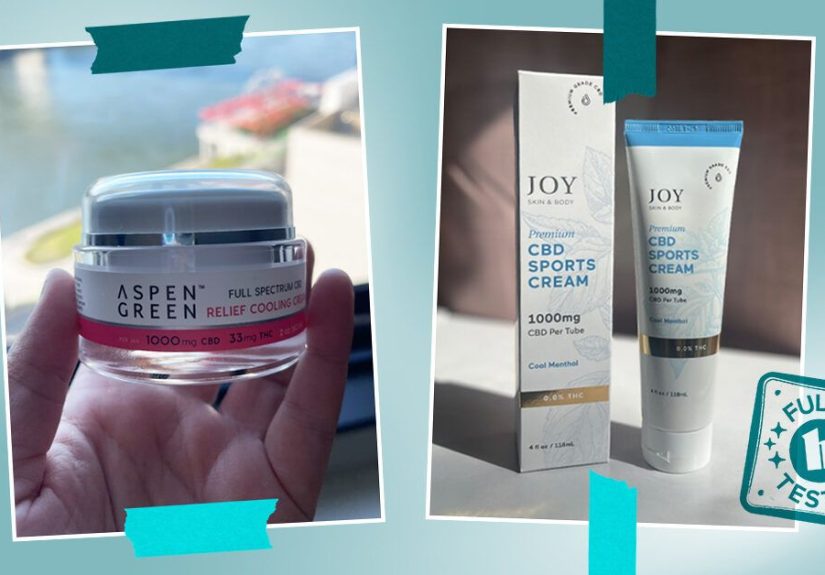
Joy Organics’ Premium CBD Sports Cream is a popular broad-spectrum option that blends CBD with classic cooling/warming helpers (like menthol and camphor),
creating that familiar “ahhh, yes, my muscles are receiving a strongly worded memo” sensation.
- CBD type: Broad-spectrum (generally chosen by people trying to avoid THC)
- Potency snapshot: 1,000 mg CBD per 4 fl oz container
- Why it made the list: Strong athletic-leaning formula, widely recommended, and typically positioned as a high-quality, THC-avoiding topical option.
Best for: gym soreness, muscle tightness, post-run legs, and anyone who wants a topical that feels like it’s “doing something” within minutes.
Watch-outs: Menthol and essential oils can be too intense for sensitive skin. Patch-test first, especially if you’ve had reactions to fragranced products.
2) Lazarus Naturals CBD Skin Repair Cream (Best for Skin-Forward Folks Who Still Want CBD)
Some CBD topicals are basically “pain cream with CBD.” This one leans more “skin repair cream that happens to be loaded with cannabinoids.”
Lazarus Naturals’ Skin Repair Cream stands out for pairing a high-CBD, full-spectrum profile with botanical, skin-friendly ingredients often found in classic skincare.
Think of it as the option for people who want their topical to do double duty: support dry, stressed skin while delivering the CBD component.
- CBD type: Full-spectrum
- Potency snapshot: Often listed around 2,000 mg CBD per 75 mL container (brand listings vary by batchcheck the COA)
- Notable extras: Botanicals commonly used for skin support (for example, calendula and witch hazel show up in many “repair” style formulas)
Best for: dry patches, “my elbows look like they belong to a stone statue,” and anyone who prefers a more skincare-like experience than a medicated-sports-cream vibe.
Watch-outs: Full-spectrum means trace THC may be present. If you must avoid THC entirely, consider a broad-spectrum or isolate topical instead.
Also, botanicals can still irritate some peoplepatch-test if you’re reactive.
3) Cornbread Hemp CBD Balm (Best Full-Spectrum Stick for On-the-Go Relief)
Balm sticks are underrated. They’re tidy, portable, and far less likely to explode in a gym bag than a jar. Cornbread Hemp’s CBD Balm is a full-spectrum option
that’s frequently highlighted for its straightforward, “grab-and-apply” design. If you like the idea of targeted applicationneck, shoulders, wrists, kneesthis format is wonderfully practical.
- CBD type: Full-spectrum
- Potency snapshot: 750 mg CBD per 2.4 oz stick
- Why it made the list: Great portability, clear positioning for muscle relief, and a stick format that encourages consistent use (because it’s easy).
Best for: people who want quick application without messy hands; travel; desk drawers; gym bags; “I need relief but I also need to touch my keyboard later.”
Watch-outs: Full-spectrum can include trace THC. Also, balm sticks often use waxy basesamazing for staying put, less amazing if you prefer ultra-light lotions.
4) BATCH CBD Cream (Best for Dry Skin and “Spa Day at Home” Energy)
If you want a CBD topical that feels like a legit skincare productsmooth, soothing, and not aggressively medicinalBATCH’s CBD Cream is a strong contender.
It’s often noted for combining CBD with moisturizing ingredients like aloe plus an essential-oil blend that leans more “refreshing” than “medicine cabinet.”
Bonus: some people like chilling it briefly for an extra cooling feel (because we’re all just trying our best out here).
- CBD type: Typically hemp-derived; confirm full/broad/isolate on the label and COA
- Potency snapshot: 1,500 mg CBD per 2 oz container
- Why it made the list: High potency for the size, skincare-friendly feel, and a formula that’s popular among people shopping for comfort + moisturization.
Best for: dry skin, post-shower use, hands/feet/elbows, and anyone who wants a CBD cream that doesn’t scream “sports gel.”
Watch-outs: Essential oils are polarizing. If fragrance triggers headaches or irritation for you, choose an unscented option.
5) Medterra Rapid Recovery Cream (Best Value Pick for Everyday Aches)
Not everyone wants a luxury cream. Some of us want a dependable jar that shows up, does its job, and doesn’t require a small loan.
Medterra’s Rapid Recovery Cream gets frequent “value” recognitionespecially for folks who use topicals regularly after workouts or long workdays.
It’s commonly described as combining CBD with other familiar topical helpers (like arnica-style ingredients) for a practical, daily-use formula.
- CBD type: Varies by product linecheck the label (Medterra often offers THC-free options in other categories)
- Potency snapshot: 500 mg CBD per 1.7 fl oz container
- Why it made the list: Accessible pricing positioning, simple everyday application, and a formula built around “recovery” use-cases.
Best for: budget-conscious shoppers, routine use, and “I just need something that works with my schedule.”
Watch-outs: As with any topical, additional ingredients can irritate some skin types. Patch-test, especially if you’re sensitive to botanical extracts.
Honorable Mentions (Because the Topical World Is Huge)
- CBDistillery Oooh Distilled 500 mg CBD Balm: A compact full-spectrum balm often mentioned for mild achesthough some users find balm textures greasy.
- Aspen Green Relief Cooling Cream: A “strong cooling” style option frequently highlighted in best-of lists for people who like menthol-forward formulas.
- Soul Rapid Relief Cream: Often cited for a moisturizing feel and high potency, with some versions using CBD isolate.
CBD Topicals 101: Cream vs. Balm vs. Roll-On (What’s the Difference?)
The best CBD topical isn’t just about brandit’s about format. Here’s the quick cheat sheet:
- CBD creams/lotions: Great for larger areas (back, thighs, shoulders). Usually lighter feel, faster absorption.
- CBD balms/salves: Thicker, often wax-based. They stay put longer and feel more occlusiveexcellent for dry spots and targeted application.
- CBD sticks/roll-ons: The neat-freak’s dream. Minimal mess, easy reapplication, perfect for travel.
Do CBD Topicals Actually Work?
The honest answer: topical CBD research is promising, but not “case closed.” There are early clinical signals that topical CBD may help with certain types of localized discomfort.
For example, a randomized controlled trial in people with thumb basal joint arthritis reported improvements in pain and disability with topical CBD compared with placebo.
That’s encouragingwhile also reminding us that more large, multi-center trials are still needed.
It’s also important to keep expectations realistic. Many topicals combine CBD with ingredients like menthol, camphor, arnica, or essential oilsingredients that can provide noticeable sensations on their own.
That doesn’t mean the CBD is “doing nothing,” but it does mean results are often a team sport.
How to Choose a High-Quality CBD Topical in 2025
1) Check the COA Like You’re a Detective in a Cozy Mystery
A COA (certificate of analysis) should be easy to findon the product page, via QR code, or through a batch lookup tool.
Look for cannabinoid potency (CBD amount) and screening for common contaminants.
If a brand won’t show lab results, it’s basically asking you to “trust the vibes,” which is not an FDA-recognized quality standard.
2) Pick Your CBD Type: Full-Spectrum vs. Broad-Spectrum vs. Isolate
Full-spectrum includes multiple hemp compounds and may contain trace THC (federally legal hemp-derived products are typically limited to 0.3% THC by dry weight, though state rules can vary).
Broad-spectrum aims to keep multiple compounds while removing THC.
Isolate is CBD onlyoften the simplest choice for people avoiding THC.
3) Avoid Wild Medical Claims
If a topical claims it “cures” serious diseases, that’s not just suspiciousit can be a regulatory red flag. The FDA has issued warning letters to companies marketing cannabis-derived products with illegal health claims.
A reputable brand focuses on quality, transparency, and responsible language.
4) Patch-Test First (Yes, Even if You’re Brave)
Apply a small amount to a small area and wait 24 hours. Many topicals include essential oils or botanical extracts that can irritate sensitive skin.
This is especially true if you’re using products with strong cooling ingredients.
How to Use CBD Topicals for Best Results
- Start small: Use a pea-sized amount on a targeted spot. You can always add more.
- Massage it in: Not because you need a spa certificate, but because it helps spread the product evenly.
- Give it time: Many people assess at 15–45 minutes. Reapply based on label directions.
- Track what you feel: Where did you apply it? How much? What else is in the formula (menthol, arnica)? This helps you learn what actually works for you.
Safety Notes You Shouldn’t Skip
- Medication interactions: CBD can interact with some medications. If you take prescription meds (especially those with grapefruit warnings), ask your clinician before using CBD products.
- Pregnancy and nursing: Many health authorities advise avoiding CBD due to insufficient safety data.
- Drug testing: Topicals are generally considered lower risk than ingestible products, but full-spectrum products may contain trace THC and labeling errors happen. If drug testing is a major concern, choose isolate/broad-spectrum from a brand with robust COAs.
FAQ: Quick Answers About CBD Topicals
Will a CBD topical get me high?
Typical CBD topicals are not intended to cause intoxication. However, full-spectrum products can contain trace THC. Most people don’t feel a “high” from topical use,
but product quality and THC content varyso buy from brands with reliable testing.
How strong should my CBD topical be?
There’s no universal “right” potency. If you’re new, start mid-range and focus on consistency. For comparison, many popular creams land anywhere from a few hundred mg to 2,000 mg per container.
More isn’t always betterespecially if the formula irritates your skin.
Is CBD topical better than ibuprofen gel or menthol rubs?
It depends on your body and your preferences. Some people like CBD topicals as part of a broader routine (stretching, physical therapy, rest, hydration),
while others prefer OTC products they already know. If pain is severe, persistent, or worsening, get medical guidance.
Conclusion: The Best CBD Topicals Are the Ones You’ll Actually Use
In 2025, the CBD topical market is mature enough that you can find genuinely well-made productsbut still messy enough that you need a little strategy.
Prioritize third-party testing, choose a format you’ll apply consistently, and match the formula to your skin (and your scent tolerance).
Whether you’re after a sports cream, a balm stick, or a skin-repair style lotion, the best results usually come from steady, sensible usenot miracle-chasing.
: experiences
Real-World Experiences: What CBD Topicals Feel Like (and What They Don’t)
Let’s talk about the part nobody explains well: what it’s actually like to try CBD topicals in real lifewhen you’re tired, busy,
and your shoulders have been slowly creeping toward your ears since 2019.
The “First Try” Moment: Expectations vs. Reality
Most people expect one of two things: (1) nothing happens, or (2) angels descend and personally massage their kneecaps.
The reality is usually more… practical. With many CBD creamsespecially sports formulasyou’ll feel the other ingredients first.
Menthol and camphor can create immediate cooling/warming feedback, which feels reassuring (and occasionally startling).
CBD itself is subtler: people often describe it as taking the edge off localized discomfort over time rather than flipping a switch in 30 seconds.
Scenario 1: Post-Workout Soreness
After a tough workout, a sports cream can feel like a “recovery ritual.” You apply it, massage it in, and your muscles get a cooling sensation that makes you feel
slightly more optimistic about walking down stairs tomorrow. The key here is consistency. People who swear by topicals often use them the same way they use stretching:
not once, not dramatically, but repeatedly and thoughtfully.
A practical tip: apply after a shower when your skin is clean and warm. Use enough to cover the area, but don’t slather it like frostingmore product won’t necessarily
mean more comfort, and it can mean more fragrance.
Scenario 2: Desk-Job Neck and Wrist Drama
CBD balm sticks and roll-ons shine here because they’re tidy. You can apply a small amount to wrists, forearms, or the base of the neck, then get back to typing without
leaving greasy fingerprints on everything you own. People often describe this use-case as “maintenance,” not rescuesomething you use when discomfort is mild to moderate,
not when you’re in serious pain.
Another tip: treat the topical as a reminder to do the boring-but-effective stuff too. Apply the balm, then do a 60-second wrist stretch.
Your future self will send you a thank-you note (or at least stop complaining as loudly).
Scenario 3: Dry Skin Season (a.k.a. “Why Are My Elbows Like This?”)
Skin-repair style CBD creams are a different experience from sports gels. They feel more like traditional body butterhydrating, soothing, and designed for everyday comfort.
People who like these products often care as much about texture and moisturization as they do about CBD content.
In practice, these creams tend to fit well into routines: after-handwashing, before bed, after a shower, or whenever your skin starts acting like it’s auditioning for a desert documentary.
Here, ingredient lists really matter. Botanicals like calendula and witch hazel can be great for some users, but anyone with sensitive skin should patch-test first.
The “best” cream is the one that doesn’t cause redness, itching, or a surprise rash that ruins your whole week.
Scenario 4: The “Why Isn’t This Working?” Phase
If you try a CBD topical and feel nothing, it doesn’t automatically mean CBD is useless. It might mean:
- The product’s potency is low for your needs (or unclear).
- You’re using too littleor applying it inconsistently.
- The issue you’re treating is better addressed with a different approach (rest, physical therapy, OTC meds, medical evaluation).
- The formula doesn’t agree with your skin, so you avoid using enough to notice an effect.
Many experienced CBD topical users treat it like a mini-experiment: same area, same time of day, same amount, for a week.
If it still doesn’t help, they move onno guilt, no dramatic speeches, no “I guess my body is immune to plants.”
Bottom Line
The most common “success story” with CBD topicals isn’t a miracle. It’s a routine: a product with clear testing, a formula that feels good on your skin,
and consistent use in the moments you normally reach for comfortafter workouts, during long desk days, or in the dead of winter when your hands feel like sandpaper.