Table of Contents >> Show >> Hide
- Why Cats Are So Obsessed With Christmas Trees
- 1. Start With a Safer Tree Setup From Day One
- 2. Decorate Like You Live With a Tiny Acrobat
- 3. Protect the Base, the Water, and the Cords
- 4. Use Gentle Barriers and Smart Deterrents
- 5. Give Your Cat a Better Option Than the Tree
- Common Mistakes to Avoid
- Final Thoughts
- Experience Section: What Cat Owners Learn the Hard Way During Christmas
- SEO Tags
There are two kinds of Christmas trees: the one you lovingly decorate, and the one your cat immediately registers as a luxury jungle gym with free shiny toys. If that sounds familiar, congratulations, you are officially celebrating the holidays with a cat.
The good news is that you do not have to choose between festive decor and feline safety. You can absolutely enjoy a beautiful tree without spending all of December saying, “Please get out of there,” every six minutes. The trick is to think like a cat for a moment. Cats love height, movement, sparkle, texture, and novelty. A Christmas tree offers all five, plus the audacity to stand in the middle of the room acting mysterious.
This guide breaks down five practical ways to keep cats out of your Christmas tree safely, without resorting to harsh punishment or risky home remedies. You will also learn which decorations are most likely to cause trouble, how to create a more cat-safe Christmas tree, and what to do if your furry little ornament inspector simply will not take the hint.
Why Cats Are So Obsessed With Christmas Trees
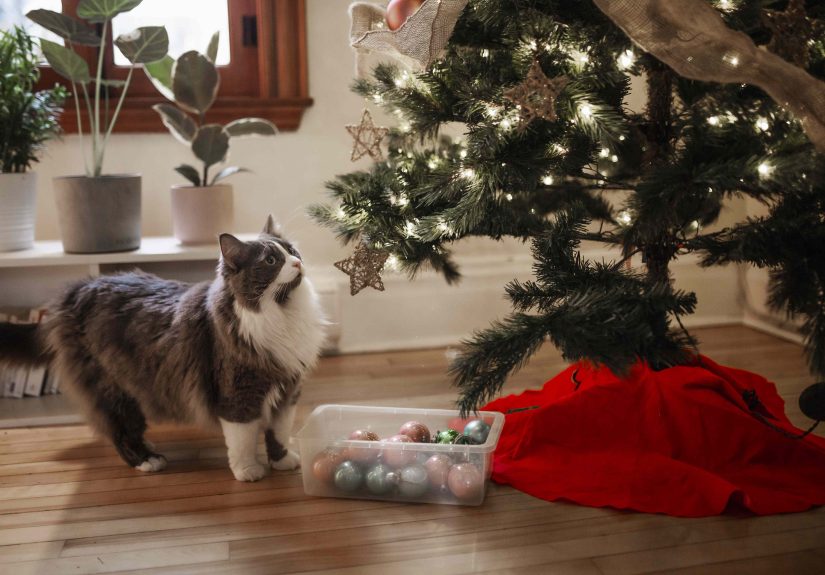
Before we jump into the solutions, it helps to understand the problem. Your cat is not trying to ruin Christmas. Your cat is simply being a cat. Trees smell interesting, branches sway, lights twinkle, and ornaments dangle at ideal paw-batting height. To a human, the tree says “holiday tradition.” To a cat, it says “interactive climbing structure with bonus glitter.”
That curiosity matters because the tree itself is only part of the issue. The real hazards often come from what is attached to it or sitting around it: breakable ornaments, cords, ribbons, hooks, tinsel, exposed tree water, edible decorations, and fallen needles. So if your goal is to keep cats away from the Christmas tree, the smartest strategy is not one magic trick. It is a layered setup that makes the tree less tempting, less accessible, and far less dangerous.
1. Start With a Safer Tree Setup From Day One
If you want to win the annual battle of cat versus Christmas tree, start before the ornaments go on. The best time to make your tree less tempting is during setup, not after your cat has already discovered that the lower branches bounce like a trampoline.
Choose the right location
Place the tree away from launch pads like sofas, side tables, bookshelves, ottomans, and anything else your cat can use as a runway. Cats are talented. Give them a nearby jump-off point and they will treat your spruce like an action movie stunt set.
When possible, put the tree in a room that can be closed off when you are sleeping, working, or away from home. This is one of the easiest ways to reduce unsupervised tree adventures. If a separate room is not possible, choose a corner that naturally limits access from multiple sides.
Make stability non-negotiable
A wobbly tree is a bad idea even in a house without pets. In a house with cats, it is practically a challenge. Use a heavy-duty stand that matches the size and weight of the tree. Then anchor the tree to a wall or ceiling with discreet line or hardware so it cannot tip if your cat decides to audition for mountaineering season.
Real tree or artificial tree? Either one can work, but both require precautions. A real tree sheds needles and may tempt cats to chew or drink from the stand. An artificial tree avoids some natural debris but can still topple, snag claws, or become chewable plastic chaos. If your cat is especially determined, a smaller tabletop tree placed out of reach or a wall-mounted tree alternative may save your sanity.
Let the tree become “boring” before decorating
One underrated trick is to set up the tree and leave it undecorated for a day or two. This gives your cat time to inspect the new object before it starts sparkling like a casino lobby. Once the novelty wears down a bit, add decorations gradually. It is not glamorous, but it can reduce the dramatic first-contact frenzy.
2. Decorate Like You Live With a Tiny Acrobat
Once the tree is stable, your next job is to remove the stuff most likely to turn curiosity into an emergency. This is where smart decorating matters more than fancy decorating.
Skip the classics that are dangerous for cats
Tinsel may look magical in photos, but for cats it is the holiday equivalent of “please swallow this shiny string and let everyone panic.” Ribbon, garland, ornament hooks, popcorn strands, and angel hair decorations are also risky because they can be chewed, swallowed, or tangled around paws and necks.
Glass ornaments are another problem. One enthusiastic tail-swipe and suddenly you have broken shards on the floor and a cat pretending this was all part of the plan.
Use cat-safer decor choices
Choose shatterproof, soft, plush, wooden, or sturdy plastic ornaments whenever possible. Secure ornaments tightly so they do not swing like cat toys. Put your favorite fragile decorations higher up on the tree, and keep the lowest third of the tree as plain and boring as possible. Yes, this may slightly offend your inner decorator. No, your cat will not appreciate your symmetry anyway.
A good rule is simple: if it dangles, sparkles, jingles, crinkles, smells edible, or looks like prey, do not place it within easy reach. That includes candy canes, cookies, strings of berries, and decorative treats. Your tree is not a snack rack.
Be careful with lights and scent-heavy hacks
Lights should be secured so they do not dangle loosely. Keep cords neat, tight, and difficult to paw at. LED lights are generally a smarter choice because they run cooler than older bulbs.
Also, be cautious with internet-famous deterrent ideas. Spraying a tree with strong essential oils, heavily scented products, or random homemade mixtures is not a great plan unless your veterinarian specifically says the ingredients are safe for your cat. A hack that sounds clever online is not so clever if it irritates your cat’s mouth, skin, or breathing.
3. Protect the Base, the Water, and the Cords
If the tree itself is the main attraction, the base is often the VIP lounge. Cats love sniffing it, hiding behind it, batting the skirt, chewing the branches near the bottom, and treating the tree stand water like a forbidden cocktail.
Cover the tree water
Tree water is one of the most overlooked Christmas tree safety for cats issues. Even plain water can collect bacteria, sap, and debris. Some people also add fertilizers or preservatives, which makes that little pool even less pet-friendly. Cover the water reservoir so your cat cannot drink from it. Then use a skirt or decorative barrier over the cover so it does not become the newest household treasure chest.
Clean up fallen needles fast
If you have a real tree, vacuum or sweep dropped needles often. Cats may bat them, chew them, or track them around the house. Needles are not a toy, not a snack, and definitely not a seasonal salad. They can irritate the mouth and stomach, and in larger amounts they create a bigger digestive risk.
Hide and protect electrical cords
Loose cords are a problem because cats may chew them, claw them, or become tangled. Use cord covers, tuck wires behind furniture when possible, and tape or secure slack so it does not wiggle enticingly. Unplug tree lights when you are asleep or out of the house. It is a simple habit that reduces risk and gives you one less thing to worry about.
If your cat has a history of chewing cords, do not rely on wishful thinking. A determined cord-chewer does not suddenly become a holiday gentleman in December.
4. Use Gentle Barriers and Smart Deterrents
Some cats respect boundaries. Others hear the word “boundary” and take it as a personal insult. For those cats, physical setup matters.
Put a barrier around the tree
A pet gate, exercise pen, decorative screen, or playpen can help block access to the tree’s base. This works especially well for kittens, curious young cats, or multi-pet households where the tree becomes a group project. The barrier does not have to be ugly. Plenty of people use folding screens, wooden pet fences, or decorative enclosures that still look festive.
You can also create a less inviting zone around the bottom of the tree. Some cats dislike the feel and sound of aluminum foil around the base. Others will react like you just rolled out a red carpet for mischief. Feline opinions vary. Test it and see whether your cat avoids it or proudly stands on it like a holiday villain.
Use hands-off deterrents, not punishment
If you need a deterrent, choose one that does not damage your relationship with your cat. Motion-activated air devices can discourage repeat visits without teaching your cat to fear you. That is much better than chasing, yelling, or squirting your cat with water every time they go near the tree.
Water-bottle discipline often backfires. The cat may simply learn to avoid the tree when you are around and turn into a tiny arborist the second you leave the room. Worse, it can make your cat anxious around you. The goal is to make the tree less rewarding, not to make yourself the villain of the living room.
Block access during high-risk times
Even if your cat behaves beautifully while you are watching, nighttime is when many tree crimes occur. Close the room door if possible. If not, unplug lights, remove particularly tempting decorations from the lower branches, and do a quick sweep of the area before bed. Your future self will appreciate waking up to a silent tree instead of a 3 a.m. crash that sounds like Santa missed the landing.
5. Give Your Cat a Better Option Than the Tree
This may be the most important strategy of all. Cats do not stop climbing, swatting, and exploring just because you asked nicely. Those are normal feline behaviors. So instead of focusing only on what not to do, give your cat something more rewarding to do.
Increase play before the chaos starts
A bored cat is far more likely to investigate your decorations. Daily interactive play helps burn energy and satisfy hunting instincts. Wand toys, kickers, puzzle feeders, rolling toys, and short play sessions before dinner can make a big difference. Think of it as strategic holiday cardio.
Create an approved climbing zone
If your cat loves height, provide a cat tree, window perch, shelves, or another legal climbing spot near the main living area. Your Christmas tree is more tempting when it is the tallest, newest, and most exciting structure in the room. Give your cat another elevated option and you reduce the tree’s celebrity status.
Keep routines steady
Holiday visitors, travel, noise, and changing schedules can make cats more restless. Try to keep feeding times, play times, and litter box care consistent. Some cats are not just curious around the tree; they are overstimulated by the whole season. A calm routine can lower the urge to act out in creative, branch-related ways.
If your cat seems especially stressed, talk with your veterinarian about safe calming options for the season. A cat who feels secure is less likely to turn your tree into a coping mechanism.
Common Mistakes to Avoid
Even well-meaning cat owners make a few classic holiday mistakes. Avoid these and you will already be ahead of the game:
- Putting fragile ornaments on the lowest branches
- Leaving tree water uncovered
- Using tinsel, ribbon, or string-like garlands
- Letting cords dangle where they invite chewing
- Relying only on scolding instead of changing the environment
- Ignoring fallen needles, broken hooks, or dropped decorations
- Assuming an older cat will not suddenly rediscover chaos as a hobby
Final Thoughts
You do not need a military-grade security system to cat-proof a Christmas tree. What you need is a realistic setup, safer decor, protected cords and water, a gentle barrier strategy, and a better outlet for your cat’s energy. In other words, make the tree sturdy, make it boring, and make something else more fun.
The best holiday homes are not the ones with perfect trees. They are the ones where people, pets, and decorations all survive December with their dignity mostly intact. So go ahead and decorate. Just do it with the quiet wisdom of someone who knows their cat is already planning a heist.
Experience Section: What Cat Owners Learn the Hard Way During Christmas
If there is one universal holiday truth among cat owners, it is this: your first Christmas tree with a cat is usually a research project you did not realize you had signed up for. Many people begin the season optimistic. The tree goes up, the lights go on, the ornaments are spaced perfectly, and for a brief shining moment the living room looks like a magazine spread. Then the cat arrives. Usually silently. Usually with very strong opinions.
A common experience is underestimating how exciting the lower half of the tree is. People tend to focus on the whole tree as one decoration, but cats do not experience it that way. They experience it branch by branch, ornament by ornament, with special attention paid to anything shiny, swinging, crinkly, or suspiciously chewable. The first sign of trouble is often not dramatic. It is a missing ornament. Then a chewed ribbon. Then one lonely branch bouncing in the corner as your cat sits nearby looking innocent in a way that convinces absolutely no one.
Another lesson cat owners quickly learn is that “my cat has never cared about plants before” means very little in December. The novelty factor changes everything. A cat who ignores your houseplants all year may suddenly become deeply invested in the pine tree you brought indoors and decorated like a festival ride. That surprise is why so many experienced pet owners now anchor trees from the start, even if their cats are usually calm. Holiday behavior can be different simply because the environment is different.
Many households also discover that punishment is exhausting and ineffective. Following your cat around with a spray bottle turns the season into a full-time hall monitor job, and cats are often clever enough to wait until you leave. Owners who get better results usually switch strategies. Instead of saying “no” fifty times a day, they change the setup. They move furniture away, cover the base, remove tempting items, add a barrier, and give the cat a better place to climb. Suddenly the tree is less of a thrilling target because the room no longer feels designed for feline parkour.
There is also the emotional side of holiday pet safety that people do not talk about enough. A lot of cat owners feel guilty when they have to simplify their decorations. Maybe the glass heirloom ornaments stay boxed this year. Maybe the tinsel is retired forever. Maybe the tree looks a little less dramatic and a lot more practical. But most people who make that shift end up saying the same thing: the peace of mind is worth it. A slightly simpler tree is much easier to enjoy when you are not bracing for a crash every time the cat enters the room.
And perhaps the funniest shared experience is how often cats create a new family tradition all by themselves. Some become self-appointed tree inspectors. Some nap under the skirt like tiny holiday trolls. Some merely stare at the lights as if they personally approved the electrical plan. Once owners stop aiming for perfection and start aiming for safety, the whole season usually gets easier. The tree stays up more often, the cat stays safer, and everyone gets to keep Christmas exactly where it belongs: festive, warm, and only slightly chaotic.

![18 Best Types of Charts and Graphs for Data Visualization [+ How to Choose]](https://corkopencoffee.org/wp-content/uploads/2026/05/18-best-types-of-charts-and-graphs-for-data-visualization-how-to-choose-qKM1PBYG-thumb.jpg)