Table of Contents >> Show >> Hide
- Layout First: Make Conversation Feel Effortless
- Seating That Makes People Linger (In a Good Way)
- Cozy Up: Texture, Rugs, and Soft Finishes
- Color and Pattern That Feels Inviting (Not Overwhelming)
- Lighting: The Secret Sauce of a Great Gathering Space
- Storage, Styling, and “Real Life” Function
- Quick Wrap-Up
- Extra Experiences: What Actually Works When You Want a Living Room Everyone Uses
The best living rooms don’t just look goodthey get used. They host movie nights, birthday cake moments,
board-game rivalries, awkward in-law visits, and that one friend who “just needs to charge their phone” (for three hours).
If you want a gathering space everyone loves, focus on three things: comfort, conversation,
and flexibility.
Below are 50 practical, real-world living room ideaslayout tricks, cozy upgrades, lighting moves, storage saves,
and style choicesthat help your space feel welcoming without turning it into a museum where no one is allowed to sit.
Steal what fits your home (and your actual life).
Layout First: Make Conversation Feel Effortless
- Choose a focal point on purpose. Fireplace, picture window, built-ins, or even the TVpick one main anchor so the room feels organized, not random.
- Pull furniture off the walls. Even a few inches can make the room feel more intentional and more social (instead of “waiting room chic”).
- Create a clear conversation zone. Group seating so people can talk without shouting across a canyon of hardwood floors.
- Try the “face-to-face” setup. Two sofas facing each other (or a sofa and two chairs) encourages actual conversationwild concept, right?
- Angle chairs toward the center. Straight lines feel formal; slight angles feel welcoming and help everyone “join the circle.”
- Keep walkways comfortable. Make traffic paths obvious and roomy so guests don’t have to do the sideways crab-walk between furniture.
- Use an area rug to define the hangout zone. A rug “draws the boundary” of the gathering space and helps seating feel connected.
- Don’t buy the rug after the furnitureplan together. A too-small rug makes the whole room feel smaller (and slightly annoyed).
- Float a sectional, don’t “hug the wall” by default. A sectional can work better pulled out a bitespecially in open layouts.
- Break up an open concept with zones. Use a console table behind the sofa, a rug change, or a lighting shift to signal “this is the living area.”
- Work with multiple doorways by “centering” the seating. If doors are everywhere, place furniture to protect a central social area and keep paths around it.
- Use symmetry when you want instant calm. Matching chairs, paired lamps, or two similar side tables can make a space feel balanced fast.
Seating That Makes People Linger (In a Good Way)
- Pick a sofa depth that matches how you live. If you’re a “sit upright and chat” household, go a bit shallower; if you’re a “nap enthusiast,” go deeper.
- Add one extra seat beyond your “normal.” If you typically host 4, plan for 5–6. The goal is “room for one more,” not “sorry, floor’s open.”
- Bring in swivel chairs. They turn toward conversation, the TV, or the snacksbasically the most diplomatic chair in the room.
- Use a bench where you’d normally skip seating. Under a window, behind a sofa, or along a wallbenches add seats without visual heaviness.
- Choose an ottoman that can do overtime. A large upholstered ottoman works as a footrest, extra seating, and a coffee table with a tray.
- Keep side tables within easy reach. Everyone needs a safe place for a drink. That’s not a design trendit’s basic hospitality.
- Pick a coffee table that fits your traffic flow. Round or oval tables are great when people constantly pass through; rectangles work well in longer rooms.
- Mind the “reach zone.” Set the coffee table close enough that guests can grab snacks without performing an accidental ab workout.
- Layer in flexible seating. Poufs, stools, and lightweight accent chairs can appear when needed and disappear when you want breathing room.
- Give “the corner chair” a job. Add a lamp and small table so it becomes a reading spot instead of a place where laundry goes to retire.
Cozy Up: Texture, Rugs, and Soft Finishes
- Layer textures like you’re building a great outfit. Mix linen, wool, velvet, leather, boucle, or chunky knits so the room feels rich, not flat.
- Use pillows strategically. Mix sizes and textures, but don’t add so many that guests need to negotiate for a place to sit.
- Add a throw blanket within arm’s reach. It signals comfort and makes the room feel lived-in (in the charming way, not the “we gave up” way).
- Choose curtains that soften sound. Fabric helps reduce echo, which makes conversation easierespecially in open-plan or hard-surface rooms.
- Hang curtains high and wide. Mount closer to the ceiling and extend beyond the window frame so the room feels taller and brighter.
- Try a washable rug if life is messy. Kids, pets, red wine, salsachoose materials you can actually maintain without a dramatic sigh.
- Layer rugs for depth. A large natural-fiber rug under a patterned smaller rug adds texture and helps define a conversation area.
- Bring warmth with wood tones. Even in modern spaces, a wood coffee table, picture frames, or shelves can add that “come on in” feeling.
- Use baskets as “soft storage.” They hide clutter while adding textureperfect for throws, toys, or that collection of remotes you can’t explain.
- Make the room feel good underfoot. If your floors are cold, add a thicker rug pad. Your feet will send thank-you notes.
- Pick performance fabrics for the main pieces. Stain-resistant upholstery lets you relax, which is kind of the whole point of a living room.
- Mix smooth and nubby finishes. Pair sleek leather with a boucle chair, or a smooth sofa with a chunky knitcontrast makes it cozy.
Color and Pattern That Feels Inviting (Not Overwhelming)
- Start with a simple palette, then add personality. Two to three main colors plus a couple accents keeps the space cohesive.
- Go tonal for instant calm. Different shades of the same color (like layered blues or warm neutrals) read as restful and intentional.
- Use contrast to create energy. Light walls with darker furniture, or vice versacontrast gives the eye something to enjoy.
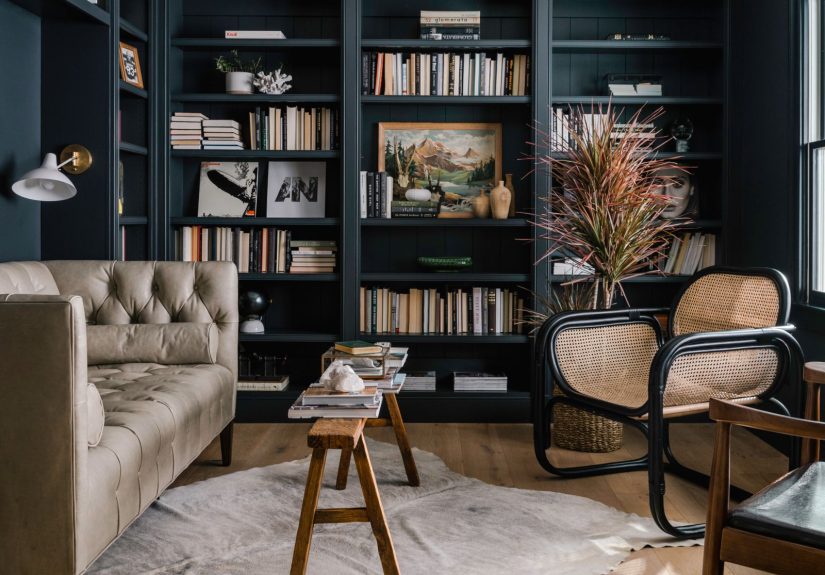
- Try a moody color for a “hug” effect. Deep navy, olive, or charcoal can make the room feel cozyespecially when balanced with warm lighting.
- Let one bold thing be the star. A statement rug, a colorful sofa, or a dramatic wall colorpick one hero so the room doesn’t feel chaotic.
- Use pattern like seasoning. Mix a few patterns at different scales (small, medium, large) so it feels layered without looking like a prank.
- Repeat an accent color three times. For example: rust in a pillow, a piece of art, and a vase. Repetition makes it look “designed.”
- Use art to set the tone. Big art can anchor a room, add color, and make the space feel more personal than “beige furniture showroom.”
Lighting: The Secret Sauce of a Great Gathering Space
- Layer your lighting. Combine ambient (overall), task (reading), and accent (mood) so the room works for everything from parties to quiet nights.
- Add dimmers or smart bulbs. Being able to shift brightness instantly is the difference between “cozy” and “interrogation room.”
- Use warm light for comfort. Softer, warmer color temperatures help a living room feel invitingespecially in the evening.
- Put a floor lamp in an empty corner. Corners often look forgotten; lighting them makes the room feel finished and balanced.
- Try sconces to soften the space. Wall lighting adds glow without taking up table spacegreat for smaller living rooms.
- Highlight art or shelves. Picture lights or small accent lamps make the room feel curated and layered.
- Use a statement fixture to add personality. A bold pendant or chandelier can become a focal point that elevates the whole room.
- Light where people sit. Place lamps near seatingcomfort matters more than perfectly symmetrical styling.
Storage, Styling, and “Real Life” Function
- Stop fighting cluttergive it a home. Add closed storage (cabinets, credenzas, trunks) for things you use but don’t want on display.
- Hide cords like it’s your job. Use cord covers, cable boxes, or a media console that actually manages wires. Visual calm is instant calm.
- Style shelves with breathing room. Leave empty space between objects so shelves look curated, not like a yard sale with good intentions.
- Create a “landing zone.” A tray on the coffee table or a bowl on a side table gives keys, remotes, and random items a place to go.
- Use a tray to tame the coffee table. Corral candles, coasters, and a small plant so the surface feels organizedeven if your day isn’t.
- Mix old and new for warmth. Vintage pieces add character; modern pieces keep it fresh. Together, they make a room feel collected over time.
- Build a mini “beverage moment.” A bar cart, a small cabinet, or a shelf with glasses makes hosting easier and gives guests a friendly destination.
- Make a spot for games. A basket or cabinet for cards, puzzles, and board games invites togetherness (and healthy competition).
- Consider a conversation-pit vibewithout major remodeling. Low seating, a plush rug, and layered pillows can create that intimate, sunken-lounge feeling.
- Adopt the five-minute reset. End the night by returning pillows, tossing blankets in a basket, and clearing surfaces. Your future self will be emotionally moved.
Quick Wrap-Up
A living room people love isn’t about perfectionit’s about comfort, flow, and a layout that invites connection.
Start with the furniture arrangement (conversation first), then add softness (rugs, textiles), then layer lighting.
Finally, make it functional for real life: storage, surfaces, and flexible seating for “one more person.”
Extra Experiences: What Actually Works When You Want a Living Room Everyone Uses
In real homes, the most successful living room upgrades usually have nothing to do with buying “the perfect” thingand everything to do with removing friction.
Friction is that tiny annoyance that makes people avoid a space: nowhere to put a drink, harsh overhead lighting, a sofa that looks great but feels like sitting on a polite brick,
or a layout that forces everyone to face the TV like it’s a mandatory meeting.
One of the biggest breakthroughs is simply moving the seating closer together. People often start with furniture pushed to the edges because it feels like it creates space,
but the result is a room that’s technically bigger and emotionally colder. When you pull pieces inwardanchored by a properly sized rugthe room instantly becomes more social.
Suddenly, you don’t need to “project” your voice, and guests don’t drift to the kitchen out of habit. The living room becomes the place where conversations actually happen.
Another common win is fixing the lighting. Lots of living rooms have one overhead light that’s either too bright, too cool, or both.
Layered lighting changes how people feel in the room. A floor lamp in a dark corner, a table lamp near the sofa, and a soft accent light on a shelf can turn a space from
“staged” to “settle in.” When the light is warm and adjustable, people naturally relaxand relaxed people stick around longer.
Then there’s the “silent deal-breaker”: surfaces and storage. If guests have to hold a drink the entire time, they won’t feel fully comfortable.
If the coffee table is cluttered with mail, remotes, and mystery items, people won’t want to set anything down. The fix is straightforward: add side tables,
use a tray to corral the everyday clutter, and give the room closed storage for the stuff you genuinely use. That’s how you get a living room that can go from
“Tuesday chaos” to “Friday hangout” in minutes.
Real life also includes kids, pets, roommates, and the occasional spaghetti incident. So the rooms that stay lovable are the ones built for reality:
durable fabrics, washable rugs, baskets that hide toys fast, and furniture that can handle actual living. If you’re always worried about spills,
you’ll never fully enjoy the spaceso choose materials that let you relax.
Finally, the most underrated “experience upgrade” is creating a reason to gather. That might be a game shelf, a cozy reading nook,
a place to play music, or a simple beverage station that makes hosting feel effortless. The goal isn’t to fill your living room with stuffit’s to create a few
small invitations that say: “Come sit. Stay awhile. We like having you here.” That’s when a living room becomes the heart of the homenot because it’s perfect,
but because it’s genuinely welcoming.