Table of Contents >> Show >> Hide
- 1. Warm Wood Cabinets and Earthy Colors Are Replacing Stark White
- 2. Concealed Storage, Sculleries, and Micro-Zones Are Making Kitchens Look Calmer
- 3. Full-Height Backsplashes and Stone “Countersplashes” Are Becoming the Focal Point
- 4. Oversized Islands and Eat-In Layouts Are Becoming the Kitchen’s Command Center
- 5. Personality Is Back: Bold Color, Vintage Touches, Mixed Metals, and Furniture-Style Details
- 6. Smarter, Harder-Working Features Are Defining the High-Function Kitchen
- Why These 2025 Kitchen Design Trends Have Staying Power
- Real-Life Experiences: What These 2025 Kitchen Trends Feel Like Day to Day
If 2024 was the year people side-eyed their all-white kitchens and whispered, “You’re nice, but you feel a little… sterile,” then 2025 is the year they finally do something about it. Across designer forecasts, homeowner surveys, and renovation trend reports, one thing is obvious: the modern kitchen is warming up, loosening up, and getting a whole lot smarter.
That does not mean kitchens are becoming chaotic. Quite the opposite. The biggest kitchen design trends of 2025 blend style and practicality in a way that feels more human. Homeowners want spaces that look polished but still survive weeknight pasta, coffee-fueled mornings, snack-hunting teenagers, and guests who somehow always migrate straight to the island. In other words, the dream kitchen now has to do more than pose for photos. It has to work.
What is replacing the cold, cookie-cutter kitchen? Think warm wood cabinets, earthy colors, hidden storage, statement stone backsplashes, oversized islands, and appliances that quietly pull their weight without screaming “I am technology!” from across the room. There is also a strong push toward kitchens that feel collected rather than showroom-perfect, with vintage touches, mixed finishes, and furniture-inspired details making the room feel more lived-in and less lab-tested.
Below, we break down the six major kitchen design trends you’ll see everywhere in 2025, why they matter, and how to bring them into your own space without accidentally turning your remodel into a financial thriller.
1. Warm Wood Cabinets and Earthy Colors Are Replacing Stark White
The all-white kitchen is not exactly dead, but it is no longer the star of the show. In 2025, warm wood tones, soft off-whites, deep greens, muddy browns, burgundy accents, and creamy neutrals are taking over. The mood is less “pristine gallery” and more “beautiful room where real people make pancakes.”
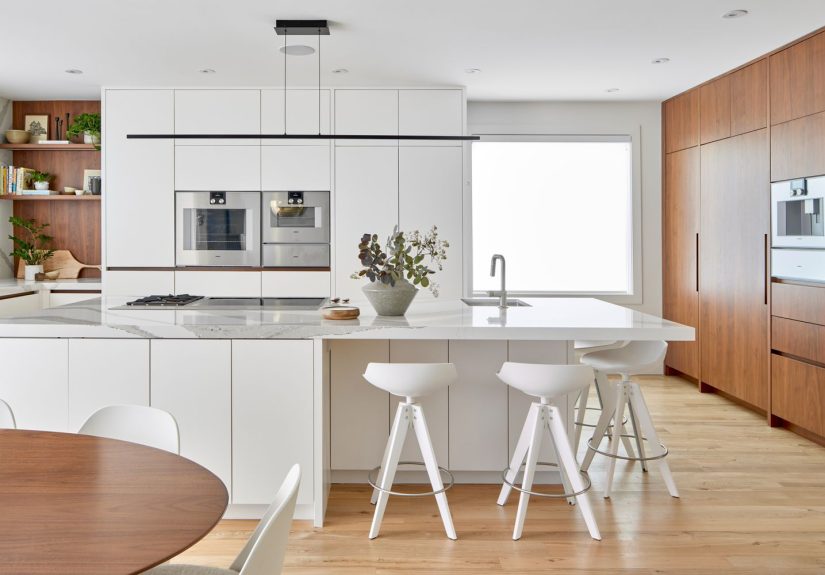
One reason this trend is sticking is that homeowners are craving warmth and character. White kitchens can still look elegant, but many now feel too flat or too safe. Wood cabinetry instantly adds grain, depth, and movement. It also plays nicely with a wide range of styles, from modern traditional to contemporary organic. White oak remains a favorite, but richer oak finishes, walnut looks, and darker stained woods are also gaining attention.
Color is warming up, too. Instead of icy grays and bright whites, designers are leaning into earthy palettes that feel grounded and timeless. Olive green lowers the blood pressure of the room. Mushroomy taupe makes everything look expensive. Soft greige is the reliable friend who goes with everyone. Even dramatic shades like oxblood, deep blue, or mocha are showing up on islands, lower cabinets, or pantry walls.
How to use this trend well
If a full cabinet replacement is not in the cards, try introducing warmth in layers. Refinish lower cabinets in a rich neutral, add wood bar stools, swap in oak floating shelves, or repaint walls in a creamy off-white instead of a bright builder-grade white. Even small changes can make a kitchen feel more current without forcing you into a full-blown demolition romance.
2. Concealed Storage, Sculleries, and Micro-Zones Are Making Kitchens Look Calmer
The 2025 kitchen is not just prettier. It is better at hiding its mess. One of the biggest shifts this year is the move toward concealed kitchens, back kitchens, sculleries, and micro-zoned layouts that keep clutter from colonizing every visible surface.
Panel-ready appliances are a huge part of this look. Dishwashers and refrigerators disappear behind cabinetry so the room reads as furniture-first rather than machine-first. Pantries are increasingly hidden behind cabinet doors, and even secondary prep spaces are becoming more common. These “dirty kitchens” or back kitchens are especially appealing in open-concept homes, where nobody wants a mountain of dishes photobombing the living room.
At the same time, designers are breaking kitchens into task-based zones. Instead of one giant do-everything room, you might see a coffee station, baking corner, beverage center, breakfast setup, or homework perch built into the plan. This makes the space more functional and keeps traffic from piling up in one overworked triangle. The old work-triangle rule is not gone, exactly, but it is no longer the only game in town.
Why homeowners love it
This trend works because it makes kitchens feel calmer and more intentional. A toaster, blender, air fryer, mail pile, charging cable, and fruit bowl all deserve homes. The counter should not have to parent them full time. Better zoning also supports the way people actually live now: cooking, entertaining, working, snacking, helping with homework, and reheating leftovers at the same time.
How to steal the look
You do not need a mansion-sized scullery to borrow this trend. Add appliance garages, deep drawers, pull-out pantry organizers, or a dedicated beverage cabinet. A simple under-counter section with shelves for mugs, coffee beans, and a machine can create a micro-zone that makes your mornings feel suspiciously under control.
3. Full-Height Backsplashes and Stone “Countersplashes” Are Becoming the Focal Point
Backsplashes are no longer content to sit quietly between the counter and upper cabinets like a polite supporting actor. In 2025, they are going full diva. Designers are extending backsplash coverage higher, wrapping stone up the wall, and using more sculptural or textural surfaces to create a stronger visual statement.
One of the clearest kitchen design trends for 2025 is the rise of the countersplash, where the countertop material continues vertically up the wall. Marble, quartzite, or other stone slabs create a seamless, tailored look that feels elevated and timeless. It is sleek, easy to wipe down, and a welcome break from the endless subway tile parade.
Tile is still very much in play, but it is getting more interesting. Fluted or reeded tile, classic rectangular tile laid in updated patterns, and full-height installations are helping backsplashes read more like design features and less like practical afterthoughts. Plaster range hoods are also part of this softer, more organic approach. They bring subtle texture and a handcrafted feel that pairs beautifully with warm woods and earthy colors.
Where this trend works best
This look shines in kitchens that need one strong focal point. A dramatic slab behind the range can make a modest kitchen feel custom. In larger spaces, continuing the backsplash to the hood or even the ceiling creates a more architectural finish. The effect is clean, intentional, and just dramatic enough to impress guests without making the room feel like it is trying too hard.
4. Oversized Islands and Eat-In Layouts Are Becoming the Kitchen’s Command Center
If the island was already the social center of the kitchen, 2025 has officially promoted it to chief operating officer. Bigger islands, better storage, more seating, and more specialized functions are defining how today’s kitchens are used.
Homeowners want islands that do more than hold a bowl of lemons and existential dread. They want prep space, serving space, hidden storage, charging stations, sink access, and enough room for people to gather without bumping elbows every fourteen seconds. Many renovations now prioritize islands because they help the kitchen support everyday life and entertaining at the same time.
Alongside the oversized island, eat-in features are gaining momentum. Banquettes, breakfast nooks, and built-in seating are making kitchens feel more intimate and useful. This move also reflects a larger shift toward kitchens as genuine living spaces, not just task zones. People are hanging out here, eating here, working here, and occasionally pretending to read recipes while mostly scrolling for them.
Design notes that matter
The best islands are not just large. They are proportional. In a smaller kitchen, a slim island with drawers and seating on one side can be a hero. In larger kitchens, double islands or curved islands are showing up more often, especially in homes designed for entertaining. Layered lighting above the island is equally important. Pendants add style, but under-cabinet lighting, ambient lighting, and dimmable task lighting are what make the room genuinely usable from breakfast through midnight snack o’clock.
5. Personality Is Back: Bold Color, Vintage Touches, Mixed Metals, and Furniture-Style Details
The era of the copy-paste kitchen is fading fast. One of the most exciting kitchen trends of 2025 is the return of personality. Homeowners are embracing kitchens that feel collected, individual, and a little less afraid of commitment.
That shows up in several ways. Cabinet color is getting bolder, especially on islands, lower cabinets, and accent storage. Vintage-inspired details are also back, from old-school silhouettes to furniture-style millwork that makes cabinetry look more like a freestanding hutch or sideboard. Mixed metals are another big signal. Instead of matching every finish down to the last hinge, designers are pairing brass, bronze, pewter, polished nickel, and black stainless in a more layered way.
Hardware is having a moment, too. Knobs and pulls are getting more sculptural, textured, elongated, and decorative. In some kitchens, hardware is practically jewelry. In others, wood knobs or antique-inspired pulls reinforce that warmer, less industrial look. Accent cabinets with glass fronts, open display moments, and collected decorative pieces also help the kitchen feel personal rather than mass-produced.
Why this trend feels fresh
Because perfection is exhausting. A kitchen with personality feels easier to live with. It invites imperfection, patina, and evolution. It leaves room for a vintage lamp, inherited cutting board, or flea-market stool without making the whole room collapse in aesthetic outrage. In 2025, the best kitchens are not the ones that look untouched. They are the ones that look thoughtfully lived in.
6. Smarter, Harder-Working Features Are Defining the High-Function Kitchen
Style may get the glory, but function is still the backbone of a good kitchen. In 2025, the most successful kitchens are packed with smarter, harder-working features that make cooking, cleaning, and daily routines easier.
Workstation sinks are one standout. These sinks often include cutting boards, drying racks, colanders, and accessories that turn one fixture into a mini prep center. They are especially useful in smaller kitchens, where every square inch has to earn its keep.
Induction cooking is also pushing further into the mainstream, thanks to better finishes, more intuitive controls, and improved performance. At the same time, multimode ovens that combine baking, air frying, or steam functions are gaining traction because homeowners want fewer appliances doing more jobs. Specialty features in microwaves, refrigerators, and ovens are increasingly expected rather than optional.
Sustainability is woven into this shift, too, though often in practical ways instead of performative ones. Dedicated spaces for compost and recycling, durable natural materials, and designs that age gracefully are all part of the conversation. The goal is not just to make a kitchen trendy for twelve minutes. It is to make it efficient, healthier, and easier to maintain over time.
The big takeaway
In 2025, a dream kitchen is not simply beautiful. It reduces friction. It helps you move through your day with less clutter, less stress, and fewer “Where did I put the measuring cups?” moments. That kind of luxury is not flashy, but it is powerful.
Why These 2025 Kitchen Design Trends Have Staying Power
The best thing about the top kitchen design trends of 2025 is that most of them are not gimmicks. They are rooted in how people actually live. Warm wood makes a room feel welcoming. Hidden storage makes it function better. Statement backsplashes create beauty without requiring a dozen trendy accessories. Bigger islands improve gathering. More color and mixed finishes make the room feel like yours. Smarter appliances and task-based zones make daily life smoother.
That is why these trends are likely to outlast the usual cycle of “hot for six months, embarrassing by next spring.” They are not just about aesthetics. They reflect a broader move toward kitchens that are personal, practical, and emotionally comfortable. The modern kitchen is still the heart of the home. In 2025, it just looks warmer, works harder, and finally stopped trying to be a museum.
Real-Life Experiences: What These 2025 Kitchen Trends Feel Like Day to Day
Here is the part that trend roundups often skip: what do these ideas actually feel like when you live with them? Because a kitchen can photograph beautifully and still annoy you every single morning before coffee. The smartest thing about the 2025 kitchen is that many of its biggest trends improve everyday life in quiet, practical ways.
Warm wood cabinets, for example, do more than look stylish. They make a kitchen feel softer the second you walk in. Early in the morning, when the room catches a little natural light and the grain starts to show, it feels calm instead of clinical. In the evening, under layered lighting, those same cabinets add depth and warmth that bright white kitchens often struggle to create. The room feels more forgiving, too. A lived-in kitchen with wood tones and earthy colors tends to hide minor scuffs, fingerprints, and daily wear better than a stark, high-contrast palette.
Concealed storage changes the emotional temperature of the room just as much. There is something deeply satisfying about closing a panel and making a coffee maker, toaster, or snack stash disappear. It is not about pretending nobody cooks there. It is about lowering visual noise. A kitchen that looks calmer usually feels calmer. When appliances have homes, counters are easier to clean, and cleanup does not feel like a full-contact sport.
Micro-zones are one of those features that sound trendy until you try them and wonder how you lived without them. A dedicated coffee zone means one person can make espresso while someone else packs lunch and another person washes fruit at the sink. A beverage drawer keeps guests from drifting into your prep space like curious raccoons. A baking section with mixing bowls, measuring tools, and sheet pans in one area saves steps you did not realize you were wasting every week.
Then there is the island. In a great 2025 kitchen, the island becomes the unofficial headquarters of the home. Breakfast happens there. Groceries land there. Friends gather there. Kids do homework there. Someone leans on it dramatically while explaining a minor crisis there. A well-designed island can absorb all of that activity without feeling overloaded because it usually includes drawers, cabinets, outlets, or seating that support real use rather than decorative fantasy.
Full-height backsplashes and slab surfaces also make a practical difference. Yes, they are beautiful. But they can also make cleanup easier, especially behind a range or prep area. Fewer seams can mean less grime buildup, and the room often feels more polished even when the rest of the kitchen is busy. That is part of the appeal of 2025 design in general: a lot of it is secretly about reducing friction.
The same goes for smarter appliances and workstation sinks. A sink that lets you rinse produce, drain pasta, and dry dishes in one place can shave time off dinner prep. An induction range that heats quickly and cleans easily makes weeknight cooking feel less like a chore. A multifunction oven earns its space in a way single-task appliances often do not. None of that is flashy in the “look at me” sense. It is better. It is useful.
Most of all, these kitchens feel personal. The mixed metals, collected details, bolder colors, and furniture-like elements make the room feel less generic. Instead of looking like a showroom designed for a fictional family that never spills tomato sauce, it feels like a real home. And honestly, that may be the most important kitchen trend of 2025: rooms that are beautiful enough to admire, but comfortable enough to actually live in.