Table of Contents >> Show >> Hide
- Why January Is the Best Time for a Decluttering Reset
- 1. The Entryway Drop Zone
- 2. The Junk Drawer and Paper Pile
- 3. The Pantry
- 4. Under the Sinks
- 5. The Medicine Cabinet and Bathroom Drawers
- 6. The Linen Closet
- A Simple January Decluttering Strategy That Actually Works
- What These January Decluttering Sessions Actually Feel Like in Real Life
- Final Thoughts
January has a funny way of exposing your home’s little secrets. Once the holiday lights come down, the guests go home, and the “I’ll deal with that later” energy finally expires, you start noticing the sneaky clutter zones that have been freeloading in plain sight. Suddenly, the pile by the front door looks less like a “system” and more like a hostage situation involving shoes, unopened mail, and a tote bag from 2023.
That is exactly why January is such a smart time to declutter. You do not need to turn your house into a minimalist museum where nobody is allowed to sit down. You just need to reset the spots that quietly collect the most mess and cause the most daily friction. The best January decluttering projects are not always the biggest ones. In fact, the most satisfying wins often come from tackling the overlooked places you use every single day.
If you want a calmer home, a more organized routine, and fewer moments of muttering, “Why do we own seventeen pens that don’t work?” start here. These are six overlooked spots you should declutter this January, along with practical home organization tips to make the changes stick.
Why January Is the Best Time for a Decluttering Reset
There is a reason decluttering in January feels different from doing it in the middle of a random Tuesday in May. Your home has just gone through peak activity season. Closets were raided for extra linens. The pantry was stuffed with holiday ingredients and mystery snacks. The entryway handled coats, boots, packages, and enough incoming paper to start a side business as a recycling center.
January gives you a natural pause. It is the month of fresh starts, yes, but it is also the month when clutter becomes easier to spot. Without seasonal decorations and year-end chaos competing for attention, the everyday problem areas stand out. That makes it easier to see what is not serving you, what is taking up valuable space, and what keeps making your home feel more stressful than it needs to be.
The goal is not perfection. The goal is function. If a spot makes your day harder, wastes time, or turns simple tasks into scavenger hunts, it deserves a January decluttering session.
1. The Entryway Drop Zone
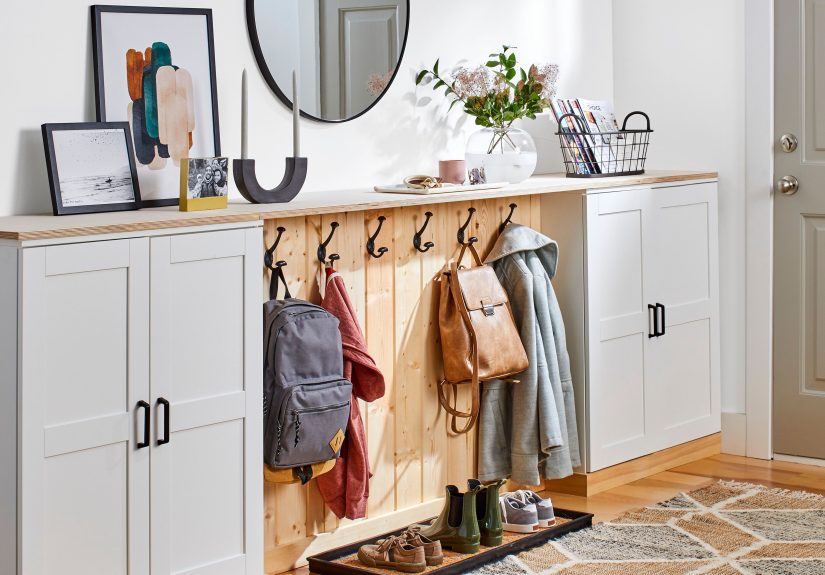
The entryway is one of the most overlooked clutter hotspots in the house because it fills up gradually. One pair of shoes becomes six. One shopping bag becomes a stack of reusable totes plotting a quiet takeover. Keys, receipts, sunglasses, packages, pet leashes, and random coins all start hanging out together like they were invited to the same party.
This area matters because it affects your mood the second you walk in the door. If your first view of home is chaos, your brain does not say, “How charming.” It says, “Fantastic, now I am tired and annoyed.”
How to declutter it
Start by removing everything that does not belong in the entryway. Be ruthless. If it does not help you leave the house or return home smoothly, it probably belongs somewhere else. Limit the area to true essentials: shoes currently in rotation, coats being worn this season, keys, bags, and incoming mail.
Add simple boundaries. A tray for keys, hooks for bags, one bin for scarves and gloves, and a basket for shoes can do more than a dozen vague promises to “be better organized this year.” The trick is not buying fancy organizers. The trick is making it easy to put things away without a dramatic internal debate.
If you want a quick win this January, declutter your entryway first. It is small, visible, and instantly rewarding.
2. The Junk Drawer and Paper Pile
Every home has one. Sometimes it is officially called a junk drawer. Sometimes it is a kitchen counter, a side table, or a mysterious mail mountain near the microwave. Whatever shape it takes, it becomes the final resting place for batteries, menus, paper clips, expired coupons, mystery keys, tangled cords, birthday candles, and pens that have retired from writing but still refuse to leave.
This is one of the most common January decluttering projects for a reason: holiday receipts, cards, shopping lists, and loose paperwork tend to pile up fast at the end of the year. If you ignore it, paper clutter starts multiplying like it pays rent.
How to declutter it
Empty the drawer or surface completely. Yes, completely. You cannot organize chaos by politely nudging it around. Sort everything into categories: keep, relocate, shred or recycle, and trash. Test pens. Match batteries. Toss dried-out markers. Rehome the screwdriver that somehow has been living next to spare birthday candles for six months.
For paper, create a simple system with only a few buckets: action, file, recycle. That is it. You do not need a filing cabinet worthy of a law firm. You need fewer loose stacks and a clear place for important documents. A small inbox tray works wonders because it turns random paper clutter into one contained decision zone.
The real magic here is maintenance. Spend five minutes once a week clearing the drawer or paper station, and it stops becoming a tiny monument to postponed decisions.
3. The Pantry
The pantry always seems organized until you need paprika, and suddenly you are excavating through stale crackers, duplicate pasta boxes, and a can of beans old enough to have opinions. January is the perfect time to declutter the pantry because the post-holiday rush usually leaves it overstuffed, uneven, and full of items you forgot you bought.
Pantry clutter is more than a visual annoyance. It wastes money, creates duplicate purchases, and makes weeknight cooking harder than it needs to be. An organized pantry saves time, helps you see what you actually have, and makes meal planning feel less like an escape room challenge.
How to declutter it
Take everything out by section. Check expiration or best-by dates, toss stale items, and be honest about what your household really eats. If that novelty grain has been untouched for two years, it is not an aspirational ingredient. It is shelf décor.
Group similar items together: snacks, baking supplies, canned goods, pasta, breakfast foods, spices. Keep the most-used items at eye level. Use bins or baskets only where they genuinely help contain categories. Labels can be useful, but they are not the main event. Visibility is.
Do not forget the nearly invisible clutter of mismatched food containers and missing lids if your pantry shares space with food storage. Those pieces have one job. If they cannot find each other, the relationship is over.
4. Under the Sinks
Under-sink cabinets are the Bermuda Triangle of home organization. You put one bottle of cleaner under there and, a few months later, discover twelve half-used sprays, crumpled grocery bags, damp sponges, and a roll of trash bags behaving like a wild animal.
These spaces are easy to ignore because you can shut the cabinet door and pretend everything is fine. But they matter. They hold daily-use items, and when they are cluttered, even basic chores become irritating. You should not have to move four mystery bottles just to find dish soap.
How to declutter it
Empty the cabinet and wipe it down first. Under-sink areas tend to collect drips, crumbs, and sticky residue, which means clutter is often accompanied by grime. Toss empty bottles, combine duplicates when appropriate, and get rid of products you never use.
Then sort by purpose. Keep everyday cleaning supplies front and center. Put backups together in one container. Use a small bin for dishwasher tabs, sponges, or trash bags. A tension rod or stackable shelf can help if the plumbing leaves you with awkward shapes, but the most important move is reducing volume. Organization is much easier when the cabinet is not stuffed like an overpacked suitcase.
This is also a smart place to check for anything that should be stored more safely away from kids or pets. Practical beats pretty every time.
5. The Medicine Cabinet and Bathroom Drawers
Bathroom clutter is sneaky because it often hides behind doors and inside drawers. From expired medications to half-used lotions, hotel freebies, backup toothpaste, old makeup, and that one hair product you keep out of guilt, this area becomes crowded fast. January is an ideal time to reset it because you are already in fresh-start mode, and your daily routines feel better when the bathroom is not overflowing with tiny bottles making big demands.
This is one decluttering zone where safety matters as much as neatness. Unused or expired medications should not just sit around indefinitely, and they should not be tossed carelessly either.
How to declutter it
Pull everything out. Check medicine labels and expiration dates. Set aside anything expired, unused, or no longer needed for proper disposal. For many medications, drug take-back locations or mail-back programs are the safest option. For toiletries and beauty products, be realistic. If you did not like it in July, you probably will not love it more in January.
Group what stays into simple categories: daily essentials, first aid, dental care, skincare, hair products, and travel items. Use drawer dividers or small bins so products do not slide into one chaotic community. Keep only the things you actually use within easy reach.
The bathroom should help you start and end the day smoothly. It should not feel like a clearance aisle after a windstorm.
6. The Linen Closet
The linen closet is often treated like a polite hiding spot. Extra sheets? Toss them in. Guest towels? Shove them somewhere near the top. Random pillowcases, sample toiletries, backup soap, a heating pad, wrapping paper, and possibly a board game from a different decade? Sure, why not.
By January, this closet can be especially messy after holiday guests, extra hosting, and cold-weather bedding swaps. The result is a packed space that somehow still never contains the exact sheet set you need when it is time to change the bed.
How to declutter it
Take out all linens and sort by category. Match sheet sets, fold towels, and remove anything stained, torn, scratchy, or no longer useful. Keep only the number of sheet sets and towels that fits your household’s real needs. More is not always better. Sometimes more is just harder to stack.
Store complete sheet sets together, whether folded inside one pillowcase or grouped in a labeled bin. Keep frequently used towels on the easiest shelf to reach. Move unrelated items elsewhere so the closet can do its actual job.
When the linen closet is streamlined, chores get easier. Making beds takes less time. Guest prep becomes simple. And you no longer risk being attacked by an avalanche of fitted sheets the moment you open the door.
A Simple January Decluttering Strategy That Actually Works
If all six spaces need attention, do not try to conquer them in one dramatic weekend unless that is genuinely your thing. Most people do better with shorter, focused sessions. Choose one zone at a time. Set a timer for 20 to 30 minutes. Finish the job completely, even if it is small.
That is the real secret behind home organization tips that work: finishable projects. A decluttered junk drawer is more useful than a half-finished whole-house plan. Momentum matters. Once you see one tidy, functional space, it becomes much easier to tackle the next one.
And when you are done, make the reset stick by asking one question: What made this spot cluttered in the first place? Usually, the answer is one of three things: there was no designated home, too much stuff was being stored there, or the system was too annoying to use consistently. Fix that, and the clutter is far less likely to stage a comeback.
What These January Decluttering Sessions Actually Feel Like in Real Life
There is a very particular experience that comes with decluttering overlooked spots in January, and it rarely looks like those perfectly staged before-and-after photos where someone calmly places three beige baskets on a shelf and suddenly achieves enlightenment. Real-life decluttering is messier, funnier, and strangely emotional.
You start with confidence. “I’ll just clean out the entryway,” you say. Twenty minutes later, you are holding a single glove, two expired coupons, a restaurant receipt from months ago, and a tote bag you forgot you owned but are somehow not ready to part with. The front door area becomes a snapshot of your habits: what you grab in a rush, what you drop when you are tired, and what you keep postponing because it feels too small to matter. Then you clear it, and suddenly coming home feels easier. Lighter. Less noisy.
The junk drawer experience is even more revealing. It starts as a simple organization task and quickly turns into archaeology. You discover dead batteries, mystery cords, twist ties, rubber bands, and at least one object no one in the house can identify. But once it is sorted, the payoff is enormous. The next time you need scissors, tape, or a pen that actually writes, you find it immediately. That tiny shift feels absurdly luxurious.
The pantry reset often brings a different emotion: mild disbelief. You realize how often clutter causes invisible waste. Duplicate ingredients, forgotten snacks, stale crackers, and food shoved so far back it practically entered witness protection. After decluttering, meal prep gets easier, grocery shopping gets smarter, and you stop buying your third jar of cinnamon because you thought you were out.
Under the sink, the experience is usually part decluttering and part honesty session. Why do we keep half-empty bottles of products we do not like? Why is there always a damp sponge involved? Why are there so many plastic bags when everyone swore they were using reusable totes now? Yet once that cabinet is cleaned and simplified, ordinary chores become less irritating. You are no longer fighting clutter before you can even start wiping the counter.
The bathroom and medicine cabinet can feel surprisingly satisfying because they combine visual order with practical safety. Throwing out old samples and setting aside expired items gives the whole room a fresher rhythm. Your morning routine moves faster. Bedtime feels calmer. The drawer stops jamming shut like it is protesting your life choices.
And then there is the linen closet, which often delivers the most dramatic transformation of all. One hour earlier, it was a stuffed cube of mismatched towels and suspiciously aggressive fitted sheets. Now it is neat, breathable, and useful. You can grab what you need without starting an accidental avalanche. That kind of improvement may sound small, but it changes how your home functions behind the scenes.
That is really the best part of decluttering these overlooked spots in January. You do not just create a tidier house. You create less friction. Less searching. Less overstuffing. Less visual noise. Your home begins to support you instead of quietly annoying you twelve times a day. And honestly, that is a pretty excellent way to start the year.
Final Thoughts
If your home feels cluttered this January, you do not need a total overhaul. You need a few smart wins in the areas that affect daily life the most. Start with the entryway, the junk drawer, the pantry, under the sinks, the bathroom storage, or the linen closet. These overlooked spots tend to collect clutter quietly, but once you clear them, the entire home feels more manageable.
Decluttering this January is not about chasing perfection. It is about making your space easier to live in. And when you focus on the hidden troublemakers instead of just the obvious mess, your progress feels faster, more practical, and a lot more satisfying.