Table of Contents >> Show >> Hide
- Why Patio Design Goes Sideways So Fast
- 1. Matching Furniture Sets That Look Like a One-Click Impulse Buy
- 2. Worn-Out Furniture and Sad Cushions That Have Seen Too Much
- 3. Lighting That Is Either Too Harsh, Too Weak, or Just Plain Corny
- 4. Bulky Layouts, Blocked Sight Lines, and a Patio That Fights Back
- 5. Too Many Materials, Trendy Surfaces, and Hardscaping With Commitment Issues
- 6. Decorative “Features” That Look Cute but Do Absolutely Nothing
- The Real Fix: Design Your Patio for Living, Not Just Looking
- Extra Perspective: What People Learn About Patio Design the Hard Way
- SEO Tags
Patios are supposed to feel like a little vacation attached to your house. A place for iced coffee, grilled corn, late-night chats, and the occasional dramatic flop into a lounge chair after a long week. But some patio features miss the mark so badly that designers can spot them from the back fence. You know the vibe: the furniture looks tired, the layout feels awkward, the lighting is somehow both blinding and useless, and the whole space gives off “we bought everything in one panic order at 11:47 p.m.” energy.
The good news is that a patio does not need to be huge, expensive, or professionally landscaped to look polished. What designers care about most is comfort, proportion, durability, and a sense that the outdoor space actually belongs to the home. The bad news is that a few common choices can make even a nice backyard feel cheap, cramped, or strangely hostile to human life. Nobody wants their patio to say, “Please eat your burger quickly and leave.”
Below are six patio features that instantly give designers the ick, plus what to do instead if you want your outdoor space to feel elevated, usable, and much more inviting.
Why Patio Design Goes Sideways So Fast
Outdoor spaces are tricky because they have to do more than look pretty. A good patio has to survive heat, rain, pollen, sun fade, muddy shoes, dinner spills, and that one friend who always drags a chair across stone like they are trying to summon ghosts. Designers tend to react strongly to patio mistakes because outdoor areas fail faster than indoor rooms when the basics are wrong.
The most common issues usually come down to four things: scale, function, maintenance, and cohesion. Furniture that is too bulky overwhelms the patio. Materials that are too trendy or delicate age badly. Features that look great in a photo but solve no real problem become expensive annoyances. And when the patio feels disconnected from the house, the whole setup starts reading like a random yard sale instead of a true outdoor living area.
1. Matching Furniture Sets That Look Like a One-Click Impulse Buy
Designers do not hate coordinated furniture. They hate the kind of matching patio set that makes a space feel flat, predictable, and weirdly temporary. When every chair, table, frame, cushion, and finish is identical, the patio starts to resemble a furniture showroom after closing time. There is no personality, no layering, and no visual rhythm. It is the outdoor version of buying the framed art, lamps, and fake lemon bowl from the same catalog page and calling it a day.
The problem gets worse when the set is the wrong size for the patio. A chunky sectional on a modest slab can swallow the whole surface and leave no room to walk. On the other hand, a tiny table with four flimsy chairs can make a large patio feel oddly abandoned. Designers constantly come back to scale because it affects everything: comfort, flow, and how spacious the patio feels at first glance.
There is also the durability issue. Cheap all-in-one sets often use materials that look tired fast. Cushions flatten, faux wicker starts to fray, and the finish fades before you can say “Memorial Day sale.” A patio should age gracefully, not collapse emotionally by mid-summer.
What to Do Instead
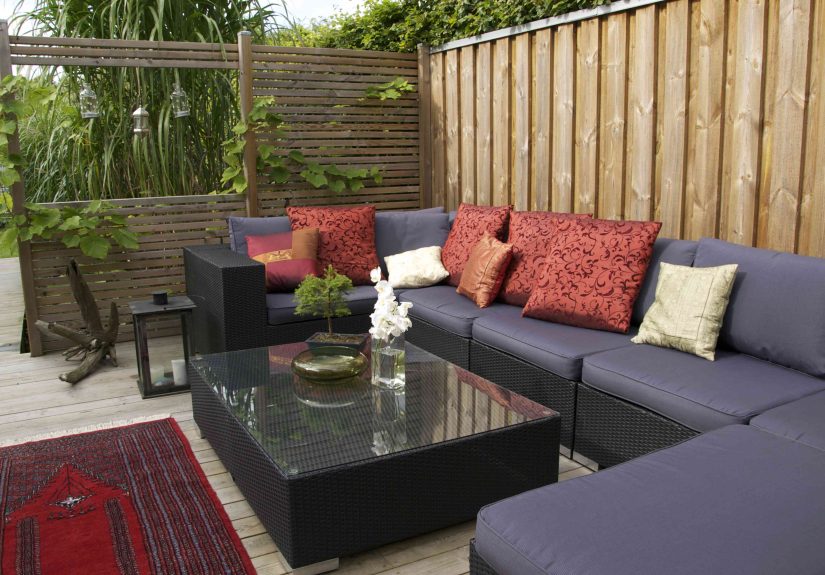
Think in terms of a collected look. Mix seating styles that share a color palette or material family rather than buying six clones. Pair a sofa with two lounge chairs. Add a side table that contrasts in shape or finish. Use one anchor piece and build around it. Most of all, measure before buying. A patio should feel furnished, not stuffed or stranded.
2. Worn-Out Furniture and Sad Cushions That Have Seen Too Much
If your patio furniture squeaks, sags, peels, rusts, or lists to one side like it has given up on life, designers will notice immediately. Weather-beaten pieces are one of the fastest ways to make a patio look neglected. Outdoor furniture does not need to be pristine, but it should not look like it survived three breakups, seven storms, and a minor pirate attack.
This is especially true for cushions. Flat inserts, faded fabric, mildew spots, and that suspicious damp smell? Absolutely not. Good patio design is about making people want to linger. Nobody lingers on a cushion that feels like a wet sponge wearing sunscreen residue.
Designers also dislike when homeowners use indoor fabrics outdoors and hope for the best. That optimism is touching, but the patio always wins. Materials matter because sun, rain, humidity, and debris are relentless. If your upholstery and frames are not made for outdoor use, they will advertise that fact very quickly.
What to Do Instead
Edit ruthlessly. Replace anything unstable, stained, or visibly deteriorating. Invest where it counts: seating, cushions, and core materials. Choose outdoor-safe fabrics, easy-clean finishes, and frames designed for exposure to the elements. You do not need luxury resort money. You just need pieces that still look intentional after a season of actual living.
3. Lighting That Is Either Too Harsh, Too Weak, or Just Plain Corny
Patio lighting is where good intentions go to die. Some patios are lit like parking lots, with cold, glaring bulbs that make dinner feel like an interrogation. Others rely on a few droopy string lights that create atmosphere but not enough visibility to find your drink, your phone, or your dignity. Designers get especially cranky about lighting because it affects mood, safety, and how often the space gets used after sunset.
Bad lighting can also cheapen an otherwise lovely patio. Random rope lights, exposed cords, harsh blue-white bulbs, and fixtures that are far too small for the surrounding architecture all tend to read as afterthoughts. And while string lights can be charming, they should not be expected to do every job at once. Ambiance is not the same thing as functional illumination.
There is a practical side here, too. Better outdoor lighting extends the usefulness of a patio well into the evening. Warm LEDs are a smart choice because they are efficient, versatile, and longer-lasting than older lighting types. In other words, good lighting is not just pretty. It is a performance upgrade.
What to Do Instead
Layer the light the same way you would indoors. Start with one reliable source for general illumination, then add softer accent lighting through wall sconces, lanterns, step lights, or a few well-placed overhead strands. Choose warm color temperatures, not icy ones. And match fixture scale to the house and patio size. Tiny fixtures on a large exterior look timid, while over-bright bulbs make everybody look like they are waiting for airport security.
4. Bulky Layouts, Blocked Sight Lines, and a Patio That Fights Back
Designers are deeply unimpressed by patios that make movement awkward. One oversized dining table in the middle of a small patio can cut the space in half. A giant grill parked dead center can hijack the whole view. Umbrellas, storage boxes, and furniture with heavy profiles can visually crowd the area and make it feel much smaller than it is.
This is where the phrase “outdoor room” gets misunderstood. Yes, your patio should feel like an extension of the home. No, that does not mean you should cram a full living room, dining room, grilling station, decorative ladder, sideboard, and six planters onto one rectangle of concrete. When everything is competing for attention, the patio stops feeling relaxed and starts feeling like an obstacle course.
Designers generally prefer layouts that preserve sight lines and give each function its own zone. Lounge seating belongs where people can converse comfortably. Dining areas need clear circulation. Large visual elements should usually sit to one side, not in the center, especially in smaller spaces. The best patios let your eye travel. The worst ones make you feel trapped between a planter and a grill with nowhere to set your plate.
What to Do Instead
Use zoning, but keep it simple. Decide whether your patio needs dining, lounging, cooking, or two of the three. Then arrange furniture to support those uses without choking the flow. Choose slim-profile pieces when square footage is tight. Leave breathing room around entry points and major traffic paths. A patio should guide people through the space, not challenge them to a tactical maneuver.
5. Too Many Materials, Trendy Surfaces, and Hardscaping With Commitment Issues
One of the quickest ways to make a patio feel visually chaotic is to throw too many materials at it. Designers see this all the time: stamped concrete next to pea gravel next to glossy tile next to random pavers next to a wood border that is somehow also involved. The result is not “eclectic.” It is a patio having an identity crisis.
Fragmented flooring makes a space feel smaller because the eye keeps stopping and restarting. Trend-driven surfaces can be even worse. Glossy finishes may look sleek online but can create glare, show every speck of dirt, and become slippery when wet. Ultra-light concrete can feel stark and high-maintenance. Excessive wood elements can look beautiful at first but often demand more sealing, repair, and upkeep than homeowners bargain for.
Designers are usually less concerned with chasing the hottest outdoor trend and more concerned with longevity. Natural stone, textured concrete, consistent pavers, and restrained material palettes tend to age better because they provide continuity and a calmer visual field. The goal is not to make the patio boring. It is to keep it from looking like a sample board exploded.
What to Do Instead
Limit your hardscape palette. Choose one main surface and let it carry the space. If you need contrast, bring it in through furniture, textiles, and plants rather than stacking five flooring materials into one backyard. Prioritize texture, slip resistance, durability, and ease of maintenance over trendiness. Outdoor materials should work hard without begging for applause.
6. Decorative “Features” That Look Cute but Do Absolutely Nothing
This may be the biggest patio ick of them all: features that are all style and no substance. Think empty planters, cute signs with corny slogans, pergolas that provide almost no actual shade, and decorative accessories that feel copied from a social media mood board instead of chosen for real outdoor living.
Designers tend to dislike this category because it exposes a larger problem: the patio was decorated before it was solved. Shade, seating, lighting, privacy, airflow, and plant scale all matter more than gimmicks. A pergola without shade functionality may create a focal point, but if it leaves everyone roasting at 2 p.m., it is not doing its job. Empty pots and undersized planters make hardscaping look stark instead of lush. Literal word art can make a space feel less sophisticated when texture, greenery, and warm accessories would send the same message much better.
Function matters beyond comfort, too. Poor drainage and water-collecting accessories can make a patio feel neglected in a hurry. Standing water around saucers, containers, or low spots is not just unattractive. It is exactly the kind of maintenance oversight that turns a relaxing patio into a mosquito meetup.
What to Do Instead
Choose features that earn their spot. If you add a pergola, pair it with a canopy, louvers, or climbing elements that create usable shade. Fill planters generously and scale them to the patio. Use accessories to add softness and color, not visual noise. Hide clutter, store tools, and keep surfaces maintained. The most attractive patios feel effortless, but they are never accidental.
The Real Fix: Design Your Patio for Living, Not Just Looking
The best patios succeed because they balance beauty with utility. They match the home without copying it too literally. They feel layered but not cluttered. They use lighting to create atmosphere and function. They respect scale. And above all, they make people want to stay awhile.
If you want one easy design test, ask yourself this: would you honestly want to spend two hours here with a drink, a snack, and people you like? If the answer is no, the patio does not need more random decor. It needs better choices. Start with comfort, edit what feels cheap or awkward, and let the design support how you actually live.
A great patio does not have to be fancy. It just has to stop giving designers the ick.
Extra Perspective: What People Learn About Patio Design the Hard Way
There is a funny thing that happens once people start really using their patio instead of just admiring it from the kitchen window: the truth comes out immediately. That adorable bistro set you bought because it looked charming online? Turns out it is only comfortable if everyone at the table is exactly the size of a folded umbrella. The glossy tile that looked stunning in a product photo? It becomes a skating rink the second the weather gets dramatic. The pretty little planters? They looked intentional for about four days, and then they started reading more “forgotten herb experiment” than curated outdoor oasis.
One of the biggest lessons homeowners learn is that patios are less about decorating and more about behavior. Where does the sun hit at 4 p.m.? Where do people naturally gather? Is there somewhere to set a glass without balancing it on a knee like a circus act? Can guests move around without backing into a planter or clipping a chair leg every eight seconds? These are the unglamorous questions that separate a nice-looking patio from one that truly works.
Another common realization arrives after the first real season outdoors. Materials that seemed “good enough” start showing their personality. Cheap cushions fade. Thin metal gets hot enough to fry optimism. Wood that felt warm and natural suddenly needs cleaning, sealing, or repairing. String lights sag. Decorative lanterns collect dirt. The patio starts quietly asking whether you designed for real weather or just for a photo taken on one perfect spring afternoon.
Then there is the layout problem, which many people discover during their first gathering. Guests avoid the chairs that are too upright. Nobody sits in the corner with no side table. Everyone ends up standing near the grill because that is where the action is, which tells you the patio was not really arranged for conversation in the first place. Good designers notice this instantly because they know outdoor spaces have social patterns. People cluster where there is comfort, shade, light, and an easy path through the area.
Shade, in particular, is one of those things homeowners often underestimate until the patio becomes unusable for half the day. A pergola may look architectural and elegant, but if it does not block enough sun, everyone will drag chairs into the one patch of shadow like desert travelers finding water. Likewise, lighting feels optional right up until dusk, when the patio suddenly becomes a dim stage set where no one can see the appetizer tray.
The most successful patios usually come from a second round of thinking, not the first. People try the patio, notice what annoys them, and start editing. They swap flimsy chairs for deeper seating. They replace tiny decor pieces with a few larger, stronger elements. They add a real shade solution. They simplify the palette. They stop treating the patio like a separate, decorative project and start treating it like another room of the home.
That is really the heart of the matter. Designers get the ick from certain patio features because those features reveal a mismatch between appearance and experience. A good patio should not just photograph well. It should support slow mornings, messy dinners, sunset conversations, and ordinary life. When an outdoor space does that, nobody cares whether the chairs match perfectly. The patio feels right, and that is always the goal.