Table of Contents >> Show >> Hide
- Why the Kitchen Matters So Much in Feng Shui
- 1. Knives Left Out on the Counter
- 2. Dead, Dried, or Dying Plants
- 3. Broken or Chipped Items
- 4. Stuff Piled on Top of Cabinets or the Fridge
- 5. Overflowing Trash, Recycling, and Forgotten Food Waste
- 6. Cluttered Countertops That Double as a Catch-All
- How to Make a Kitchen Feel Better Without Renovating Anything
- Final Thoughts
- Experience: What Changed After Removing These 6 Things From a Real Kitchen
- SEO Tags
The kitchen is where coffee happens, leftovers get second chances, and somebody always asks, “What’s for dinner?” In feng shui, it is also one of the most important rooms in the home because it represents nourishment, daily rhythm, and the energy that supports everyone living there. So when a kitchen feels chaotic, stale, or stressful, the problem is not always the square footage. Sometimes it is the stuff.
That is why feng shui experts tend to be surprisingly picky about what stays in a kitchen. This is not about turning your home into a minimalist showroom where one lemon sits heroically in a bowl and nobody is allowed to touch it. It is about removing the items that create visual noise, collect grime, interrupt flow, or make the room feel tired before breakfast even starts.
If you have ever walked into your kitchen and felt weirdly annoyed by a pile of mail, a dusty knife block, or that one chipped mug you keep pretending is “still fine,” congratulations: your instincts are working. Below are six things feng shui experts never keep in their kitchens, why they matter, and what to use instead if you want a kitchen that feels calmer, cleaner, and a lot more welcoming.
Why the Kitchen Matters So Much in Feng Shui
Feng shui is all about the movement of energy, often called chi. In practical terms, that usually means asking a very simple question: does this room help life flow more smoothly, or does it make everything feel harder than it needs to be?
The kitchen has a huge job. It stores food, supports routines, and often acts as the social headquarters of the home. Even in houses where the living room gets all the design attention, people still drift into the kitchen like it has its own gravitational pull. Because of that, the condition of the kitchen often affects how the whole home feels.
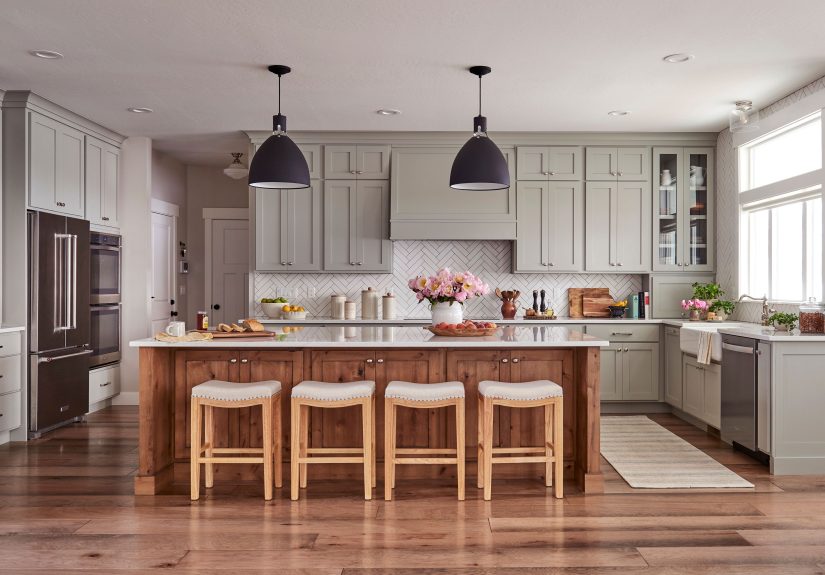
A kitchen with good feng shui is not necessarily expensive or trendy. It is functional, bright, easy to move through, and free from the kind of clutter that quietly raises your stress level. In other words, it does not need a marble island the size of a small country. It just needs fewer bad decisions sitting on the counter.
1. Knives Left Out on the Counter
Knives are useful. Essential, even. But feng shui experts generally do not love seeing them displayed on the countertop, especially in a bulky block that becomes a magnet for grease, crumbs, and dust. The reasoning is simple: sharp objects create a cutting energy. In a room meant to support nourishment and harmony, that can feel visually aggressive.
Now, this does not mean you need to hide your chef’s knife like it is in witness protection. It means giving knives a more intentional home. A drawer insert, a protected in-drawer organizer, or a well-placed magnetic strip away from visual clutter can help the room feel calmer and cleaner.
Why this matters
Countertops work best as work surfaces, not storage surfaces. When knives live out in the open, they add to the sense that the kitchen is always “on edge,” especially when combined with too many utensils, gadgets, and appliance cords.
What to do instead
- Use an in-drawer knife organizer for a cleaner look.
- Keep only what you truly use on a weekly basis within easy reach.
- Wipe down knife storage areas often so they do not become grime museums.
2. Dead, Dried, or Dying Plants
Fresh herbs on a sunny ledge? Lovely. A healthy pothos in the corner? Great. A dried bouquet that is shedding onto the toaster like botanical confetti from 2024? Not so much.
In feng shui, living plants can symbolize growth, vitality, and renewal. Dead, dried, or visibly struggling plants send the opposite message. Instead of making the kitchen feel alive, they make it feel neglected. And because kitchens already deal with heat, moisture, grease, and changing temperatures, anything dusty and past its prime tends to look especially sad in there.
Spiky plants can also be a questionable choice in feng shui because their shape is thought to create a harsher feel. Even if you are not deeply invested in energy theory, the design logic still checks out. Soft, healthy greenery feels welcoming. A crispy arrangement that looks one sneeze away from collapse does not.
Why this matters
The kitchen should feel fresh. Dead plants read as stagnant, and stagnant is not the mood when you are trying to make Tuesday night pasta feel hopeful.
What to do instead
- Swap dried arrangements for fresh flowers or a bowl of citrus.
- Choose low-maintenance plants you can actually keep alive.
- If a plant is not thriving, move it or let it go without guilt.
3. Broken or Chipped Items
There is a special category of kitchen item that people keep for no rational reason: the chipped bowl, the cracked plate, the mug with a handle that feels emotionally unstable. Feng shui experts are usually firm on this one. Broken items represent broken energy, and in a room tied to nourishment and routine, that is not considered ideal.
There is also the practical side. Chipped dishes are harder to clean properly, can feel rough or unsafe, and make everyday tasks feel a little more worn down. You may not think one cracked cereal bowl matters, but kitchens are built on repetition. If you see damaged items every single day, they become part of the atmosphere.
And yes, this applies beyond tableware. Loose cabinet hinges, burnt-out lights, warped cutting boards, a burner that only works when you whisper encouraging words to it, all of that counts. If it can be repaired, repair it. If it cannot, replace it or recycle it.
Why this matters
Small signs of neglect add up. A kitchen filled with “I’ll deal with that later” energy eventually starts feeling heavy, frustrating, and oddly exhausting.
What to do instead
- Do a quick sweep for chipped mugs, cracked containers, and broken tools.
- Fix what is worth fixing this week, not “someday.”
- Keep only items that are functional, safe, and pleasant to use.
4. Stuff Piled on Top of Cabinets or the Fridge
If your kitchen cabinets have become a rooftop parking lot for baskets, vases, platters, mystery boxes, and a blender you forgot you owned, feng shui experts would like a word. High, hard-to-reach storage zones often become dust-collecting dead zones. They are out of sight, rarely cleaned, and usually filled with things you do not actually need daily.
The top of the fridge is another classic problem area. It looks like free real estate, but it often turns into a trap for clutter, grease, and awkwardly balanced objects. From a visual perspective, these spots create a heavy feeling overhead. From a practical perspective, they collect grime and make the kitchen feel more crowded than it is.
This is where feng shui and common sense become best friends. If a storage solution is hard to access, easy to ignore, and permanently dusty, it is probably not a great solution.
Why this matters
Overhead clutter makes a kitchen feel compressed. Even a large kitchen can look smaller and more stressful when the eye lands on dusty storage mountains above every cabinet line.
What to do instead
- Keep the tops of cabinets and appliances as clear as possible.
- Store seasonal pieces inside cabinets, not above them.
- Use drawer dividers, shelf risers, or pantry bins where items are easier to see and clean.
5. Overflowing Trash, Recycling, and Forgotten Food Waste
This one is not very glamorous, but neither is an overstuffed trash can leaning like it has given up on life. Feng shui experts often warn against overflowing trash and recycling because it creates stagnant, unpleasant energy. Translation: your kitchen starts to feel neglected fast.
Even if the bin is technically closed, an overfilled can or a pile of recyclables waiting indefinitely by the door creates a subtle sense of unfinished business. Add old produce in the fridge, stale pantry items, and a compost bowl you forgot to empty, and suddenly the whole room feels off.
Neglect is usually more disruptive than mess itself. A pan on the stove after dinner is normal. A trash area that always looks one takeout container away from mutiny is another story.
Why this matters
Trash is literally what the kitchen no longer needs. When it stays too long, it becomes a visual and emotional reminder of delay, buildup, and low-level stress.
What to do instead
- Empty trash and recycling before they overflow.
- Do a quick fridge and pantry check weekly for expired or forgotten food.
- Wash bins regularly so they do not become odor headquarters.
6. Cluttered Countertops That Double as a Catch-All
If there is one theme nearly every organizing expert and feng shui practitioner can agree on, it is this: cluttered counters make a kitchen feel chaotic. Counters piled with unopened mail, vitamins, receipts, random school papers, too many appliances, and three decorative objects that are trying very hard are not helping the energy. They are just taking up your prep space and stressing you out before the coffee finishes brewing.
Feng shui sees clutter as a blockage. Modern organizing experts call it visual overload. Either way, the conclusion is the same: when counters are jammed, the room feels busier, smaller, and less functional. It also becomes harder to clean, which means clutter breeds more clutter. That is one of life’s less charming feedback loops.
This does not mean your kitchen has to be bare. It means the items on display should be intentional. A coffee maker you use daily, a fruit bowl, maybe one attractive tray. That is very different from a counter that looks like six unrelated errands had a group meeting there.
Why this matters
Clear counters create immediate visual relief. They also make cooking easier, cleaning faster, and mornings noticeably less irritating.
What to do instead
- Keep only daily-use essentials on the counter.
- Give paper clutter and miscellaneous items a home outside the kitchen.
- Store small appliances you rarely use in a cabinet or pantry zone.
How to Make a Kitchen Feel Better Without Renovating Anything
The good news is that improving kitchen feng shui usually does not require a contractor, a demolition plan, or a dramatic identity shift into someone who labels every grain jar by moon phase. Small changes matter.
Start with what you can remove. Toss expired food. Put away duplicate gadgets. Retire chipped dishes. Clear the top of the fridge. Empty the trash. Wipe down one counter until it looks like a surface again instead of a storage negotiation.
Then add a little life back in. Open a window. Place a healthy plant where it can thrive. Use a bowl of lemons or oranges for color and freshness. Make sure the lighting is warm enough that the room feels inviting, not like an interrogation scene in a crime drama.
The goal is not perfection. The goal is ease. A kitchen with better flow supports better habits because it is easier to cook in, easier to clean, and easier to enjoy.
Final Thoughts
So, what do feng shui experts never keep in their kitchens? Sharp clutter, dead energy, broken objects, dusty overflow zones, neglected trash, and catch-all countertop chaos. Different words, same lesson: the kitchen works best when it is cared for, not crowded.
If you want the biggest payoff, do not overcomplicate it. Remove one category today. Toss one broken item. Clear one shelf. Empty one bin. Feng shui may speak the language of energy, but its kitchen advice often comes down to something wonderfully ordinary: keep what supports you, and stop storing what drains you.
Your kitchen does not need to be perfect. It just needs to stop acting like a storage unit with a stove.
Experience: What Changed After Removing These 6 Things From a Real Kitchen
One of the most interesting things about kitchen feng shui is that you usually feel the difference before you can fully explain it. I have seen this happen in regular family kitchens, small apartment kitchens, and those narrow galley kitchens where two people cannot pass each other without one of them turning sideways like a crab. The pattern is almost always the same.
At first, the kitchen looks “fine.” Not terrible. Not dangerous. Just normal. There is a knife block on the counter, a stack of mail near the fruit bowl, a few half-dead stems in a vase, two chipped mugs no one admits to owning, and a trash can that is technically not overflowing if you define “overflowing” very creatively. Nothing feels dramatic. But the room feels tiring.
Then the edit begins. The broken mug goes out. The dead plant follows. The top of the fridge gets cleared, which reveals enough dust to qualify as an archeological layer. The mystery appliances are moved off the counter. Old spices and stale crackers are tossed. Suddenly, the kitchen is breathing again.
The most surprising change is not just that the room looks cleaner. It behaves better. People put things away more easily because there is actually somewhere to put them. Cooking feels less annoying because there is room to chop vegetables without moving seven unrelated objects first. Cleaning takes less time because you are wiping counters, not excavating them.
There is also an emotional shift. A calmer kitchen changes the tone of the day in sneaky ways. Mornings feel less frantic. Dinner prep feels less like a personal attack. Even standing at the sink seems slightly less tragic when the room around it is not visually shouting at you.
I remember one kitchen in particular where the biggest problem was not size but buildup. The homeowners had good storage, but every visible surface had become a landing pad. Once they removed the countertop clutter and cleared the cabinet tops, the room looked larger by what felt like several imaginary square feet. Nothing structural changed. The energy did.
That is what makes this topic so practical. You do not have to agree with every feng shui principle in a mystical sense to notice that dead plants feel gloomy, broken dishes feel worn out, and overflowing trash feels terrible. These are not abstract ideas. They are everyday experiences hiding in plain sight.
And maybe that is the real magic of it. A better kitchen does not always come from buying more organizers, more decor, or more gadgets. Sometimes it comes from removing the six things that never should have been hanging around in the first place. Your kitchen gets lighter. You get less irritated. And suddenly, making toast in the morning feels like less of a negotiation with the universe.