Table of Contents >> Show >> Hide
- Before we blame the drink: what “gas” and “bloating” usually mean
- 1) Soda (regular or diet)
- 2) Sparkling water, seltzer, and fizzy “zero-cal” flavored waters
- 3) Beer
- 4) Milkshakes, ice cream floats, and creamy coffee drinks
- 5) Fruit juice (especially apple, pear, mango) and “juice-heavy” smoothies
- 6) Sugar-free drinks with sugar alcohols (and some “keto” beverages)
- 7) Protein shakes and meal replacement drinks
- How to tell which drink is actually causing your bloating
- When bloating is a sign to check in with a clinician
- Quick swap ideas (so you still enjoy drinking things)
- of Experiences: What Gas-and-Bloating Drinks Look Like in Real Life
- Conclusion
Your stomach is not “being dramatic” it’s being physics-y and biology-y. A drink can bloat you for a few main reasons:
it can add extra gas (hello, bubbles), pull extra water into your intestines (some sugars do this),
or feed your gut bacteria a buffet of hard-to-digest ingredients that get fermented into gas.
And sometimes it’s not the drink itself it’s what’s in it (sweeteners, dairy, fiber additives) or how you drink it (fast, through a straw).
The tricky part: the same drink can be totally fine for your friend and a balloon-in-a-glass for you.
If you’re trying to figure out which beverages are behind your gas and bloating, this guide breaks down seven common culprits,
why they cause digestive discomfort, and what you can do without giving up every fun sip forever.
Before we blame the drink: what “gas” and “bloating” usually mean
Gas is air you swallow and gas made when bacteria break down food in your intestines.
Bloating is that full, tight, swollen feeling sometimes from gas, sometimes from fluid shifts, constipation, or sensitivity in the gut.
Drinks can contribute to both, especially if you’re prone to reflux, IBS symptoms, lactose intolerance, or sensitivity to certain carbohydrates.
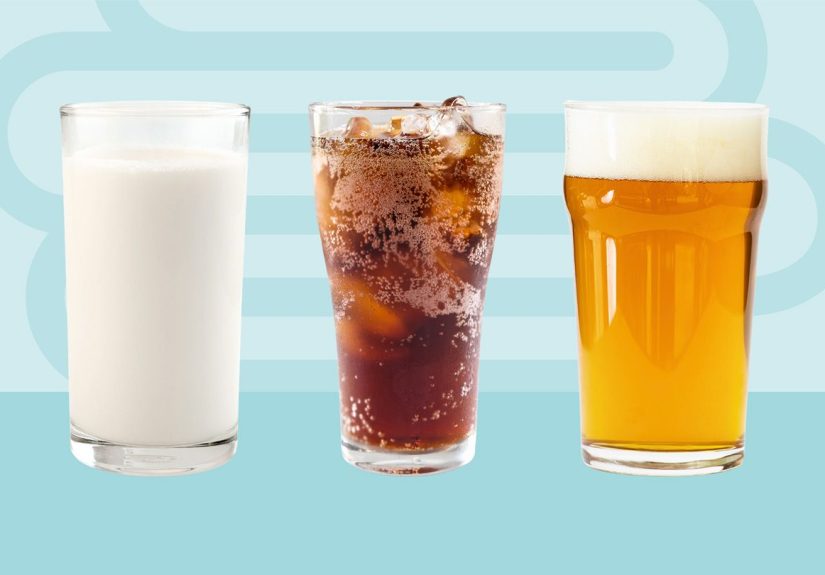
1) Soda (regular or diet)
Why it can bloat you
Soda is basically a triple threat:
- Carbonation adds carbon dioxide gas that can build pressure and lead to burping and a bloated feeling.
- Sweeteners can be a problem. Regular sodas often use sweeteners like high-fructose corn syrup, which some people don’t absorb well.
- Diet sodas may use sugar substitutes that can trigger gas, especially for sensitive guts.
If you drink soda quickly, through a straw, or while multitasking (aka “inhaling” it), you may swallow extra air, which doesn’t help.
How to make it easier on your gut
- Try a smaller serving (like a mini can) and sip slowly.
- If diet soda gets you, experiment with cutting back on sugar substitutes for a week.
- Pick still drinks when you’re already feeling puffy (after a salty meal, during PMS, or when constipated).
2) Sparkling water, seltzer, and fizzy “zero-cal” flavored waters
Why it can bloat you
“But it’s just water!” True… and also: bubbles. Carbonated water can still deliver enough gas to make you feel full and tight,
especially if you’re sensitive to pressure in the stomach or you tend to gulp beverages.
Some flavored sparkling waters also contain sweeteners or sugar alcohols that can add another layer of bloat potential.
How to make it easier on your gut
- Pour it into a glass and let it sit 5–10 minutes (less carbonation punch).
- Choose plain sparkling water first; if that’s fine, then test flavored versions.
- Alternate sips with still water, especially during meals.
3) Beer
Why it can bloat you
Beer has “bloat energy” in multiple directions:
- Carbonation adds gas and pressure.
- Fermentable carbs can be tough for some people, especially those sensitive to certain grains.
- Alcohol can irritate the stomach lining for some people and may disrupt normal digestion.
If you’ve ever felt like your jeans tightened one notch halfway through a pint, you’re not imagining things.
How to make it easier on your gut
- Try a smaller pour or switch to a less carbonated option.
- Drink slowly and avoid pairing beer with super salty bar foods (salt can amplify water retention).
- If wheat-based beers bother you, note it in a symptom diary and test alternatives.
4) Milkshakes, ice cream floats, and creamy coffee drinks
Why it can bloat you
Many people have some degree of lactose intolerance meaning they don’t make enough lactase to break down lactose (milk sugar).
When lactose isn’t digested well, it travels down to the large intestine, where bacteria ferment it. Result:
gas, bloating, cramps, and sometimes diarrhea.
Creamy lattes, frappes, and “extra splash of milk” coffees can trigger the same problem, especially on an empty stomach.
And if your drink includes whipped cream, ice cream, or extra dairy… your gut may feel like it just got assigned group-project work.
How to make it easier on your gut
- Try lactose-free milk or plant-based options (and see what works for you).
- Test smaller dairy portions many people can tolerate some lactose but not a full milkshake.
- If coffee itself irritates you, have it with food and consider a lower-acid roast.
5) Fruit juice (especially apple, pear, mango) and “juice-heavy” smoothies
Why it can bloat you
Fruit sounds innocent and whole fruit often is, thanks to fiber slowing things down. But juice is different:
it’s a concentrated hit of sugars with less fiber to buffer the ride.
Two common bloating triggers in fruit drinks:
- Fructose overload: Some people absorb fructose poorly, which can lead to fermentation and gas.
- High-fructose sweeteners: Some fruit drinks and “healthy” bottled smoothies add sweeteners that can worsen bloating.
This is why a big glass of apple juice can feel like you just set off a tiny marching band in your intestines.
How to make it easier on your gut
- Try smaller portions (4–6 oz) or dilute juice with still water.
- Pick whole fruit more often than juice when possible.
- Check labels on smoothies for added sweeteners and large “serving sizes” that are secretly two servings.
6) Sugar-free drinks with sugar alcohols (and some “keto” beverages)
Why it can bloat you
Sugar alcohols (like xylitol, sorbitol, maltitol, mannitol) are popular in sugar-free sodas, flavored waters, drink mixes,
and “low-carb” products. The catch: they’re often not fully absorbed in the small intestine.
When they reach the colon, bacteria ferment them and that can cause gas, bloating, and sometimes urgent bathroom plans.
Not everyone reacts the same way. Some sugar alcohols (like erythritol) may be easier for some people, but dose matters
and “one serving” can become “oops, I drank half the bottle.”
How to make it easier on your gut
- If you suspect sugar alcohols, try a 7–10 day break and see if symptoms improve.
- Scan ingredients for words ending in “-tol.” (It’s not foolproof, but it’s a strong clue.)
- Reintroduce slowly: a small amount first, not the jumbo “party size” version.
7) Protein shakes and meal replacement drinks
Why it can bloat you
Protein shakes can be super convenient and also a surprisingly common source of “why is my stomach doing this?”
Here’s what can trigger gas and bloating:
- Whey concentrate may contain lactose (problematic if you’re lactose intolerant).
- Fiber additives (like inulin/chicory root) can be very fermentable for some people.
- Thickener blends (gums) and sugar alcohols can add to digestive discomfort in sensitive individuals.
- Drinking too fast can increase swallowed air especially if you’re chugging post-workout.
A shake can be “healthy” and still not agree with your specific gut.
How to make it easier on your gut
- Try a lactose-free protein (like whey isolate or a plant protein) if dairy seems to trigger symptoms.
- Look for simpler ingredient lists and avoid high doses of added fibers at first.
- Mix with water instead of milk to test whether lactose is the real issue.
How to tell which drink is actually causing your bloating
If you feel bloated “all the time,” it’s tempting to blame the last thing you consumed but bloating can lag.
A helpful approach is a short, low-stress experiment:
- Keep a simple drink diary for 3–7 days: what you drank, how fast, and your symptoms.
- Change one thing at a time (swap soda for still water; change dairy milk to lactose-free; pause sugar alcohols).
- Watch your habits: drinking through a straw, chewing gum, and chugging can increase swallowed air.
If symptoms improve, you’ve got a solid lead. If not, it may be more about the overall diet pattern, constipation, stress, or an underlying issue.
When bloating is a sign to check in with a clinician
Occasional gas and bloating are extremely common. But if you notice any of the following, it’s worth getting medical advice:
persistent or worsening bloating, significant unexplained weight loss, blood in stool,
ongoing vomiting, fever, new or severe abdominal pain, or symptoms that wake you up at night.
You don’t need to panic you just shouldn’t ignore your body’s “hey, can we talk?” signals.
Quick swap ideas (so you still enjoy drinking things)
- Instead of soda: still water with citrus slices or a splash of cranberry (if tolerated).
- Instead of sparkling water daily: alternate sparkling and still, especially with meals.
- Instead of milk-heavy drinks: lactose-free milk or a plant-based option that works for you.
- Instead of juice bombs: diluted juice or smaller portions; choose whole fruit more often.
- Instead of sugar-alcohol beverages: lightly sweetened options without “-tol” ingredients.
- Instead of mystery protein shakes: simpler formulas, smaller servings, slower sipping.
of Experiences: What Gas-and-Bloating Drinks Look Like in Real Life
If you’ve ever wondered why bloating feels so random, you’re not alone. A lot of people describe it like this:
“Some days I can drink a soda and I’m fine. Other days I drink the same soda and my stomach inflates like it’s preparing for a parade.”
That’s because bloating often depends on the context what else you ate, how fast you drank, your stress level, and whether your gut is already irritated.
One common pattern shows up around lunchtime. Someone grabs a “diet” drink because it feels lighter than a sugary soda.
They pair it with a quick meal, drink it fast, maybe through a straw, then go right back to work.
An hour later: uncomfortable fullness, gurgling, and that unmistakable waistband pressure. In many of these cases, it’s not just the carbonation
it’s the combination of swallowed air plus sugar substitutes that the gut doesn’t fully absorb. If that drink also contains sugar alcohols,
the symptoms can ramp up later in the afternoon when fermentation kicks in.
Another classic story is the “healthy smoothie” surprise. Someone blends fruit juice, a banana, protein powder, and a fiber booster
because wellness influencers said so (and the blender made it look like a tropical vacation). The drink tastes great… and then their stomach feels
like it’s negotiating for more personal space. Often the issue is that juice-heavy smoothies deliver a large fructose load quickly,
and certain fibers (like inulin/chicory root) are very fermentable. The result can be gas production that feels sudden and dramatic,
even though it’s simply your gut bacteria doing what they do.
Coffee experiences can be surprisingly specific. Some people do fine with coffee after breakfast but feel bloated or crampy when they drink it on an empty stomach.
Others notice the real trigger is the “extras”: milk, creamers, sugar-free syrups, or whipped toppings.
In practice, switching just one variable like using lactose-free milk or avoiding sugar-free add-ins can make the difference between
“normal morning” and “why am I unbuttoning my jeans at 10 a.m.?”
Alcohol-related bloating stories tend to come with a timeline: people feel fine while drinking, then notice puffiness and a bloated belly later that night or the next morning.
Beer is famous here because it’s fizzy and fermented, but even cocktails can contribute if they’re mixed with carbonated soda or high-fructose mixers.
And then there’s the salty snack factor chips, fries, wings which can add water retention and make the bloating feel bigger than it otherwise would.
The most helpful takeaway from these real-life patterns is that you don’t have to guess forever.
Many people get clarity by running a short “detective week”: choose one suspected drink category (carbonation, dairy, sugar alcohols, juice-heavy drinks, or protein shakes),
pause it briefly, and then reintroduce it in a smaller amount under calmer conditions. Your gut tends to give very honest feedback
sometimes with the subtlety of a megaphone and once you know your triggers, you can usually enjoy your favorites in a smarter way.
Conclusion
Drinks that cause gas and bloating usually do it for understandable reasons: carbonation adds gas, certain sugars and sweeteners ferment,
dairy can trigger lactose intolerance symptoms, and some “healthy” add-ins are surprisingly fermentable.
The goal isn’t to fear beverages it’s to learn your personal triggers, adjust portions and ingredients, and sip in a way your gut actually likes.
If bloating is persistent, severe, or comes with concerning symptoms, check in with a healthcare professional to rule out other causes.