Table of Contents >> Show >> Hide
- Why leftover meter time feels like “found money” (but friendlier)
- The parking meter has evolved, but the joy is still the same
- The unspoken rules: enjoy the minutes, but don’t get cocky
- How to maximize leftover meter time without becoming a cartoon character
- Small scenes where this “awesome thing” hits hardest
- What this moment says about gratitude, cities, and human nature
- of experiences that make leftover meter time unforgettable
You know that little jolt of joy when you pull into a metered spot, glance up at the screen, and it’s already blinking back at you with bonus minutes? It’s like the city just handed you a tiny, crinkly gift bag labeled: “For you. No receipt. No questions.”
In the grand universe of “awesome things,” this moment is perfectly sized: not life-changing, not post-worthy, but still enough to make your shoulders drop and your brain say, “Ah. Today is cooperating.” It’s the street-parking version of finding a French fry at the bottom of the bag when you were sure you ate them all.
And it’s weirdly personal, toobecause you didn’t earn it. You didn’t calculate it. You didn’t even have to fumble for quarters while a line of cars judged your parallel parking technique. You simply arrived at the right place at the right time… and someone else’s leftover meter time became your tiny win.
Why leftover meter time feels like “found money” (but friendlier)
Psychologically, unused parking meter time hits a sweet spot: it’s valuable, it’s unexpected, and it feels like a favoreven when it’s not meant for you. The minutes are small enough that you don’t feel guilty accepting them, yet real enough that you immediately start plotting what to do with them. That’s the magic recipe for delight: low stakes + instant benefit + mild surprise.
It also carries a whisper of community. In a city, so much of daily life is anonymous and transactional: swipe, tap, scan, receipt, fee, convenience fee, “processing fee,” “breathing near the curb fee.” But leftover meter time feels like a human gesture. It’s proof that another person was here five minutes ago, they didn’t perfectly optimize their day, and they left behind a little pocket of time you can borrow.
Even if the person didn’t intend to “pay it forward,” your brain often frames it that way. And that tiny story “a kind stranger did a small thing”makes ordinary errands feel lighter.
The parking meter has evolved, but the joy is still the same
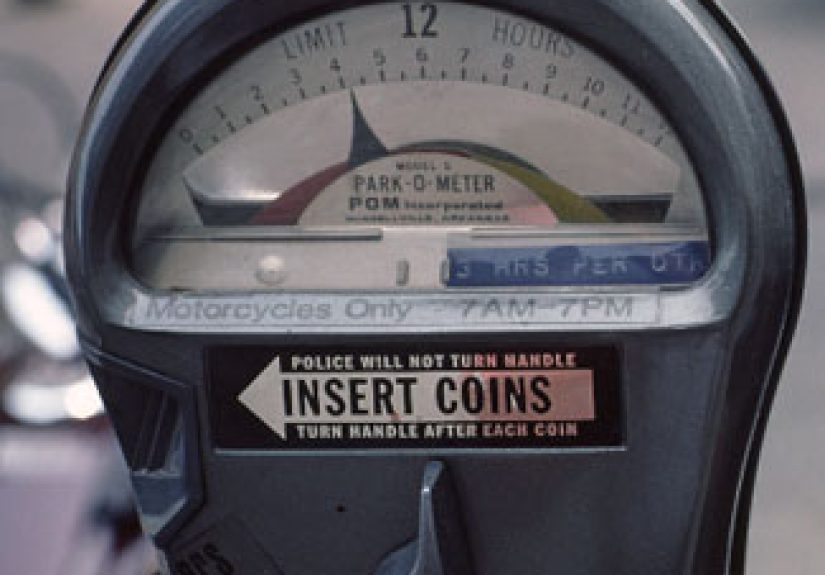
Parking meters used to be simple: a pole, a slot, some coins, and a ticking countdown that felt like a game show you did not volunteer to join. Today, many cities run a whole ecosystem of curb managementapps, pay stations, license-plate verification, variable pricing, time caps, reminders, and enforcement that can check payment digitally. The tech changes the mechanics, but not the emotional hit when you get “extra time.”
1) The classic single-space meter: the original tiny present
The old-school meter is where this awesome thing was born. You pull up, see 7 minutes left, and suddenly you’re a person who can do anything in 7 minutespick up coffee, grab a prescription, return a library book, and still have time to speed-walk back like an Olympic shopper.
The best part is the instant recalculation. You haven’t even turned off your engine and you’re already doing mental math: “Okay, the bank line is risky, but the bakery is doable if I don’t get emotionally attached to the seasonal donuts.”
2) Pay-and-display receipts: the “dashboard lottery ticket” era
Then came the receipt era: multi-space kiosks where you pay at a central machine, get a slip, and place it on the dashboard. These systems can feel more officiallike you’re not just parking, you’re participating in a civic ritual.
In some places, this made it easier to “pass along” time. If someone left and their receipt still had time on it, it sometimes felt like the parking equivalent of leaving a coupon on the table at a diner. (Not a dramatic act. Just quietly nice.)
3) Pay-by-plate, pay-by-app: convenient, efficient, and less “shareable”
Many modern systems now tie payment to your vehicle’s license plate (often paired with a zone number). The upside is convenience: no paper receipt required, and you can often get reminders before time expires. The downside is that the classic “bonus minutes” moment can shrink, because the time is linked to the carnot the space.
In other words: the curb got smarter, but the small romance of “inherited minutes” got harder to stumble into. That’s not necessarily badit can improve turnover and reduce confusionbut it does mean that when you do encounter leftover time, it feels even rarer. Like spotting a payphone in the wild.
The unspoken rules: enjoy the minutes, but don’t get cocky
The leftover-time win is best enjoyed with a pinch of street smarts. Parking rules aren’t universal, and what “counts” in one city might not work in another. The real pro move is to treat those minutes as a head startnot a loophole.
Read the sign like your plans depend on it (because they do)
Meter time isn’t the only rule in play. Signs can set time limits, hours, loading zones, street cleaning, residential permits, and all the other fun surprises cities like to hide in plain sight. The meter might show time, but the sign decides what’s legal.
Time limits matter more than the number on the meter
Many places enforce posted time caps regardless of whether more time is added or still remains. That’s why the “I paid, therefore I’m safe forever” logic tends to end in a small rectangular ticket tucked under your wiper like an angry bookmark.
Assume modern systems may not “transfer” time
If the city uses pay-by-plate or app-based validation, leftover time on a screen might not mean what you think it means. Some systems validate by license plate, some by space number, and some by a mix depending on the block. If you’re unsure, treat the visible time as a helpful hintnot as a legal guarantee.
Yes, “feeding the meter” rules can be a thing
In some cities, adding time beyond the posted maximum is explicitly prohibitedsometimes called “feeding the meter.” That can apply even if you’re topping up your own session. The safest approach is simple: never plan to exceed the posted time limit, and don’t assume extra payment buys extra legality.
How to maximize leftover meter time without becoming a cartoon character
The best way to enjoy bonus minutes is to turn them into a calm, organized advantagenot a frantic sprint that ends with you jogging back to your car holding a baguette like a relay baton.
The “Free-Minutes Sprint” (a gentle strategy)
- Decide the mission. One errand. One stop. Don’t build a three-store montage in your head.
- Set a timer for earlier than the meter. If there are 8 minutes, set 5. Give yourself margin.
- Park like you want to leave later. Note your cross street or snap a photo. Future-you will be grateful.
- Walk like you mean it, but don’t panic. Speed-walking is fine. Panic-walking makes you drop things.
- Re-check before committing. If the line is long, pivot. The city gave you a gift, not a deadline trauma.
Use the tools the new era gives you
If the area supports pay-by-phone, reminders can save your day. Notifications are basically the modern version of glancing at the meter every 90 seconds like a nervous squirrel. When you can manage your session from your phone, you’re less likely to overstay, and less likely to treat errands like an action sequence.
Small scenes where this “awesome thing” hits hardest
Leftover meter time is universally nice, but certain situations make it legendary:
- The coffee grab: You only needed a quick pickup, and the meter is already halfway paid. Bliss.
- The “I’m late” arrival: You’re running behind, you pull in, andmiraclethere’s still time.
- The heavy-item errand: Hardware store. One bolt. One paint sample. You’re in and out with minutes to spare.
- The rain bonus: It’s pouring, you’re juggling an umbrella, and the meter time is already there like a small mercy.
- The downtown surprise: In the most expensive area, the meter is still ticking. It feels illegal (but hopefully isn’t).
The common thread is simple: leftover time makes the city feel less adversarial. For a moment, the curb isn’t a trap or a costit’s a collaborator.
What this moment says about gratitude, cities, and human nature
The #822 moment works because it’s a micro-reminder that good things still happen in ordinary places. Not in a highlight reel. Not on vacation. Right there on the street next to a smudged pay station and a sign that somehow uses six fonts.
It’s also a tiny gratitude exercise you didn’t have to schedule. You can’t buy that exact feeling on demand. You can only notice it when it shows up. And maybe that’s the point of the whole “awesome things” idea: training your attention to spot the small wins hiding inside the normal day.
So yesparking meters are annoying. But every now and then, the meter becomes a slot machine that pays out in minutes. And if you let yourself enjoy it, those minutes feel bigger than they are.
of experiences that make leftover meter time unforgettable
There’s a particular flavor of relief that comes from pulling up to a curb you expected to “pay immediately,” only to find the meter still running. It’s not just about saving a couple of quarters (or dodging an app fee). It’s about the sudden sense that you’re ahead of the day instead of chasing it.
Picture the classic scenario: you’re late to pick up a to-go order, and you’ve already accepted the inevitable you’ll park, pay, hurry, and still return to your car with the meter breathing down your neck. Then you look up and see six minutes left. Suddenly your shoulders unclench. You walk into the restaurant like a person who has time to read the specials board, even though you absolutely do not need to read the specials board.
Or you’re doing the quick pharmacy runone item, one mission, no distractions. The meter shows four minutes. That’s not a lot, but it’s enough to convert your errand from “stressful” to “sporty.” You become a focused, efficient version of yourself who doesn’t browse the aisle of mystery vitamins. You’re in, out, and back at the car with one minute still glowing like a tiny trophy.
Sometimes the experience turns into a small social moment. You’re stepping away from the spot and another driver slows down, hopeful. You point at the meter and give them the universal hand gesture for “good news”a little wave, a nod, the face that says, “Yes, yes, it’s realthere’s time.” They smile like you just handed them concert tickets, even though it’s really just eight minutes and a chance to not panic.
Then there’s the “unexpected meeting” moment: you pull in to meet a friend, find leftover time, and it changes the whole vibe. Instead of opening the hangout with, “Hi, I have to go feed the meter,” you can start with a normal greeting, sit down, and pretend the city isn’t charging you per minute to exist near a sidewalk.
And if you’re lucky, the leftover time inspires a tiny act of generosity later. Maybe you return with extra minutes andwhere it’s allowedyou add a little time for the next person who pulls in after you. Not because you’re trying to be a hero. Just because you remember how ridiculously good it felt when it happened to you. That’s the quiet chain reaction of #822: a small, practical surprise that makes you treat the day like it might surprise you again.