Table of Contents >> Show >> Hide
- Why 2-Ingredient Bagels Work (Yes, It’s Actual Food Science)
- The Best 2-Ingredient Bagels Recipe (Oven Method)
- Air Fryer 2-Ingredient Bagels
- DIY Self-Rising Flour (If You Don’t Have It)
- Flavor Variations (Because Plain Is Fine, But Fun Is Better)
- Troubleshooting: Fix the Usual 2-Ingredient Bagel Problems
- Nutrition Notes: Are 2-Ingredient Bagels “Healthy”?
- How to Serve 2-Ingredient Bagels
- Storage and Freezing
- Conclusion: The Shortcut Bagel That Actually Delivers
- Real-World Experiences: What Making 2-Ingredient Bagels Is Actually Like (The Fun Part)
If “homemade bagels” sounds like a weekend project that requires a stand mixer, a chemistry degree, and the patience of a sourdough starter,
I’ve got excellent news: 2-ingredient bagels are the shortcut your breakfast routine deserves.
They’re chewy-ish, toasty, satisfyingly bready, and they come together in about the time it takes to argue with your toaster.
No yeast. No proofing. No boiling. No drama.
The magic comes from a classic internet-famous combo: self-rising flour + plain Greek yogurt.
That’s it. (Okay, toppings are optional, but we both know “everything bagel seasoning” is basically a love language.)
This guide will walk you through why the recipe works, how to get the best texture, and how to riff on the base dough for sweet or savory variations.
Why 2-Ingredient Bagels Work (Yes, It’s Actual Food Science)
Traditional bagels rely on yeast fermentation for rise and flavor, and they’re usually boiled before baking to get that glossy, chewy crust.
No-yeast bagels skip the fermentation and use chemical leavening insteadmeaning lift comes from baking powder (and sometimes baking soda),
not tiny microorganisms doing overtime.
Ingredient #1: Self-Rising Flour = Flour + Leavening + Salt
Self-rising flour already contains leavening (typically baking powder) and salt, so it’s basically a “baking shortcut” in a bag.
Because it’s often milled from a softer wheat than standard all-purpose flour, it can produce a more tender biteperfect for quick breads and fast bagels.
Ingredient #2: Greek Yogurt = Moisture + Protein + Tang
Greek yogurt is thick (especially compared to regular yogurt), which helps form a dough you can shape.
It adds moisture and a subtle tang, and it boosts proteinone reason these high-protein bagels have become a breakfast staple for busy people.
Put them together and you get a dough that bakes up into something that’s not trying to be a New York deli bagel…
but is trying to be a warm, satisfying, quick homemade bagel you can toast and slather with cream cheese like you mean it.
The Best 2-Ingredient Bagels Recipe (Oven Method)
This version is built for real kitchens: minimal mess, flexible measurements, and clear checkpoints so you know what the dough should feel like.
Greek yogurt brands vary in thickness, so think of the flour amount as “target consistency” rather than a law of physics.
Ingredients (Makes 4 Bagels)
- 1 cup plain Greek yogurt (fat-free, low-fat, or whole; choose thick, not runny)
- 1 1/4 cups self-rising flour, plus more for dusting
- Optional: 1 egg white or whole egg (for shine and to help toppings stick)
- Optional toppings: everything bagel seasoning, sesame seeds, poppy seeds, dried garlic/onion, cinnamon-sugar, shredded cheese
Equipment
- Baking sheet
- Parchment paper (or a silicone baking mat)
- Mixing bowl + fork/spatula
- Cooling rack (helpful, not mandatory)
Step-by-Step Instructions
- Preheat your oven to 375°F. Line a baking sheet with parchment.
(If your parchment tends to stick, a light spritz of oil can help.) - Mix the dough: Add the self-rising flour to a bowl. Spoon in the Greek yogurt.
Stir with a fork or spatula until the mixture looks shaggy and crumbly, then press it together into a rough ball. - Knead briefly: Dust your counter with flour. Turn out the dough and knead for about 2–4 minutes.
You’re aiming for dough that’s tacky but not sticky. If it’s sticking to your hands like a needy toddler, dust in a bit more flour. - Rest (recommended): Let the dough rest for 10–15 minutes.
This makes shaping easier and helps the flour hydrate for a smoother texture. - Shape: Divide into 4 equal pieces. Roll each into a rope (about 6–10 inches),
then pinch the ends together to form a ring. (Or make a ball and poke a hole through the center, then gently widen it.) - Top: If using egg wash, brush lightly over the tops. Sprinkle your toppings generously.
(No egg? Brush with water or milk to help toppings adhere.) - Bake: Bake for 25 minutes, or until golden and set. Cool at least 10–15 minutes before slicing.
Cutting too early can make the inside feel gummybagels also need personal space.
What You’ll Get: Texture Expectations (Honest and Helpful)
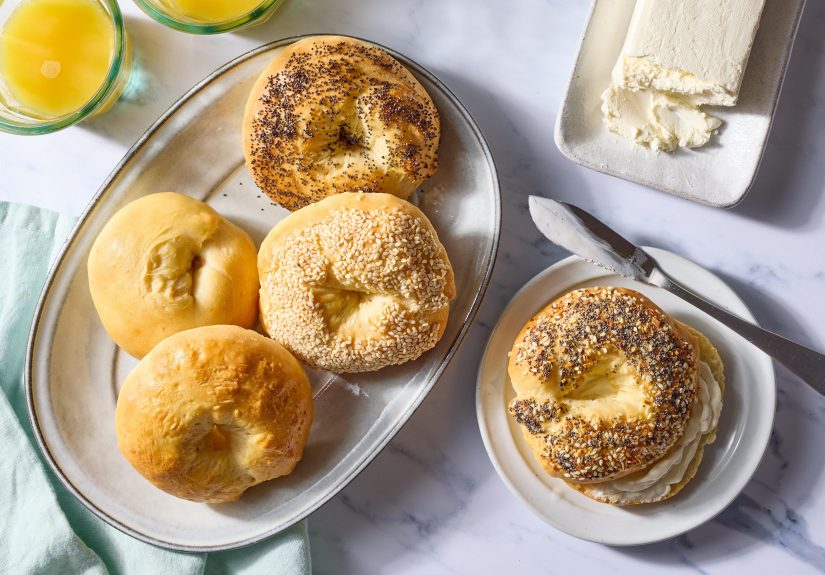
These are best described as “bagel-adjacent in the best way.” You’ll get a browned exterior, a tender interior,
and a nice chew once toasted. They’re especially great as toasted breakfast bagels,
breakfast sandwiches, or quick snacks.
Air Fryer 2-Ingredient Bagels
If you want faster browning and a crust that leans crisp, the air fryer is your friend.
Because models vary, start with a moderate temperature and check early.
Air Fryer Method (General Guide)
- Preheat air fryer if your model requires it.
- Cook at 280–325°F for about 12–16 minutes, until golden and cooked through.
- Avoid overcrowding; air needs to circulate for even browning.
DIY Self-Rising Flour (If You Don’t Have It)
No self-rising flour in the pantry? You can make a quick substitute.
Different test kitchens use slightly different ratios, but the idea is consistent: flour + leavening + salt.
Use the version below for a reliable bagel dough.
Quick Self-Rising Flour Substitute (Per 1 Cup Flour)
- 1 cup all-purpose flour
- 1 1/2 teaspoons baking powder
- 1/4 teaspoon fine salt (or up to 1/2 teaspoon if you like it saltier)
Shortcut note: If your substitute uses baking soda too, it can enhance browning and liftbut it’s not mandatory for a great result.
The key is fresh leavening. If your baking powder has been living in the back of your cabinet since the early days of streaming TV, replace it.
Flavor Variations (Because Plain Is Fine, But Fun Is Better)
Classic Everything Bagel
Brush with egg wash (or water), then coat with everything seasoning. Toast and add cream cheese. Smile knowingly.
Sesame or Poppy Seed
Keep it simple. These toppings toast beautifully and make your kitchen smell like you paid $3.50 more than you did.
Cinnamon-Raisin
Knead in 1–2 teaspoons cinnamon and 2–3 tablespoons raisins. For extra bakery vibes, sprinkle cinnamon-sugar on top.
These are especially good toasted with butter.
Cheddar Jalapeño
Add shredded cheddar to the dough and top with more cheese. Sprinkle sliced jalapeños on top for a spicy kick.
(Optional: a tiny pinch of garlic powder in the dough goes a long way.)
Blueberry-Lemon
Fold in blueberries gently (fresh or frozen; frozen may tint the dough a little). Add lemon zest for brightness.
Keep toppings minimalthis one likes to be the main character.
Troubleshooting: Fix the Usual 2-Ingredient Bagel Problems
“My dough is super sticky.”
This usually means your yogurt is thinner or your flour was measured lightly. Add flour 1 tablespoon at a time and keep kneading until the dough is tacky, not gluey.
Also: drain any liquid sitting on top of the yogurt before mixing.
“My bagels didn’t rise much.”
Check your baking powder (if you made DIY self-rising flour). Expired leavening is a silent saboteur.
Also make sure the oven is fully preheated.
“They’re pale.”
Egg wash helps with browning. If skipping egg, brush lightly with milk or even a little melted butter.
You can also bake on a higher rack to prevent over-browning on the bottom while the top colors.
“The inside feels doughy.”
Let them cool before slicing, and toast for best texture.
If they’re truly underbaked, your bagels may have been thicker than averageadd a few minutes next time.
Nutrition Notes: Are 2-Ingredient Bagels “Healthy”?
“Healthy” depends on your goals, but here’s the practical breakdown:
compared to many traditional bagels, these often come out smaller and can be higher in protein thanks to Greek yogurt.
Many versions land roughly in the 150–210 calorie range per bagel, depending on yogurt type, flour amount, and toppings.
Protein often lands around 7–12 grams each.
The bigger nutrition win is flexibility: you can build a balanced breakfast by adding protein and fiber toppings
(eggs, smoked salmon, nut butter, berries, chia jam) instead of turning your bagel into a one-note carb cameo.
How to Serve 2-Ingredient Bagels
Breakfast Sandwich Ideas
- Classic: egg + cheese + spinach
- Deli-style: cream cheese + smoked salmon + cucumber + everything seasoning
- Sweet: peanut butter + banana + cinnamon
- High-protein: turkey + tomato + arugula + mustard
Best Toasting Tip
Slice, toast, then top. These bagels go from “pretty good” to “wait, why am I not making a double batch?” with a little toasting.
Storage and Freezing
Store cooled bagels in an airtight container for up to 2–3 days (room temp or refrigeratedyour call).
For freezing, slice first, then wrap individually and freeze.
Reheat by toasting straight from frozen, or warm in the oven/air fryer until revived.
Conclusion: The Shortcut Bagel That Actually Delivers
The internet has given us many thingssome good (two-day shipping), some questionable (microwaving eggs in a shell).
But 2-ingredient bagels belong firmly in the “good” column.
They’re fast, forgiving, customizable, and they scratch the “fresh-baked bread” itch without turning your day into a baking marathon.
Keep a tub of Greek yogurt and a bag of self-rising flour around, and you’ve basically got a breakfast emergency kit.
Real-World Experiences: What Making 2-Ingredient Bagels Is Actually Like (The Fun Part)
The first time you make these, there’s a high chance you’ll stare at the bowl and think, “That’s it? This can’t be right.”
The dough often starts out looking like dry crumbs that have trust issues. Then you press it together, knead it for a minute,
and suddenly it’s cooperating like it heard there would be toppings.
One of the most common “aha” moments is realizing how much Greek yogurt thickness matters. If your yogurt is ultra-thick,
the dough comes together quickly and feels plush, almost like playdough (but, you know, less toxic and more delicious).
If it’s thinner, the dough can feel sticky, like it’s trying to high-five your fingers and not let go.
The fix is simple: dust with flour, knead a bit more, and remind yourself that dough is supposed to be a little moody.
Shaping is where you discover your bagel personality. Some people roll ropes like they’re making edible bracelets.
Others poke a hole through a dough ball and stretch it like a tiny life raft.
Either works, but here’s what you’ll probably learn by batch two:
make the hole bigger than you think. Bagels love to puff and will happily close up a small center hole like it never existed.
Then comes the topping phasealso known as “the moment you become an artist.” Everything seasoning is the crowd favorite because it hides a multitude of sins.
Slightly uneven shaping? Everything seasoning distracts. A top that didn’t brown perfectly? Everything seasoning says, “Look over here!”
For sweet versions, cinnamon-sugar is basically a standing ovation in topping form.
When they come out of the oven, the house smells like a bakery that also pays rent on time.
The bagels look golden, you want to slice immediately, and this is where patience gets rewarded.
Cutting too soon can make the inside feel a little gummycooling lets steam redistribute and the crumb set.
If you can wait 10–15 minutes, you’ll get a cleaner slice and a better texture.
The next-day experience is also oddly satisfying. Toasting turns the outside crisp and gives the interior a sturdier bite,
which is why a lot of people end up preferring these toasted anyway. If you’re building a breakfast sandwich,
the toasted version holds up better under eggs, cheese, and enthusiastic spreads.
The biggest real-world perk? These bagels make you feel like the kind of person who “just bakes bagels sometimes,”
without requiring the kind of schedule that includes “boil water for bread” as an afternoon appointment.
Once you’ve made them a few times, you’ll start experimentingadding herbs, trying different yogurts,
swapping toppings based on what’s in the pantry, and casually telling people, “Oh yeah, they’re just two ingredients.”
(It’s not bragging if it’s true.)