Table of Contents >> Show >> Hide
- Why This Glacial Study Matters So Much
- The Near Collapse Nobody Wanted
- How JIRP Was Pulled Back From the Edge
- Why the World Needed It “Most”
- What Glaciers Tell Us That Other Indicators Can’t
- The Human Side of a Long Climate Record
- What We Can Learn From JIRP’s Near Miss
- Conclusion
- Field Experiences and Human Stories From the Icefield
- SEO Tags
If glaciers could talk, they would probably say two things: “It’s getting warm in here,” and “Please stop cutting the science budget.”
That joke lands a little too close to reality. One of the world’s most important long-running glacier research effortsthe Juneau Icefield Research Program (JIRP), based in Alaskacame dangerously close to fading out after decades of groundbreaking work. This wasn’t just another niche academic project with dusty binders and a coffee-stained clipboard. It was a rare, continuous field record built over generations, the kind of scientific time series that becomes more valuable every single year.
And the timing could not have been worse. Just as glacier loss accelerated, sea-level concerns grew, and communities needed better climate and water-risk predictions, the people and institutions behind this historic study were struggling to keep it alive.
This is the story of how a legacy glacial study nearly slipped into the crevasseand why saving it matters to science, public safety, and the future of climate research.
Why This Glacial Study Matters So Much
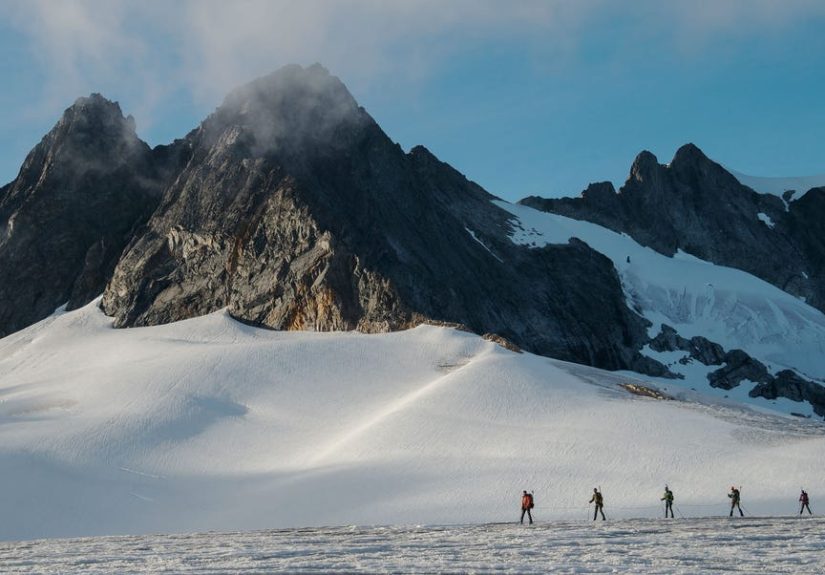
The Juneau Icefield, spanning southeast Alaska and northwestern British Columbia, is a massive, living laboratory. It feeds dozens of glaciers and includes famous names like Mendenhall and Taku. It’s also one of the most accessible large icefields in North America for field science, which makes it uniquely useful for training scientists and collecting long-term observations.
JIRP’s legacy is extraordinary. For more than 75 years, the program has combined expedition-style field education with real glaciology research. That combination is rare. Most programs either teach students about glaciers or study glaciers with professional teams. JIRP does bothon the ice, in real conditions, with real data, and very cold hands.
Its long-running observations have helped create some of the most valuable glacier mass-balance records in North America. In glacier science, “mass balance” is essentially the glacier’s annual report card: how much snow and ice it gained versus how much it lost. Positive means it bulked up. Negative means it slimmed down. A little negative is a warning. Decades of negative? That’s a full-blown climate alarm.
Long records are everything in climate science. A single hot summer can be noise. A multi-decade trend is signal. Continuous measurements allow scientists to separate weather swings from climate shifts, improve predictive models, and understand how glacier changes affect freshwater, hazards, and sea level. In short: when glaciers become unstable, old data becomes gold.
The Near Collapse Nobody Wanted
So how does a program this important almost disappear?
Like many legacy scientific institutions, JIRP depended heavily on a small group of dedicated people, especially longtime leader Maynard Miller, who helped shape the program for decades. His leadership was legendary, but the downside of iconic leadership is that succession planning can get overshadowed. When a program runs on passion, relationships, and institutional memory, it can become fragile even while looking strong from the outside.
By the mid-2010s, the cracks were showing. Alumni and observers described a difficult transition period marked by leadership turnover, organizational strain, and uncertainty about whether the program’s old model could survive in a modern research environment. Funding was tougher. The logistics were harder. Expectations for data quality, safety, and academic structure had evolved. Meanwhile, the climate crisis was speeding up and glacier science needed to move faster, not slower.
In a painful irony, the study nearly lost momentum precisely when its value was rising. A long-running glacier record is like a chain: every year adds another link, and losing a few years in the middle weakens the whole thing. You can restart a field course. You cannot easily replace a broken climate time series.
How JIRP Was Pulled Back From the Edge
The rescue did not come from a single superhero with an ice axe and a grant proposal. It came from something better: a community.
Former participants, scientists, and supporters rallied around the idea that JIRP was too important to lose. The program began restructuring, modernizing, and rebuilding its institutional foundation. New leadership and nonprofit support helped stabilize operations. Partnerships with universitiesincluding a formal relationship with the University of Mainebrought academic structure, fresh energy, and a clearer path for student involvement.
This mattered for more than optics. A university-linked model helps with curriculum design, credit, research standards, and recruitment. It also helps younger scientists see glacier fieldwork not as a romantic side quest, but as a legitimate and rigorous part of their education and careers.
JIRP’s own mission today reflects that evolution: education and research support working together. That dual purpose is exactly what climate science needs right now. We do not just need better data; we need more people trained to collect, interpret, and communicate it.
And JIRP has delivered on that front for decades. The program reports thousands of participants, more than a thousand publications and reports, and dozens of graduate theses and dissertations linked to its work. That kind of output does not happen by accident. It happens when a field program becomes an ecosystemone that produces data, researchers, and scientific culture.
Why the World Needed It “Most”
The phrase sounds dramatic, but the science backs it up.
Recent research on the Juneau Icefield shows glacier loss there is accelerating. Studies and news coverage in 2024 highlighted that the icefield’s volume loss between 2010 and 2020 was roughly double the annual rate seen from 1979 to 2010. Researchers also reported widespread retreat across mapped glaciers, with more than a hundred glaciers in the system disappearing entirely since historical baselines.
That is not just a regional story. It is a warning about plateau icefields and glacier systems in other northern regions. Once thinning pushes ice into lower, warmer elevations, feedback loops can speed up loss and make regrowth less likely. In plain English: glaciers can get pushed onto a one-way street.
And Juneau is not alone. Across the globe, glacier melt is accelerating. Large international analyses reported in 2025 show that mountain glaciers have been losing ice faster in recent years than in the early 2000s, with record losses in 2023. Alaska, in particular, is among the fastest-losing glacier regions by total ice mass. That means what happens on the Juneau Icefield is both local science and global signal.
This is exactly why long-term field studies matter. Satellites are powerful, but they are strongest when calibrated and interpreted alongside on-the-ground measurements. A mass-balance pit dug by tired students in the snow may not look glamorous, but it helps validate the remote sensing and climate models that governments, planners, and researchers rely on.
What Glaciers Tell Us That Other Indicators Can’t
Glaciers are often called “sentinels” of climate change because they respond directly to temperature and precipitation. The physics is straightforward: snow accumulates in the upper part of a glacier, while melting dominates lower down. When melting consistently outpaces accumulation, the glacier retreats.
That makes glaciers a rare kind of climate evidencevisible, measurable, and emotionally impossible to ignore. People may argue over political slogans, but a glacier that has retreated hundreds of feet does not care about anyone’s talking points.
Scientists track glacier health using field measurements, repeat photography, historical maps, geodetic surveys, and satellite data. Agencies like the U.S. Geological Survey (USGS), NOAA, NASA, the National Park Service, and research centers such as NSIDC all contribute pieces of this puzzle. JIRP fits into that broader network as a field-intensive, long-duration program that bridges student training and scientific continuity.
That continuity is crucial because glacier change affects more than mountain scenery. It touches sea-level rise, seasonal water supply, sediment transport, ecosystem changes, tourism economies, and hazard planning. In Juneau and surrounding areas, glacier-fed systems also shape flood risk, including glacial lake outburst flooding events that can damage roads, homes, and infrastructure.
In other words, glacier science is not just about “saving ice.” It is about understanding risk in real communities.
The Human Side of a Long Climate Record
One of the most powerful things about JIRP is that its record is not just scientificit is generational.
Students in their early 20s work alongside veteran researchers who have returned to the icefield for decades. Some arrive with strong outdoor backgrounds. Others have barely camped before. They ski, dig snow pits, sample snow cores, learn navigation and safety, and then discover that climate science is not only computer modeling and graphs. It is sweat, weather windows, logistics, teamwork, and occasionally realizing you are having a life-changing moment while standing in a hole in the snow.
That experience matters because climate science needs communicators as much as it needs analysts. JIRP has long emphasized not only measurement, but also science communicationtraining students to explain what they are seeing and why it matters. That turns a field course into something larger: a pipeline for informed public voices.
And frankly, this is how climate science stays alive. Data does not defend itself. Institutions do not renew themselves. People do.
What We Can Learn From JIRP’s Near Miss
1) Scientific continuity is a climate asset
We talk a lot about protecting forests, coastlines, and infrastructure. We should also talk about protecting long-term scientific records. A 70-year glacier dataset is infrastructure. It is just less visible than a bridge.
2) Field science needs succession planning
When programs depend on a few extraordinary personalities, they become vulnerable. JIRP’s story is a reminder to build institutional resilience: shared leadership, funding diversity, partnerships, and clear pathways for younger researchers.
3) Education and research belong together
The best climate programs do both. They produce knowledge and train the next people who will produce more. JIRP’s hybrid model is not a side featureit is the secret sauce.
4) Glacier science is not “remote” science
It may happen on icefields, but the consequences show up in cities, ports, water systems, insurance risk, and coastlines. What looks far away is often downstream from all of us.
Conclusion
The Juneau Icefield Research Program almost became one of those stories people tell with a sigh: “It was a great project, but it ended.” Instead, it became a different kind of storyone about rescue, renewal, and relevance.
That is good news, because glaciers are changing fast, and the world needs long-term science more than ever. Not just satellite snapshots. Not just headlines. Continuous records. Trained observers. Institutions that can survive generational change.
The “almost died” part of this story is a warning. The “still alive” part is a blueprint. If we want to understand climate change in the real world, we need to protect the people and programs that keep showing up to measure ityear after year, storm after storm, shovel after shovel.
And yes, sometimes in shorts, on a glacier, because science is weird like that.
Field Experiences and Human Stories From the Icefield
The most unforgettable part of long-running glacier research is not always the graph at the end of the paper. It is the experience of being therewhen the wind picks up, the clouds drop, and everyone suddenly moves from “classroom mode” to “we are definitely doing real expedition science now.” That human side helps explain why programs like JIRP survive setbacks and keep coming back.
Reported accounts from students and researchers on the Juneau Icefield often sound like a blend of boot camp, field lab, and summer camp run by Earth scientists. A student who expected a quiet academic summer may find themselves hauling gear over snow, learning how to move safely on skis, digging mass-balance pits deep enough to make their legs question every life choice, and then spending the evening discussing climate models over a camp meal. It is hard work, but the kind of hard work that changes people.
Many participants describe the moment glacier science becomes personal. A snow pit is no longer just a measurement site; it becomes a time machine. Each layer of snow tells a story about storms, melt, and seasonal change. When students compare this year’s snowpack to last year’s surface, they are not reading about climate change in a textbookthey are physically standing inside the evidence.
There is also the emotional contrast that shows up again and again in field stories: beauty and grief in the same frame. The Juneau Icefield can feel vast, bright, and almost unreal. On clear days, the landscape looks endless. But the same people who are amazed by the view are also learning that many glaciers in the system are shrinking, some rapidly. That tension leaves an impression. Participants often come away with a stronger sense of responsibility because they have seen both the wonder and the warning at the same time.
Veteran researchers add another layer to these experiences. People who have returned for decades carry a living memory of how camps, routes, and glaciers have changed. Their stories connect today’s students to the program’s earlier generations, and that continuity is powerful. A long-term dataset becomes easier to respect when you meet someone who helped measure it 20 or 30 years ago and can explain what the ice looked like then.
Another recurring theme is teamwork. Glacier fieldwork is not solo-hero science. It depends on shared labor, safety protocols, and trust. Students learn quickly that careful measurements, camp chores, route finding, and communication all matter. That kind of training is valuable far beyond glaciology. It teaches scientific discipline under real-world constraintsweather, fatigue, limited time, and imperfect conditions.
Finally, the icefield experience often creates better climate communicators. People who have spent a season on the ice tend to explain glacier change differently. They talk about measurements, yes, but also about sound, texture, distance, and effort. They can describe what retreat means on the ground, not just on a chart. That kind of communication helps the public understand why long-term glacier studies are worth protecting.
In that sense, the “experience” section is not extra. It is the point. A 70-year glacial study survives because it produces databut it thrives because it also produces people who care enough to continue the work.