Table of Contents >> Show >> Hide
- Why A Discovery of Witches Works So Well
- Ranking the Seasons of A Discovery of Witches
- Best Episodes Ranked (Spoiler-Light)
- Character Power Rankings: Witches, Vampires, and Daemons
- Books vs. Show: Which Version Wins?
- Who Should Watch A Discovery of Witches Today?
- Real-World Viewing Experiences: Living With A Discovery of Witches
Some shows creep up on you like a shy vampire in a library aisle.
A Discovery of Witches is one of those seriespart paranormal romance, part historical fantasy, and part academic drama with more archives than jump scares.
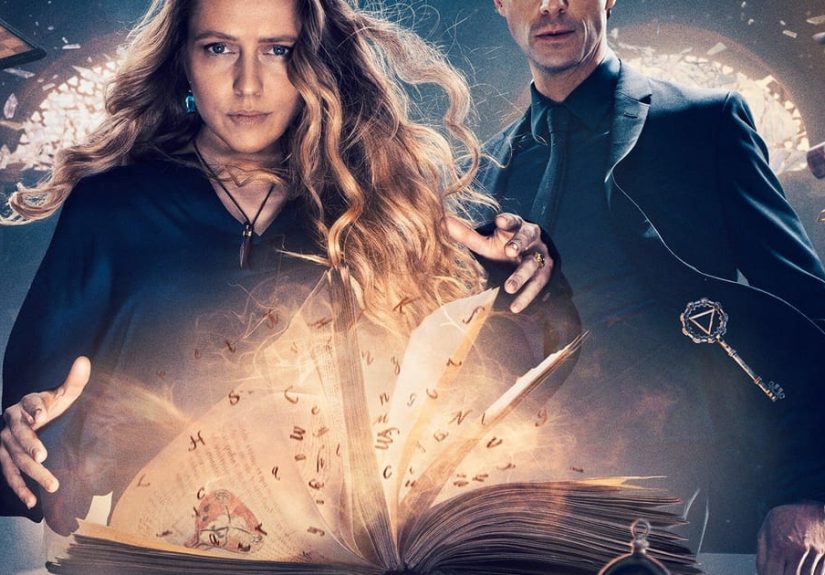
Based on Deborah Harkness’s bestselling All Souls Trilogy, the TV adaptation follows historian and reluctant witch Diana Bishop and centuries-old vampire Matthew Clairmont as they circle around a bewitched manuscript, Ashmole 782, and each other.
If you’ve ever wondered how the seasons stack up, which episodes are truly magical, or which characters deserve a spot at the high table of the Congregation, this breakdown is for you.
Below you’ll find our rankings and opinions on the show’s seasons, standout episodes, and most unforgettable charactersplus a fan-style look at what it’s actually like to live with this series in your streaming rotation.
Why A Discovery of Witches Works So Well
Before handing out rankings like spell books at Sept-Tours, it helps to understand what makes this universe so addictive:
- Academic fantasy with real texture: Harkness is a historian, and it shows. The show leans into manuscripts, alchemy, and actual historical settings, especially once the story timewalks to Elizabethan England.
- Slow-burn paranormal romance: Diana and Matthew’s relationship is more “grad-seminar tension” than instant love spell. Their bond deepens through shared research, danger, and ethical dilemmas around power, blood, and destiny.
- Creature politics and found family: Witches, vampires, and daemons live under a fragile political structure called the Congregation, but the emotional core is the chosen and biological families surrounding Diana and Matthew.
- Production values that feel cinematic: The series makes excellent use of locations like Oxford, Venice, and Elizabethan London, paired with lush costumes and atmospheric lighting that sells the “grown-up fantasy” vibe.
With that foundation in place, let’s get into the rankings and the strong opinions every fan secretly has.
Ranking the Seasons of A Discovery of Witches
1. Season 2 – The Timewalking Masterpiece
Season 2 is where the show throws open the door to Elizabethan England, and it’s hard not to crown it the strongest season overall.
Diana and Matthew timewalk to the late 16th century, adopting new identities and immersing themselves in the world of spies, playwrights, and alchemists while continuing the search for Ashmole 782.
The season shines because:
- Worldbuilding goes full throttle: Historical London, Prague, and court intrigue add weight to the fantasy.
- Diana’s power arc finally takes off: She trains as a witch, discovers her weaver abilities, and begins to control her magic rather than fear it.
- Supporting cast levels up: Characters like Gallowglass, Philippe de Clermont, and Kit Marlowe steal scenes and deepen the lore.
Some fans find the pacing a bit languid, but if you love historical detail, Season 2 feels like the show at its most confident and ambitious.
2. Season 1 – A Strong, Romantic Introduction
Season 1 is essentially an academic paranormal romance set in contemporary Oxford and France.
It’s also where new viewers decide whether they’re in for the long haul.
The big wins:
- The Bodleian Library scenes deliver a perfect “what if magic was real… in my grad program?” energy.
- Diana’s refusal to embrace her witch identity gives the show a grounded emotional core.
- Matthew and Diana’s slow but intense connection has genuine chemistry instead of relying on tropes alone.
On the downside, some viewers feel the season leans heavily into romance and exposition over action, especially in the middle episodes.
Still, as a pilot season, it sets the tone beautifully and establishes the stakes around Ashmole 782 and the inter-creature politics.
3. Season 3 – Satisfying but Rushed
Season 3 wraps up the storylines from both the books and the show: the blood-rage mystery, the danger posed by Benjamin and Knox, and the future of the de Clermont family and the Congregation itself.
What works:
- Diana has fully stepped into her poweremotionally, magically, and politically.
- We get more of the extended ensemble, including Marcus, Phoebe, and the other creatures whose fate depends on the Book of Life.
- The central relationship feels mature; they’re no longer starry-eyed lovers but partners with shared responsibilities.
The trade-off is pacing. With only seven episodes, some arcs resolve quickly, and a few emotional beats don’t land as deeply as they could have with more screen time.
It’s still a satisfying conclusionbut compared with the richer sprawl of Season 2, it feels like a fast-forwarded finale tour.
Best Episodes Ranked (Spoiler-Light)
Different fan polls and rating sites shuffle the exact order, but a few episodes consistently float to the top.
Here’s a spoiler-light ranking of standout episodes based on overall impact, character growth, and rewatch factor.
-
Season 2, Episode 9 – The Emotional Crescendo
High political stakes, emotional confrontations, and major reveals about blood rage make this one of the most intense hours of the series. -
Season 1, Episode 7 – The Sept-Tours Showdown
The tension between creature factions explodes, and we finally see just how dangerous the Congregation can be when provoked. -
Season 2, Episode 6 – Prague, Power, and the Book
The hunt for Ashmole 782 in Bohemia blends court intrigue, jealousy, and Diana’s evolving magic into a tightly wound episode. -
Season 1, Episode 1 – The Bodleian Awakening
As pilots go, this one hooks viewers with that first call of Ashmole 782, moody Oxford visuals, and the instant yet wary spark between Diana and Matthew. -
Season 2, Episode 3 – Training Days
Diana’s witch training is both dangerous and empowering, and it’s where many fans fall in love with her growth arc. -
Season 3, Episode 5 – Confronting the Past
The modern-day storylines intersect with the consequences of timewalking, and Diana’s leadership style comes into focus. -
Season 3, Episode 7 – The Series Finale
Not perfect, but emotionally satisfying. It ties together the themes of bloodline, choice, and coexistence while giving the main couple a hard-earned peace.
If you’re short on time and want a “greatest hits” rewatch, these are the episodes most likely to remind you why you loved the series in the first place.
Character Power Rankings: Witches, Vampires, and Daemons
Ranking characters in A Discovery of Witches is risky businesswitches hold grudges, and vampires have eternity to be petty.
Still, here’s a broad, opinionated take on who stands out the most.
1. Diana Bishop
The show lives or dies on Diana, and fortunately she’s compelling: a brilliant historian who’d prefer grant applications and rowing sessions to spellcasting.
Her journey from reluctant witch to fully realized weaver is one of the best “own your power” arcs in recent fantasy TV.
The series also lets her be stubborn, flawed, and occasionally reckless, which keeps her from feeling too idealized.
2. Matthew Clairmont
Matthew is the brooding vampire scientist with centuries of guilt, a killer wardrobe, and a tendency to overprotect everyone within a five-mile radius.
His character works best when the show leans into his internal conflict: torn between centuries of creature prejudice and his desire to build a different future with Diana.
The interplay between his cold strategic mind and genuine tenderness makes him more than a standard dark romance lead.
3. Ysabeau de Clermont
Ysabeau brings old-world gravitas and sharp pragmatism.
Her initial hostility toward Diana evolves into a layered respect and, eventually, a fierce guardianship.
She embodies the show’s central tension between tradition and change: she understands the cost of rewriting rules because she has survived those rules for centuries.
4. Sarah Bishop and Emily Mather (Tie)
As Diana’s aunts, Sarah and Em are the emotional anchor of her human and witch identities.
Sarah is all sharp edges and protective fury; Em is warmth and quiet strength.
Together, they represent a kind of queer, witchy domestic haven that stands in contrast to the more aristocratic de Clermont world.
5. Gallowglass
Technically supporting, emotionally vital. Gallowglass provides levity, loyalty, and a different lens on Matthew’s past.
His mix of swagger and vulnerability makes him a fan favorite and a reminder that the de Clermont family extends well beyond its central couple.
6. Satu Järvinen and Peter Knox
As antagonistic witches, Satu and Knox embody two different forms of power obsession.
Satu is raw talent turned inward and warped by isolation and manipulation.
Knox is institutional power gone toxicproof that the real horror sometimes wears a nice suit and quotes bylaws.
7. Marcus Whitmore and Phoebe Taylor
These two quietly set up the “next generation” of the All Souls world.
Marcus, a vampire idealist with a rebellious streak, and Phoebe, a human turned vampire by choice, show what happens when the old rules are questioned from the ground up.
Their presence gives the final season a sense that the story extends beyond the main couple.
Books vs. Show: Which Version Wins?
For purists, the All Souls Trilogy books and the TV series aren’t competitors so much as complementary spell components.
Still, preferences shake out roughly like this:
- Team Books: Loves the detailed academic and historical tangents, slower emotional build, and deep interior monologues, especially from Diana’s point of view.
- Team Show: Appreciates tighter plotting, strong performances, and the ability to actually see Elizabethan London, Sept-Tours, and Oxford brought to life.
- Team “Why Not Both?”: Uses the show as a visual companion to the books, then yells at the screen when a favorite subplot gets compressed or cut.
In terms of accessibility, the series probably wins for new viewers looking for a polished fantasy romance.
For depth and lore, the books still have the edge.
Fortunately, you’re allowed to binge one and read the otherit’s not the Congregation; nobody’s voting on this.
Who Should Watch A Discovery of Witches Today?
If you’re trying to decide whether to start (or restart) the show, here’s the quick compatibility check:
- You enjoy paranormal romance but want it to skew more adult than YA.
- You like fantasy that takes history and research seriously, but not so seriously that there’s no room for kissing in shadowy cloisters.
- You’re okay with a slower pace in exchange for atmosphere, character work, and political intrigue.
- You love the idea of witches, vampires, and daemons arguing over bylaws like a supernatural HOA meeting.
If you nodded along to at least two of those, you’ll probably find A Discovery of Witches worth the watchand maybe even worth a rewatch, especially around spooky season.
Real-World Viewing Experiences: Living With A Discovery of Witches
Rankings are fun, but they don’t quite capture what it feels like to have A Discovery of Witches living rent-free in your brain (and your streaming queue).
Here’s what the viewing experience is like for many fansblended from common patterns you’ll recognize if you’ve ever fallen down this particular magical rabbit hole.
First, there’s the “I’ll just try one episode” phase.
You hit play expecting background noise while you scroll your phone, and suddenly you’re very invested in a historian whispering Latin to a manuscript.
By the time Diana is rowing at dawn on the Thames and Matthew is lurking in the stacks like the world’s most handsome research assistant, you’ve forgotten your notifications exist.
Then comes the group-chat phase.
Messages start flying: “Why is this vampire so good at wine but so bad at communication?” and “Can someone explain Ashmole 782 like I’m five?”
One friend is there for the romance, another for the historical details, and someone else is quietly googling “Bodleian Library tours” and “books similar to A Discovery of Witches.”
On a rewatch, the show settles into comfort-viewing territory.
Season 1 becomes the cozy Oxford season you throw on when you’re working late and want candlelight, stacks of books, and a bit of supernatural drama.
Season 2 turns into your “vacation in Elizabethan England” seasonperfect for rainy weekends or when you’re in the mood for cloaks, coded letters, and tavern scenes.
Season 3 is the one you save for when you’re ready to feel feelings and say goodbye to these characters (again).
Many viewers also talk about how the series nudges them back toward reading.
After finishing the show, it’s common to pick up the All Souls Trilogy to fill in the missing gaps: more time with secondary characters, deeper explanations of creature genetics, and additional context for Matthew’s long history.
The adaptation becomes a gateway back into physical books, annotated margins, and late-night reading sessions.
There’s also a surprising amount of lifestyle inspiration.
Fans find themselves craving long walks, better coffee, and slightly dramatic coats.
Some start learning a bit of historical trivia or basic Latin phrases, just for the satisfaction of understanding the show’s references on a different level.
Others lean into the witchy aesthetic: bees, herbal teas, candle collections, and tarot decks quietly multiply around the house.
Finally, the show tends to stick with people because it treats adulthoodand especially adult romancewith respect.
Diana and Matthew aren’t teenagers; they have careers, responsibilities, and real grief.
Watching them choose each other again and again, through political chaos and personal loss, resonates with anyone who’s tried to build a life with another human being (vampire status optional).
That emotional realism, wrapped in gorgeous supernatural packaging, is what keeps fans rewatching long after they know exactly how the story ends.
So when we talk about A Discovery of Witches rankings and opinions, we’re not just debating which season is “best.”
We’re really talking about which parts of the story hit closest to homeOxford or Elizabethan London, first discovery or final victory, early crush or enduring partnership.
And like any good spell, the right answer depends on who you are when you hit play.