Table of Contents >> Show >> Hide
Electric vehicles are supposed to feel like the future. They whisper instead of rumble, update themselves overnight, and can locate a charger faster than your uncle can locate a gas station hot dog. But for a surprising number of EV owners, the future still comes with one annoying catch: no Apple CarPlay.
That might sound like a first-world problem wrapped in a Lightning cable, but it matters more than automakers sometimes admit. For millions of drivers, CarPlay is not a shiny toy. It is the familiar interface they use every day for maps, messages, music, podcasts, calls, and the sacred ritual of asking Siri to “play something good” and then immediately skipping three songs. When that feature disappears from an otherwise advanced EV, the experience can feel strangely backward.
Now the good news: if your EV does not offer Apple CarPlay, you may not be stuck with a screen-shaped hole in your digital life. A growing wave of aftermarket solutions, from EV-specific retrofit devices to portable dashboard displays, is giving drivers a way to add CarPlay themselves. It is not always as elegant as factory integration, and it is definitely not one-size-fits-all, but the DIY CarPlay era has officially arrived.
Why Some EVs Still Skip Apple CarPlay
The short version is simple: some automakers want more control. They want control over the software, the look and feel of the interface, the flow of vehicle data, the connected services, and the long-term relationship with the customer. In other words, they do not just want to sell you a car. They want to own the screen too.
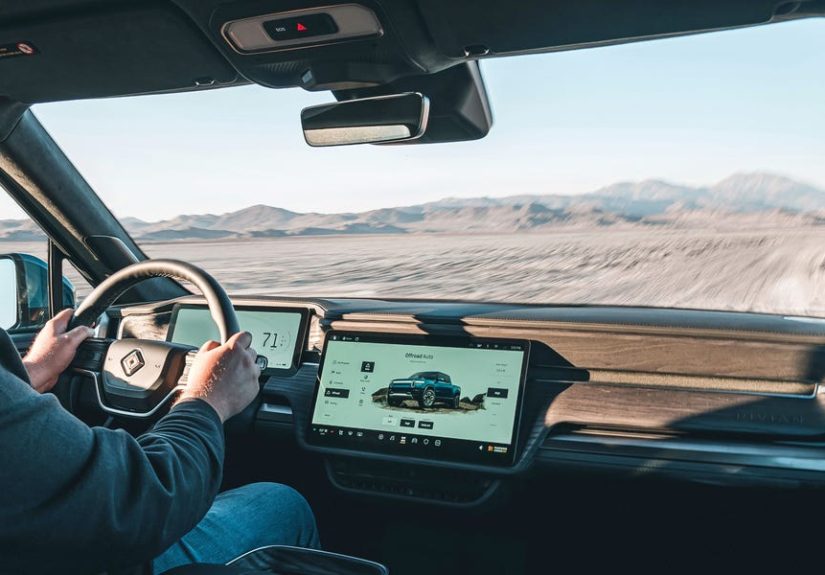
That is why some EV makers have leaned harder into native software platforms rather than smartphone mirroring. General Motors made headlines when it said future EVs would move away from Apple CarPlay and Android Auto in favor of Google built-in systems. Rivian has held its ground as well, arguing that it wants a tightly integrated experience rather than handing prime dashboard real estate to a phone interface. From the automaker perspective, that argument is not nonsense. EVs rely heavily on software for routing, charging, battery management, climate settings, and vehicle controls, so manufacturers want everything to feel seamless and branded.
There is also a business angle, of course. Native software creates opportunities for subscriptions, first-party data, brand loyalty, and features that live inside the automaker’s ecosystem. In plain English: the dashboard is the new storefront, and nobody wants Apple renting the best shelf space for free.
Still, that strategy comes with risk. Drivers have gotten used to a smartphone-first world, and many of them prefer CarPlay because it feels familiar, consistent, and updated on the same timeline as their phones. An automaker may promise a “better built-in experience,” but drivers hear, “Please trust our software team forever,” which is a bold ask in an industry where infotainment bugs can breed like rabbits.
The twist: some EV makers are going the other way
This story is not all one-directional rebellion. Some EV brands still support CarPlay, and some are even expanding it. Lucid has rolled out CarPlay and Android Auto to the Gravity through an over-the-air update, while the Lucid Air already offers it. Apple, meanwhile, is pushing forward with CarPlay Ultra, a more deeply integrated version of CarPlay that reaches further into the vehicle experience when automakers choose to support it.
So the market is not really splitting into “smart” automakers and “dumb” ones. It is splitting into different philosophies. One camp says, “Use our software.” The other says, “Use what works best for you.” Unsurprisingly, many drivers are voting with their phones.
Why Drivers Still Love CarPlay
CarPlay survives because it solves a very basic human problem: people do not want to relearn their digital life every time they buy a new car. They already know Apple Maps, Google Maps, Waze, Spotify, Apple Music, Messages, WhatsApp, Overcast, Audible, and a dozen other apps that have become part of their daily driving routine. CarPlay keeps those habits intact.
It also has a trust advantage. Your phone gets updated constantly. Your car might not. Even when automakers offer over-the-air updates, they usually move slower than Apple and app developers do. So CarPlay feels less like a feature and more like a software life raft. It lets drivers bring a familiar, regularly updated interface into a vehicle that might otherwise age faster than the battery degradation forum predicted.
There is also the reality that EV drivers spend a lot of time thinking about navigation. Charging stops, route changes, traffic detours, and finding the least cursed fast charger on a road trip all make navigation more central to the EV experience. When drivers already trust their phone-based ecosystem, they naturally want it on the biggest screen in the car.
The New Workaround: Add CarPlay Yourself
For years, the aftermarket answer to bad infotainment was simple: swap the head unit. Easy, right? Well, not in many modern EVs. Today’s center display often handles climate controls, cameras, charging menus, vehicle settings, warning prompts, and more. Replacing that whole system can range from impractical to “please do not turn your dashboard into a science fair project.”
That is why the new solutions are different. Instead of replacing the entire factory brain, most modern CarPlay add-ons either piggyback on the existing system or live alongside it.
Option 1: EV-specific retrofit devices
The most interesting new category is the EV-specific retrofit. These are not generic little dongles designed for any random sedan. They are purpose-built products designed around particular EVs and their native screens.
A good example is EV Play, an Android-based add-on created to bring Apple CarPlay and Android Auto to vehicles like Rivians and certain GM EV applications. The appeal is obvious: instead of staring at a gorgeous giant display that somehow still does not show your iPhone interface, a retrofit uses that existing screen and adds the smartphone experience drivers have been asking for. In some cases, these systems support both wired and wireless CarPlay and switch back to the factory interface when needed.
This is the most elegant DIY route because it feels closer to factory behavior. But it is also the route that requires the most caution. Installation can be more involved, compatibility matters a lot, and automakers may not exactly send you a fruit basket for modifying their software-adjacent ecosystem. If a company says “average install time is 45 minutes,” experienced DIY people hear, “Clear your entire Saturday and charge your drill.”
Option 2: Portable CarPlay screens
The easier, more universal solution is the portable CarPlay screen. These are freestanding displays that mount on your dash or windshield and connect to your phone wirelessly or by cable. Think of them as bringing your own infotainment system to the party.
Portable screens have become more appealing because they are simple, relatively affordable, and do not require rewriting the DNA of your dashboard. Many support both Apple CarPlay and Android Auto, and some include extra features like backup cameras, dash cams, or screen mirroring. They are especially attractive for drivers who want the function of CarPlay without touching the vehicle’s native system.
There are trade-offs, though. You need a good mounting location, the audio path matters, and not all models are equal. AUX or direct-wired audio connections usually sound better than FM transmission, which can work but often sounds like your podcast is being broadcast from a weather balloon. You also need to make sure the screen does not block your view or interfere with controls. Convenience is the point, so do not install it like you are trying to hide a second laptop in the windshield.
Option 3: Traditional aftermarket upgrades, when possible
In a few vehicles, a more traditional aftermarket stereo route may still be possible. But in many new EVs and high-tech vehicles, replacing the factory unit is difficult because the screen controls so many core systems. That is why today’s DIY CarPlay movement is less about ripping out hardware and more about carefully layering new functionality on top of what is already there.
What to Check Before You Buy Anything
1. Compatibility
This is the big one. A universal product is not truly universal, and a vehicle-specific product is only useful if it actually supports your exact model year, trim, and screen configuration. Verify everything before you spend a dollar.
2. Installation difficulty
Some products are basically plug-and-play. Others are “plug-and-pray.” Watch install videos, read the FAQ, and decide honestly whether you want a weekend project or a five-minute upgrade.
3. Audio quality
If the device uses AUX, Bluetooth, or FM to route audio into your car, know the trade-offs. AUX and direct wired connections usually deliver the best results. FM is convenient, but convenience and fidelity are not always on speaking terms.
4. Native EV functions
This is where expectations need a reality check. Adding CarPlay does not automatically replace or improve every EV-specific tool your vehicle already has. Charging menus, battery preconditioning, climate controls, camera systems, and native route planning may still live in the factory software. In many cases, the best setup is not CarPlay instead of the native interface. It is CarPlay plus the native interface.
5. Warranty and support questions
Any time you add hardware to a new vehicle, support and warranty questions enter the chat. That does not mean you should panic, but it does mean you should read the fine print, understand the installation process, and know who is responsible if something goes sideways.
What This Means for EV Ownership in 2026
The bigger story here is not just that drivers can add Apple CarPlay themselves. It is that the EV market is entering a more mature phase where owners are no longer willing to accept missing features just because the car is electric, futuristic, or wrapped in software marketing copy.
Drivers have become more selective. They want good range, strong charging performance, solid software, and a cabin experience that does not make them choose between innovation and convenience. If an EV omits CarPlay, some buyers will shrug and move on. Others will treat it like a loose floorboard in a luxury hotel: fixable, but weirdly unnecessary.
That tension is pushing the market in two directions at once. Automakers are doubling down on native ecosystems, while owners and aftermarket companies are building bridges back to the phone-centric experience they actually want. The result is a strange but fascinating middle ground: the age of the customizable EV dashboard.
Real-World Experiences After Adding CarPlay Yourself
The most common real-world experience after adding CarPlay to an EV is not amazement. It is relief. Drivers often describe the change less like “upgrading” the car and more like finally restoring a part of daily life that should have been there all along. The first time a favorite navigation app appears on a proper screen, texts can be handled with voice, and your podcasts resume without a six-step menu hunt, the reaction is usually something like: “Yes. This. Why was this such a journey?”
One of the biggest improvements people notice is reduced friction. Native EV software may be polished, but it often asks drivers to adapt to the car’s preferred workflow. CarPlay flips that dynamic. Instead of learning a new messaging system, new media layout, new voice assistant logic, and new map behavior, you step back into the phone ecosystem you already use every day. That familiarity lowers mental load, which is a very fancy way of saying you stop poking random icons while sitting at a red light wondering where your audio app went.
Navigation tends to be the star of the show. Drivers who add CarPlay often say that route searching becomes faster, rerouting feels more intuitive, and map data feels more current. That does not automatically mean the factory system is bad. In fact, many built-in EV navigation systems still do useful EV-specific things, especially around charging stops and battery-related planning. But in everyday driving, a lot of owners simply prefer the look, search behavior, and voice controls of the apps on their phones. So the lived experience becomes a two-system rhythm: native EV tools when the battery matters, CarPlay when the human being in the driver’s seat matters.
Audio is where the experience can swing wildly. People who use a clean wired connection often come away happy. People relying on FM transmission sometimes discover that “good enough” has a distinct flavor, and that flavor is static. Portable screens also live or die by mounting position. A well-placed display can feel clever and tidy. A badly mounted one can make the cabin look like somebody balanced a small tablet there after losing a bet.
There is also the emotional side. Many EV owners buy tech-forward vehicles because they love technology, not because they enjoy compromising with it. So when a DIY CarPlay solution works, it feels satisfying in a very specific way. It is not just about gaining apps. It is about making an expensive, advanced product behave in a more personalized, more rational way. Owners often describe that experience almost like reclaiming the vehicle. The car still does its EV magic, but now it also speaks the driver’s language.
That said, the experience is rarely perfect. Some people do not love switching between factory software and the add-on interface. Others wish steering-wheel integration were deeper, startup times were faster, or the install were cleaner. And because these solutions sit somewhere between consumer electronics and vehicle tech, they can carry a little extra uncertainty. When your phone glitches, you blame your phone. When your car glitches, you feel your blood pressure in your eyebrows. That emotional difference matters.
Even so, the overall pattern is clear. For many drivers, adding CarPlay themselves does not feel like a gimmick. It feels like finishing the car. And that may be the most revealing thing of all. In an era of giant screens, software-defined vehicles, and constant over-the-air promises, plenty of people still measure in-car technology by one brutally simple standard: does it make everyday driving easier? When the answer becomes yes, nobody misses the philosophical debate. They just enjoy the drive.
Conclusion
A lot of EVs still do not have Apple CarPlay, and that gap has become one of the clearest signs that “high-tech” and “user-friendly” are not always the same thing. Automakers want control, drivers want familiarity, and the aftermarket is happily stepping into the middle with solutions that range from clever to surprisingly polished.
The smartest takeaway is this: if your EV skipped CarPlay, you may not have to live without it. Whether you choose an EV-specific retrofit or a portable CarPlay screen, there are now realistic ways to add the feature yourself. Just go in with clear expectations. The best setup is not always the flashiest one. It is the one that fits your vehicle, your tolerance for installation drama, and your everyday habits behind the wheel.
Because at the end of the day, the future of driving should not require you to miss your favorite map app just to enjoy instant torque.

![18 Best Types of Charts and Graphs for Data Visualization [+ How to Choose]](https://corkopencoffee.org/wp-content/uploads/2026/05/18-best-types-of-charts-and-graphs-for-data-visualization-how-to-choose-qKM1PBYG-thumb.jpg)