Table of Contents >> Show >> Hide
- Why a Planet Wall Mural Works in a Nursery
- Pick Your Planet Mural Style
- Design the Nursery Around the Mural
- Materials & Safety: Because Babies Explore Like Tiny Scientists
- Installation That Doesn’t End in Tears
- Finishing Touches That Make It Feel Like a Home (Not a Theme Store)
- Three Budget-Friendly Ways to Build a Planet Mural Nursery
- Common Mistakes (So You Don’t Have to Learn the Hard Way)
- 500-Word Experience Add-On: Living With a Planet Wall Mural
- Conclusion
A planet wall mural in a nursery is basically a cheat code: it fills a big blank wall, sets a theme in one move,
and gives you something to talk about at 2:17 a.m. besides “please, tiny human, blink slower.”
Done right, a solar system mural turns the room into a cozy little observatorycalm enough for naps, fun enough for
toddler years, and interesting enough that adults don’t feel like they’re living inside a giant pastel cupcake.
This guide walks you through choosing a mural style, designing the rest of the nursery around it, installing it
without a breakdown, and keeping the whole setup baby-safe. We’ll also steal a little inspiration from a famously
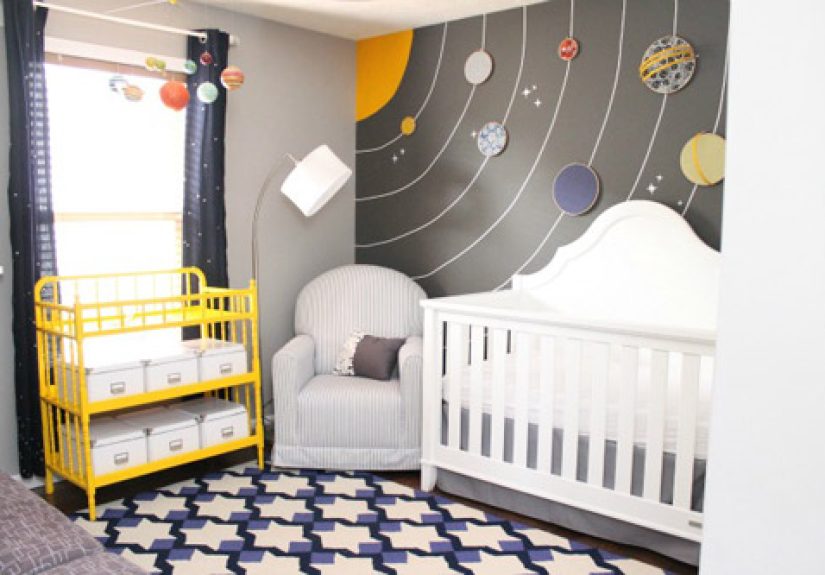
clever “planet wall mural” nursery concept that uses embroidery hoops to create a 3D planet “mural” (so the planets
literally pop). Because if you’re going to decorate a baby’s room, you might as well commit to the bit.
Why a Planet Wall Mural Works in a Nursery
It’s high-impact without adding clutter
Nurseries can get crowded fast: crib, changing station, rocker, storage, laundry basket that somehow reproduces.
A wall mural gives you “wow” without taking up floor space. One accent wall can carry the whole room so you don’t
feel obligated to buy twelve themed knickknacks that will later haunt your donation pile.
It grows with your kid
Space is one of those themes that ages well. A sweet watercolor planet mural works for babies, toddlers, and early
school years. Later, you can lean more “science museum” with framed space prints, constellation charts, or a
telescope corner. The mural becomes the anchor, and everything else can evolve around it.
Built-in storytelling for bedtime
Murals aren’t just decor; they’re prompts. Even before your child understands the words, you can narrate:
“That’s Jupiterbig guy energy. That’s Saturnfashion icon.” The mural becomes a familiar visual routine that can
help make the room feel like a safe, consistent place (which is half the battle in the newborn stage).
Pick Your Planet Mural Style
“Planet wall mural” can mean everything from a peel-and-stick wallpaper panorama to a hand-painted galaxy wash.
Here are four styles that work especially well in nurseries.
1) Peel-and-stick mural wallpaper: quickest transformation
Peel-and-stick murals are popular for a reason: minimal mess, no paste bucket, and you can remove them later
(which feels comforting when your brain is filled with “what if we move?” thoughts). They’re best on smooth,
clean, well-cured paint. If your walls are heavily textured, do a sample firsttexture can make panels lift or
show seams.
Design tip: If you want a calming nursery, choose a mural with a softer background (inky navy, smoky gray,
muted teal) and planets with gentle color rather than neon-bright everything. You can always add playful pops via
pillows, a changing pad cover, or a little rocket lamp.
2) Traditional mural wallpaper: most seamless, most “pro” looking
Traditional mural wallpaper (the kind you hang with paste) often looks the most like a true “painted-on” feature
wall. It can be more forgiving on lightly textured walls than peel-and-stick, but installation is messier and
usually less DIY-friendly if you’re new to wallpaper. If you love the look and want it to last for years, it’s a
strong optionjust plan the install carefully and don’t rush it.
3) Hand-painted planets or a galaxy wash: custom and magical
If you’re the kind of person who thinks “we can totally paint a galaxy this weekend” and you actually mean it,
hand-painted can be incredible. You can keep it minimalist (a few oversized planets and stars) or go full
planetarium (nebula clouds, star clusters, the whole cinematic universe).
The win here is personalization: you choose the scale, the colors, and exactly how “busy” the mural feels. The
risk is… well, geometry at 11 p.m. But if you sketch first, measure twice, and keep your palette controlled, you
can land something that looks intentional, not “science fair poster but make it permanent.”
4) The 3D “planet hoops” wall: a mural with actual dimension
One of the smartest twists on a planet wall mural is making it partly sculptural: using embroidery hoops as frames
for planet fabric or painted circles so the “mural” becomes a collection of 3D planet portholes. It’s an approach
that pairs beautifully with a calm base palette (think grays and blues) plus one bright accent color elsewhere
(like a sunny yellow dresser) so the room feels playful, not chaotic.
How it works (in plain English):
- Choose planet sizes (small Mercury, medium Earth, big Jupiter) and lay them out on the floor first.
- Wrap the hoops with fabric (solid colors, subtle texture, or watercolor prints) and secure tightly.
- Add details with fabric paint or stitching if you want rings, swirls, or craters.
- Mount securely with appropriate wall anchors so nothing can fallnursery walls are not the place for “good enough.”
This style is also easy to expand later: add a comet, a moon, or a tiny Pluto (because the “Pluto debate” is the
perfect low-stakes conversation for sleep-deprived adults).
Design the Nursery Around the Mural
Start with a “space-neutral” base
Space themes can go two ways: dreamy and calm, or arcade laser-tag. If your goal is a soothing nursery, pick a base
that’s quiet: warm white, soft gray, or a dusty blue. Then let the mural do the talking.
A classic winning combo is grays + blues with one bold accent (mustard, terra-cotta,
sage, or sunny yellow). That accent can live on a thrifted changing table makeover, a storage cart, or a rug detail.
You get personality without turning the room into a theme park.
Choose the right wall for your planet mural
Most nurseries place the mural on the wall you see first when you walk in, or behind the crib (because that’s the
“photo wall,” let’s be real). Either can workjust think practically:
- Behind the crib: dramatic, iconic, great backdrop. Keep any 3D pieces well above reach and ultra-secure.
- Opposite the crib: easier to enjoy during rocking/feeding sessions, often safer for dimensional elements.
- Above a daybed/futon: ideal if you want a two-adult seating zone (helpful for bedtime teamwork and visitors).
Balance scale so it doesn’t overwhelm
If the mural is bold and busy, keep the rest of the room simple: solid curtains, clean-lined furniture, minimal
open shelving. If the mural is subtle (soft watercolor planets on a pale background), you can add more texture:
starry rug, knit pouf, layered baskets, and framed prints.
Lighting: make it cozy, not “spaceship interrogation”
Lighting matters more than most people expect. The mural will look different in morning sun versus nighttime
lamplight, so test bulbs. Warm white light tends to keep the room cozy, while very cool bulbs can make blues feel
harsh. Add dimmable options if you can: one gentle lamp for nighttime feeds, and brighter overhead light for diaper
changes (your future self will thank you).
Materials & Safety: Because Babies Explore Like Tiny Scientists
Low-VOC paint (and why “zero-VOC” isn’t a free pass)
If your mural involves painting (even just the base wall), choose low-VOC or zero-VOC options and ventilate well.
“Zero-VOC” labels can still involve some emissions depending on pigments and additives, so the practical rule is:
paint early, ventilate aggressively, and let the room air out before baby spends long stretches in it.
Wallpaper and adhesives: go gentle and give it time
With murals and wallpaper, the main concerns are adhesion (you don’t want peeling edges) and off-gassing (new
products can smell). Follow manufacturer instructions, keep airflow moving, and consider a short “air-out” period
after installationespecially if you’re sensitive to odors.
Safe placement basics: keep hazards away from the sleep zone
In a nursery, decor must obey the laws of physics and baby logic. Avoid anything heavy or dangling where it could
fall into the crib, and keep the crib away from window blind cords. If you add a mobile or hanging element, make
sure it can’t entangle baby and remove it once baby can push up or sit.
Installation That Doesn’t End in Tears
Prep like a minimalist: clean, smooth, dry
Whether you’re doing peel-and-stick or pasted wallpaper, prep is everything. Clean the wall (dust and oils are
mural villains), let it dry fully, and fix bumps you can fix. If you just painted, give the paint time to cure
before applying adhesive productsfresh paint can cause peeling or damage on removal.
Measure like you’re planning a moon landing
Measure the wall height and width in multiple spots (old houses laugh at “perfectly square”), and order slightly
larger if possible. Most murals come in panels; lay them out in order before you start so you don’t accidentally
install Saturn where the moon should be. (Saturn will not complain, but you will.)
Use a level or plumb lineyour eyes will betray you
A straight first panel sets the whole mural. Mark a vertical guideline so the design doesn’t drift. If you notice
a gap or misalignment growing as you go, stop and adjust early rather than trying to “finesse” it at the end.
Air bubbles can be smoothed out with a wallpaper tool or a clean cloth; work from center outward.
Worried about commitment? Try a “framed mural” approach
If you want a removable look without risking wall damage, consider mounting your mural onto a lightweight panel
(like thin backing board) and trimming it like a giant framed art piece. It’s not invisible like true wallpaper,
but it can look intentionalespecially in a nursery where “practical” is a design style.
Finishing Touches That Make It Feel Like a Home (Not a Theme Store)
Textiles: where the comfort lives
Space can feel “cool” visually, so warm it up with texture: a soft rug (bonus if it has subtle star shapes), linen
or cotton curtains, knit blankets, and woven baskets. If you’re doing a deep navy mural background, add creamy
whites and natural wood tones so the room feels balanced.
Add one “pop” piece that makes you smile
A painted thrifted changing table, a bright storage cart, or a cheerful lamp base gives the room a playful note
without fighting the mural. The trick is choosing one hero accent and repeating it in tiny ways (a pillow,
a book cover, a small print) so it feels cohesive.
Use real space inspiration for art
For a more grown-up, educational layer, mix in authentic-looking space prints or travel-style posters inspired by
NASA/JPL “future destinations.” They’re a fun way to make the nursery feel curated instead of purely themed.
Keep frames lightweight and securely mounted, and place them out of reach.
Three Budget-Friendly Ways to Build a Planet Mural Nursery
Option A: The “Weekend Win” (budget-friendly)
- Peel-and-stick planet mural on one wall
- White crib + simple changing setup
- Star-print rug or neutral rug with texture
- One accent item (painted cart, bold curtains, or colorful wall shelf)
Option B: The “Custom Look” (mid-range)
- Traditional mural wallpaper for a seamless finish
- Coordinated paint on adjacent walls (soft gray or dusty blue)
- Layered lighting: dimmable lamp + overhead light
- Art prints and shelves for books and keepsakes
Option C: The “Handmade Heirloom” (DIY-forward)
- Painted base wall + hand-painted planets or galaxy wash
- 3D embroidery-hoop planets for dimension
- Upcycled furniture piece as the accent color moment
- Seating zone (rocker + pouf, or a small daybed if space allows)
Common Mistakes (So You Don’t Have to Learn the Hard Way)
- Going too busy: If the mural is loud, let the rest of the room be quiet.
- Skipping wall prep: Dust, texture, and uncured paint are why murals peel.
- Placing hazards near the crib: Heavy frames, cords, or dangling decor should be far from the sleep zone.
- Forgetting longevity: Pick a mural you’ll still like when your child is three, not just when they’re three days old.
- Overbuying themed stuff: The mural is the theme. Everything else is support cast.
500-Word Experience Add-On: Living With a Planet Wall Mural
The funniest thing about putting a planet wall mural in a nursery is how quickly it stops being “decor” and starts
being “part of the household.” At first, you’ll obsess over installation. You’ll stare at seams like you’re
inspecting a priceless painting. You’ll smooth bubbles you swear weren’t there five minutes ago. But then the baby
arrives, and suddenly your design choices get promoted from “aesthetic decisions” to “survival tools.”
During those early weeks, the mural becomes a focal point for you as much as the baby. When you’re rocking
in the dark, sleep running on fumes, you’ll catch yourself tracing the curve of Saturn’s rings with your eyes.
It’s oddly groundinglike a reminder that the universe is huge, and also that you can probably handle a diaper
blowout. Probably.
As your baby grows, the mural becomes a gentle routine-builder. You start narrating the planets during diaper
changes: “Mercury is the speedy one; Jupiter is the big boss.” You point out stars while humming lullabies. Even
if your child can’t answer, the repetition matters. It’s language practice for them and a script for youhelpful
when your brain is too tired to improvise.
Then comes the toddler stage, when the mural turns into an interactive game board. Your child will point.
They’ll invent names. They’ll decide Jupiter is a cookie. They’ll insist the moon is “cheese,” and you’ll be
tempted to correct them, but honestly? Let them have it. A space-themed nursery is basically permission for
imagination to run wild in a room that still needs to function for sleep.
Practical bonus: the mural can also make cleanup feel less painful. When you’re picking up toys, you’re not in a
random beige boxyou’re tidying up Mission Control. When you’re rotating books on a shelf, you can theme it:
space stories, animal stories, bedtime stories. The mural quietly keeps the room “together,” even when life feels
messy.
And if you chose a mural with a calmer palette, you’ll notice something else: the room doesn’t feel overstimulating
at night. That’s the sweet spotwhimsical, but not chaotic. The planet mural is still fun in daylight, but it fades
into a soothing backdrop when you dim the lights. It’s proof that a nursery can be playful and peaceful,
which is basically the design equivalent of getting a baby to nap on schedule: rare, magical, and worth celebrating.
Conclusion
A nursery with a planet wall mural isn’t just “cute theme decor”it’s a smart design move. One mural can anchor the
entire room, reduce clutter, and grow with your child from newborn nights to big-kid curiosity. Pick a style that
fits your wall (and your patience), keep the palette balanced, prioritize baby-safe placement and materials, and
let the mural do the heavy lifting. Your nursery can be calm, functional, and a little bit out of this worldall at
the same time.