Table of Contents >> Show >> Hide
- Why Personal Wall Art Works So Well
- Start With Meaning Before You Start Hanging
- How to Choose the Right Pieces
- Placement Rules That Actually Help
- Popular Ways to Add Personal Wall Art
- How to Make a Gallery Wall Look Intentional
- Protecting Personal Pieces the Smart Way
- Common Mistakes to Avoid
- How Personal Wall Art Changes a Home
- Experiences With Adding Personal Wall Art
- Conclusion
Blank walls are rude. They stand there acting innocent while quietly telling your home, “Nice personality… shame if no one could see it.” That is exactly why adding personal wall art matters. It turns a room from generic to genuinely yours. Not showroom yours. Not “I bought the exact same framed abstract leaf print as 80,000 other people” yours. Real yours.
Personal wall art does more than fill space. It tells stories, creates mood, softens sterile rooms, and gives guests something better to ask about than your Wi-Fi password. A thoughtful collection of family photos, travel prints, children’s art, heirloom sketches, custom typography, or framed keepsakes can make a room feel layered, warm, and lived in. The trick is making it look intentional instead of like your wall lost a bet.
Done well, personalized wall decor balances emotion with design. It feels meaningful, but it also looks polished. That is the sweet spot. You want a wall that says, “These memories matter,” not, “I own tape and made several impulsive decisions after coffee.”
Why Personal Wall Art Works So Well
There is a reason personal wall art keeps showing up in stylish homes, cozy apartments, and every enviable hallway on the internet. It creates connection. People naturally respond to spaces that feel curated by a real human being rather than assembled by an algorithm with a thing for beige.
Personal art can do several jobs at once. It can act as a focal point in a living room, bring softness to a bedroom, add rhythm to a staircase, and make an entryway feel welcoming. More importantly, it helps a home reflect memory and identity. A gallery wall made of black-and-white family photos creates a totally different atmosphere than one built from colorful travel prints, pressed botanicals, and handwritten notes. Both can work beautifully. The key is knowing what story you want the room to tell.
That story does not have to be dramatic. It can be simple. Maybe your wall celebrates places you have lived. Maybe it highlights your child’s drawings in frames that make them feel museum-worthy. Maybe it mixes wedding photos with vintage postcards and one weird flea-market painting of a duck in a sweater. Honestly, the duck may become the star. Homes are funny like that.
Start With Meaning Before You Start Hanging
The best approach to adding personal wall art is to begin with content, not hardware. Before you grab a hammer, decide what belongs on the wall. Think in categories. Family photographs, vacation images, original art, typography prints, cultural textiles, album covers, sketches, certificates, postcards, and sentimental objects can all become part of the display.
Then ask a simple question: what should this wall say about the people who live here?
If the answer is “warm and grounded,” lean into softer colors, natural wood frames, black-and-white photos, and classic arrangements. If the answer is “creative and collected,” mix frame finishes, add texture, and include objects alongside prints. If the answer is “I want this room to stop feeling like a rental with commitment issues,” a tight, cohesive photo wall can do wonders.
Try narrowing your collection using one of these organizing ideas:
1. Build Around a Theme
A theme keeps even eclectic walls from feeling chaotic. You might choose family milestones, favorite cities, nature photography, old letters, or art in one color family. A clear theme creates visual unity without making the wall feel stiff.
2. Pick a Visual Mood
Not every piece has to match, but they should get along. Decide whether the wall should feel airy, dramatic, playful, vintage, modern, or layered. Mood matters just as much as subject.
3. Edit Like a Ruthless but Loving Curator
Not every treasured item belongs on one wall at the same time. Some pieces need to be stored, swapped seasonally, or moved to another room. Editing is not betrayal. It is good taste with boundaries.
How to Choose the Right Pieces
A common mistake with personalized wall art is using only photos. Photos are wonderful, but a one-note display can feel flat. The best walls often mix two-dimensional art with texture and shape. Consider pairing framed photographs with a small mirror, a handwritten recipe, a child’s watercolor, or a shadow box holding tickets from a memorable trip.
If your photos are colorful and busy, bring order with matching frames and generous mats. If your images are quieter, you can loosen up the styling with varied frame shapes or finishes. Black frames make mixed collections feel crisp. Wood frames feel warmer. White mats add breathing room and make small pieces appear more substantial.
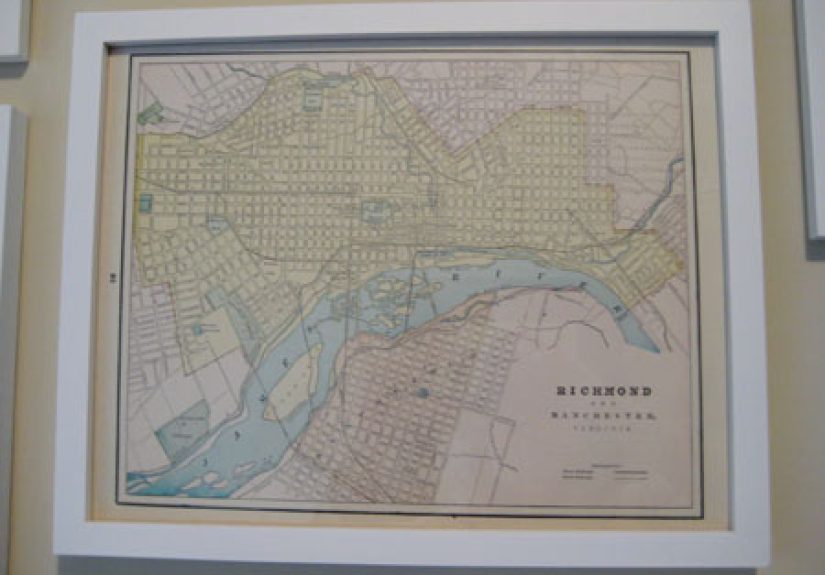
Personalization also gets stronger when you include pieces that are not obviously expensive. A scanned postcard from a grandparent, a map from your honeymoon, or a menu from the restaurant where you got engaged can carry more emotional weight than a pricey print. That combination of high and low is what makes a wall feel lived in instead of staged.
Placement Rules That Actually Help
Now for the part that sounds technical but saves you from patching seventeen mysterious nail holes later.
When hanging a single piece on an open wall, the center usually looks best around eye level. In many homes, that means around 57 to 60 inches from the floor to the center of the frame. If you are hanging art above furniture, keep it visually connected to that furniture rather than floating too high above it. A lonely frame hovering near the ceiling over a sofa has the same emotional energy as a balloon that escaped a child’s hand.
Size matters too. As a general design principle, wall art looks more balanced when it spans a substantial portion of the furniture below it. Tiny art over a wide sofa often feels apologetic. If your pieces are small, group them so they read as one larger composition.
Spacing is another make-or-break detail. Keep gaps between frames consistent so the arrangement feels intentional. Whether you prefer a tidy grid or a looser salon-style look, repeated spacing creates harmony. In other words, give your art room to breathe, but not enough room to start a long-distance relationship.
Popular Ways to Add Personal Wall Art
Create a Family Photo Gallery Wall
This is the classic for a reason. A family photo wall can be timeless, especially when you unify it with consistent framing. Black-and-white images create instant cohesion. A symmetrical grid feels clean and polished, while an organic arrangement feels more relaxed and collected over time.
Use a Picture Ledge for Flexible Styling
If you like changing things up, picture ledges are your friend. You can layer frames, rotate seasonal prints, and add depth without committing to a permanent configuration. This works especially well for people who enjoy decorating but do not enjoy measuring, leveling, drilling, and regretting.
Mix Art With Objects
A personal wall becomes richer when it includes texture. Add woven pieces, mini shelves, sculptural objects, or framed textiles. These details keep the wall from feeling too flat and help bridge the gap between decor and memory.
Go Room by Room
Bedrooms benefit from softer, more intimate imagery. Hallways are ideal for chronological family stories or travel moments. Living rooms can handle bigger statement pieces and layered gallery walls. Staircases are perfect for ongoing collections because the movement of the wall naturally supports repetition.
How to Make a Gallery Wall Look Intentional
Gallery walls are wonderful when they are done well. They are less wonderful when they look like framed panic. Start by laying everything out on the floor first. This helps you test balance, scale, and rhythm before the wall gets involved. Use paper templates if you want a cleaner install and fewer surprises.
Begin with an anchor piece. That is usually the largest or boldest item. Then build around it with supporting pieces. Spread color, weight, and visual interest across the arrangement so one side does not feel heavy. Step back often. Then step back again. Then take a photo of the layout with your phone. Strange imbalances become obvious when viewed on a screen.
If you want a polished look, keep mats or frame colors consistent. If you want a collected look, vary the frames but repeat at least one element, such as a shared color palette, similar subject matter, or matching mat tone. The wall should feel like a choir, not 14 soloists warming up in different keys.
Protecting Personal Pieces the Smart Way
This part matters, especially if your personal wall art includes original family photos, documents, children’s artwork, or anything irreplaceable. Light is not your sentimental items’ best friend. Direct sunlight can fade images, discolor paper, and slowly turn precious memories into decorative ghosts.
For valuable originals, consider displaying high-quality scans or copies and storing the originals safely. This is especially wise for old photographs, handwritten letters, and paper memorabilia. Use proper framing materials when possible, and avoid hanging delicate items in bathrooms, kitchens, or other areas with fluctuating heat and humidity.
If a piece is mostly sentimental and lightly damaged already, you still have options. Digitize it, print a display version, and frame that instead. You preserve the memory while still getting the beauty. That is not cheating. That is strategy.
Common Mistakes to Avoid
Hanging art too high: This is the undefeated champion of wall-art mistakes. Art should relate to the room and the furniture, not the ceiling fan.
Using pieces that are too small: One tiny frame on a giant wall can look accidental. Group small pieces or choose a larger anchor.
Ignoring scale and spacing: Uneven spacing makes even good art feel sloppy. Keep the arrangement deliberate.
Forgetting the room’s style: A personal wall should still belong to the room. Repetition of color, texture, or frame style helps it connect.
Displaying fragile originals in harsh light: Beautiful memory, bad placement. Preserve first, decorate second.
How Personal Wall Art Changes a Home
The most compelling thing about adding personal wall art is not that it makes a room prettier. It does, of course. Bless it for that. But the deeper value is emotional. Personal art makes a house feel inhabited in the most human way. It reflects relationships, history, humor, taste, and growth. It can celebrate where you have been, who you love, what you have made, and what you want to remember.
That is why the best walls rarely come together in one shopping trip. They evolve. A baby photo becomes part of a hallway gallery. A travel snapshot turns into a framed series. A child’s drawing gets upgraded from refrigerator celebrity to actual wall-mounted greatness. The wall grows with your life, which is exactly what makes it personal.
So do not wait for a perfectly finished home before you start. Start with what matters. Frame what you love. Mix memory with design. Give your walls something real to say.
Experiences With Adding Personal Wall Art
One of the most interesting things about adding personal wall art is how often people begin for aesthetic reasons and end up with something much more emotional. At first, the goal is usually practical: fill the blank wall, make the room feel finished, stop the space from echoing like a minimalist cave. But once the pieces go up, the room changes in a different way. It starts feeling familiar, specific, and grounded. People often realize that the wall is not just decor. It becomes a visual memory bank.
A common experience is starting too cautiously. Many people hang one small frame, step back, and immediately realize it looks lonely. Then they add another, then another, and eventually understand that wall art needs confidence. A well-designed personal wall usually works because it commits to a point of view. That might mean a strong grid of family photos above a console, a layered ledge of art and books in a living room, or a staircase gallery that turns everyday movement into a small ritual of remembering.
Another real-world lesson is that the most meaningful pieces are often the least fancy. People routinely discover that guests respond more to a framed handwritten note, an old recipe card, a child’s drawing, or a postcard from a memorable trip than to expensive decorative prints. These pieces invite stories. They create conversation naturally. They also make a home feel impossible to copy, which is a nice bonus in a world of suspiciously identical interiors.
There is also the experience of trial and error. Nearly everyone who has built a personal gallery wall has gone through a mildly chaotic phase involving paper templates, a tape measure, second-guessing, and at least one moment of staring at the wall in silence like it has personally offended them. That is normal. The process usually gets easier once you stop chasing perfection and start aiming for balance. A wall can be polished without being rigid. In fact, slight irregularity often makes personal art feel more authentic.
People also learn that wall art changes with life. Photos are updated. Children’s art improves or becomes funnier. Travel expands. Family dynamics shift. New memories deserve room. The best personal walls are rarely static. They are edited, refreshed, and occasionally rearranged when the mood strikes or when one new piece changes the entire conversation. That flexibility is part of the pleasure. Your wall is allowed to evolve right along with you.
In the end, the experience of adding personal wall art is less about decoration and more about recognition. It helps people see their own lives reflected back at them in a beautiful, organized, everyday way. And that is powerful. It turns blank square footage into something warmer and more human. It reminds you where you have been, who matters, and what deserves a place in view. That is a lot to ask from a wall, but with the right art, it absolutely delivers.
Conclusion
Adding personal wall art is one of the simplest ways to make a home feel layered, memorable, and unmistakably yours. Whether you choose a clean photo grid, a collected gallery wall, or a rotating ledge of meaningful pieces, the goal is the same: combine good design with real life. Choose art that means something, hang it with intention, protect the pieces that matter most, and let the wall grow over time. The result is not just better decor. It is a home with a point of view.