Table of Contents >> Show >> Hide
- The Moment That Split My Life in Two: “Before” and “After”
- The “After” Nobody Posts: Recovery, Fear, and the Brain’s Alarm System
- The Pivot: Turning Survival into a Plan (Not Just a Vibe)
- What Made 2017 “The Best Year”: The 7 Pillars That Actually Worked
- 1) Rebuild the body (gently, consistently, and with patience)
- 2) Protect sleep like it’s a non-negotiable appointment
- 3) Strengthen relationships (and stop saving gratitude for funerals)
- 4) Make room for meaning, not just thrills
- 5) Do the bucket list things (but do them smart)
- 6) Keep the brain steady with routine (yes, routine can be exciting)
- 7) Let the story change you (this is where post-traumatic growth lives)
- Traveling After a Wake-Up Call: How to Chase Adventure Without Being a Darwin Awards Finalist
- If You Want Your Own “Best Year,” Start Smaller Than You Think
- Extra: of “Best Year” Experiences (What It Feels Like in Real Life)
- Conclusion: The Best Year Is a Practice, Not a Prize
- SEO Tags
A near-death wake-up call, a messy recovery, and the surprisingly practical playbook that turned “I’m lucky to be here” into “I’m actually living.”
The Moment That Split My Life in Two: “Before” and “After”
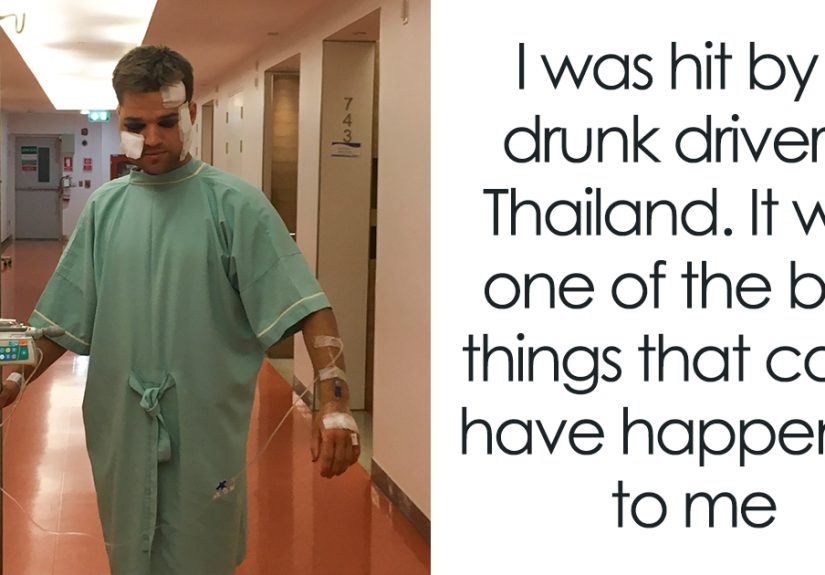
At the very end of 2016, I learned a lesson I do not recommend as a personal-development strategy: I got hit by a drunk driver while traveling in Thailand.
One second I was just… existing. The next second, my body was auditioning for a medical textbook.
I ended up needing emergency surgery that took hours. I remember waking up with that strange mix of pain, relief, and disbelieflike my brain was buffering.
And then came the thought that hit harder than the crash: I almost didn’t get another year.
People love to say “life is short” like it’s a cute sign you hang above a coffee bar. When you’ve been close enough to the edge to feel the wind,
it stops being décor and starts being a daily question: What am I doing with the time I still have?
Here’s the part nobody tells you: surviving something big doesn’t automatically make you brave, grateful, or enlightened.
Sometimes it makes you anxious, jumpy, exhausted, and weirdly angry at the guy ahead of you in line for chewing loudly.
The “after” is complicated. But it can also be powerful.
The “After” Nobody Posts: Recovery, Fear, and the Brain’s Alarm System
Why you can feel grateful and still feel wrecked
Right after a traumatic event, your mind and body can react in ways that are completely normaland still completely miserable.
Trouble sleeping, replaying what happened, feeling on edge, getting overwhelmed by small stuff… it can feel like you’re living with an internal smoke alarm
that goes off whenever someone burns toast.
I had to learn (the hard way) that “I’m alive” and “I’m not okay yet” can be true at the same time. Growth doesn’t erase stress.
In fact, sometimes you grow because you have to figure out how to carry the stress without letting it drive the car.
When to get help (yes, even if you think you “should be over it”)
I’m not a clinician, but I am a fan of not suffering in silence just to prove you’re “tough.”
If symptoms like flashbacks, intense anxiety, numbness, or hypervigilance stick around and start messing with work, relationships, or sleep,
it’s worth talking to a mental health professional. Getting support isn’t weaknessit’s maintenance.
I treated recovery like it was only physical at first: stitches, swelling, rest. But the emotional recovery was its own rehab program.
The best thing I did was stop negotiating with my pain like it was a bill collector and start treating it like a message:
Pay attention. Adjust your life.
The Pivot: Turning Survival into a Plan (Not Just a Vibe)
After the hospital, I made a decision that sounds dramatic because it was: I was going to make the next year count.
Not “I’ll be happier” (what does that even mean?). Not “I’ll travel more” (cool, to whereyour couch?).
I needed a real blueprint.
Step 1: Write down what you’re chasing (and what you’re done tolerating)
I did a “life audit” with brutal honesty:
- What felt meaningful before the accident (and what felt like noise)?
- Who made me feel safe and supportedand who drained me?
- What did I keep postponing because I assumed time was unlimited?
Then I made a second list that I called “Never Again,” which included things like ignoring my body, living on autopilot,
and pretending rest is optional. (Spoiler: rest is not optional. It’s not a suggestion. It’s physics.)
Step 2: Make goals so specific they can’t hide
Big feelings are valid. But big feelings are also vague. I needed goals with edges.
I used a simple structure: specific, measurable, realistic, and time-bound. Not because it’s trendybecause it’s usable.
Example:
- Vague: “I’m going to live more.”
- Specific: “I’m doing one ‘scary-but-safe’ adventure activity this quarter, and one meaningful trip with a purpose.”
- Measurable: “Booked, scheduled, completedyes or no.”
- Time-bound: “By March 31, June 30, September 30, December 31.”
Step 3: Use “if-then” planning (because motivation is flaky)
Motivation is like a cat: it shows up when it wants something and disappears when you need it.
So I started using “if-then” plans:
- If I start spiraling at night, then I write for 10 minutes and do a short breathing routine.
- If I feel myself withdrawing, then I text one person I trust and ask for a quick call.
- If I’m tempted to “do it later,” then I do the smallest possible version now.
The goal wasn’t to become a productivity robot. The goal was to stop leaving my life up to moods.
What Made 2017 “The Best Year”: The 7 Pillars That Actually Worked
1) Rebuild the body (gently, consistently, and with patience)
I’m convinced a lot of “mental” resilience is built on very unglamorous physical habits:
sleep, movement, hydration, and food that doesn’t come exclusively in a crinkly bag.
The comeback wasn’t a single heroic workoutit was consistency.
I aimed for a realistic routine: regular walking, strength work a couple days a week, and movement that felt like a friend, not a punishment.
Think: “I’m taking care of the body that carried me through this,” not “I must suffer to earn dinner.”
2) Protect sleep like it’s a non-negotiable appointment
Trauma can mess with sleep, and bad sleep can mess with everything else.
I stopped treating bedtime like the leftovers at the end of the day and started treating it like the foundation.
Same wake time, wind-down routine, less late-night doom scrolling (my thumbs were devastated).
3) Strengthen relationships (and stop saving gratitude for funerals)
I got more intentional about the people I let close. I said thank you out loud.
I apologized faster. I checked in without waiting for a “reason.”
Turns out “someday” is not a calendar date.
4) Make room for meaning, not just thrills
Adventures are incredible, but they aren’t a personality. I wanted meaning, not just motion.
So I started balancing “big” experiences with grounding ones:
volunteering, deep conversations, long walks, journaling, and learning to sit still without feeling guilty.
5) Do the bucket list things (but do them smart)
Yes, I chased some huge dreams in 2017because if you survive the unthinkable, your inner child deserves at least one “we’re doing it” moment.
I did things like:
- Hiking to Everest Base Camp (a childhood dream with very real lungs involved).
- Soaking in the silence of desert landscapes that make you feel tiny in a good way.
- Skydivingbecause apparently I needed to prove to gravity that we were on speaking terms again.
- Motorbiking through harsh weather and learning respect for conditions you can’t control.
- A long road trip across Oman that reminded me freedom can look like an empty highway and a full tank.
- Climbing mountains and volcanoesbecause “I’m alive” hits different at altitude.
- Camping in landscapes that looked like another planet and made everyday problems feel hilariously small.
But here’s what I did differently than my pre-2016 self: I planned. I respected risk.
I didn’t confuse “living” with “being reckless.”
6) Keep the brain steady with routine (yes, routine can be exciting)
Routine isn’t boring when it gives you stability to do bold things.
I kept a few anchors no matter where I was: a short morning walk, hydration, a daily check-in message,
and a weekly “reset” where I reviewed money, health, and plans.
7) Let the story change you (this is where post-traumatic growth lives)
There’s a concept called post-traumatic growthpositive changes that can happen after major adversity.
Not because trauma is “good” (it’s not), but because the struggle can force you to reassess priorities,
deepen relationships, and see new possibilities.
I didn’t wake up as a new person. I built a new person in small steps:
choosing courage when fear was loud, choosing presence when distraction was easy, choosing gratitude when my mind wanted to catastrophize.
Traveling After a Wake-Up Call: How to Chase Adventure Without Being a Darwin Awards Finalist
If you’re going to make “the best year of my life” include travel and high-adrenaline experiences, do it with a brain attached.
Here’s what helped me stay safe while still saying yes:
Practical safety habits that don’t kill the vibe
- Plan like an adult: know routes, weather windows, local rules, and backup options.
- Tell someone your plan: one person should know where you are and when you’ll check in.
- Respect recovery: if your body is healing, don’t pretend you’re invincible because you bought new hiking boots.
- Insurance and documents: boring until it saves your trip (or your savings account).
- Register smartly when needed: if you’re abroad, use available traveler resources and alerts.
The point isn’t to live in fear. The point is to remove avoidable chaos so you can focus on what you came for:
the view, the people, the stories, the reminder that you’re still here.
If You Want Your Own “Best Year,” Start Smaller Than You Think
Your best year doesn’t have to be Everest or skydiving. It can be:
- Finally going to therapy and feeling your chest unclench for the first time in months.
- Taking your health seriously and seeing your energy come back.
- Reconnecting with someone you love (or letting go of someone who keeps hurting you).
- Traveling two hours away instead of two continents awayjust to prove to yourself you can.
A simple 30-day “best year” starter plan
- Pick 3 focus areas: health, relationships, meaning, work, adventure, creativitywhatever matters most.
- Choose one weekly “mini-quest”: something slightly uncomfortable but safe (new class, tough conversation, solo day trip).
- Set one daily anchor habit: 20-minute walk, gratitude note, bedtime routine, journalingkeep it small and repeatable.
- Use an if-then plan: decide now what you’ll do when you hit resistance.
- Review weekly: keep what works, adjust what doesn’t, and don’t turn setbacks into a personality.
The secret isn’t perfection. The secret is momentum with compassion.
Extra: of “Best Year” Experiences (What It Feels Like in Real Life)
Let me tell you what surprised me most about trying to make a year “the best” after almost dying: it wasn’t the big moments.
The big moments are incredibledon’t get me wrong. Standing in front of an enormous landscape, feeling small in the healthiest possible way,
does something to your nervous system. It reminds you you’re part of the world, not trapped in your own head.
But the real transformation showed up in quieter, almost boring scenes.
Like the first time I rode in a car and realized my hands weren’t gripping the seatbelt like it was a climbing rope.
Or the first night I slept through the dark without jolting awake, convinced something bad was about to happen.
Or the afternoon I laughed so hard with a stranger-turned-friend that I forgot to check my phone for an entire houran achievement so rare it deserves a trophy.
There were hard days too. Days when my face still felt tender and my confidence felt bruised.
Days when I’d catch a reflection and think, “Is this really me?” and then feel guilty for caring.
(Pro tip: don’t bully yourself for having feelings. You’ve been through enough.)
On those days, “living like it’s my last day” didn’t mean skydiving. It meant eating a real meal.
It meant calling someone instead of isolating. It meant going for a walk and letting my body remember it can move without danger.
I also learned that making the most of life isn’t about stacking highlights like you’re trying to win an award for “Most Interesting Human.”
It’s about making your values visible in your schedule. If you value relationships, they need time on the calendar.
If you value health, you need habits that don’t rely on willpower. If you value adventure, you need planningnot just spontaneityso you can say yes without gambling with your safety.
One of my favorite “best year” experiences wasn’t even dramatic: I sat in a desert at dusk, watched the sky change color, and realized my mind had gone quiet.
Not numbquiet. That’s different. Quiet is peace. Quiet is your brain deciding it doesn’t have to fight right now.
I remember thinking, “I used to rush past moments like this because I thought there would be thousands more.”
That night, I didn’t rush. I stayed until the cold crept in. I took a slow breath and felt thankful in a way that wasn’t forced.
If you’re reading this after your own close callan accident, an illness, a losshere’s what I want you to know:
you don’t owe anyone a heroic comeback story on a deadline. You’re allowed to heal in phases.
You’re allowed to chase joy while still carrying fear. And you’re allowed to build a best year that fits your body, your budget, and your reality.
Start with one decision that says, “I’m still here, and I’m going to honor that.” Then repeat it tomorrow.