Table of Contents >> Show >> Hide
- Why Air-Fryer Scallops Work (And Why They’re Not Always Brown)
- Ingredients
- How to Choose Scallops (Because Waterlogged Scallops Are a Villain)
- Prep Like You Mean It: 5 Minutes That Change Everything
- Air-Fryer Scallops: Step-by-Step Recipe
- Lemon-Herb Sauce: Bright, Salty, and Ridiculously Easy
- What to Serve With Air-Fryer Scallops
- Troubleshooting: When Scallops Misbehave
- Storage and Reheating (A Gentle Warning)
- Nutrition Notes and Dietary Angles
- Experience Notes: What It’s Actually Like Making These at Home (The Extra 500-ish Words)
- Final Take
Scallops are the “fancy restaurant” food that secretly wants to be your weeknight dinner.
And the air fryer? It’s basically a tiny convection jet engine that can cook scallops fast,
clean, and without turning your stove into a splatter-themed art installation.
This recipe gives you tender, juicy air-fryer scallops and a bright lemon-herb sauce that tastes
like you know what you’re doing (even if you’re wearing sweatpants and Googling “what is a caper”).
Along the way, you’ll learn the small details that make scallops buttery instead of rubberybecause
scallops will absolutely humble you if you let them.
Why Air-Fryer Scallops Work (And Why They’re Not Always Brown)
Scallops cook quickly because they’re lean and delicate. The air fryer’s rapid hot airflow helps
them firm up fast without a lot of oil. The tradeoff: air-fried scallops may not develop the deep,
skillet-style crust you get from a screaming-hot pan. In other words, don’t use “golden brown”
as your only doneness signaluse texture and temperature instead.
Think: opaque, pearly, and gently springy when pressed. If you want a sure thing, use an instant-read
thermometer and pull them as soon as they hit your preferred doneness range (more on that below).
Ingredients
For the air-fryer scallops
- 8 large sea scallops (about 1 ounce each), cleaned and patted very dry
- 1/4 teaspoon ground black pepper
- 1/8 teaspoon kosher salt (or fine sea salt)
- Nonstick cooking spray (avocado-oil spray works well)
- Optional but excellent: a pinch of smoked paprika or Old Bay for a subtle coastal vibe
For the lemon-herb sauce
- 1/4 cup extra-virgin olive oil
- 2 tablespoons very finely chopped flat-leaf parsley
- 2 teaspoons capers, very finely chopped
- 1 teaspoon finely grated lemon zest
- 1/2 teaspoon finely chopped garlic (or microplaned)
- Optional upgrades: 1–2 teaspoons lemon juice, a pinch of red pepper flakes, chopped chives/dill
To serve
- Lemon wedges
- Flaky salt (optional, for finishing)
- Cooked pasta, rice, or a simple arugula salad (optional, but highly recommended)
How to Choose Scallops (Because Waterlogged Scallops Are a Villain)
If you can, buy dry-packed sea scallops. “Wet” scallops are often treated with a solution
that helps them retain moisture, which can mean extra water release during cooking and less browning.
Extra moisture also makes it harder to get that tender, buttery textureespecially in the air fryer, where
steam is the enemy of “seared-ish.”
Also: you generally don’t need to rinse scallops. Rinsing can add moisture right when you’re
trying to get rid of it. Instead, pat them dry thoroughly. If you do rinse for any reason, keep it brief and
dry immediately and aggressively.
Prep Like You Mean It: 5 Minutes That Change Everything
1) Remove the side muscle
Look for a small, tough “tag” on the side of each scallop (the abductor muscle). Pinch it and peel it off.
It’s chewy, and not the good kind of chewy.
2) Pat dry (then pat dry again)
Place scallops on paper towels, top with another towel, and press gently. Moisture is the number-one reason
scallops turn out pale and a little… steamed. If your scallops look glossy-wet, keep drying.
3) Season simply
Salt and pepper are enough. Scallops have a naturally sweet, briny flavorthink “ocean marshmallow,” in the
most delicious way. Heavy seasoning can bulldoze that.
Air-Fryer Scallops: Step-by-Step Recipe
-
Preheat the air fryer to 400°F (if your model preheats). If it doesn’t,
no panicjust add a minute or two to the cook time and watch closely. -
Season the scallops. Sprinkle both sides with the black pepper and salt.
Add optional smoked paprika/Old Bay if you want a slightly bolder flavor. -
Prep the basket. Lightly spray the air-fryer basket with nonstick spray.
(Lightly. We’re cooking scallops, not repainting the kitchen.) -
Arrange in a single layer. Place scallops in the basket with space around each one.
Overcrowding traps steam and makes the texture less “tender luxe” and more “hmm, bouncy.” -
Spritz the tops. Lightly coat the scallops with cooking spray. This helps with surface
browning and prevents sticking. -
Air fry. Cook at 400°F for about 5–7 minutes, depending on thickness.
Many large scallops finish around 6 minutes. If your scallops are very thick, add 1–2 minutes. -
Check doneness the smart way. Scallops can look pale even when perfectly cooked. Aim for:
- Texture: opaque and gently firm/springy
- Color: pearly white throughout (no translucent centers)
- Temperature: many cooks prefer pulling around 120–130°F for tenderness
Food-safety note: General guidance for seafood emphasizes cooking until opaque/pearly; fin fish is often
referenced at 145°F. If you’re cooking for someone pregnant, older, immunocompromised, or you just
want maximum caution, cook longer until fully opaque and firmer (and consider aiming closer to that higher endpoint). - Rest briefly. Let scallops sit for 1 minute while you sauce. This helps juices settle and keeps them tender.
Lemon-Herb Sauce: Bright, Salty, and Ridiculously Easy
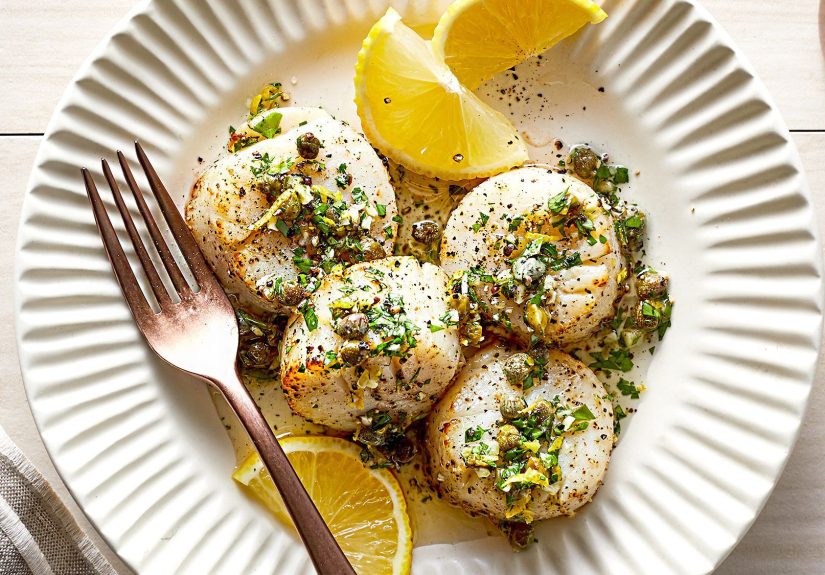
This sauce is the whole personality of the dish: lemon zest for perfume, parsley for freshness,
capers for briny pop, garlic for backbone, and olive oil for silky body.
-
In a small bowl, combine olive oil, parsley, capers,
lemon zest, and garlic. -
Taste. If you want more zing, add 1–2 teaspoons lemon juice. If you want gentle heat, add
a pinch of red pepper flakes. - Drizzle over the warm scallops right before serving.
Easy variations (so you can make this 12 times without boredom)
- Butter-meets-olive-oil: Replace 1–2 tablespoons of olive oil with melted butter for a richer sauce.
- Herb remix: Add chopped chives, dill, basil, or tarragonjust keep the total herbs roughly the same.
- Caper swap: No capers? Use finely chopped green olives or a tiny spoon of Dijon for tang.
- Sweet-heat: Add a small drizzle of honey plus chili flakes (surprisingly great with scallops).
What to Serve With Air-Fryer Scallops
Scallops are rich in flavor but light in weightso pair them with something that catches sauce and doesn’t
require a second mortgage of effort.
- Pasta: Angel hair or linguine with a splash of pasta water and extra lemon-herb sauce.
- Rice or quinoa: Great for soaking up oil, capers, and lemony goodness.
- Salad: Arugula + shaved fennel + cherry tomatoes = crunchy, bright, and a little fancy.
- Vegetables: Asparagus, broccolini, or green beansair fried or quickly sautéed.
- Bread: Warm, crusty bread turns this into “date-night restaurant vibes” at home.
Troubleshooting: When Scallops Misbehave
“My scallops are rubbery.”
That’s usually overcooking. Scallops go from tender to bouncy fast. Next time, pull them earlier and let carryover
heat finish the job. Also check size: smaller scallops need less time.
“They released a bunch of water.”
Moisture can come from “wet” scallops or from not drying thoroughly. Pat them dry like it’s your job, avoid rinsing,
and don’t overcrowd the basket.
“They’re paledid I do something wrong?”
Not necessarily. Air-fryer scallops can be fully cooked without much browning. Use a thermometer and the opaque/pearly
look as your guide, not “golden crust.”
“Can I use frozen scallops?”
Yes, but thaw first in the refrigerator and dry them extremely well. Frozen scallops tend to shed extra moisture.
If they’re still wet after thawing, you’ll steam them.
Storage and Reheating (A Gentle Warning)
Scallops are at their peak right after cooking. If you have leftovers, refrigerate in an airtight container and eat
within 1 day if possible. Reheat carefully: a short air-fryer burst at a lower temp (around 300–325°F) just until warm
helps avoid turning them into seafood erasers. Sauce is best stored separately and spooned on after reheating.
Nutrition Notes and Dietary Angles
Scallops are naturally high in protein and relatively lean. This recipe uses a modest amount of oil (mostly in the sauce),
and it’s naturally gluten-free and dairy-free as written. If you want a lighter sauce, reduce the olive oil slightly and add
lemon juice or a splash of warm water to keep it drizzle-friendly.
Allergy note: Scallops are shellfish. If you’re cooking for guests, this is not the time for surprises.
Experience Notes: What It’s Actually Like Making These at Home (The Extra 500-ish Words)
The first time I tested air-fryer scallops, I made the classic rookie mistake: I waited for browning. In a skillet, browning
is a love language. In the air fryer, browning is a flaky friend who may or may not show up to the party. I kept cooking until
I saw color, and the scallops politely informed mevia texturethat they were done five minutes ago. Lesson learned: with air-fryer
scallops, don’t chase a crust. Chase doneness.
The second lesson was moisture. Scallops can look deceptively dry in the package, but once you set them on a plate, they can start
weeping a little (relatable). If you season too early, salt draws out even more moisture, and then your air fryer becomes a steam room.
My best results came from drying the scallops first, seasoning right before cooking, and giving them a light spritz of oil spray. That
tiny bit of fat helps the surface cook evenly and keeps them from stickingespecially on baskets that have seen a few too many “I’ll clean
it later” nights.
I also found that scallop size matters more than you’d think. Those big, thick sea scallops? They’re perfect for air frying because you
get a small buffer before overcooking. Small scallops cook so fast that “I’ll just check them real quick” can turn into “why are they
squeaky?” in the time it takes to find tongs. If you only have smaller scallops, reduce the time and start checking early.
Sauce-wise, the lemon-herb drizzle is the kind of simple that feels smugin the best way. Finely chopping the capers is worth it: big chunks
can hijack a bite with too much brine, while finely chopped capers spread that salty punch evenly. Zest is the other secret weapon. Lemon juice
adds acidity, but lemon zest adds lemon perfume. Together, they make the scallops taste brighter without tasting “sour.”
My favorite serving move for real life: toss hot pasta (or rice) with a spoonful of the sauce first, then plate scallops on top and finish
with the rest of the drizzle. It looks intentional, like you planned the whole thing, and it guarantees the sauce doesn’t just sit on the
scallops and slide off like a raincoat. If you’re going for date-night energy, add a crunchy salad (arugula and fennel are fantastic) and
put the lemon wedges on the plate like you’re starring in your own cooking show. Bonus: the whole meal still takes less time than choosing a
streaming service.
Finally, a practical note: air fryers vary a lot. Basket models tend to cook faster than oven-style air fryers, and some run hot. The “right”
time is the time your scallops reach doneness. Once you nail it on your machine, write it down somewherebecause future you will absolutely
forget and then try to reinvent the wheel at 6:45 p.m. on a Tuesday.
Final Take
If you want a fast seafood dinner that feels special, air-fryer scallops with lemon-herb sauce are the move.
Keep the scallops dry, cook them quickly, and let the sauce do the heavy lifting. You’ll get a bright, briny,
buttery-tender plate that tastes like it came from a restaurantexcept the soundtrack is your dishwasher running.