Table of Contents >> Show >> Hide
- What Is a Kitchen Backsplash?
- Why Kitchen Backsplashes Matter
- Popular Kitchen Backsplash Materials
- Best Kitchen Backsplash Ideas by Style
- How High Should a Kitchen Backsplash Be?
- Choosing the Right Backsplash Color
- Grout: The Small Detail That Changes Everything
- Kitchen Backsplash Installation: DIY or Professional?
- How Much Does a Kitchen Backsplash Cost?
- Common Kitchen Backsplash Mistakes to Avoid
- How to Clean and Maintain a Kitchen Backsplash
- Real-Life Experience: What Homeowners Learn After Living With a Backsplash
- Conclusion
A kitchen backsplash is the part of the kitchen that quietly saves your walls from spaghetti sauce, coffee splatter, oil mist, and the mysterious splash that somehow appears three feet away from the sink. But today, a backsplash is much more than a washable wall protector. It is a design feature, a personality test, a budget decision, and sometimes the one kitchen update that makes guests say, “Wait, did you remodel?” even when you only changed twenty square feet of tile.
Whether you are planning a full kitchen renovation or just tired of staring at painted drywall behind your stove, choosing the right kitchen backsplash can completely change the look and feel of the room. The best backsplash balances beauty, durability, maintenance, cost, and common sense. Yes, common sense matters, especially if you cook like a professional chef but clean like a raccoon with a sponge.
This guide covers everything you need to know about kitchen backsplashes: popular materials, layout ideas, installation choices, cleaning tips, design mistakes to avoid, and practical real-life experience that can help you make a smarter decision before the first tile goes on the wall.
What Is a Kitchen Backsplash?
A kitchen backsplash is the vertical surface installed behind countertops, sinks, cooktops, and ranges. Its main job is to protect the wall from water, grease, food stains, steam, and general kitchen chaos. Traditionally, backsplashes were simple strips of tile a few inches high. Modern backsplashes can run from countertop to cabinet, wrap around the entire kitchen, or extend all the way to the ceiling for a dramatic, designer-level effect.
Backsplashes are commonly made from ceramic tile, porcelain tile, glass, natural stone, metal, brick, wood-look materials, quartz slabs, marble slabs, stainless steel, or peel-and-stick panels. Each option has its own personality. Subway tile is the reliable friend who always shows up on time. Marble is elegant but a little high-maintenance. Stainless steel looks professional but shows fingerprints like it is collecting evidence. Peel-and-stick tile is budget-friendly and renter-friendly, but it must be chosen carefully if you want it to look polished rather than temporary.
Why Kitchen Backsplashes Matter
They Protect Your Walls
The area behind the sink and stove takes a daily beating. Water droplets, cooking oil, tomato sauce, soup, batter, and steam can stain or damage painted drywall over time. A good backsplash creates a durable, easy-to-clean barrier. Instead of repainting your wall every time dinner gets dramatic, you can wipe the surface clean and move on with your life.
They Add Style Without Rebuilding the Kitchen
A backsplash is one of the most visible design surfaces in the kitchen. Cabinets and countertops are expensive and harder to change, but a backsplash offers a chance to introduce color, texture, shape, pattern, shine, or contrast. A white kitchen can feel warmer with handmade tile. A dark kitchen can feel brighter with reflective glass. A plain kitchen can suddenly look custom with a full-height stone slab.
They Can Increase Perceived Home Value
A clean, well-installed kitchen backsplash can make a kitchen look more finished and updated. While it may not magically double your home value overnight, it can improve buyer appeal. People notice kitchens. They also notice stained walls behind stoves. One says “well cared for.” The other says “many brave sauces died here.”
Popular Kitchen Backsplash Materials
Ceramic Tile
Ceramic tile is one of the most common backsplash materials because it is affordable, versatile, and available in endless colors, sizes, and patterns. It works with farmhouse kitchens, modern kitchens, traditional kitchens, and nearly everything in between. Classic white subway tile remains popular because it is timeless, easy to pair with cabinets, and friendly to most budgets.
The main advantage of ceramic tile is flexibility. You can create a simple grid, a brick pattern, a herringbone layout, or a decorative mosaic. The downside is grout. Grout lines can stain over time, especially behind a stove or sink, so sealing and regular cleaning are important.
Porcelain Tile
Porcelain tile is denser and often more water-resistant than standard ceramic tile. It is a smart choice for busy kitchens because it handles moisture, heat, and cleaning well. Porcelain can imitate marble, concrete, wood, limestone, and other expensive materials at a lower cost and with easier maintenance.
If you want the look of natural stone without the constant anxiety of sealing and staining, porcelain is a strong contender. It is practical, durable, and available in large-format sizes that reduce grout lines.
Glass Tile
Glass tile reflects light beautifully, which makes it especially useful in small or dark kitchens. It can create a clean, bright, modern look. Glass backsplashes come in subway shapes, mosaics, squares, rectangles, and shimmering mixed patterns.
The biggest benefit of glass is that it is nonporous and easy to wipe clean. The challenge is installation. Glass tile can show adhesive marks, uneven walls, and cutting errors more easily than opaque tile. For the best result, precise installation matters.
Natural Stone
Marble, travertine, slate, limestone, and granite bring organic texture and depth to a kitchen backsplash. No two pieces are exactly alike, which gives the kitchen a custom, natural feel. Marble backsplashes are especially loved for their elegant veining and soft luxury.
However, natural stone is not for everyone. Many stone materials are porous and may stain if they are not sealed properly. Acidic foods like lemon juice, vinegar, and tomato sauce can also affect some stone surfaces. If you love the look of stone, be prepared for regular maintenance and gentle cleaning.
Slab Backsplashes
A slab backsplash uses one large piece of material, such as quartz, marble, granite, porcelain, or solid surface, instead of many small tiles. The result is sleek, seamless, and dramatic. Slab backsplashes are especially popular in contemporary kitchens and luxury remodels because they reduce grout lines and create a clean visual flow from countertop to wall.
The downside is cost. Slab materials and installation can be expensive, especially when matching the countertop. But if your dream kitchen involves fewer grout lines and more “magazine photo shoot energy,” a slab backsplash may be worth considering.
Stainless Steel
Stainless steel backsplashes are common in restaurant kitchens because they are heat-resistant, durable, and easy to sanitize. In a home kitchen, stainless steel works well behind a range or cooktop, especially in modern, industrial, or chef-inspired spaces.
The catch is that stainless steel can show fingerprints, water spots, and scratches. It is practical, but it does not stay visually perfect without regular wiping. Think of it as the kitchen equivalent of a black car: gorgeous when clean, dramatic when smudged.
Peel-and-Stick Backsplash
Peel-and-stick backsplash tiles are popular for renters, quick updates, and budget-friendly makeovers. Many modern options imitate ceramic tile, stone, metal, or glass surprisingly well. They are easier to install than traditional tile because they do not require mortar or grout.
However, quality varies. Some peel-and-stick products look realistic and hold up well, while others look flat or plasticky. They also need a clean, smooth, dry wall for proper adhesion. In high-heat areas behind a stove, always check whether the product is rated for that use.
Best Kitchen Backsplash Ideas by Style
Classic Kitchen
For a classic kitchen, white subway tile is still a winner. It pairs beautifully with shaker cabinets, marble-look countertops, brass hardware, and stainless steel appliances. To make it feel less basic, choose a handmade-look tile, a beveled edge, or a contrasting grout color.
Modern Kitchen
Modern kitchens often look best with large-format porcelain, glass tile, quartz slabs, or simple stacked tile. Clean lines matter. A vertical stacked layout can make the room feel taller, while a horizontal layout can make the kitchen feel wider.
Farmhouse Kitchen
Farmhouse kitchens work well with white tile, handmade ceramic, brick veneer, beadboard-style panels, or soft neutral stone. A slightly imperfect tile can add charm and warmth. The goal is cozy, not sterile.
Luxury Kitchen
For a luxury look, consider marble slabs, quartz slabs, book-matched stone, zellige tile, metallic accents, or dramatic veining. Full-height backsplashes that extend to the ceiling can make the space feel custom and expensive, even if the rest of the kitchen stays relatively simple.
Colorful Kitchen
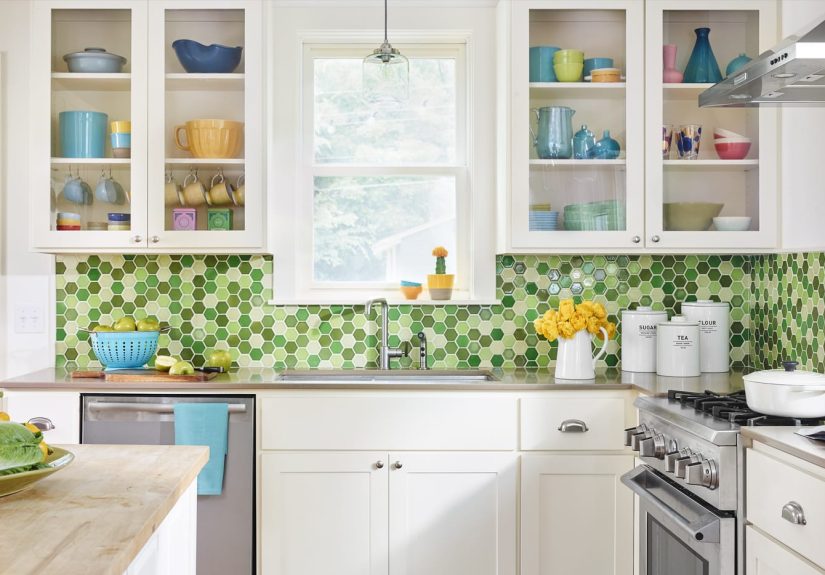
If you want personality, the backsplash is a perfect place to use color. Blue, green, terracotta, blush, charcoal, and deep burgundy can all work beautifully depending on the cabinets and countertops. The trick is balance. If your cabinets are bold, keep the backsplash calmer. If your cabinets are neutral, the backsplash can become the star of the show.
How High Should a Kitchen Backsplash Be?
The most common backsplash height is from the countertop to the bottom of the upper cabinets, usually around 18 inches. This is practical and visually balanced. However, there are several other options.
A short backsplash, often around 4 inches high, is common with some countertop installations, but it offers less wall protection and can look unfinished in modern kitchens. A full-height backsplash extends up to the ceiling or around open shelving, creating a more dramatic and custom appearance. Behind a range hood, many homeowners choose to extend the backsplash higher to create a focal point.
If your kitchen has open shelves instead of upper cabinets, a full-height backsplash can look especially polished. It gives the wall a finished surface and prevents the space from looking like someone forgot the final chapter of the renovation.
Choosing the Right Backsplash Color
Backsplash color should work with your cabinets, countertops, flooring, wall color, and lighting. That may sound like a lot, because it is. The kitchen is a visual team sport.
If your countertop has strong veining or movement, choose a quieter backsplash so the two surfaces do not compete. If your countertop is plain, you can add interest with patterned tile, texture, or color. White, cream, gray, and soft beige are safe and timeless. Green, navy, black, terracotta, and warm clay tones feel more expressive and design-forward.
Lighting also changes everything. A tile that looks soft beige in the showroom may look yellow under warm bulbs or gray under cool lighting. Always bring samples home before making the final decision. The sample stage is where many expensive regrets are quietly prevented.
Grout: The Small Detail That Changes Everything
Grout may seem like a minor detail, but it has a huge visual impact. Matching grout creates a smooth, subtle look. Contrasting grout highlights the tile shape and pattern. Dark grout can hide stains better than white grout, but it can also make a backsplash look busier.
For example, white subway tile with white grout feels clean and classic. White subway tile with dark gray grout feels more graphic and casual. Handmade green tile with matching grout feels soft and organic. Mosaic tile with high-contrast grout can look lively, but sometimes too lively, like it had one espresso too many.
In practical terms, grout should be sealed when required and cleaned regularly. Areas behind the stove and sink need extra attention because grease and moisture can discolor grout over time.
Kitchen Backsplash Installation: DIY or Professional?
Some backsplash projects are realistic for confident DIY homeowners. Simple ceramic subway tile on a flat wall is one of the more beginner-friendly tile projects. Peel-and-stick tile is even easier. Adhesive tile mats and premixed grout can simplify the process for smaller projects.
However, professional installation is usually better for glass tile, natural stone, slab backsplashes, complicated patterns, uneven walls, outlets, corners, and expensive materials. Herringbone tile, for example, looks beautiful but requires careful cuts and alignment. One tiny mistake can slowly become a wall-sized optical illusion.
Before deciding to DIY, consider the cost of tools, tile spacers, adhesive, grout, sealant, a tile cutter or wet saw, safety gear, and your own patience. If the backsplash is small and simple, DIY may save money. If the material is costly or the layout is complex, hiring a professional can protect the investment.
How Much Does a Kitchen Backsplash Cost?
Kitchen backsplash cost depends on material, square footage, labor, wall preparation, pattern complexity, and location. Ceramic and basic porcelain tiles are usually among the most affordable traditional options. Handmade tile, marble, glass mosaics, metal, and slab backsplashes cost more. Professional labor can also vary widely based on the installer and project complexity.
A budget-friendly backsplash might use simple ceramic tile or peel-and-stick panels. A mid-range project might use porcelain, decorative ceramic, or glass tile. A high-end project might use marble, quartz, custom mosaics, or a full-height slab. The best choice is not always the most expensive one. A well-chosen affordable tile often looks better than an expensive material that clashes with everything else.
Common Kitchen Backsplash Mistakes to Avoid
Choosing Looks Over Maintenance
A backsplash can be beautiful in a photo and annoying in real life. Highly textured tile may collect grease. Porous stone may stain. Tiny mosaics mean more grout lines to clean. Before choosing a material, think about how often you cook and how much cleaning you are willing to do.
Ignoring the Countertop
The backsplash and countertop are neighbors. They do not need to match perfectly, but they should get along. If both are loud, the kitchen can feel chaotic. If both are flat and plain, the kitchen can feel dull. Aim for contrast, harmony, or intentional repetition.
Forgetting About Outlets
Outlets interrupt backsplash patterns. Plan tile layout around them before installation begins. In high-end kitchens, some homeowners use under-cabinet outlet strips to keep the backsplash cleaner visually. If outlets remain on the wall, matching cover plates can help them blend in.
Buying Too Little Tile
Always order extra tile. Cuts, breakage, pattern matching, and future repairs require additional material. A common rule is to buy at least 10 percent extra, and more for complicated patterns. Running out of tile mid-project is the renovation version of a cliffhanger, except nobody enjoys it.
How to Clean and Maintain a Kitchen Backsplash
For ceramic, porcelain, and glass tile, regular cleaning is simple. Use warm water, mild dish soap, and a soft cloth or sponge. Avoid harsh abrasives that can scratch glossy surfaces. For greasy areas behind the stove, a gentle degreasing cleaner can help.
Natural stone requires more care. Use stone-safe cleaners and avoid acidic products like vinegar or lemon-based sprays. Reseal stone when recommended by the manufacturer or installer. For stainless steel, wipe with the grain and use a microfiber cloth to reduce streaks.
Grout is usually the part that needs the most maintenance. Clean spills quickly, scrub gently when needed, and reseal grout if required. If grout becomes permanently stained, grout pens or professional regrouting can refresh the look without replacing the entire backsplash.
Real-Life Experience: What Homeowners Learn After Living With a Backsplash
One of the biggest lessons people learn after installing a kitchen backsplash is that samples are not optional. A tile can look perfect under showroom lighting and completely different at home. Natural light, cabinet color, countertop pattern, and even the color of nearby walls can change the way tile appears. A glossy white tile may look crisp in the store but too reflective in a sunny kitchen. A beige tile may suddenly look pink next to cool gray cabinets. Taking samples home and viewing them morning, afternoon, and evening can prevent disappointment.
Another practical lesson is that grout color deserves more attention than most people give it. Many homeowners focus entirely on the tile and choose grout at the last minute. Then they realize the grout either disappears, dominates, or makes the tile look busier than expected. A slightly warm white grout can soften a white tile backsplash, while a dark grout can make the pattern bold and easier to maintain. Behind a stove, pure white grout may require more cleaning than expected, especially in households that cook often.
People also learn that not every trendy backsplash fits every lifestyle. Handmade zellige tile, for example, can look stunning with its wavy surface and color variation. But because it is intentionally imperfect, it may not appeal to someone who wants perfectly straight lines. Marble can make a kitchen feel elegant, but it may worry homeowners who dislike patina, etching, or routine sealing. Tiny mosaic tile can look artistic, but more grout lines mean more cleaning. The best backsplash is not the one that gets the most likes online. It is the one that still makes sense after breakfast, dinner, homework, meal prep, and a week of real life.
Installation timing is another area where experience matters. Many homeowners assume backsplash installation is the final decorative step, and in many cases it is. But it still needs planning early in the renovation. Cabinet height, countertop thickness, range hood placement, floating shelves, window trim, and outlet locations all affect the backsplash layout. When these details are ignored, installers may have to make awkward cuts or stop tile in strange places. Good planning makes the backsplash look intentional rather than squeezed in at the end.
Budget experience is also revealing. Homeowners often discover that the tile itself is only part of the total cost. Adhesive, grout, trim pieces, edge finishing, wall repair, outlet extenders, sealing, tools, and labor all add up. A tile that seems inexpensive per square foot can become more costly if the pattern requires many cuts. On the other hand, a slightly more expensive large-format tile may reduce labor time and grout maintenance. Looking at the full project cost, not just the tile price, leads to better decisions.
Finally, living with a backsplash teaches one simple truth: easy cleaning is underrated. A kitchen is not a museum. It is a working room where oil pops, sauce bubbles, coffee spills, and someone will eventually blend soup without securing the lid properly. A backsplash should make cleanup easier, not become another chore. Smooth tile, sealed grout, practical colors, and wipeable surfaces may not sound glamorous, but they are the quiet heroes of a kitchen that looks good on Monday morning, not just on installation day.
Conclusion
A kitchen backsplash is one of the smartest ways to combine function and style in the heart of the home. It protects the walls, frames the countertops, adds personality, and can make an ordinary kitchen feel thoughtfully designed. From classic subway tile to dramatic stone slabs, from budget-friendly peel-and-stick panels to handcrafted ceramic, there is a backsplash for nearly every taste, budget, and cooking habit.
The key is to choose with both your eyes and your lifestyle. Think about cleaning, heat, moisture, grout, lighting, countertop coordination, installation difficulty, and long-term appeal. A beautiful backsplash should not only look good in photos; it should survive Tuesday night pasta, Saturday pancakes, and the occasional kitchen experiment that nobody speaks of again.
If you want a timeless choice, ceramic or porcelain tile is hard to beat. If you want drama, consider marble, quartz, or a full-height slab. If you rent or need a quick refresh, peel-and-stick backsplash products can offer a low-commitment upgrade. Whatever you choose, plan carefully, sample generously, and remember: the best kitchen backsplash is the one that makes your kitchen easier to love and easier to clean.