Table of Contents >> Show >> Hide
History usually gives us emperors, battles, and enough marble statues to make a museum gift shop very nervous. What it does not always give us is a soft place to land. That is why a recent archaeological discovery from the ancient city of Hippos, near the Sea of Galilee, feels so striking. Researchers found a Byzantine-era mosaic with a Greek inscription aimed at “the elders,” and that small phrase may point to something unexpectedly tender: an organized place where older adults were cared for as a community responsibility, not just a family problem.
If that interpretation holds, Hippos may offer the earliest direct archaeological evidence of a nursing home-like institution anywhere in the world. That is a big claim, and scholars are wisely using careful language. Still, even the cautious version is fascinating. The find suggests that by the late fourth or early fifth century, some early Christian communities were not merely preaching compassion. They were building it into stone, staffing it with people, and making room for aging bodies in public life.
In other words, this was not just theology with nice manners. It may have been elder care with a floor plan.
What Archaeologists Found at Hippos
The mosaic that started the conversation
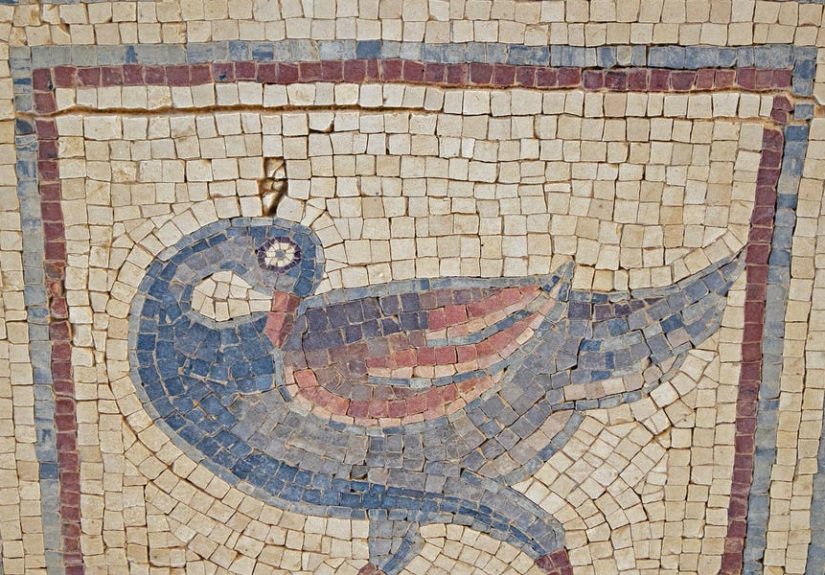
The ancient city of Hippos, also called Sussita, was a major Christian center in the Byzantine period. Perched dramatically above the Sea of Galilee, it was the kind of place where religion, politics, and civic life mixed freely. Archaeologists working there uncovered a colorful mosaic near the entrance to a public building dated to the late fourth or early fifth century. The standout detail was a Greek inscription that can be rendered as “Peace be with the elders.”
That blessing may sound simple, but in archaeology, simple phrases can cause scholarly fireworks. Greetings directed specifically to older people are unusual in inscriptions from this period. The wording, the placement, and the building’s location all suggest the structure may have served older residents in a formal way. This was not a random doodle in tesserae. It was part of a public-facing message.
Why the location matters
The building stood near a major urban intersection and close to the civic heart of Hippos. That matters because it points away from a private house and toward an institution with a recognized social function. If the structure was indeed tied to elder care, it was not hidden at the edge of town like an afterthought. It occupied meaningful city space. That detail alone says a lot about status, visibility, and public values.
The surrounding imagery also helps. The mosaic included decorative motifs associated with abundance, blessing, and life. Archaeologists do not treat decoration as a magic decoder ring, but in context it strengthens the case that this was a place meant to welcome and honor a vulnerable group.
Why Scholars Think This May Be the First Nursing Home
The clue is not just the inscription
The strongest argument for identifying the site as an early nursing home is not one word on a floor. It is the combination of inscription, location, date, and what historians already know from later Byzantine texts. Written sources from the fifth and sixth centuries mention institutions devoted to different groups in need: the poor, the sick, travelers, orphans, and the elderly. In Greek, homes for older adults were known as gerokomeia or gerontokomeia, terms tied to the care of the aged.
What makes Hippos exciting is that the material evidence may predate the period when these institutions become easier to spot in literary sources. In plain English, the paperwork got famous later, but the building may have arrived earlier. Archaeology is sometimes like finding the kitchen before you find the cookbook.
Why the word “may” belongs in the headline
Now for the historian’s favorite buzzkill: caution. Calling Hippos the world’s first nursing home is plausible, but not proven beyond debate. Ancient institutions rarely match modern categories perfectly. A modern nursing home suggests licensed staff, regulated long-term residence, medical supervision, and a whole mountain range of paperwork. A Byzantine charitable home for elders would not have looked like that.
It may have offered lodging, food, daily assistance, prayer, and basic nursing rather than the full medical model people imagine today. It may also have served a mixed mission, combining hospitality, religious care, and social support. So the best way to understand the claim is this: Hippos may preserve the earliest archaeological evidence for a dedicated institution that cared for older adults in an organized, communal way. That is still a remarkable sentence, even without the dramatic drumroll.
Early Christians and the Rise of Organized Care
From home-based care to public charity
To see why Hippos matters, it helps to understand the world that came before it. In the Greek and Roman world, most care for the sick and frail happened at home. Families shouldered the burden. Doctors existed, of course, but they generally worked privately and mainly served people who could afford them. There were military infirmaries and some healing sanctuaries, but there was no broad civilian system of free public institutions for the poor, the sick, and the aging.
Early Christianity changed that moral imagination. Christian teaching placed unusual emphasis on widows, orphans, strangers, the poor, and the sick. The message was not simply “be nice.” It was closer to “your faith is fake if you walk past suffering like it is none of your business.” That ethic encouraged believers to move from personal almsgiving to organized care.
As Christianity expanded, bishops and churches began building institutions that served concrete human needs. These included hostels, poorhouses, orphan care, and facilities for the sick. Some historians even argue that the hospital, in the sense of a charitable institution open to the broader public, was a distinctly Christian development. Not everyone defines “hospital” the same way, but there is broad agreement that Christians played a major role in creating durable care institutions in late antiquity.
Basil, bishops, and the birth of institutions
One key figure is Basil of Caesarea, a fourth-century bishop famous for creating a large charitable complex often called the Basileias. It was not one building but a network of services for people in need, including the sick and poor. Basil’s project showed that Christian charity could become architectural. Mercy no longer had to depend on one good-hearted neighbor showing up with soup. It could be built, endowed, staffed, and maintained.
That shift matters for elder care too. Once a society develops institutions for strangers, widows, the sick, and the poor, it is only a short hop to recognizing that some older adults also need structured support. Aging can bring frailty, social isolation, disability, poverty, or all four at once. A city shaped by Christian philanthropy would have had both the moral framework and the organizational tools to respond.
What “Nursing Home” Meant in Late Antiquity
Not modern medicine, but real long-term care
It is easy to hear “nursing home” and picture fluorescent lights, medication carts, and someone asking whether you want applesauce or pudding. Ancient Hippos was not that. But long-term care has never been only about medicine. It has always included feeding, washing, sheltering, supervising, comforting, and preserving dignity for people whose daily life has become harder to manage alone.
That is exactly why this discovery matters. Even if the Hippos institution offered modest treatment by modern standards, it still represents a sophisticated social idea: older adults with increasing needs deserve more than private pity. They deserve communal provision.
This is where the Christian element becomes especially important. In the Byzantine world, care institutions often grew around churches, monasteries, and bishops’ networks. Their purpose was not merely practical. It was moral and spiritual too. To care for vulnerable people was to serve God, to practice mercy, and to make the city itself more faithful.
The wider Byzantine system of gerocomeia
By later centuries, Byzantine sources clearly refer to homes for the elderly. These facilities, often associated with monasteries or church foundations, formed part of a broader ecosystem of welfare institutions. The state sometimes supported them; private donors and religious leaders also played major roles. Scholars studying Byzantine social policy describe a world where old age increasingly carried a moral claim on society.
That does not mean Byzantium invented perfect elder care. Let us not get carried away and start handing out five-star reviews across the centuries. But it does mean the empire developed a meaningful tradition of institutional support for aging people. Hippos may capture an early chapter in that story, before the system became more visible in law and literature.
Why This Discovery Matters Today
The Hippos mosaic lands with surprising force in a modern world that is still arguing about who should care for older adults, how that care should be funded, and whether aging people are treated as persons or logistics. We often talk as though long-term care were a purely modern dilemma created by longer life expectancy and expensive medicine. The archaeology suggests the core moral question is much older.
What do we owe people when strength fades, independence narrows, and daily life becomes difficult? The society at Hippos appears to have answered: more than sympathy. It answered with space, structure, and public acknowledgment.
That is part of why the phrase addressed to “the elders” feels so powerful. It is not just administrative. It is respectful. It suggests the residents were not hidden embarrassments or discarded burdens. They were visible members of the community, spoken to directly, welcomed at the threshold, and folded into the city’s moral imagination.
Frankly, plenty of modern societies could still use that lesson.
The Human Experience of Elder Care, Then and Now
Anyone who has ever visited an older relative in assisted living, a nursing home, or even a rehab facility knows the emotional weather of such places. You notice the quiet first. Then the tiny signs of ordinary life hanging on heroically: family photos, a favorite blanket, a cardigan draped over a chair, a half-finished crossword, a plant that may or may not be surviving on optimism alone. These places are never just about health. They are about memory, dependence, pride, fatigue, patience, and the stubborn dignity of being human on a slower timetable.
That is why the Hippos discovery feels more personal than many archaeological finds. A mosaic for “the elders” is not merely a historical detail. It hints at a room, a doorway, a daily rhythm. It makes it easier to imagine older people not as abstract “aged populations” but as individuals who woke up stiff, needed help, hoped not to be forgotten, and still wanted blessing, company, and respect. Across sixteen centuries, those needs have not changed much.
There is also something deeply familiar in the tension between family care and community care. Many people today know what it is like to ask hard questions about an aging parent or grandparent. Can they still live alone? Are they eating enough? Did they take their medication? Are they lonely? Is this a problem love alone can solve, or does love now require outside help? Those are painful, practical questions, and they do not belong only to the modern age. The people of Hippos likely wrestled with their own versions of them.
That is what makes the possible nursing home at Hippos so moving. It suggests that one early Christian society looked at old age and concluded that private households could not carry every burden by themselves. The response was not abandonment. It was organization. They created a place where care could happen more reliably, more visibly, and perhaps more honorably. In a way, that is one of civilization’s finest tricks: turning compassion from a mood into a system.
There is humor in this too, if only because every era seems shocked to learn that humans have always been humans. We act as if elder care was invented around the same time as the remote control. Yet here is a Byzantine city reminding us that aging relatives, strained households, compassionate neighbors, and overworked caregivers are not new plot twists. They are recurring characters in the longest-running drama on earth.
But the strongest feeling this story leaves behind is not amusement. It is recognition. The discovery at Hippos suggests that a community once made room for older adults in the center of civic and spiritual life. That choice still matters. Every generation decides, in its buildings as much as in its beliefs, whether age will be honored, tolerated, or hidden. A mosaic greeting the elders at the door is a small thing, but small things often reveal the largest truths. Someone wanted older people to cross that threshold and feel they belonged. That is not just ancient history. That is an evergreen measure of whether a society has a soul.
Conclusion
The claim that an early Christian society may have run the world’s first nursing home is compelling not because it proves modern elder care existed in exact ancient form, but because it captures a turning point in human responsibility. The Hippos mosaic suggests that older adults were becoming the concern of institutions, not just families. In the broader context of Christian charity, that development makes sense. A faith that helped create hospitals, hostels, orphan care, and poor relief would eventually make space for the elderly too.
So was Hippos truly home to the first nursing home in history? Maybe. The evidence is strong enough to excite scholars and cautious enough to keep the headline honest. Either way, the discovery reveals something more important than bragging rights. It shows that organized elder care is not merely a modern policy challenge. It is part of a much older moral tradition, one built on the radical idea that frailty does not reduce a person’s worth. If the people of Hippos understood that sixteen centuries ago, the rest of us have no excuse to act like it is breaking news.