Table of Contents >> Show >> Hide
- What Is a Heat Pump Water Heater, Exactly?
- The Science: Like a Refrigerator, Just in Reverse
- Key Parts Inside a Heat Pump Water Heater
- Why Heat Pump Water Heaters Are So Efficient
- Pros and Cons: Is a Heat Pump Water Heater Right for You?
- Where to Install a Heat Pump Water Heater
- How to Choose the Right Heat Pump Water Heater
- Living With a Heat Pump Water Heater: Operation & Maintenance
- Common Myths About Heat Pump Water Heaters
- Real-World Experiences: What Homeowners and Pros Report
- The Bottom Line
If your water heater could talk, there’s a good chance it would be screaming,
“I’m eating your energy budget!” Traditional electric tanks are notorious for
running up utility bills. That’s why heat pump water heaters have become the
new favorite of energy nerds, contractors, and homeowners who like saving money
more than they like wasting it.
In this guide, we’ll walk step by step through how heat pump water heaters work,
why they’re so efficient, where they make sense (and where they don’t), and what
real homeowners have experienced after living with them. By the end, you’ll be
able to talk about them like an expertwithout having to pretend you’re an engineer.
What Is a Heat Pump Water Heater, Exactly?
A heat pump water heater (often called a hybrid water heater)
is an electric water heater that uses a small refrigerator-style heat pump on
top of the tank to heat water. Instead of creating heat directly with electric
resistance elements, it moves heat from the surrounding air into the
tank. Moving heat is much more efficient than generating it, which is why
heat pump water heaters can be two to three times more efficient than a
standard electric tank.
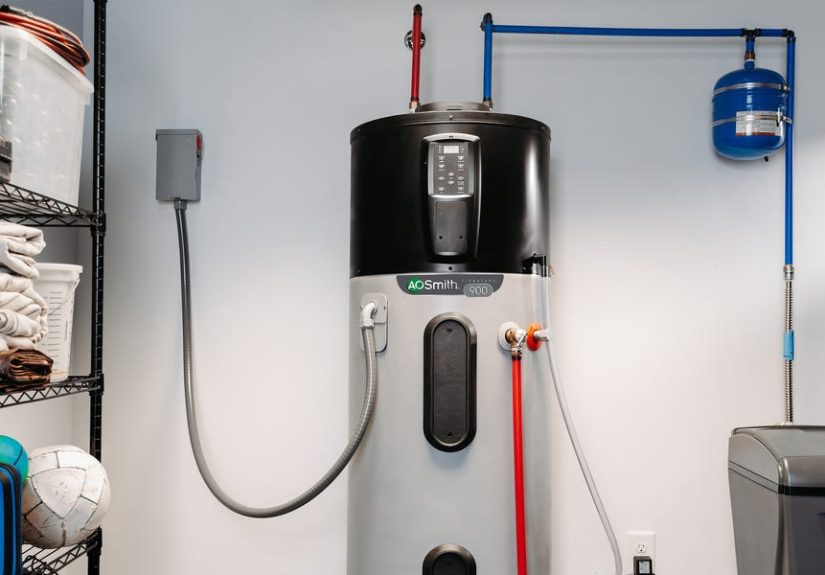
Most residential models look like a tall cylinder with a “mini air conditioner”
sitting on the top. Inside the tank is the hot water you use every day.
On top is the heat pump assembly: a fan, coils, a compressor, and controls.
Many models are “hybrid,” meaning they can run in several modes:
- Heat pump only – Maximum efficiency, slower recovery.
- Hybrid or auto – Uses the heat pump most of the time, but
turns on electric resistance backup during heavy use or very cold conditions. - Electric only – Works like a regular electric water heater
if needed (handy in a very cold garage or during a heat pump malfunction).
The Science: Like a Refrigerator, Just in Reverse
The easiest way to picture how heat pump water heaters work is to think about
your refrigerator. A fridge pulls heat out of the food compartment and dumps it
into your kitchen air. A heat pump water heater does basically the opposite:
it pulls heat from the air and dumps it into the water.
Step-by-step: How the Refrigeration Cycle Heats Your Water
-
The fan pulls in air.
The fan on top of the unit draws in surrounding air from the room, basement,
garage, or mechanical area. -
The refrigerant absorbs heat.
Inside an evaporator coil, cold refrigerant flows. As the warmer room air
passes over this coil, heat transfers into the refrigerant. The air leaving
the unit is cooler and often drier. -
The compressor boosts the temperature.
The refrigerant enters a compressor, which squeezes it. Compressing
refrigerant raises its temperature dramatically, turning it into a
high-temperature, high-pressure gas. -
Heat moves into the water.
That hot refrigerant flows through another coil (a condenser or heat
exchanger) wrapped around or inside the tank. Heat transfers from the
refrigerant into the tank water. -
The refrigerant cools and cycles again.
After giving up its heat, the refrigerant passes through an expansion valve,
drops back in pressure and temperature, and returns to the evaporator coil
to start the cycle over.
This closed loop is why heat pump water heaters can deliver two to three units
of heat energy for every unit of electricity they use. In engineering terms,
that’s a coefficient of performance (COP) of roughly 2–3 or more, compared
with 1.0 for standard electric resistance heating.
Key Parts Inside a Heat Pump Water Heater
You don’t need to memorize every component, but knowing the basics helps you
understand how these units behave in real life.
-
Tank: Just like a conventional water heater, most residential
heat pump models store 40–80 gallons of hot water in an insulated steel tank. -
Fan: Pulls ambient air through the evaporator coil so the
refrigerant can grab that heat. -
Evaporator coil: Where the refrigerant absorbs heat from
the incoming air. -
Compressor: The “heart” of the heat pump that raises the
refrigerant temperature. -
Condenser or heat exchanger: Transfers heat from the
refrigerant to the water in the tank. -
Electric resistance elements: Backup heaters inside the
tank that can help during heavy demand or low ambient temperatures. -
Condensate drain: Because the unit cools and dehumidifies
the air, water drips off the coil and has to be drained away. -
Control panel: Lets you choose modes, set temperatures, and
sometimes connect via Wi-Fi or apps.
Why Heat Pump Water Heaters Are So Efficient
Traditional electric water heaters turn electricity directly into heat.
That’s always a 1-to-1 trade. Heat pump water heaters use electricity to run
the compressor and fan, but the actual heat going into the water mostly comes
from the air around the unit. That’s why they can deliver two to four times
as much heat per kilowatt-hour as a standard electric tank.
In the U.S., water heaters are rated using a metric called
Uniform Energy Factor (UEF). Standard electric tanks often
land around 0.9 UEF. Many modern heat pump water heaters are 2.5 UEF or
higher, which means they use less than half the energy for the same amount
of hot water.
In everyday language: if your old electric water heater costs $600 a year to
operate, a good heat pump water heater might cut that to roughly $200–$300,
depending on your local rates, climate, and hot water use. Over a decade or
more of service life, those savings add up to thousands of dollars.
Pros and Cons: Is a Heat Pump Water Heater Right for You?
Big Advantages
-
Lower operating costs.
Because they use much less electricity, heat pump water heaters can slash
your water heating bill by 50–70% compared with a standard electric tank in
many homes. -
Rebates and tax credits.
In the U.S., federal incentives and many utility rebates can significantly
reduce the upfront price for an Energy Star heat pump water heater.
In some cases, the incentives can knock well over $1,000 off the installed cost. -
Cooler, drier space.
Because the unit pulls heat and moisture out of the air, it can help dehumidify
a basement or utility roomoften a bonus in humid climates. -
Lower carbon emissions.
Using less electricity for the same hot water means lower greenhouse gas
emissions, especially in regions where the grid is getting cleaner. -
Flexible modes.
Hybrid units let you choose between maximum efficiency, maximum speed,
or a balance of both, depending on your household’s schedule.
Real Limitations to Consider
-
Higher upfront cost.
A heat pump water heater costs more than a standard electric tank, especially
once you include installation, electrical work, and any condensate drain
or ducting that’s needed. -
Needs space and air volume.
The heat pump wants a steady supply of room air. Most manufacturers recommend
at least 700–1,000 cubic feet of space or ducting to another area.
Small, tightly closed closets are usually not a good fit. -
Noise.
The compressor and fan are roughly as loud as a quiet dishwasher. That’s
fine in a basement or garage, but potentially annoying next to a bedroom
or home office. -
Cooler room.
The unit’s cooling effect is great in a hot climate but can make a cool
basement or garage feel colder in winter. -
Not ideal in every climate.
In very cold or unconditioned spaces, the heat pump has to work harder.
Many units will automatically rely more on electric resistance heat, which
reduces the energy savings.
Where to Install a Heat Pump Water Heater
Location is one of the biggest make-or-break factors for performance and comfort.
In general, heat pump water heaters like:
-
Basements with enough headroom: They often have stable
temperatures, extra air volume, and benefit from some dehumidification. -
Garages in mild climates: Plenty of air volume and free
cooling in summer, but be aware of performance in cold snaps. -
Laundry rooms or utility rooms that aren’t noise-sensitive
and have some extra space.
For best results:
- Keep the unit away from bedrooms and quiet living areas when possible.
-
Make sure there’s a reliable path for condensate drainage
(to a floor drain, condensate pump, or nearby sink). -
Check electrical requirements: many units need a dedicated 240-volt,
30-amp circuit. - Follow manufacturer clearance guidelines so the fan and coils can breathe.
How to Choose the Right Heat Pump Water Heater
Shopping for a heat pump model can feel like alphabet soupUEF, COP, CEE tiers,
Energy Star labelsbut a few simple rules will keep you on track.
1. Size the tank correctly
For most homes:
- 1–2 people: 40–50 gallons may work.
- 3–4 people: 50–65 gallons is common.
- 5+ people or big tubs: 65–80 gallons or larger.
Heat pump water heaters often recover more slowly in high-efficiency mode, so
erring slightly larger on tank size can make mornings smoother.
2. Look for a high UEF and Energy Star label
Aim for a model with a UEF of at least 2.5 if possible. The higher the UEF,
the more hot water per kilowatt-hour. Energy Star–certified units must meet
strict performance criteria and often qualify for the best rebates.
3. Plan for installation details
-
Electrical: Verify your main panel has space and capacity
for a 30-amp, 240-volt breaker if you’re upgrading from an older unit. -
Condensate: Decide whether you’ll drain by gravity or
need a small pump. -
Ducting (optional): In some cases, you can duct intake or
exhaust air to or from other spaces to manage noise, cooling, or airflow.
4. Take advantage of rebates and tax credits
Before buying, check:
- Federal tax credits for high-efficiency heat pump water heaters.
- State or local incentives and utility rebates, which can stack with federal benefits.
- Bonus programs for low- or moderate-income households in some regions.
In many cases, these incentives shrink the real-world price down close to,
or even below, a standard electric unitwhile still giving you the long-term
energy savings.
Living With a Heat Pump Water Heater: Operation & Maintenance
Once installed, a heat pump water heater is fairly low maintenance, but a few
habits keep it running efficiently and quietly.
-
Choose the right mode.
Use “heat pump” or “efficiency” mode for everyday use, and “hybrid” mode if
you have guests or expect back-to-back showers. -
Set a reasonable temperature.
Many households find 120°F is a good balance of safety, comfort, and efficiency.
If you need hotter water (for example, with a mixing valve), understand that
efficiency will drop slightly. -
Keep the intake and exhaust clear.
Don’t stack boxes or laundry baskets around the unit. The fan needs air flow. -
Clean the air filter.
Most models have a washable filter above the fan intake. A quick rinse every
few months keeps airflow strong and noise down. -
Flush the tank periodically.
Just like any tank-type heater, flushing sediment once a year (or as recommended)
can extend service life and maintain performance. -
Check the condensate drain.
Make sure the line isn’t clogged or backing up. A blocked condensate line can
cause leaks or error codes.
Common Myths About Heat Pump Water Heaters
“They don’t work in cold climates.”
Modern units are designed to operate efficiently over a wide range of
temperatures, and real-world studies in colder U.S. regions have shown
strong energy savings. In very cold spaces, you may rely more on hybrid or
electric modes, which reducesbut doesn’t erasethe benefit. Proper placement
and sizing are key.
“They always make the room uncomfortably cold.”
They definitely cool the surrounding air, but the impact depends on the size
of the space, how often the unit runs, and your climate. In many homes, the
cooling effect is modest and can even be welcome in summer. In tight or
already-cold spaces, ducting or a different location may be better.
“They’re too noisy for a home.”
Noise ratings vary by brand and model, but many are in the range of a quiet
dishwasher. Placing the unit in a basement, garage, or utility room and
avoiding shared walls with bedrooms usually keeps noise from being an issue.
Real-World Experiences: What Homeowners and Pros Report
Numbers and specs are useful, but what happens when a heat pump water heater
actually moves into your house? Let’s look at typical experiences from
homeowners and contractors who have lived with these systems for a while.
Day-to-day performance
In many average-sized households (two to four people), properly sized heat
pump water heaters keep up just fine with showers, dishwashing, and laundry.
Most owners who choose a 50–65 gallon tank and use hybrid mode rarely run out
of hot water, even with morning shower “traffic jams.” Where complaints pop
up, it’s often because the tank was undersized for a big household or the
unit was left in “heat pump only” mode during heavy use periods.
One common pattern: people start out in hybrid mode to get comfortable with
the system, then experiment with switching to pure heat pump mode to squeeze
out more savings. Many discover that heat pump-only mode works perfectly fine
most of the year and only switch to hybrid around holidays, guests, or very
cold weather.
The sound factor
On paper, a sound level of 45–55 dBA doesn’t mean much. In practice, owners
often describe the noise as a soft whoosh plus a gentle hum, similar to a
window AC on low. In a basement or garage, it tends to disappear into the
background. In a small utility closet on the other side of a bedroom wall,
you’ll be more aware of it.
Plumbers and HVAC contractors will often warn about this up frontnot because
the units are “loud” in an absolute sense, but because noise tolerance is
deeply personal. If you’re picky about sound, prioritize models with lower
listed dBA ratings and choose a location with some buffer from bedrooms or
media rooms.
Comfort in the space around the unit
Homeowners in humid climates frequently report an unexpected bonus:
their basements or utility rooms feel less damp after installing a heat
pump water heater. Because these units dehumidify as they run, they can
sometimes replace or reduce the runtime of a standalone dehumidifier.
In cool basements in northern climates, the story is more mixed. Some owners
love the “free dehumidification” and don’t notice much difference in
temperature. Others find that, in winter, the room feels noticeably cooler
when the heater runs a lot. In those cases, simple solutions like partially
closing doors, adding a bit of insulation, or switching to hybrid mode during
the coldest months can keep comfort in balance.
Bill impacts and payback
Real-world bill savings depend on your local electricity rate and how you
operated your old water heater. Households moving from an older, inefficient
electric tank often see the biggest wins. It’s not unusual for people to
report saving $20–$40 per month on electric bills once the heat pump unit
is dialed in.
With rebates and tax credits factored in, many homeowners find the simple
payback periodfrom energy savings alonefalls in the 3–7 year range.
Considering that modern heat pump water heaters are typically expected to
last 10–15 years, that leaves a lot of time for “pure profit” from lower
utility bills.
What pros like (and what they don’t)
Contractors who regularly install heat pump water heaters tend to appreciate:
- Fewer call-backs about running out of hot water when units are properly sized.
- Happy customers once people see their first few utility bills.
- Well-supported, name-brand products with clear manufacturer guidance.
On the flip side, the things professionals grumble about are usually:
- Homes without a good location (no drain, not enough space, or too close to bedrooms).
- Undersized electrical service that needs panel upgrades.
- DIY installs where condensate lines weren’t done correctly and caused leaks.
The takeaway from the field is simple: when installed in a suitable spot and
set up correctly, heat pump water heaters perform very well. Most problems come
from poor planning, not from the technology itself.
The Bottom Line
Heat pump water heaters take a familiar appliance and give it a high-efficiency
brain upgrade. By using heat pump technology instead of brute-force electric
resistance, they can cut water heating energy use dramatically, especially in
homes that currently rely on standard electric tanks.
They’re not perfect for every situation. You’ll need the right location, enough
air volume, a suitable electrical setup, and tolerance for a little fan noise.
But in many households, a heat pump water heater offers lower bills, smaller
carbon footprints, and a more modern, flexible way to get hot water every day.
If your current water heater is nearing the end of its life, now is the right
moment to consider upgrading. Check the incentives in your area, talk with a
qualified installer, and decide whether a hybrid heat pump water heater might
be the quiet MVP of your home’s energy future.