Table of Contents >> Show >> Hide
- What Archaeologists Actually Found
- Why the “Book of the Dead” Is Such a Big Deal
- Why This Discovery Stands Out
- The Cemetery Tells a Story Bigger Than One Scroll
- What the Discovery Reveals About Ancient Egyptian Belief
- Why Finds Like This Still Captivate the Public
- The Experience of a Discovery Like This
- Conclusion
It sounds like the setup for a movie trailer: archaeologists open an ancient Egyptian cemetery and discover the Book of the Dead. Cue the sand, the torchlight, and at least one person in the audience whispering, “Absolutely not. Close the tomb.” But the real story is even better than the spooky version. What researchers uncovered in central Egypt was not a cursed novel with dramatic cover art. It was a rare funerary papyrus buried in a real cemetery, part of a larger archaeological discovery that opens a fresh window onto how ancient Egyptians thought about death, status, memory, and the afterlife.
The find came from the Tuna al-Gebel necropolis, in the Al-Ghuraifa area of Minya Governorate, where archaeologists revealed a New Kingdom cemetery filled with burials, coffins, mummies, canopic jars, amulets, statues, and an unusually long papyrus identified as part of the Book of the Dead. Public reports described the scroll as roughly 43 to 49 feet long and in notably good condition. That alone would have been enough to turn heads in the archaeology world. But the larger context matters just as much: this was not a random object drifting through the antiquities market or a fragment separated from its original burial long ago. It appears to have been found in a cemetery setting that still helps explain who used such texts, why they mattered, and what elite burial looked like during the New Kingdom.
In other words, this was not just a cool old scroll. It was a message from a civilization that took the afterlife very, very seriously.
What Archaeologists Actually Found
The cemetery dates to the New Kingdom, the period that roughly spans the 16th through 11th centuries B.C.E. That was an era of major political power in ancient Egypt, the age associated with rulers such as Hatshepsut, Akhenaten, Tutankhamun, and Ramesses II. At Tuna al-Gebel, archaeologists reported rock-cut tombs and a broad range of funerary objects, suggesting the burials belonged to people of rank, including priests and officials. This was not a modest resting place for ordinary daily life. This was the afterlife with a budget.
The headline object was the papyrus connected to the Book of the Dead, but the surrounding discoveries help explain why the scroll mattered. The excavation also produced wooden and stone coffins containing mummies, large quantities of ushabti figurines, canopic equipment, amulets, and decorated burial goods. One of the more talked-about burials involved the coffin of Ta-de-Isa, described in public accounts as the daughter of a high priest. Finds like that remind us that the cemetery was not simply old; it was socially meaningful, tied to religious and administrative elites.
Officials also said the papyrus was the first complete example of its kind reported from that area. That point matters because archaeology is often a game of fragments. Many ancient texts survive in pieces, in poor condition, or stripped of context by looting and trade. A longer, better-preserved papyrus found in an actual burial setting gives scholars a stronger chance to study how texts, images, and ritual objects worked together in ancient Egyptian funerary practice.
Why the “Book of the Dead” Is Such a Big Deal
First, it was not really a single book
The phrase Book of the Dead is modern. Ancient Egyptians did not think of it as one standard volume with a fixed table of contents and a dramatic skull on the front. The text is better understood as a collection of funerary spells, prayers, hymns, and ritual formulas designed to help the deceased navigate the afterlife. A more accurate translation often given by scholars is something like the “Book of Coming Forth by Day” or “Going Forth by Day.” That title sounds less like a horror novel and more like a spiritual travel manual, which is closer to the truth.
These texts drew on older Egyptian funerary traditions, including the Pyramid Texts and Coffin Texts. Over time, they evolved into customizable papyrus compositions. Different copies could contain different selections, orders, and illustrations depending on the wealth, preferences, and needs of the person for whom they were made. So when headlines say archaeologists found “the” Book of the Dead, what they really mean is that they found a copy or version of a funerary text tradition that was central to Egyptian beliefs about what happened after death.
Second, it was a survival toolkit for the soul
Ancient Egyptians imagined the afterlife as a journey filled with obstacles, tests, divine encounters, and moral judgment. The deceased needed the right words at the right moments, not unlike showing up at an airport, a courthouse, and an oral exam all at once, except the invigilators are gods and one of them has a jackal head. The spells in the Book of the Dead were meant to protect, guide, and transform the dead person, helping them move safely through the underworld and ultimately join the blessed dead.
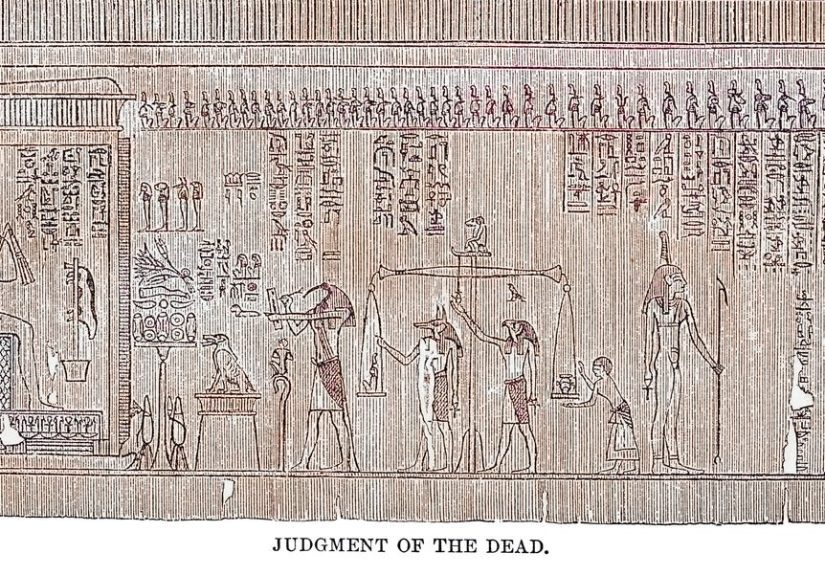
Some of the most famous scenes linked with these texts involve the weighing of the heart against the feather of Maat, the principle of truth and cosmic order. If the deceased passed judgment, they could continue into an ideal afterlife. If not, the outcome was considerably less cheerful. The scrolls therefore were not decorative extras. They were practical religious technology, meant to do something essential.
Why This Discovery Stands Out
Egypt has yielded funerary texts before, so the mere existence of another papyrus is not, by itself, astonishing. What makes this discovery stand out is the combination of preservation, context, and timing. Scholars quoted in public coverage noted that it is especially rare to find a Book of the Dead still in the grave where it was originally placed. That gives the find unusual value. Archaeology is strongest when objects stay connected to the people, places, and rituals that gave them meaning.
There is also the issue of condition. A 43-to-49-foot papyrus surviving in usable form is no small thing. Papyrus is durable only up to a point, and ancient burials are often damaged by moisture, disturbance, robbery, or simple bad luck over centuries. A long scroll in good condition offers the possibility of studying not only the words but the craftsmanship: handwriting, layout, pigments, iconography, and how the text was physically produced for burial.
At the same time, experts have been careful not to oversell what is not yet known. Public reporting on the discovery made clear that the exact contents of the papyrus were not fully described at the time, and no detailed scholarly publication had yet settled every question. That kind of caution is healthy. Archaeology is full of big announcements that later become more nuanced once objects are conserved, translated, compared, and formally studied. The exciting version of the story is real enough. It just does not need extra dramatic seasoning.
The Cemetery Tells a Story Bigger Than One Scroll
The papyrus may have grabbed the headlines, but the cemetery itself deserves equal billing. Tuna al-Gebel was already known as an important necropolis, and the Al-Ghuraifa area continues to show how long and layered Egyptian burial landscapes could be. What the New Kingdom cemetery adds is a clearer picture of who was being buried there and how elite religious identity was materialized in death.
Coffins, statues, canopic containers, and ushabti figurines all speak a common ritual language. Canopic jars protected internal organs. Ushabti figures were meant to serve the dead in the next world. Amulets supplied protection and power. Coffin decoration linked the deceased to gods, rebirth, and cosmic order. The Book of the Dead joined that system as the text that helped explain, activate, and safeguard the journey ahead.
Seen together, these objects show that Egyptian burial was not just about preserving a body. It was about equipping a person for eternity. That required text, image, object, ritual, and status all working in concert. In modern terms, it was a carefully assembled afterlife package, except instead of a carry-on and charger, you brought spells, symbols, and divine paperwork.
What the Discovery Reveals About Ancient Egyptian Belief
One of the most fascinating things about the Book of the Dead tradition is how it reflects a shift in who could access the afterlife. Earlier funerary texts were more tightly associated with royalty and the highest levels of society. By the New Kingdom, the afterlife was increasingly imagined as available to nonroyal people too, at least for those who could afford the necessary rituals and texts. That democratization did not mean burial became simple. It meant that spiritual aspiration expanded while craftsmanship and luxury still signaled social rank.
This discovery fits that pattern beautifully. The cemetery seems to have served priests and officials, people who had the resources and religious standing to commission elaborate burials. The papyrus shows not only belief in the afterlife, but belief in preparation. Ancient Egyptians did not seem to think death was a vague mystery best handled with crossed fingers. They prepared for it with writing, imagery, mummification, and careful ritual planning.
For modern readers, that is part of the enduring appeal. The Book of the Dead is not only about death; it is about control in the face of death. It turns fear into procedure, uncertainty into language, and cosmic danger into something a well-prepared soul might actually manage. No wonder the text still fascinates people. It is theological, poetic, practical, and deeply human all at once.
Why Finds Like This Still Captivate the Public
Let’s be honest: ancient Egypt has an unfair advantage when it comes to attention. Gold masks, painted coffins, monumental tombs, gods with animal heads, and a funerary scroll called the Book of the Dead are practically engineered to dominate headlines. But the real reason discoveries like this resonate is not just aesthetics. It is recognition.
Across thousands of years, the questions remain familiar. What happens after death? How do we honor the dead? What do we leave behind to say who we were? How much of memory can survive if given enough care, enough symbolism, enough beauty? Ancient Egyptians answered those questions with extraordinary seriousness, and archaeology allows us to see those answers in physical form.
The Tuna al-Gebel discovery also shows how much is still waiting underground. Egypt has been excavated for generations, yet major finds continue to emerge. Each one adds detail, corrects assumptions, and sometimes changes the bigger picture. That is a useful reminder that history is not a finished shelf of facts. It is an active process of recovery.
The Experience of a Discovery Like This
Even if you are not standing in the Egyptian desert holding a field notebook and brushing sand from a coffin lid, it is easy to imagine the emotional charge of a discovery like this. Archaeology is often described in technical language: context, stratigraphy, conservation, typology, inscriptional evidence. And that is all necessary. But underneath the science is a deeply human experience. You are walking into a place built for the dead by people who expected the future to respect their effort. Then, thousands of years later, the future finally shows up.
Picture the rhythm of a dig season. Early light. Dry air. Long stretches of patient work where nothing especially cinematic happens. A brush, a trowel, a measured scrape, another bucket of fill. Then suddenly a surface changes. A line becomes a painted edge. A painted edge becomes a coffin. A coffin becomes a person with a name, a family, a role, and a belief system so intricate that they were buried with texts to guide them beyond death. That is not just exciting. It is intimate.
For archaeologists, a find like the Tuna al-Gebel papyrus must be equal parts thrill and responsibility. Thrill, because a long, well-preserved funerary text found in context is the kind of discovery people hope for across entire careers. Responsibility, because every object removed from the ground loses part of its silence and gains a new life in scholarship, museums, media, and public imagination. Once the papyrus enters the modern world, it becomes evidence, heritage, and story at the same time.
There is also the visual experience. Ancient Egyptian burial goods do not whisper; they announce themselves. Painted wood, carved stone, bright pigments, polished surfaces, neat columns of hieroglyphs, protective deities, ritual objects arranged with purpose. Even when damaged, they carry a strange clarity. They were made to endure. They were made to be seen by gods, by the dead, and perhaps, indirectly, by us. When modern viewers see a coffin face or a line of hieratic writing on papyrus, the effect is often immediate. It feels less like debris and more like a deliberate act of communication.
For museum visitors, the experience is different but related. You are not discovering the object, but you are encountering the intention behind it. A papyrus from the Book of the Dead can feel surprisingly contemporary in one sense: it reveals anxiety, hope, planning, and the desire to be remembered correctly. Those are not ancient emotions. They are human ones. The gap of more than three millennia collapses a little when you realize that someone once commissioned that text because they wanted safe passage, protection, dignity, and continuity after death.
That is why stories like this endure long after the first headline fades. The discovery is dramatic, yes, but the deeper experience is one of recognition. Beneath the sand, archaeologists are not only finding artifacts. They are finding evidence that people long ago loved order, feared oblivion, trusted ritual, and invested enormous care in the hope that life could continue in another form. The Book of the Dead survives because that hope was written down, rolled up, buried, and protected. Finding it again lets us witness that hope with fresh eyes.
Conclusion
The discovery of a Book of the Dead papyrus in an Egyptian cemetery is more than a sensational archaeological headline. It is a vivid reminder that ancient burials were intellectual as well as material creations. The people buried at Tuna al-Gebel were not sent into the next world empty-handed. They were furnished with images, objects, names, symbols, and sacred language meant to keep them whole beyond death.
That is why this find matters. The papyrus is valuable not only because it is rare, long, and ancient, but because it reconnects text to tomb, belief to burial, and archaeology to the full emotional force of human history. Ancient Egyptians did not leave behind a random pile of beautiful things. They left behind a system of meaning. And every time archaeologists recover part of it, the ancient world becomes a little less distant and a lot more alive.