Table of Contents >> Show >> Hide
Once upon a time, your face was just your face. It smiled in family photos, looked mildly alarmed on your driver’s license, and betrayed you every time someone mentioned “mandatory icebreakers.” Now it is increasingly treated like a universal ID badge, a shopping pass, a security token, a workplace tracker, and possibly the world’s least-consensual boarding pass.
That shift is what makes the phrase face-scanning dystopia feel less like sci-fi drama and more like a very annoying software update. Facial recognition technology has moved from high-security labs and police procedurals into airports, stores, office buildings, apartment complexes, phones, and hiring systems. The pitch is always familiar: faster lines, better security, smoother experiences, fewer fraudsters, more convenience. The trouble is that convenience has a habit of arriving in a tuxedo and leaving with your civil liberties in its pocket.
So, can anyone stop our slide into face-scanning dystopia? The honest answer is not with one magic law, one viral protest, or one strongly worded tweet. But the slide can be slowed, reshaped, and, in some places, reversed. The future is not locked in. It is being negotiated right now through regulation, lawsuits, public pressure, procurement rules, and the stubborn refusal of regular people to accept “because it’s efficient” as a sufficient answer to “why are you scanning my head?”
Why Face Scanning Suddenly Feels Like It’s Everywhere
The spread of face scanning did not happen because society held a grand philosophical debate and decided this was wise. It happened because cameras got cheaper, cloud computing got stronger, data got easier to store, and institutions discovered that “seamless” sounds much nicer than “constant biometric identification.” Add a layer of AI branding, and suddenly a surveillance tool starts sounding like a customer-service improvement.
In public-facing settings, facial recognition is often marketed as a friction remover. Airports describe faster identity checks. Retailers frame it as loss prevention. Employers talk about attendance, access control, or workplace efficiency. Landlords and property managers see it as a security upgrade. Tech vendors, naturally, describe all of this as innovation, which is a wonderfully flexible word that can mean almost anything except “please read the privacy policy carefully.”
That is the first reason the slide feels steep: face scanning does not usually arrive as a dramatic police-state announcement. It arrives as a speed boost, a feature enhancement, or a safety tool. It does not pound on the front door wearing boots. It slips in through the side entrance carrying a tablet and promising shorter lines.
Convenience Is the Favorite Sales Pitch
Most people do not wake up craving a facial recognition debate. They wake up wanting coffee, a functioning Wi-Fi signal, and maybe a line that moves at the airport. Institutions know this. If face scanning can shave a few seconds off a process, many organizations will present that speed as self-evident progress. The technology becomes hardest to challenge precisely when it feels minor.
But “small” uses can normalize larger ones. Once people accept facial comparison at a checkpoint, it becomes easier to justify face scanning at the gate, the office entrance, the school pickup lane, or the pharmacy checkout. This is the classic mission-creep problem: the original use case is sold as narrow, but the infrastructure remains ready for expansion. Cameras stay. Databases stay. Vendors stay. Contracts stay. The logic spreads.
What Makes Face-Scanning Dystopia Different From Ordinary Surveillance
We already live among cameras. That alone is not new. What changes with facial recognition is that cameras no longer just record; they can identify, sort, compare, flag, and follow. Old-school surveillance watched. Biometric surveillance tries to know. That is a very different power.
Your Face Is Not a Password
If a password leaks, you change it. If your credit card gets skimmed, the bank can issue a new one. If your face becomes part of a searchable biometric system, you do not get a replacement forehead. Biometric data is intimate, persistent, and hard to revoke. That is what raises the stakes.
This matters because face data is not just another username. It can become a permanent key that links your physical presence to digital systems, location trails, purchase behavior, employment records, law-enforcement queries, and social profiles. Once different systems begin to talk to one another, the risk is not merely that one company knows your face. It is that many systems can begin building a map of your movements and associations without your meaningful consent.
Errors Don’t Fail Quietly
When facial recognition gets something wrong, the consequences are not always harmless. A typo in a playlist recommendation is annoying. A false biometric match can lead to humiliation, interrogation, denial of service, police attention, or worse. The error is not abstract. It lands on a person.
That is why wrongful-arrest stories tied to false matches hit such a nerve. They expose the real-world danger hidden beneath glossy vendor language. A “match” sounds scientific. In practice, it may be one clue among many, and a flawed one at that. Even when agencies say a human reviews the results, human beings are not magically immune to automation bias. If a system presents an answer with enough technical confidence, people may stop asking whether the machine deserves that confidence in the first place.
Bias Is Not a Side Note
One of the most persistent public concerns about facial recognition is unequal performance across demographic groups. Researchers and advocates have been sounding this alarm for years, and regulators have increasingly taken it seriously. That matters because a technology does not become fair just because it comes wrapped in machine-learning jargon and a polished sales deck.
Even if accuracy improves overall, that does not solve everything. Performance can vary by image quality, lighting, camera angle, age, skin tone, data source, or the conditions under which the system is deployed. A vendor demo in controlled settings is not the same as real life, where faces move, hats exist, lighting is terrible, and public systems rarely operate under ideal conditions. In other words, the machine may be smart, but fluorescent lighting remains undefeated.
The Real Threat Is Mission Creep
The scariest version of face-scanning dystopia is not one giant national database introduced overnight with ominous background music. It is a patchwork of ordinary systems that slowly become interoperable. One program verifies travelers. Another monitors workers. Another spots “persons of interest” in stores. Another controls access to housing, schools, or events. Individually, each use is defended as limited. Collectively, they can produce something much broader: ambient identification.
Ambient identification means you do not need to present ID for the world to know who you are. Your presence becomes your credential. Your face becomes your login. And because cameras can operate at a distance, your participation may be technically “optional” but practically hard to avoid. This is where the dystopian feeling comes from. It is not just being seen. It is being recognized, categorized, and potentially judged before you have said a word.
That possibility has major implications for free expression and civic life. People behave differently when they think a protest, meeting, religious service, or public gathering could be logged and identified. Surveillance does not have to arrest everyone to change behavior. Sometimes it only has to make people wonder who is watching and what they might do with the record later.
Who Is Actually Pushing Back?
The good news, and yes there is some, is that opposition to indiscriminate face scanning is not limited to privacy diehards muttering into encrypted messaging apps. Pushback is coming from several directions at once.
Regulators
Federal regulators have already signaled that biometric systems can trigger privacy, fairness, and security concerns. That matters because it shifts the conversation from “cool new tool” to “tool with legal obligations.” Once agencies start asking whether companies assessed foreseeable harms, trained employees, monitored errors, and disclosed the technology properly, facial recognition stops looking like a toy and starts looking like liability.
That shift is huge. Companies love innovation right up until innovation begins generating lawsuits, consent decrees, audit requirements, and executive certifications. Few things sharpen corporate ethics like the sudden realization that bad governance has a receipt.
Courts and Civil-Rights Litigators
Lawsuits matter because they turn abstract debates into records, testimony, discovery, and accountability. They force institutions to explain what databases they searched, what safeguards existed, what training staff received, and whether “human review” was meaningful or merely decorative.
Civil-rights litigation has been especially important in exposing what can happen when biometric tools are treated as neutral truth machines. These cases do more than challenge single arrests or incidents. They teach the public how the systems are used, where oversight breaks down, and how easily a “lead” can turn into a life-altering mistake.
Cities, States, and Advocacy Groups
Local bans, moratoria, and restrictions have shown that the spread of facial recognition is not inevitable. Some communities have drawn lines around government use, school use, or real-time public surveillance. Advocacy groups have also kept pressure on lawmakers by tracking new proposals, exposing weak guardrails, and pushing for stronger rules rather than symbolic gestures.
This local action matters because facial recognition policy in the United States is still a patchwork. There is no single national consensus. That can be frustrating, but it also means bad policy is not destiny. Cities and states can become proving grounds for smarter limits.
Ordinary People
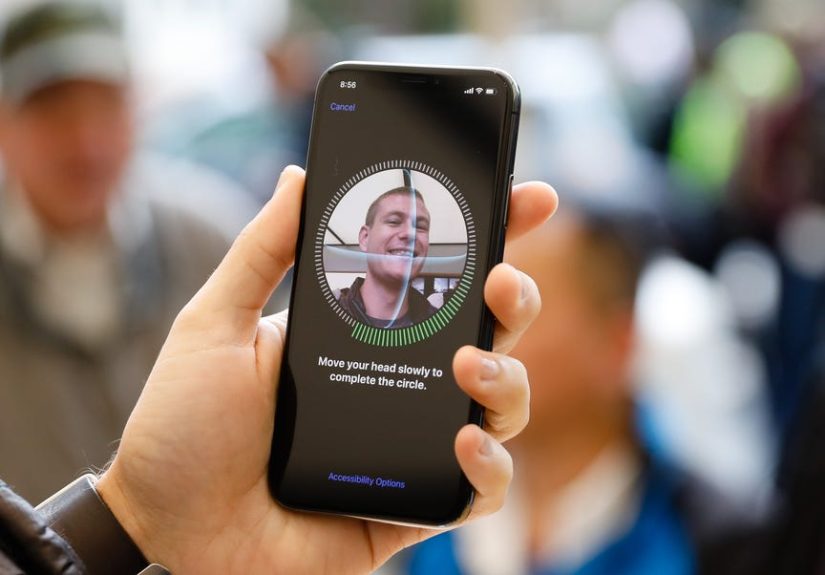
Public skepticism is not trivial here. Americans are often more comfortable with narrow, practical uses of face recognition than with broad, speculative, or emotion-reading uses. That distinction is important. It shows the public is not anti-technology in some blanket sense. People are drawing lines. They may accept a phone unlock they control while rejecting the idea that an employer, school, or retailer should scan them into obedience.
That is how meaningful resistance usually works: not through total rejection of all technology, but through a demand for boundaries, consent, transparency, and real alternatives.
So, Can Anyone Stop the Slide?
Yes, but not by pretending the technology will disappear. The better question is whether societies can stop the worst versions of it from becoming normal. That requires rules that are specific, enforceable, and boring in the best possible way.
What Effective Limits Would Look Like
- Ban real-time face scanning in public spaces for broad surveillance purposes. This is the use case most likely to chill speech, target crowds, and turn public life into a rolling identity check.
- Require explicit opt-out paths that are real, not theatrical. If declining a scan means extra delays, extra suspicion, or worse treatment, the choice is not truly voluntary.
- Limit retention and sharing of biometric data. Data that is not stored cannot later be repurposed, breached, sold, or quietly cross-matched.
- Mandate independent testing, auditing, and public reporting. Vendors should not be allowed to grade their own homework and call it accountability.
- Forbid face recognition from being sole evidence in consequential decisions. If a match leads to arrest, denial, discipline, or removal, there must be independent corroboration.
- Restrict sensitive uses in schools, housing, healthcare, and workplaces. These are places where power imbalances already exist and consent is often weak.
- Make procurement transparent. Communities should know when public agencies buy or deploy these systems, what databases they access, and what rules govern them.
None of this is anti-innovation. It is pro-democracy. The issue is not whether computers can compare faces. The issue is whether institutions should be allowed to build systems of identification and tracking first, then ask questions later, preferably after the contract renews.
The Most Likely Future
The future is probably not a full cinematic dystopia where every lamppost scans you while a villainous algorithm assigns your mood score. Reality is usually less theatrical and more bureaucratic. The bigger risk is a world in which face scanning becomes routine enough that people stop noticing where it appears, who controls it, and how hard it is to say no.
That kind of future is dangerous precisely because it feels ordinary. You do not panic when systems become familiar. You adapt. You shrug. You move through the line. You tell yourself it is probably harmless. Then, one day, it is woven into hiring, policing, travel, retail, building access, education, and public benefits, and the burden quietly shifts to you to prove why you should be allowed to move through the world unscanned.
That is the moment to avoid. The fight is not merely about one camera, one airport lane, or one store policy. It is about preserving the idea that people should be able to exist in public without being automatically identified, logged, and interpreted by default.
Experiences From a Face-Scanned World
To understand why this issue feels personal, it helps to imagine the everyday experience of living in a world where face scanning keeps spreading. You walk into an airport and the process is smooth, almost pleasant. No fumbling for documents, no awkward pause, just a camera and a green check. At first, it feels like progress. Then you realize that what feels convenient for one trip also helps normalize the idea that your face should be a routine credential in every future line.
Now picture a workplace. The company says facial recognition is only being used for attendance and secure access, nothing sinister, pinky promise. But workers quickly wonder what else could be measured. Time at your desk? Break frequency? Mood? Alertness? “Engagement”? Once a camera is framed as a management tool, trust tends to leave the building by the nearest exit.
Or imagine retail. You go into a store to buy toothpaste and leave with the strange feeling that the room knew more about you than you knew about it. Maybe nothing happened. Maybe the system was only watching for banned individuals. But for the customer, uncertainty itself becomes part of the experience. Am I being scanned? Am I in a database? Would I know if I had been flagged incorrectly? Few shopping trips are improved by existential doubt in aisle seven.
For some people, the experience is not vague at all. It can be sharp, stressful, and humiliating. A bad match, a security stop, an extra screening, a denied entry, an accusation that seems to come out of nowhere. Even when the mistake is eventually corrected, the person on the receiving end does not experience it as a “technical edge case.” They experience it as a public embarrassment, a lost afternoon, or a frightening encounter with authority.
There is also the psychological effect of never quite knowing when recognition is active. That uncertainty changes behavior. People may avoid events, keep their heads down, or think twice before attending protests, community meetings, or other gatherings that should be ordinary features of democratic life. Surveillance does not need to physically block you to shape your choices. Sometimes it just needs to make participation feel riskier than it used to.
And yet the weirdest part of all this may be how normal it can start to feel. Humans are adaptable. We get used to tapping, scanning, confirming, consenting, and moving on. We stop reading signs. We stop asking questions. We start treating biometric checks like weather: mildly annoying, unavoidable, and not worth discussing. That normalization is powerful. It is how extraordinary systems become background infrastructure.
But experiences can also cut the other way. A traveler may opt out and realize the world does not end. A city resident may learn their community is considering restrictions and decide to speak up. An employee may ask what happens to the collected data and discover the company has no crisp answer. A voter may see that this is not a fringe concern but a governance issue involving consent, equality, due process, and the basic right to move through life without being constantly machine-identified.
That is why experience matters. Face-scanning dystopia is not just about technology policy on paper. It is about how people feel in public spaces, how much autonomy they retain, and whether convenience quietly becomes the excuse for a world in which being watched is standard and being anonymous is suspicious. If that future arrives, it will not feel like a single dramatic collapse. It will feel like lots of little moments where nobody bothered to say, “Actually, no, this is too much.”
Conclusion
So, can anyone stop our slide into face-scanning dystopia? Yes, but only if we stop treating the issue like a battle between innovation and paranoia. The real question is governance. Who gets to scan? For what purpose? With what limits? Under whose oversight? And what happens when the system gets it wrong?
Facial recognition will not vanish. But the worst forms of biometric surveillance can still be constrained. The tools for doing that already exist: targeted bans, transparency rules, opt-out rights, retention limits, civil-rights enforcement, procurement oversight, and a public that refuses to confuse speed with legitimacy. That may not be as flashy as a sci-fi rebellion. Still, democracy rarely arrives with laser beams. More often, it shows up as paperwork, public pressure, and citizens insisting that their faces are not public infrastructure.