Table of Contents >> Show >> Hide
- What Is “Art But Make It Sports”?
- Why Sports Photos Look So Much Like Classical Art
- The Genius of the Side-by-Side Format
- 30 Side-Splitting Comparisons: What Makes Them Work?
- Why the Account Became So Popular
- How LJ Rader Bridges Two Worlds
- Why These Comparisons Are Actually Smart, Not Just Funny
- The Best Kinds of Art References for Sports Moments
- What Brands, Creators, and Writers Can Learn From It
- Why the Humor Feels So Human
- Experience Section: What It Feels Like to Fall Into the Art-Sports Rabbit Hole
- Conclusion
Somewhere between a museum hallway and a courtside seat lives a very specific kind of internet magic: the moment when a linebacker looks like a Renaissance saint, a basketball argument suddenly resembles a Baroque painting, or a tennis player frozen mid-lunge could pass for a dramatic marble sculpture having the worst Tuesday of its life. That is the wonderfully ridiculous charm behind Art But Make It Sports, the viral social media project that turns real sports moments into accidental art history lessons.
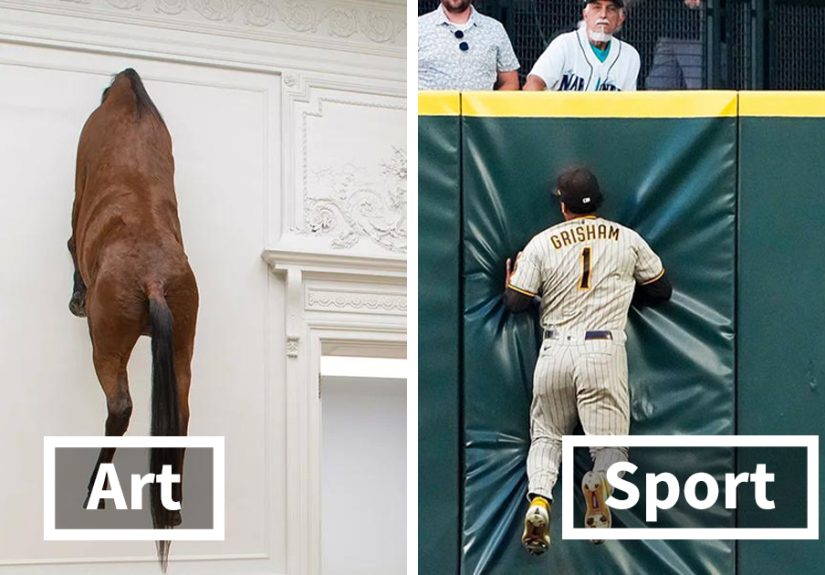
The concept is simple enough to explain in one sentence and addictive enough to ruin your lunch break: pair a sports photo with a painting, sculpture, or artwork that looks almost impossibly similar. The result is funny, oddly elegant, and occasionally so accurate that you start wondering whether old masters had access to ESPN highlights through a mysterious Renaissance satellite dish.
Created by LJ Rader, Art But Make It Sports has grown from a clever internet account into a cultural crossover hit because it speaks two languages at once. Sports fans get the chaos, rivalry, movement, and drama. Art lovers get composition, gesture, symbolism, and visual rhythm. Everyone else gets to point at a picture and say, “Okay, that is weirdly perfect.”
What Is “Art But Make It Sports”?
Art But Make It Sports is a social media account known for placing sports images next to works of art that mirror them in posture, mood, color, energy, or emotional absurdity. A player collapsing on the court might echo a wounded mythological figure. A goalkeeper stretching across the net may resemble an angel in flight. A coach shouting on the sideline might accidentally become a furious prophet from an oil painting.
The brilliance is not just in finding a visual match. It is in finding a match that feels inevitable once you see it. Before the comparison, the sports photo is just a funny or intense moment. After the comparison, it becomes a tiny museum exhibit with sweat, sneakers, and possibly a referee pretending not to see anything.
Rader’s project reportedly began after years of seeing art through a sports lens. Museum visits turned into mental highlight reels. Paintings started looking like plays. Sculptures looked like athletes. Eventually, those observations became a dedicated account, and the internet did what the internet does best: it gathered around a strangely specific idea and shouted, “More of this, please.”
Why Sports Photos Look So Much Like Classical Art
At first glance, sports and classical art seem like very different neighborhoods. One has marble columns and quiet rooms. The other has nachos, mascots, and people yelling at televisions with the confidence of professional tacticians. But visually, they share more than most people realize.
Both Are Obsessed With the Human Body
Artists have studied the body for thousands of years: muscles, balance, tension, collapse, triumph, grief, struggle, and grace. Sports photographers chase the same things, except their models are moving at full speed and may be tackled by someone named “Big Mike.”
A sprinter leaning into the finish line, a gymnast twisting in midair, or a basketball player hanging near the rim all reveal the body under pressure. That is exactly the kind of physical drama artists have painted and sculpted for centuries. The difference is that the athlete gets a stat line, while the saint gets a halo.
Both Capture One Dramatic Second
Great sports photography often depends on timing. The photographer catches the instant before impact, the peak of a jump, the face after a missed shot, or the celebration that turns a locker room into a confetti weather system. Classical art also loves the decisive moment: the hand reaching, the sword raised, the gaze turned, the body suspended between action and consequence.
That shared timing is why a sports image can feel painterly. It may not have been staged, but it still has composition. It may not have symbolism on purpose, but the symbolism shows up anyway, wearing cleats.
Both Love Big Emotions
Sports are basically public theater with uniforms. Victory, humiliation, exhaustion, betrayal, disbelief, revenge, and joy all happen in front of cameras. Classical art is also packed with human extremes. Nobody painted a grand historical canvas because someone calmly organized a sock drawer.
That emotional overlap gives Art But Make It Sports comparisons their punch. A furious tennis player can resemble a tragic hero. A basketball stare-down can look like a religious confrontation. A pileup in the end zone can resemble a dramatic battle scene, only with more polyester.
The Genius of the Side-by-Side Format
The side-by-side comparison is one of the internet’s most powerful visual formats because it removes the need for a long explanation. You do not need an art history degree. You do not need to know the painter, the year, or the movement. You just see the two images and your brain clicks like a seatbelt.
This is why Art But Make It Sports Instagram posts travel so well. They are funny in the first second and smarter in the third. You laugh at the resemblance, then notice the angle of an arm, the twist of a torso, the placement of a crowd, or the shared expression of heroic suffering. Suddenly, you are learning visual analysis without anyone forcing you to sit through a lecture called “Brushwork and You: A Journey.”
30 Side-Splitting Comparisons: What Makes Them Work?
While the exact posts vary across the account’s many viral collections, the funniest comparisons usually fall into several categories. These patterns explain why the account keeps producing moments that feel fresh, even though the formula stays familiar.
1. The Accidental Renaissance Pose
This is the classic: an athlete caught in a pose that looks impossibly old-world. A player falls backward with one arm raised. A teammate reaches toward him. Another person looks shocked in the background. Suddenly, what began as a chaotic second in a game becomes a grand painting about fate, sacrifice, and maybe questionable officiating.
2. The Baroque Drama Match
Baroque art loved high contrast, theatrical gestures, and scenes that look like everyone just heard shocking news. Sports provides this material hourly. A coach screaming, a player protesting, a bench reacting in horrorthese are not just sports emotions. They are full opera scenes with hydration breaks.
3. The Sculpture-Like Athlete
Some athletes look carved from stone when photographed at the perfect instant. A gymnast holding a position, a diver in midair, or a basketball player twisting toward the rim can resemble classical sculpture because the body forms a clean, powerful line. The joke is funny, but the beauty is real.
4. The Crowd as Chorus
In many great paintings, the background figures matter. They witness, react, gossip, mourn, or add visual noise. Sports crowds do the same thing. A fan with both hands on their head, a teammate with a wide-open mouth, or a referee standing like a silent monk can turn a sports image into a full narrative scene.
5. The Modern Meme Meets Old Master
Some comparisons work because they are visually accurate. Others work because the mood is identical. A sarcastic facial expression next to a centuries-old painting can feel like the same person has been annoyed since 1615. That is where the account becomes more than a matching game. It reminds us that human emotions have not changed much. We just upgraded from robes to compression sleeves.
Why the Account Became So Popular
The success of Art But Make It Sports comes from more than clever image pairing. It taps into several cultural trends at once: meme culture, sports fandom, museum accessibility, visual literacy, and the internet’s love of smart jokes that do not act too impressed with themselves.
It Makes Art Feel Less Intimidating
Many people think of art museums as quiet places where they are one wrong opinion away from being judged by a marble bust. The account lowers that barrier. It says, in effect, “You already understand composition, drama, and expression. You watch sports.”
That is a powerful idea. A fan who might skip an art-history thread may happily study a painting if it is paired with a viral NBA moment, a soccer celebration, or a football pileup that looks like a mythological disaster sponsored by shoulder pads.
It Makes Sports Look More Beautiful
Sports fans already know games are emotional, but the account helps reveal how visually rich they are. A sports photo is not just evidence that a play happened. It can also be a study in balance, color, tension, and narrative. Under the right eye, a fast break becomes choreography. A tackle becomes sculpture. A celebration becomes fresco-level chaos.
It Rewards People Who Pay Attention
The best comparisons feel like discoveries. They reward close looking, which is rare online. Instead of scrolling past a post in half a second, viewers often pause and inspect the details. Is the angle the same? Is the color palette similar? Are the faces matching? Did someone in 1572 somehow predict a hockey scrum?
That pause is valuable. It turns passive scrolling into a tiny act of observation. The joke gets people in the door; the details keep them there.
How LJ Rader Bridges Two Worlds
LJ Rader’s background in sports media and his self-driven interest in art history give the project its unusual balance. The account does not feel like an art critic pretending to like sports, or a sports fan using paintings as decorative wallpaper. It feels like someone fluent in both worlds, switching between them with the ease of a point guard who also knows where the museum gift shop keeps the good postcards.
That dual fluency matters. The art reference has to fit, but the sports moment also has to carry cultural meaning. A match becomes stronger when the image is not only visually similar but emotionally or narratively connected. That is why the account can compare a viral basketball confrontation to a religious painting, or a WNBA legend to a famous image of sowing and growth, and make the pairing feel layered rather than random.
Why These Comparisons Are Actually Smart, Not Just Funny
Yes, the account is hilarious. But it is also doing something more thoughtful: it trains viewers to see relationships between images. That is one of the core skills of art appreciation. You compare shape, line, light, posture, symbolism, and context. The only difference is that here the homework comes with slam dunks.
In a world where most people encounter images at high speed, Art But Make It Sports slows the eye down. It asks viewers to notice. A bent knee matters. A tilted head matters. The space between two figures matters. The direction of a gaze can change the entire emotional meaning of a scene.
That is the secret sauce. The account gives us permission to laugh, then quietly teaches us to look better.
The Best Kinds of Art References for Sports Moments
The most memorable posts often draw from a wide range of art history. Classical sculpture works beautifully with athletes because both emphasize form, strength, and idealized movement. Renaissance and Baroque paintings match moments of conflict, grief, triumph, and dramatic lighting. Modern art can match color, abstraction, repetition, or emotional distortion. Even contemporary works can mirror the strange geometry of bodies in motion.
That variety keeps the account from becoming predictable. One day, a sports moment might resemble a biblical scene. Another day, it might echo a surrealist composition, a modernist portrait, or a wild abstract painting. The range is part of the fun. Sports may repeat familiar situations, but art history offers an almost endless closet of visual costumes.
What Brands, Creators, and Writers Can Learn From It
Content creators should study Art But Make It Sports because it is a masterclass in a simple idea executed consistently. The format is clear. The hook is immediate. The tone is playful. The audience knows what to expect, but each post still offers surprise.
That combination is extremely hard to achieve. Many social media accounts chase trends by becoming louder, faster, or more chaotic. This one succeeds by being specific. It does not try to be everything. It owns a niche: art history meets sports photography. That niche is narrow enough to be memorable and broad enough to last for years.
For writers and editors, the lesson is equally useful: great comparisons can unlock a topic. If you want readers to care about art, connect it to something they already love. If you want sports fans to appreciate photography, show them how a game image can carry the same visual weight as a museum piece. Build the bridge, then let readers cross it while laughing.
Why the Humor Feels So Human
The funniest thing about these comparisons is that they are not mean-spirited. They do not depend on mocking athletes or insulting art. The humor comes from recognition. We laugh because the match feels both absurd and true.
That is a rare kind of internet comedy. It is clever without being smug, educational without being dusty, and silly without being empty. The comparisons say, “Look, life is dramatic, bodies are weird, sports are beautiful, and somebody in a museum painted your favorite player’s exact mood four hundred years ago.”
Experience Section: What It Feels Like to Fall Into the Art-Sports Rabbit Hole
Spending time with Art But Make It Sports changes the way you watch games. At first, you are just enjoying the jokes. Then, slowly, your brain becomes infected with museum vision. A baseball player sliding into home no longer looks like a baseball player sliding into home. He looks like a fallen warrior in a dusty historical canvas. A soccer goalkeeper flying horizontally across the goal looks like a winged figure from a ceiling fresco. A coach staring into the distance after a blown lead looks like a portrait titled Man Considering His Life Choices, Oil on Canvas, Fourth Quarter.
The experience is funny because it makes everyday sports moments feel grand. But it is also strangely moving. Sports already have rituals: entrances, uniforms, chants, rivalries, heroes, villains, heartbreak, redemption. Art history is full of the same ingredients. Once you notice the overlap, it becomes impossible to unsee.
Watching a big game after scrolling through the account can feel like sitting inside a live museum. The camera cuts to the bench, and suddenly there is a whole row of background characters reacting like figures in a dramatic painting. One player is stunned. Another is praying to the scoreboard. Someone is pointing with the urgency of a messenger in a medieval scene. The trainer appears with towels, looking like a humble attendant in the corner of an epic composition.
That is the real joy of the account: it makes viewers more visually alert. You start noticing body language, symmetry, negative space, light, and facial expression. You may not know the academic vocabulary, but you understand the feeling. The picture works because the bodies form a triangle. The moment is funny because the expressions contrast. The scene feels dramatic because everyone is looking in a different direction except the one person who knows disaster is coming.
There is also a personal pleasure in realizing that art does not have to be distant or formal. It can be connected to the noisy, sweaty, ridiculous things people already love. A museum painting is not just an old object behind glass. It can be a mirror for modern life. A sports photo is not just a highlight. It can be a composition worthy of slow looking.
For anyone who has ever felt intimidated by art history, this kind of content is a friendly doorway. You do not have to begin with a textbook. You can begin with a basketball photo that looks like a Renaissance lamentation. You can begin with a hockey celebration that resembles a victory scene. You can begin by laughing. That laughter is not separate from learning; it is often the thing that makes learning possible.
And for sports fans, the account adds another layer of appreciation. We already admire athletes for strength, skill, speed, and nerve. But seeing them next to artworks reveals how expressive they are. Their gestures tell stories. Their failures have shape. Their victories have composition. Their arguments, frankly, have excellent lighting.
In the end, the experience of following Art But Make It Sports is like discovering a secret tunnel between two buildings you thought were miles apart. On one side, there is the stadium. On the other, the museum. In the tunnel, everyone is laughing, pointing at a picture, and saying the same thing: “Wait, that actually matches perfectly.”
Conclusion
“Art But Make It Sports” works because it proves that culture is not divided into neat little boxes. Sports can be artistic. Art can be funny. A viral photo can carry the drama of an oil painting. A centuries-old canvas can suddenly feel like it understands playoff pressure.
The Instagram page’s side-splitting comparisons are more than visual jokes; they are tiny lessons in observation. They remind us that movement, emotion, beauty, and absurdity have always belonged together. Whether you arrive as a sports fan, an art lover, or someone who just enjoys excellent internet nonsense, the result is the same: you leave seeing both worlds a little differently.
Note: This article is based on publicly available information about LJ Rader, Art But Make It Sports, interviews, book listings, museum resources on sports and art, and published cultural coverage. No external source links or unnecessary publishing artifacts are embedded in the HTML.