Table of Contents >> Show >> Hide
- Banana Basics at a Glance
- The Banana Plant: A Giant Herb in Disguise
- Nutrition Facts: What’s Actually in a Banana?
- Health Benefits: The Parts That Are More Than Banana Hype
- Ripeness: Why Green, Yellow, and Spotted Bananas Behave Differently
- How Bananas Ripen in the Supply Chain
- How to Store Bananas at Home Without Creating a Fruit Soap Opera
- Bananas vs. Plantains (and Why Your Frying Pan Cares)
- Banana Diseases and the “Cavendish Problem”
- Fun (and Surprisingly Legit) Banana Facts
- Conclusion
- Real-Life Banana Experiences (Because Bananas Live With Us)
Bananas are the rare food that can feel like a snack, a side dish, a dessert, and an emergency meal you eat while speed-walking through an airport. They’re also quietly impressive: a banana is a portable package of carbs, fiber, and potassium, wrapped in its own biodegradable jacket. No Tupperware. No drama. (Unless you forget one in a backpack. Then: drama.)
This guide goes beyond “bananas are yellow” and gets into what they actually are, how they ripen, why they bruise if you look at them funny, what’s in them nutritionally, and what’s going on with the diseases that threaten the world’s most common export banana.
Banana Basics at a Glance
- The banana plant isn’t a tree. It’s a giant herb with a “false trunk” made of tightly packed leaf sheaths.
- The fruit is a berry. Yes, reallybotanically speaking, the edible banana is a berry.
- “Hands” and “fingers” are real terms. The bunch is made of clusters called hands, and the individual bananas are often called fingers.
- Most supermarket bananas are Cavendish. They’re popular because they ship well and ripen predictably.
- Bananas are a top fresh fruit in the U.S. By loss-adjusted availability, bananas have been cited as the most popular fresh fruit by pounds per person.
The Banana Plant: A Giant Herb in Disguise
Not a treemore like a leafy skyscraper
If you’ve ever called it a “banana tree,” you’re in good companyand also technically wrong. The banana plant grows from an underground stem (a rhizome/corm) and shoots up a tall, trunk-like structure called a pseudostem. That “trunk” is basically a tightly rolled stack of leaf bases. It looks woody from a distance, but it’s more like an herb wearing a trench coat.
One pseudostem produces one main fruit bunch, and after it fruits, that stem is cut back. The plant keeps going because new shoots (often called suckers) rise from the rhizome. This is part of why bananas can be continuously produced in suitable climates.
Flowers, hands, fingers, and the “banana is a berry” plot twist
Bananas flower through a large inflorescence (the flowering stalk) that emerges from the center of the pseudostem. The fruit forms in clusters (“hands”), with individual bananas (“fingers”) attached along the stalk. In common edible cultivars, the fruit develops parthenocarpicallymeaning it forms without pollinationso most bananas are seedless. And despite the “banana is a berry” fact sounding like internet trivia, it’s backed by horticulture references.
Nutrition Facts: What’s Actually in a Banana?
Nutritionally, bananas are mostly carbohydrates, with a helpful side of fiber and several vitamins and minerals. A “medium banana” is the typical reference point in nutrition discussions, but sizes vary wildly (and so do the nutrient numbers).
Typical medium banana snapshot (approximate)
- Calories: about 105
- Carbs: about 27 g
- Fiber: about 3 g (around 10–11% of the Daily Value, depending on the database)
- Potassium: roughly 375–420 mg (about 8–9% of the Daily Value)
- Notable micronutrients: vitamin B6, vitamin C, and some magnesium
Why the range? Food composition can vary by banana size, ripeness, and the nutrient database used. For Daily Values, the FDA lists 28 g as the Daily Value for fiber and 4,700 mg for potassium, which is why bananas often land in the “solid contributor, not magical superfruit” zone.
Health Benefits: The Parts That Are More Than Banana Hype
Potassium and blood pressure: a real relationship
Potassium plays key roles in normal cell function and fluid balance, and it’s closely tied to sodium in the body’s fluid regulation. Heart-health organizations often emphasize potassium-rich foods as part of blood-pressure-friendly eating patterns, because potassium can help counterbalance sodium’s effects and support healthy blood vessel function. Bananas aren’t the only potassium food, but they’re one of the easiest ways to remember potassium exists.
Fiber + resistant starch: your gut notices ripeness
Bananas contain fiber, and less-ripe bananas can contain more resistant starchcarbohydrate that behaves more like fiber in the digestive system. Resistant starch can be fermented by gut bacteria, which is one reason bananas show up in discussions about gut comfort. You’ll also see bananas mentioned in the traditional “BRAT” concept (bananas, rice, applesauce, toast) as a bland-food approach used during certain stomach upsetsthough modern guidance for illness varies, and it’s always worth following clinician advice for severe symptoms.
Exercise and cramps: bananas are helpful, not magical
Bananas are popular around workouts because they’re easy-to-digest carbs plus electrolytes (including potassium). That can be useful for refueling and general muscle function. But cramps can have multiple causeshydration status, training load, heat, and moreso a banana is better viewed as “good support” than a guaranteed cramp-forcefield.
A note for kidney disease and high potassium concerns
Potassium is beneficial for many people, but individuals with chronic kidney disease (or other conditions affecting potassium balance) may need to monitor or limit high-potassium foodsincluding bananasbased on medical guidance. If you’ve been told to watch potassium, treat “banana advice” online as background noise and follow your clinician or renal dietitian’s plan.
Ripeness: Why Green, Yellow, and Spotted Bananas Behave Differently
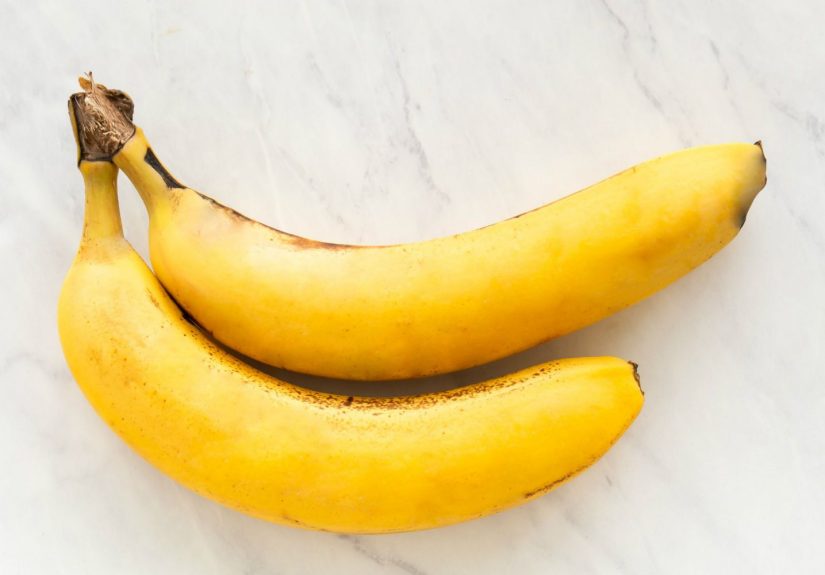
Banana ripening isn’t just a color changeit’s a chemistry makeover. As bananas ripen, starches convert to sugars, texture softens, aroma intensifies, and peeling gets easier. Less-ripe bananas tend to be firmer and starchier (including more resistant starch), while very ripe bananas taste sweeter and mash like a dream for baking.
Quick ripeness guide (the practical version)
- Green to green-yellow: firmer, less sweet; better for slicing neatly or cooking-style uses
- Yellow: balanced sweetness; classic snack texture
- Yellow with brown speckles: sweeter, softer; ideal for smoothies and banana bread
How Bananas Ripen in the Supply Chain
Most export bananas are harvested mature-green and shipped before they fully ripen. Ripening is often triggered later using ethylene, a naturally occurring plant hormone gas that bananas respond to. Postharvest specialists describe bananas as responsive to ethylene, showing the classic ripening pattern: color shifts, softening, and changes in respiration. This controlled ripening helps deliver bananas that aren’t fully ripe in transit but are ready for stores and kitchens on schedule.
Ethylene is powerful stuff. Storage and transport guidance for produce commonly warns that ethylene buildup can speed ripening, which is great when you want ripe bananasless great when you’re trying to prevent a whole shipment from racing to “banana bread emergency” at once.
How to Store Bananas at Home Without Creating a Fruit Soap Opera
Banana storage is basically about controlling ripening speed. Ethylene-producing fruits can influence nearby produce, and general produce storage advice often recommends separating fruits from vegetables to reduce unwanted ethylene effects.
Best practices (simple and science-aligned)
- Let them ripen on the counter if you want them to sweeten naturally.
- Once ripe, refrigeration slows further ripening. The peel may darken in the fridge, but the fruit inside is often fine.
- Keep them away from ethylene-sensitive produce (many vegetables are not thrilled to be stored next to ripening fruit).
- Want to speed ripening? Keep bananas near other ripening fruit or in a loosely closed paper bag (ethylene stays nearby).
Bruises happenhere’s why
Bananas bruise easily because the tissues are soft and the peel is relatively thin. Pressure, impact, and even stacking can cause cell damage that later shows up as brown spots. Bruising isn’t automatically spoilage; it’s often just cosmetic. If the smell is fine and there’s no obvious mold, bruised banana is still smoothie material.
Bananas vs. Plantains (and Why Your Frying Pan Cares)
“Banana” can mean dessert bananas (the sweet kind you eat raw) or cooking types like plantains. Plantains are typically starchier and are often cookedfried, baked, or grilledbefore eating. They’re a staple in many cuisines because they’re versatile, filling, and can act like a vegetable or a starch depending on ripeness.
In home-growing and specialty markets, you’ll also find a wider world of banana typessome with smaller fruit, tangier flavor, or different textures. But in standard U.S. grocery stores, the Cavendish dominates for one big reason: it ships well.
Banana Diseases and the “Cavendish Problem”
Here’s the not-so-funny part of banana facts: the modern banana system is vulnerable because many commercial bananas are clonally propagated. That means lots of plants are genetically similar, and if a pathogen can successfully attack one, it can potentially attack a whole region’s crop. Encyclopedic references describe bananas as especially vulnerable to novel pests and diseases because of low genetic diversity in domesticated clones.
Panama disease and Tropical Race 4 (TR4)
Panama disease (Fusarium wilt) has a history of reshaping which banana varieties dominate trade. In recent years, attention has focused on Fusarium oxysporum f. sp. cubense Tropical Race 4 (TR4), a quarantine-significant pathogen that can cause wilting and death in banana and plantain plants. U.S. agriculture authorities have issued regulatory updates describing TR4’s biology and pathways, and science coverage has tracked its spread into the Americas.
The practical takeaway: banana production isn’t “set it and forget it.” It’s a constant race among growers, researchers, and plant health agencies to protect a crop that many countries (and basically every smoothie menu) rely on.
Fun (and Surprisingly Legit) Banana Facts
- Bananas are slightly radioactive. Not “superhero origin story” radioactivejust naturally occurring potassium-40 in tiny amounts. (You’re safe. Your Geiger counter can relax.)
- Bananas ripen with ethylene. The same plant hormone that helps many fruits ripen can be used in controlled ripening systems.
- “Hands” and “fingers” aren’t just cute. They’re standard descriptors in banana botany and trade.
- One stem, one bunch. Each pseudostem fruits once; the plant continues through new shoots from the rhizome.
- Bananas are popular in the U.S. National food availability data has highlighted bananas as a leading fresh fruit by pounds per person.
Conclusion
The banana is a humble household item with a surprisingly complicated backstory: it’s a giant herb that makes berries, ripens on a hormone schedule, ships green and transforms on cue, and sits at the intersection of nutrition, agriculture, and global plant health. The next time you grab one on the way out the door, you’ll know you’re holding more than a snackyou’re holding a tiny, peelable science exhibit.
Real-Life Banana Experiences (Because Bananas Live With Us)
Most banana “experience” starts the same way: you buy a bunch that looks perfectly reasonable, and then the bananas hold a private meeting overnight and decide to ripen in synchronized formation. Day one: slightly green, optimistic, full of potential. Day two: yellow and ready. Day three: suddenly spotted like they’re auditioning for a dalmatian role. This is why so many kitchens have an informal banana policy: eat one now, freeze two later, and accept that at least one will be sacrificed to the banana bread gods.
Another universal moment is the “ripeness mismatch.” Someone in the house likes bananas greenish and firm, because they slice neatly and don’t taste like candy. Someone else insists bananas are only acceptable when they’re sweet, soft, and speckledbasically dessert with a handle. The compromise is often a lineup on the counter that looks like a ripeness gradient chart: green on the left, yellow in the middle, freckled on the right, and one banana that’s so ripe it could be used as a doorstop in a pinch. (Don’t. But you could.)
Then there’s the travel banana: the snack you throw into a bag because it’s easy, only to discover later that bananas have two modes“perfect” and “abstract smoothie.” A slightly bruised banana can feel like a personal betrayal until you remember the important truth: bruised bananas are excellent in smoothies, oatmeal, pancakes, and baked goods. In other words, bruising is less “ruined” and more “pre-mashed.” That’s not failure. That’s meal prep with extra steps you didn’t ask for.
Bananas also tend to be a family food. Kids love the sweetness and the fact that it comes in its own wrapper. Adults love that it’s quick and doesn’t require utensils. And everyone has had the moment of pulling a banana out of the bunch and hearing that tiny stringy peel fiber cling on like it’s emotionally attached. It’s fine. It’s always fine. If your banana has one string, it’s still a banana. If it has ten, congratulationsyou’ve unlocked “banana with tassels.”
Socially, bananas are a weirdly reliable peace treaty food. Office snack tables, road trips, hotel breakfasts, pre-workout routinesbananas show up everywhere because they’re familiar and low-effort. Even banana skeptics usually have a banana exception: “I don’t eat bananas… unless they’re in banana bread.” Which is fair, because banana bread is basically a dessert that tells itself it’s a responsible breakfast.
Finally, there’s the oddly satisfying ritual of managing ripeness like a tiny household supply chain. Put a few in the fridge once they’re ripe so they don’t speed-run into mush. Freeze the extras (peeled) for smoothies. Slice one into cereal and pretend you’re the kind of person who has their life together. Bananas make it easy to win small victories in food prepone peel at a time.