Table of Contents >> Show >> Hide
- What Makes “Beaumont Inn–Style” Corn Pudding Different?
- Beaumont Inn Kentucky Corn Pudding (Beaumont-Inspired)
- Ingredient Notes (Because Details Are Delicious)
- Flavor Variations (Still Kentucky-Friendly)
- Common Problems (and How to Fix Them)
- Make-Ahead, Storage, and Reheating
- What to Serve with Beaumont Inn–Style Corn Pudding
- Frequently Asked Questions
- Real-World Experiences: How This Recipe Actually Feels in a Kitchen ()
- Conclusion
If Kentucky had a comfort-food love language, it would probably be spoken in butter, baked in a casserole dish,
and served with a fork that somehow becomes a tiny shovel. Enter: Beaumont Inn–style Kentucky corn pudding
the custardy, golden side dish that shows up like a reliable friend at holidays, Derby parties, Sunday suppers,
and “I brought a dish!” potlucks.
The Beaumont Inn in Harrodsburg, Kentucky is famous for classic Bluegrass cooking, and their corn pudding is
one of those recipes people don’t just like… they request. This version keeps the spirit of the original:
a simple ingredient list, a rich milk-and-egg custard, and the signature techniquebake hot and stir a few times
so the corn stays suspended instead of sinking like it’s trying to avoid being eaten.
What Makes “Beaumont Inn–Style” Corn Pudding Different?
Corn pudding across the South ranges from spoonbread-adjacent to Jiffy-mix casserole. The Beaumont Inn approach is
more old-school and custardy: whole kernel corn + flour + milk + eggs + butter, baked at a higher temperature
than many home recipes. The result is a dish that’s creamy in the center, lightly browned on top, and sturdy enough
to scoop cleanlyyet still soft enough to feel like a warm hug in carb form.
The “stir during baking” trick (and why it matters)
Here’s the deal: corn kernels are heavy. Custard is… not. If you pour everything in a dish and walk away,
the corn can sink and the top can bake into a dense layer. Stirring gently a few times helps redistribute the corn and
encourages a more even, custardy texture from top to bottom.
Beaumont Inn Kentucky Corn Pudding (Beaumont-Inspired)
Yield: 8–10 servings | Time: ~10 minutes prep, ~40–45 minutes bake
Ingredients
- 2 cups whole kernel white corn (fresh cut off the cob, or frozen thawed and well-drained)
- 1/2 cup all-purpose flour
- 1 teaspoon salt (kosher or fine sea salt)
- 4 teaspoons sugar (optional but traditionalsee notes below)
- 3 tablespoons unsalted butter, melted (plus a little for greasing the dish)
- 4 large eggs
- 4 cups whole milk
Equipment
- 8×8-inch baking dish (or a similar 2-quart casserole)
- Mixing bowl + whisk
- Long-tined fork (or a sturdy whisk/fork combo)
Instructions
-
Preheat and prep. Heat the oven to 450°F. Butter a baking dish (or use nonstick spray).
This is a high-heat bake, so use a dish you trustno flimsy “I only use this for Jell-O salads” glassware unless it’s oven-safe. -
Build the corn base. In the prepared dish (or a bowl), mix together the flour, salt, and sugar.
Stir in the melted butter, then fold in the corn until coated and evenly combined. -
Make the custard. In a separate bowl, whisk the eggs until uniform. Whisk in the milk.
(You’re not trying to whip it into a foam partyjust smooth and consistent.) -
Combine. Pour the egg-and-milk mixture over the corn mixture and stir until evenly distributed.
Scrape into the baking dish if you mixed in a bowl. -
Bake and stir (the signature move). Bake for 10 minutes, then carefully remove.
Stir with a long-tined fork, disturbing the browned top as little as possible. -
Repeat. Bake 10 minutes more, remove, and stir again. Return to the oven for another
10 minutes, stir once more, then continue baking until set and lightly browned,
usually 40–45 minutes total depending on your oven and dish depth. -
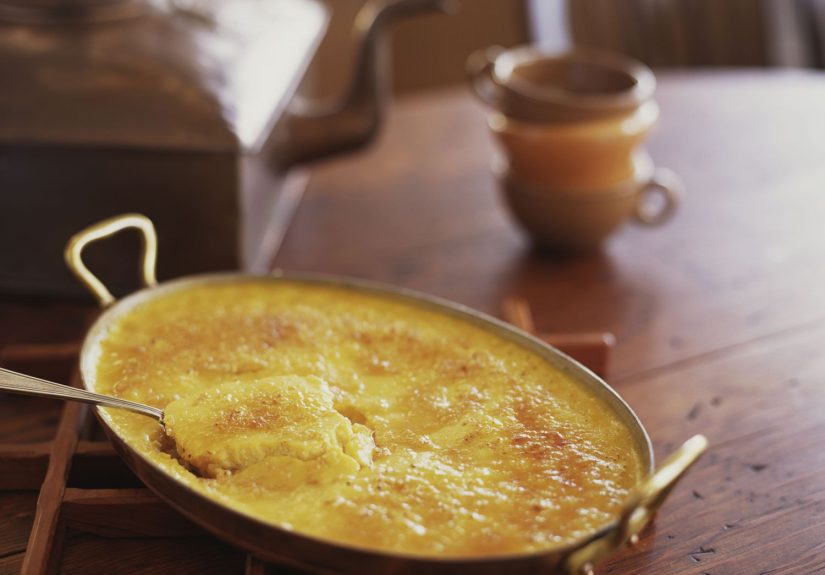
Finish and rest. The pudding is done when the center looks set (a slight jiggle is fine),
the edges are puffed, and the top is golden. Let it rest 10 minutes before serving so it firms up and scoops neatly.
Ingredient Notes (Because Details Are Delicious)
Why white corn?
Beaumont Inn–style recipes often call for white corn, which tends to read a little sweeter and “cleaner”
in flavor than some yellow varieties. You can absolutely use yellow corn if that’s what you’ve gotnobody is calling the corn police
but if you want the most classic vibe, go white.
Fresh vs frozen vs canned
- Fresh: Best in summer. You’ll need roughly 3–4 ears to get about 2 cups kernels, depending on ear size.
- Frozen: Thaw completely and drain well. Extra water can thin the custard and delay setting.
- Canned: Works in a pinch, but drain thoroughly and expect a softer texture.
Do you really need the sugar?
Many Kentucky corn pudding recipes include a small amount of sugar to highlight corn’s natural sweetness.
If you’re serving it with sweet ham, bourbon-glazed anything, or holiday sides that already lean sweet, feel free to reduce it or skip it.
Want a more savory version? Keep the sugar low and add a pinch of black pepper.
Flavor Variations (Still Kentucky-Friendly)
The original is simple on purpose, but if you’re cooking for a crowd that loves a twist, try one of these
without turning it into a completely different casserole in a witness protection program.
1) Country ham + scallion
Fold in 1/2 cup finely diced cooked country ham and 2 tablespoons sliced scallions.
It becomes a hearty side that can quietly steal the show from the main dish.
2) Peppery skillet vibe
Add 1/4 teaspoon black pepper and a pinch of cayenne for gentle heat.
This is great with fried chicken or barbecue.
3) “Holiday glow-up” (still subtle)
Add 1/4 teaspoon nutmeg (yes, reallyjust a whisper) and a tablespoon of melted butter brushed over the top during the last 10 minutes.
It’s not dessert; it’s just a little extra warmth.
Common Problems (and How to Fix Them)
“Mine is watery in the center.”
- Make sure frozen corn is fully thawed and drained.
- Use whole milk for a richer, more stable custard.
- Let it rest 10 minutes after bakingcarryover heat helps it set.
“It’s too dense.”
- Whisk eggs and milk thoroughly so the custard is even.
- Don’t overbakeonce set, it’s done.
“The top browned too fast.”
- Ovens vary. If it’s browning aggressively before it sets, tent loosely with foil for the final 10–15 minutes.
- Make sure your dish isn’t too shallow, which can speed browning.
Make-Ahead, Storage, and Reheating
Make-ahead options
-
Same-day: Bake earlier in the day, cool, cover, and reheat gently before serving.
(Bonus: it slices a bit cleaner after cooling and reheating.) -
Prep-ahead: Mix the dry ingredients and corn together, and separately whisk eggs and milk.
Combine right before baking for best texture.
Storage
Cool leftovers quickly, refrigerate promptly, and store covered. For best quality, enjoy within a few days.
You can also freeze portions; thaw overnight in the fridge before reheating.
Reheating
- Oven: Cover with foil and warm at 325°F until hot throughout.
- Microwave: Use short bursts, stir halfway, and heat until steaming hot.
What to Serve with Beaumont Inn–Style Corn Pudding
Corn pudding plays well with the Kentucky classics: fried chicken, country ham, roast turkey, meatloaf, barbecue,
green beans, mashed potatoes, and anything that comes with gravy or a story. It’s also a sneaky hero on brunch tablesserve it
beside eggs and bacon and watch people “just take a little more” three times.
Frequently Asked Questions
Is corn pudding supposed to be sweet?
Slightlydepending on the recipe. This one uses a small amount of sugar, but it’s flexible. The goal is “corn tastes like corn,” not “corn tastes like cake.”
Can I double it?
Yes. Use a larger casserole dish and expect a slightly longer bake time. Keep the stirring schedule, and bake until set.
Do I really have to stir it three times?
You don’t have to, but it’s the signature technique that helps the texture stay custardy and evenly filled with corn.
If you skip stirring, you’ll still get a tasty dishjust less “Beaumont-style.”
Real-World Experiences: How This Recipe Actually Feels in a Kitchen ()
The first thing you notice about Beaumont Inn–style corn pudding is how deceptively simple it looks on paper. Flour, milk, eggs, corn, butternothing flashy.
Then you make it once, and suddenly you understand why people talk about it like it’s a family heirloom that happens to be edible.
It’s one of those dishes that fills the kitchen with a warm, toasted-dairy smell that makes everyone wander in and ask,
“What are you making?” even if they already know the answer.
The high-heat bake is part of the magic. That initial blast at 450°F gives you quick puff and early browning, like the casserole is putting on its Sunday best.
When you pull the dish out at the 10-minute mark, you’ll see the top starting to setalmost like a thin skin. The stirring step feels a little dramatic
(careful, hot dish, long fork, steam in your face), but it’s also oddly satisfying. The custard loosens, the corn redistributes,
and you can practically watch the dish become more cohesive each time you repeat the process.
In real kitchens, ovens don’t always behave like recipe writers claim they do. Sometimes the top browns faster than expected; sometimes the middle takes its time.
The good news is that corn pudding is forgiving. If you see the surface getting too dark, a loose foil tent calms things down.
If the center still has a soft jiggle at the end of baking, letting it rest for ten minutes is the secret move.
That pause isn’t just for politenessit’s the difference between “soupy scoop” and “perfect spoonful.”
The texture is the real payoff: creamy, custardy, and spoonable, with little bursts of corn in every bite.
It’s not trying to be cornbread, and it’s not trying to be dessert. It sits right in that comfort-food middle ground,
which is probably why it belongs at so many different tables. It’s especially popular at big gatherings because it’s a natural peacemaker:
kids like it because it’s mild and slightly sweet; adults like it because it tastes like tradition and pairs with everything on the plate.
If you bring this to a potluck, expect the “recipe request” moment. Someone will take a bite, pause, and then ask what’s in itas if you have
secretly slipped in a rare spice from a hidden Kentucky hillside. The answer is wonderfully anticlimactic: good corn, a simple custard,
and the patience to stir a few times. And if you make it for the holidays, you’ll quickly learn the classic truth of corn pudding:
leftovers are great… but they rarely survive long enough to become leftovers.
Conclusion
Beaumont Inn Kentucky corn pudding earns its reputation the old-fashioned way: it’s straightforward, comforting, and consistently delicious.
Use white corn if you can, bake it hot, stir it a few times, and let it rest before serving. You’ll end up with a dish that feels
like it belongs on a Kentucky tablewhether you’re celebrating Derby Day, hosting Thanksgiving, or just making a regular Tuesday feel a little legendary.