Table of Contents >> Show >> Hide
- Why This Look Works So Well
- The IKEA Formula: Affordable Bones, High-End Finish
- Design Moves That Make a Cheap Bookcase Look Expensive
- How to Style a Bookcase So It Looks Collected, Not Cluttered
- Best Rooms for a Budget-Friendly Built-In Look
- What to Avoid If You Want the Bespoke Effect
- The Real Secret: Custom Is a Feeling
- Experience: What It Really Feels Like to Create a Bespoke-Looking Bookcase on a Budget
- Conclusion
If you’ve ever admired a wall of elegant built-ins and immediately assumed the homeowner either inherited old-money millwork or sold a kidney to pay for it, welcome. You are among friends. The good news is that getting a bespoke-looking bookcase no longer requires a carpenter, a six-week lead time, or a budget that makes your wallet whisper, “Please don’t.” With the right IKEA foundation, smart trim details, careful paint prep, and styling that looks collected instead of chaotic, you can create a bookcase that feels custom for surprisingly attainable money.
This is the real magic of a budget-friendly built-in look: it is not about pretending particleboard is palace-grade walnut. It is about using affordable, modular storage as the bones, then layering on the kind of details that make a room feel intentional. Think better proportions, wall-to-wall placement, color matching, visual symmetry, concealed storage, and styling that says “grown-up library” instead of “college apartment survivor.” When done well, the result looks less like flat-pack furniture and more like architecture.
And yes, IKEA is still the go-to source for this transformation. The BILLY line remains a favorite because it is flexible, easy to multiply across a wall, and simple to customize with shelves, extension units, and doors. That means you can start with a modest setup and build a room-defining feature that looks far more expensive than it really was. In other words, you can buy the affordable base and fake the drama. Home design has rarely been so emotionally supportive.
Why This Look Works So Well
A bespoke-looking bookcase succeeds because it solves two problems at once: storage and architecture. A standard freestanding shelf is useful, but it often reads as a temporary object in a permanent room. A built-in style bookcase, by contrast, visually belongs to the space. It frames walls, anchors furniture, emphasizes ceiling height, and makes a room feel more complete.
That polished effect comes down to a few visual tricks. First, width matters. A single narrow shelf can look practical, but multiple units connected across a wall create scale. Second, height matters. The closer the shelving gets to the ceiling, the more “custom” it feels. Third, finish matters. Paint, trim, filler, and caulk hide the seams and convert separate pieces into what looks like one continuous installation.
There is also a lifestyle reason this trend keeps sticking around. People want homes that feel personal, lived-in, and functional. A library wall, media bookcase, reading nook, or office storage system gives a room soul. It is decorative, yes, but it is also useful in the least glamorous and most beautiful way possible: it holds your stuff while making you look like someone who absolutely has their life together.
The IKEA Formula: Affordable Bones, High-End Finish
If you want a custom look on a realistic budget, start by thinking like a designer and shopping like a strategist. IKEA gives you the framework. Your job is to make that framework feel less off-the-shelf and more one-of-a-kind.
1. Start with a system, not a single shelf
The biggest mistake people make is buying one bookcase and hoping charisma will do the rest. Charisma helps, but not that much. A bespoke effect usually comes from repetition. Multiple bookcases installed together create the rhythm and scale associated with built-ins. Instead of looking like furniture, they begin to read as part of the wall.
That is why IKEA’s modular storage lines are so useful. You can mix widths, use extension pieces to go taller, and add doors where you want hidden storage below. The combination gives you the “custom cabinetry” look without commissioning actual custom cabinetry. It also lets you build around real-life needs, like storing board games, hiding printer paper, or disguising the cable chaos that seems to breed in every home office.
2. Raise it, frame it, finish it
Custom-looking bookcases rarely sit there naked and unbothered. They are usually lifted slightly on a base, finished with trim, and integrated with surrounding molding. This is where the transformation happens. A wooden platform can help level the units and create a toe-kick effect. Crown molding at the top draws the eye upward. Baseboard trim at the bottom helps the shelving blend with the room. Thin filler strips can close awkward side gaps so the final result looks intentional rather than “close enough.”
Even small details make a huge difference. Decorative trim can visually widen narrow units. Added doors make the lower half feel more like cabinetry. Hardware upgrades, especially simple knobs or pulls, instantly shift the mood from dorm-room practical to tailored and finished.
3. Paint like you mean it
If the shelves come in the exact finish you want, congratulations: you have just saved yourself several hours and possibly one mild existential crisis. But if you want the truly bespoke effect, paint is often the game-changer. Matching the bookcase to the wall color is one of the easiest ways to create that seamless, built-in feel. Contrasting paint can also work beautifully, especially in moody libraries, offices, or living rooms that need a focal point.
The catch is prep. Budget furniture does not reward laziness with a flawless finish. If you are working with laminate or MDF details, proper prep matters. Sanding, priming, filling holes, and using the right paint system will help avoid chipping and peeling. This is not the glamorous part of the makeover, but it is the part that separates “designer-inspired” from “weekend regret.”
Design Moves That Make a Cheap Bookcase Look Expensive
Once your structure is in place, the next step is making it look like it belongs in a stylish American home tour rather than in the “before” photo of one. These design choices create the visual weight and confidence that people usually associate with custom work.
Match the room’s architecture
A bookcase looks more expensive when it feels native to the room. If your home has traditional trim, echo that detail in the shelving. If your space leans modern, keep the lines clean and the finish quiet. The shelf should support the architecture rather than fighting it like two coworkers trapped in a passive-aggressive email chain.
This is why trim selection matters so much. The moldings you add should feel consistent with the rest of the home. Matching the baseboards or crown profile helps the bookcase feel integrated. The goal is not for guests to say, “Oh, nice IKEA hack.” The goal is for them to ask, “Wait, was that always there?”
Use color strategically
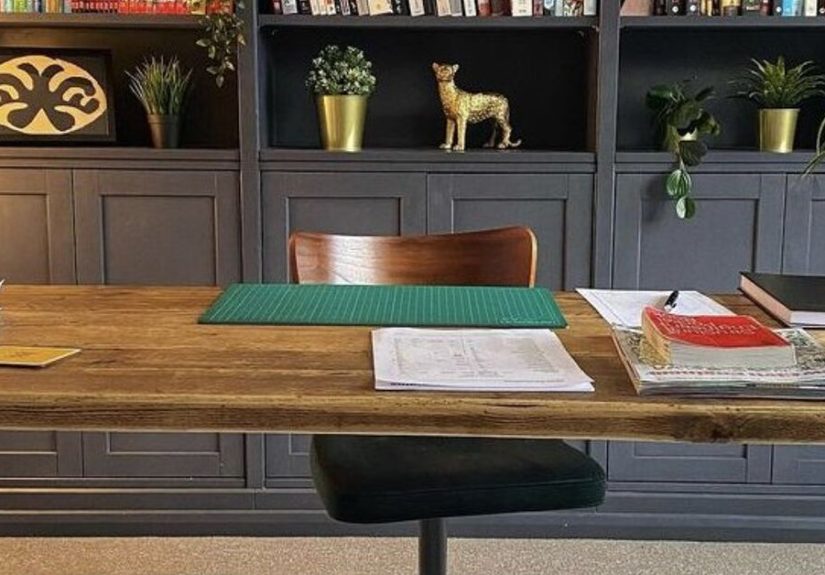
White remains popular because it reflects light and keeps a room feeling bright and open. It is especially effective in smaller spaces or rooms with limited natural light. But darker colors can look incredibly sophisticated, especially when paired with warm metals, vintage books, or art. Navy, charcoal, olive, and deep taupe can all create a dramatic library look without needing a mansion to support the fantasy.
Wood-look finishes are also having a moment, particularly warmer oak tones that feel softer and less stark than basic white. A wood-effect finish can make an affordable setup look more grounded and less obviously mass-produced, especially when paired with neutral walls and a few organic materials like baskets, linen shades, or ceramic accents.
Add hidden storage low, display space high
One of the smartest ways to make a bookcase feel bespoke is to combine open and closed storage. Lower cabinets or doors help keep the room tidy and give the installation a more furniture-like base. The upper shelves then become display space for books, art, objects, and lighting.
This combination also works better in everyday life. Not everything you own deserves public display. Some items are decorative. Some are useful. Some are deeply necessary and profoundly ugly. The best custom-looking bookcases understand this and provide beauty above, forgiveness below.
How to Style a Bookcase So It Looks Collected, Not Cluttered
Here is where many people accidentally sabotage their hard work. They install a beautiful wall of shelves and then decorate it like they are speed-running a flea market. Styling matters. A bespoke-looking bookcase is not just built well; it is edited well.
Begin with books, not random objects
If you want a timeless, elevated look, let books lead. Decorative items should support the story, not take over the plot. A shelf packed with tiny objects can feel noisy fast, while a shelf anchored with books feels grounded and authentic. The so-called “bookshelf wealth” look works because it celebrates abundance without making the room feel sterile. Real books give warmth, color, history, and personality.
Try mixing vertical rows with horizontal stacks. Use a few larger books to create visual weight. Tuck smaller decorative pieces into the negative space rather than scattering them everywhere like confetti with commitment issues.
Group items in threes or cohesive clusters
Good shelf styling often comes down to grouping. Similar objects placed together are easier on the eye than a scattered mix of unrelated pieces. That could mean a cluster of pottery, a stack of art books topped with a small box, or a framed photo leaning beside a vase and one sculptural object. The shelf feels calmer because the eye understands the arrangement more quickly.
Leave breathing room between those groups. Empty space is not a failure. It is visual confidence. It allows the objects you do display to matter more.
Mix practical order with personality
Organizing books by category can make your shelves easier to use, especially if you share your collection with family or actually plan to find things later. Color organization can be visually pleasing, but it is not always practical. A thoughtful compromise is to organize by subject, then refine the look within those sections. That gives you both function and style, which is basically the adult version of having it all.
Add personal art, framed photos, heirlooms, plants, and boxes sparingly. A styled shelf should reveal something about the person living there. The best bespoke-looking bookcases are not just pretty. They feel inhabited.
Best Rooms for a Budget-Friendly Built-In Look
Living room
A bookcase wall in the living room can frame a fireplace, TV, or sofa and instantly make the whole space feel more substantial. This is also a great room to combine books with art and decorative objects, since the shelves are part storage and part display.
Home office
Few things say “competent adult with opinions” like a home office lined with shelves. Bookcases in an office can store reference books, files, baskets, and display pieces while creating a polished video-call background that does more for your image than any ring light ever could.
Bedroom or guest room
A smaller built-in style setup can turn an underused wall into a reading nook, mini library, or hybrid dresser-and-display zone. Add closed storage at the bottom and softer styling above for a cozy, layered effect.
Hallway, alcove, or awkward niche
Odd spaces are where IKEA shines. Narrow walls, alcoves, and leftover corners can often fit slimmer bookcases beautifully. The result looks custom precisely because the shelving appears tailored to a difficult space.
What to Avoid If You Want the Bespoke Effect
Do not ignore measurements. Gaps that are too wide, heights that feel random, or shelves that block trim can ruin the illusion quickly.
Do not skip leveling. Uneven units make the entire installation look improvised in the worst way.
Do not overcrowd the shelves. More decor does not equal more style. It usually equals more dusting and visual chaos.
Do not choose finishes that fight the room. A rustic shelf in a crisp modern room, or a stark modern setup in a deeply traditional space, can feel disconnected unless you are intentionally mixing styles with skill.
And finally, do not underestimate prep. The expensive look is almost always hiding in the boring steps: measuring, sanding, priming, filling, caulking, and painting. Glamour, as ever, is mostly admin in a nicer outfit.
The Real Secret: Custom Is a Feeling
At the end of the day, a bespoke-looking bookcase for IKEA prices is not about fooling people into believing you spent a fortune. It is about building something that feels tailored to your home and your habits. A custom look comes from intention: the right size for the wall, the right finish for the room, the right mix of open display and hidden storage, and the right styling to make it feel personal.
That is why this approach works so well. It gives you the visual satisfaction of built-ins without the financial pain usually attached to them. You get a room that feels layered, polished, and more architectural. You get storage that actually functions. And you get the deeply satisfying experience of saying, “Thanks, I did it myself,” while privately enjoying the fact that the budget did not burst into flames.
So if you want your home to look more elevated, more thoughtful, and more expensive than it actually is, a budget-friendly IKEA-based bookcase makeover is one of the smartest places to start. It is practical. It is stylish. And unlike some luxury upgrades, it does not require a trust fund or a dramatic monologue to justify the expense.
Experience: What It Really Feels Like to Create a Bespoke-Looking Bookcase on a Budget
The first thing people rarely admit about building a custom-looking IKEA bookcase is that the process begins with equal parts optimism and suspicious overconfidence. You measure the wall, sketch a plan, and tell yourself this will be “a simple weekend project.” That is adorable. By hour three, you are surrounded by cardboard, tiny hardware, painter’s tape, and the sudden realization that walls have never met a right angle in their lives.
But then something shifts. Once the units are assembled and lined up along the wall, you can finally see the vision. The room starts looking less temporary. Even before the trim goes on, there is a sense that the space is becoming more intentional. A blank wall that once held nothing but vague guilt now has purpose. It stores books, yes, but it also changes the personality of the room.
One of the most satisfying parts of the experience is watching inexpensive materials begin to look refined through a series of small upgrades. A filler strip here, a base there, a line of caulk along the seams, and suddenly the whole setup feels calmer and more permanent. Paint is especially dramatic. The moment the shelving matches the wall or is coated in a rich, confident color, it stops reading as furniture and starts reading as architecture.
There is also a practical joy to the whole thing. Once the lower shelves hide messy storage bins, office supplies, chargers, or family clutter behind doors or baskets, the room functions better immediately. Daily life becomes easier. You are not just admiring a nice bookcase; you are living with a smarter system. That matters more than people think. Beautiful storage is one of the few home upgrades that keeps rewarding you every single day.
Then comes the styling phase, which is where personality finally takes over. You pull out favorite novels, oversized art books, old family photos, a ceramic vase you forgot you loved, and maybe one slightly dramatic brass object that makes you feel sophisticated. Suddenly the shelves are not just beautiful. They are yours. That is the difference between copying a trend and creating a home. One gives you a look. The other gives you a story.
And yes, guests notice. They may not always know why the bookcase looks expensive, but they feel it. The room seems more finished. The ceiling feels taller. The decor feels more thoughtful. People assume the shelving came with the house or was professionally installed, which is exactly the kind of harmless mystery every home deserves.
Most of all, the experience teaches you that “bespoke” is not always about luxury materials. Sometimes it is about patience, planning, and understanding what makes a room feel complete. When you use affordable IKEA pieces as the starting point and then tailor them with trim, color, proportion, and styling, you are not settling. You are designing intelligently. And honestly, that may be even more satisfying than ordering something custom in the first place.
Conclusion
A bespoke-looking bookcase for IKEA prices is one of the rare home upgrades that hits the sweet spot between beauty, function, and affordability. It gives you the polished presence of built-ins, the flexibility of modular furniture, and the satisfaction of a smart design decision. Start with a good system, take the finishing details seriously, and style the shelves with restraint and personality. The result will not just look expensive. It will look like it belongs exactly where it is.