Table of Contents >> Show >> Hide
- Why Candid Street Photography From Asia Feels So Rich
- What Makes a Street Photo Tell a Human Story?
- Candid Street Photography From Asia That Tells Human Stories: 50 Gallery-Style Captions
- Why These Images Work Better Than Staged “Wow” Shots
- The Experience Behind the Frame: What It Feels Like to Photograph Human Stories on the Streets of Asia
- Conclusion
- SEO Tags
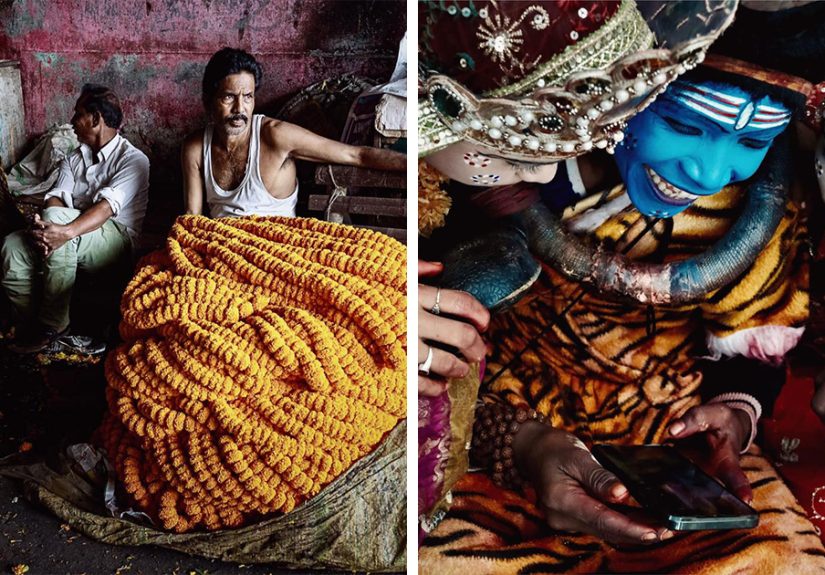
Some photo collections are all fireworks. Pretty, loud, instantly shareable, and gone from your brain five seconds later. Candid street photography from Asia tends to do something much better: it lingers. It catches the tiny theater of everyday life, where a commuter naps under fluorescent light, a vendor counts change with one hand and waves away steam with the other, and a kid in a superhero backpack struts through an alley like they own the planet. In other words, it gives us people, not props.
That is why the best street photography never feels like a tourist brochure with better shadows. It feels like overhearing life. Across cities, towns, markets, sidewalks, temples, train stations, apartment blocks, and neon corners throughout Asia, photographers keep returning to the same irresistible truth: ordinary moments are rarely ordinary when someone knows how to look. The result is a kind of visual storytelling that can be funny, tender, chaotic, stylish, melancholy, and weirdly moving all at once.
This gallery-style article explores why candid street photography from Asia resonates so strongly, what makes these images feel human instead of staged, and 50 picture captions that capture the spirit of the stories such photographs often tell. Think of it as a written companion to the images: one part street photography appreciation, one part human observation, and one part love letter to the beautiful mess of public life.
Why Candid Street Photography From Asia Feels So Rich
The magic starts with density. Many parts of Asia offer photographers what every street shooter secretly dreams about: layered streets, mixed generations, public rituals, compressed architecture, food culture that spills onto sidewalks, and fashion that can shift block by block. That does not mean every corner is cinematic on command. It means the environment is alive with possibility. The scene is always doing something, even when nobody is trying to perform for the camera.
That matters because great candid photography is not really about “gotcha” moments. It is about attention. A strong photographer notices the rhythm between people and place: the way morning light slices through a market tarp, the way school uniforms turn into moving patterns, the way monsoon puddles double a city into reflection and reality. The frame becomes a human story because it captures behavior, gesture, timing, and atmosphere in one gulp.
There is also incredible variety. Asia is not one visual mood, one color palette, or one giant street market with better noodles. It is a vast region full of contrasts. A Tokyo street scene can feel precise and futuristic. A Manila hallway can look like a stage for neighborhood life. A Harajuku sidewalk can become an explosion of self-invention. A Tehran street corner may reveal more emotion in one glance than a dozen speeches. A candid image from the region works best when it respects those differences instead of flattening them into cliché.
What Makes a Street Photo Tell a Human Story?
1. It shows behavior, not just beauty
A gorgeous alley is nice. A gorgeous alley where a grandmother negotiates fruit prices while her grandson tries to escape with a popsicle is a story. Human stories emerge when people are doing something real: waiting, flirting, arguing, resting, commuting, selling, praying, laughing, improvising, surviving.
2. It catches the in-between
The strongest candid street photography often happens in the fractions of a second between “before” and “after.” A hand hovers before a train door closes. A child looks back once before vanishing into a crowd. A worker pauses for exactly one breath between tasks. That in-between space is where pictures stop being decorative and start becoming narrative.
3. It does not turn people into scenery
There is a big difference between photographing life and using strangers like visual seasoning. The best photographers understand that a compelling image is not permission to be careless. Respect matters. Context matters. Curiosity matters. And yes, sometimes the camera has to back off instead of barging in like it pays rent there.
4. It welcomes complexity
Street life is rarely one-note. A single frame can carry joy and exhaustion, glamour and grit, solitude and noise. That complexity is exactly why candid photography is so addictive. One image can make you smile, then think, then zoom in, then wonder what happened five seconds later.
Candid Street Photography From Asia That Tells Human Stories: 50 Gallery-Style Captions
Below are 50 picture captions designed to accompany a street photography set. Each one captures the kind of everyday human story that makes candid photography from Asia so memorable.
- A sleepy commuter in Tokyo leans against the train window, while the city outside glows like it forgot bedtime existed.
- A grandmother in Seoul adjusts her market apron with the authority of someone who has survived inflation, weather, and nonsense.
- Two schoolgirls in Taipei share one umbrella and half a joke, both of them losing the battle against laughter.
- A noodle vendor in Bangkok fans the heat with one hand and makes dinner happen with the other.
- A boy in Hanoi watches a chess game like national policy depends on the next move.
- A delivery rider in Jakarta checks his phone at a red light, framed by helmets, horns, and the daily sprint of survival.
- An elderly man in Kolkata folds a newspaper so neatly it looks like a lifelong religion.
- A woman in Mumbai fixes her sandal strap mid-stride and keeps moving like the city owes her exactly zero favors.
- A child in Manila races down a corridor with superhero energy and absolutely no regard for indoor speed limits.
- A tailor in Lahore squints through a shop window while a neon sign turns the street into accidental theater.
- A tea seller in Dhaka pours from high above the glass, making an ordinary drink look like a minor miracle.
- A scooter passenger in Ho Chi Minh City balances flowers, groceries, and composure with elite-level skill.
- A teenager in Harajuku poses for nobody in particular and somehow becomes the whole point of the block.
- A father in Singapore kneels to retie a shoelace while the financial district rushes around him in expensive shoes.
- A fruit vendor in Phnom Penh counts change under a striped awning as afternoon rain turns the curb into a mirror.
- An office worker in Hong Kong eats alone beside a river of moving feet and glowing ads.
- A barber in Karachi sweeps hair into a neat pile while gossip floats out the shop door.
- A woman in Kyoto waits at a crossing in perfect stillness while bicycles blur past like impatient punctuation.
- A child in Yogyakarta presses their face to a bus window and studies the world as if it might be on the test later.
- A bookseller in Chennai dozes behind towers of paperbacks, proving literature can also function as architecture.
- A florist in Taipei rearranges lilies with the seriousness of a museum curator and the speed of a pit crew.
- A man in Tehran glances into the camera for one second, and that look says more than a headline ever could.
- A couple in Osaka laugh over a tiny restaurant table while the cook keeps one eye on the grill and one on the romance.
- A child in Kathmandu chases pigeons with full cinematic commitment and zero concern for plot consistency.
- A seamstress in Yangon sits in the doorway between daylight and shadow, halfway between work and rest.
- A street musician in Busan tunes his guitar while commuters perform the ancient ritual of pretending not to stare.
- A vendor in Beijing stacks steamed buns into a soft white skyline of breakfast ambition.
- A teenager in Kuala Lumpur checks his reflection in a train door before stepping into the night.
- A grandmother in Tbilisi carries bread home with the posture of someone who has done harder things.
- A little girl in Ulaanbaatar licks melting ice cream faster than physics says is possible.
- A cyclist in Bangkok glides past monks, motorbikes, and a dog that appears spiritually opposed to traffic rules.
- A man in Delhi naps in his rickshaw between fares, his body borrowing peace from a noisy afternoon.
- A young woman in Seoul scrolls on her phone while reflected billboards paint her face in borrowed color.
- A food stall team in Penang moves in perfect rhythm, like a kitchen band that never rehearsed but never misses.
- A child in Macau clutches a balloon animal while casino lights try and fail to outshine pure joy.
- A vendor in Colombo watches the rain, not with annoyance, but with the calm of someone who has seen wetter days.
- A student in Hanoi naps on a parked motorbike, turning a machine into a pillow and a sidewalk into a bedroom.
- A father in Manila hoists a sleeping child onto one shoulder while carrying dinner in the other hand.
- A woman in Tokyo reads on a platform while everyone else performs the sacred modern art of looking busy.
- A mechanic in Dhaka wipes grease from his hands with yesterday’s news, both literally and poetically.
- A teenage couple in Taipei share fries in silence so comfortable it deserves its own soundtrack.
- A seller in Jaipur rearranges bangles until the stall looks like it learned color from fireworks.
- A boy in Jakarta peers into an arcade window with the concentration of a future engineer or present-day schemer.
- A grandmother in Ho Chi Minh City laughs so hard her whole folding chair seems involved.
- A late-night ramen cook in Fukuoka works in steam thick enough to make the whole scene feel hand-drawn.
- A street cleaner in Hong Kong sweeps under giant luxury ads, quietly restoring order beneath aspirational chaos.
- A child in Lahore sticks one hand out of a bus window to feel the air like it is something solid.
- A woman in Tehran adjusts her scarf in a shop reflection, caught between public image and private thought.
- A group of friends in Bangkok crowd around one cracked phone screen as if it were a campfire.
- An elderly couple in Singapore walk hand in hand through the morning heat, proving the best street photography plot twist is tenderness.
Why These Images Work Better Than Staged “Wow” Shots
The internet has trained us to love instant spectacle. That can be a problem. A heavily staged travel image may be dramatic, colorful, and technically polished, but it often leaves out the one ingredient that makes viewers care: actual life. Candid street photography earns its emotional punch because it preserves unpredictability. The frame contains evidence that the world did not rearrange itself for applause.
That is especially important in photography from Asia, where visual stereotypes are everywhere. Too many weak image sets rely on the same shortcuts: monks in perfect lines, children posed for sentiment, colorful markets reduced to wallpaper, “mystical” alleys treated like theme parks. A better photographer resists the easy postcard. They wait for friction, humor, contradiction, and timing. They look for the human beat under the visual surface.
And yes, this takes patience. Street photographers often talk about anticipation as much as luck. They study a corner, predict movement, and wait for a person to walk into the right geometry at the right second. But timing alone is not enough. Ethics matter too. Not every powerful-looking scene should be photographed. Not every stranger is a public resource. The best candid work balances spontaneity with respect, and story with conscience.
The Experience Behind the Frame: What It Feels Like to Photograph Human Stories on the Streets of Asia
What makes candid street photography from Asia so unforgettable is not only what the camera records, but what the photographer experiences while trying to keep up. Walking with a camera through Asian streets can feel like stepping into five conversations, three weather systems, and two movie genres at once. That is not a complaint. That is the fun.
First, there is the sound. Street photography is often discussed as a visual art, but the experience begins with noise. Metal shutters clatter open. Scooters buzz past like impatient mosquitoes with engines. Vendors call out prices. Tea glasses knock together. Train announcements interrupt your concentration at exactly the moment the light becomes perfect. In a market lane or near a station, it can feel as if the world is improvising percussion just to test your focus.
Then there is the rhythm of movement. Streets in many Asian cities are not passive backgrounds. They behave more like living systems. Sidewalks become dining rooms, repair shops, classrooms, shortcut routes, waiting zones, and performance spaces within the same hundred feet. A photographer learns quickly that nothing stays still for long, except maybe the cat in the doorway who looks like it owns the building. This means the job is not only to react, but to sense what is about to happen. You begin to notice patterns: who slows down at a crossing, where the best reflections appear after rain, which corner catches late light, which food cart creates a natural crowd.
The emotional experience can be even more powerful than the visual one. You do not just see strangers; you start recognizing social textures. You notice tenderness in public, like parents fixing collars, old friends sharing plastic stools, or workers passing around tea during a break. You notice exhaustion too: the slouch at the end of a shift, the thousand-yard stare on a bus ride home, the way someone stands still for five seconds longer than usual because the day has clearly been doing the most. Those moments are quiet, but they are not small. They are the actual substance of human life.
Photographing in these environments also humbles you. A camera can make people feel powerful, but a good street photography session often reminds you how little control you really have. The frame you wanted is ruined by a delivery truck. The smile vanishes too soon. A great composition appears and disappears before your brain finishes saying, “Wait, that was amazing.” Sometimes the best thing you can do is miss the shot and remember it anyway. That is part of the craft no one glamorizes enough.
There is also the question of presence. In some places, people ignore the camera. In others, they notice instantly. Some smile. Some stare. Some are curious. Some are clearly not interested, and that should be the end of the story. The experience teaches a simple lesson: the street is public, but people are not scenery. The most rewarding encounters often happen when the photographer lingers, shares the image, exchanges a nod, buys something small, or simply behaves like a human being first and a photographer second.
And when it all comes together, the feeling is addictive in the best possible way. You walk home with tired feet, too many frames, and the strange certainty that you have not merely documented a place. You have listened to it. That is why candid street photography from Asia keeps pulling viewers back. Beneath the color, motion, and composition, these images tell us something deeply familiar: people everywhere are making a life in public, one fleeting moment at a time.
Conclusion
The best candid street photography from Asia does not need melodrama to hit hard. It works because it notices what most people rush past: a glance, a gesture, a pause, a joke, a routine, a tiny act of care. These moments may look modest on the surface, but together they build a portrait of public life that feels expansive, funny, and deeply human.
That is why a strong 50-picture gallery can feel bigger than a blockbuster photo essay. Every frame adds another clue about how people move through cities, neighborhoods, and changing times. Some images are playful. Some are lonely. Some are stylish enough to stop traffic. Others are so ordinary they become profound. All of them remind us that street photography is not really about streets. It is about people, and the stories they tell without realizing anyone is watching.
So when a collection like this lands well, viewers are not just admiring composition or color. They are reading faces, guessing relationships, finishing scenes in their heads, and remembering places they may never have visited. That is the real power of candid street photography from Asia: it turns fleeting public moments into lasting emotional memory. Not bad for a medium built on split seconds and sore feet.