Table of Contents >> Show >> Hide
- What Is a CD Image Via Twitter?
- Why This Handcrafted Game Disc Matters
- The Technical Heart: ISO 9660 and El Torito
- How the Tweet Becomes a Bootable ISO
- The Game Inside the Disc
- Why Code Golfers Love Projects Like This
- Testing the ISO: Emulator First, Real Hardware If You Dare
- What This Project Teaches About Digital Preservation
- Practical Takeaways for Developers and Curious Makers
- Common Questions About CD Image Via Twitter
- Experience Notes: What It Feels Like to Explore a Handcrafted Game Disc
- Conclusion
- SEO Tags
Some people use social media to share lunch photos. Others use it to start arguments about fonts. And then there are the rare, delightful technologists who look at a tiny text box and ask, “Could I fit a bootable CD image in here?” That is the wonderfully odd spirit behind CD Image Via Twitter: A Handcrafted Game Disc, a miniature computing stunt that turns a post-sized command into a playable retro game disc image.
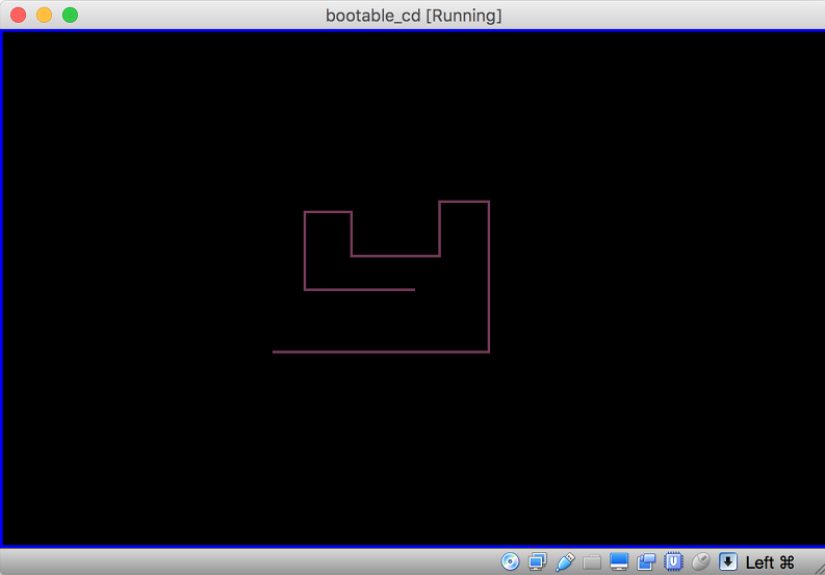
At first, the idea sounds like a magic trick performed by someone who alphabetizes hex dumps for relaxation. A short command, packed with encoded data, produces a file called cd.iso. That ISO can be booted in an emulator such as QEMU or VirtualBox, and it can even be burned to a physical CD-ROM. Once booted, it launches a tiny Tron-like game controlled with the arrow keys. No app store. No installer wizard. No “please update your graphics driver.” Just a carefully built bootable CD image, squeezed through the eye of a social-media needle.
But beneath the fun is a serious lesson in old-school computer architecture. This project touches ISO 9660, the El Torito bootable CD extension, x86 assembly, BIOS behavior, base64 encoding, and the art of doing a lot with almost nothing. In an era when a simple weather app can arrive heavier than a Thanksgiving casserole, a handcrafted game disc that fits into a tweet feels refreshingly rebellious.
What Is a CD Image Via Twitter?
A CD image is a file that represents the contents and structure of an optical disc. The familiar .iso file is the classic example. Instead of copying files one by one, an ISO image preserves the disc layout as a complete snapshot. That matters because a bootable disc is not just a folder full of files. It also needs certain sectors, descriptors, boot records, and low-level structures in exactly the right places.
The phrase CD Image Via Twitter refers to the stunt of publishing enough encoded information in a short social post to reconstruct a working CD-ROM image. The project followed an earlier experiment in which a bootable floppy image and tiny game were made compact enough for a tweet. When Twitter expanded its character limit from 140 to 280 characters, that extra room became an invitation. To most users, 280 characters meant fewer awkward abbreviations. To a code golfer, it meant, “Excellent, now we can boot optical media.”
The result was a command line beginning with Perl, containing runs of repeated characters and base64-encoded binary fragments. When executed, the command generated a file named cd.iso. The disc image was not created by a giant ISO authoring tool. It was assembled by hand, sector by sector, like a ship in a bottle.
Why This Handcrafted Game Disc Matters
On the surface, the game itself is modest. It is a simple retro arcade experience inspired by light-cycle or snake-style movement. You steer, avoid collisions, and restart when your digital worm meets an unfortunate end. Nobody is claiming this is the next billion-dollar franchise. There are no cinematic cutscenes, no loot boxes, and thankfully no horse armor.
The real achievement is the container. The handcrafted game disc shows how bootable media works at a level most developers rarely touch. Modern software development often hides the machine behind layers of frameworks, libraries, containers, virtual machines, and cheerful loading spinners. This project removes the padding. It asks: What is the smallest practical set of bytes needed to make a computer recognize a CD image, boot from it, and run a tiny game?
That question is more than trivia. It teaches several enduring concepts: how file systems describe themselves, how firmware finds boot code, how executable instructions can live inside raw sectors, and why standards matter. A bootable ISO is not “just a file.” It is a negotiated handshake between media format, firmware expectations, and machine code.
The Technical Heart: ISO 9660 and El Torito
ISO 9660: The Disc’s Table of Contents
ISO 9660 is the long-standing standard that defines how files and directories are organized on CD-ROM media. It specifies volume descriptors, file placement, directory records, and the structures that allow different systems to understand the same disc. Without that common format, every CD-ROM would be a little kingdom with its own passport office.
In a normal ISO 9660 image, the early sectors include a reserved system area, followed by volume descriptors. These descriptors identify the disc format and explain where important information begins. The familiar identifier CD001 appears in volume descriptors, acting like a small but crucial signpost that says, “Yes, this is the road you think it is.”
For a handcrafted image, every byte counts. The author does not rely on a full directory tree or a polished disc-mastering workflow. Instead, the image includes only the structures required to persuade firmware and emulators that the disc is valid enough to boot.
El Torito: How a CD Becomes Bootable
ISO 9660 explains how a CD-ROM stores information. El Torito explains how a PC can boot from it. The El Torito specification adds a boot record and boot catalog that tell the BIOS where the boot image is located and how it should be treated.
El Torito supports different boot styles, including floppy emulation, hard disk emulation, and no-emulation booting. The handcrafted game disc uses the no-emulation approach. In simple terms, the BIOS reads the boot catalog, loads a specified number of sectors into memory, and jumps to that code. That is the digital equivalent of handing the car keys to a few hundred carefully chosen bytes and hoping they know how to drive.
This is why the project is educational. It turns a dry specification into something you can run, test, and play. Reading about a boot catalog is useful. Watching a tiny game appear because your boot catalog is correct is much more satisfying.
How the Tweet Becomes a Bootable ISO
The command in the project works like a tiny factory. It prints repeated characters and base64-encoded chunks, decodes the result, and writes the output as cd.iso. Base64 is useful because it represents binary data using text-safe characters. That makes it possible to place binary content inside a platform designed for human-readable posts.
Once decoded, the file contains the essential pieces of a bootable CD image:
- Reserved sectors and volume descriptor data
- A boot record identifying the El Torito boot system
- A boot catalog with a validation entry and default boot entry
- A small bootloader and game program written in x86 assembly
- Padding where necessary to align the image to CD-ROM sector boundaries
A CD-ROM sector is typically 2,048 bytes in this context, which gives the project a natural rhythm. The handcrafted ISO is not a random blob. It is a strict layout where the right information must appear at the right offset. Move something carelessly, and the emulator will not reward you with a game. It will reward you with silence, confusion, or the computing equivalent of a shrug.
The Game Inside the Disc
The game is written in NASM-style x86 assembly, using 16-bit real mode assumptions familiar from early PC boot environments. That means the code talks to the machine in a very direct way. It sets a graphics mode, reads keyboard input, draws movement, checks collisions, and loops. There is no engine. There is no physics middleware. There is just assembly code doing exactly what it must do.
One charming detail is the use of VGA mode 13h, a classic 320-by-200 graphics mode with one byte per pixel. This mode has been beloved by demo coders, retro game programmers, and anyone who enjoys making pixels appear without negotiating with a modern graphics stack. In this tiny game, mode 13h provides enough visual space to draw borders and animate the player’s trail.
Keyboard input is read at a low level, and the game reacts to arrow-key scan codes. Movement changes direction, the trail grows, and collision means restart. The entire experience is simple, but that simplicity is the point. The code demonstrates control over the boot process and hardware environment, not narrative design. The villain here is not a dragon; it is wasted space.
Why Code Golfers Love Projects Like This
Code golf is the sport of making programs as small as possible. It is programming with a tape measure and a mischievous grin. The handcrafted game disc belongs to the same family of challenges: Can you reduce the idea to its essence? Can you remove everything nonessential and still have something that works?
That mindset is valuable even outside novelty projects. Developers who understand constraints often write better software. They learn which abstractions are helpful and which are expensive. They see why formats are designed the way they are. They appreciate that “small” is not automatically primitive; sometimes small is elegant.
In this case, the constraint is extreme. The project must fit into a social post, reconstruct a binary image, satisfy CD-ROM boot rules, and include a playable program. Each byte has to earn its seat at the table. If modern software is a cruise ship, this is a kayak made of mathematics.
Testing the ISO: Emulator First, Real Hardware If You Dare
The safest way to try a tiny bootable ISO is with virtualization. QEMU can run complete system emulation, and VirtualBox can boot optical disc images in a virtual machine. Testing in an emulator is fast, reversible, and unlikely to make your desk smell like overheated nostalgia.
A typical workflow would be simple: generate the cd.iso, attach it to a virtual CD-ROM drive, and boot the virtual machine from optical media. If the image is valid and the boot code behaves, the game appears. If not, you debug the layout, inspect offsets, and question your life choices in the traditional developer manner.
The project also showed that the image could be burned to a blank CD and booted on real hardware. That is the part that makes retro-computing fans sit up straighter. Burning the ISO gives the stunt a physical form. Suddenly, a post on the internet becomes a disc you can hold, label with a marker, and place into a drive. It is software turning into an artifact.
What This Project Teaches About Digital Preservation
There is a preservation lesson hiding inside the joke. Disc images remain important because they capture structure, not only content. A folder copy can miss boot sectors, filesystem metadata, or layout details. An ISO image can preserve the arrangement that makes old software usable.
That matters for retro games, operating system installers, educational media, and archival projects. When people preserve old software, they are often preserving the assumptions of old hardware too. A bootable disc image tells future systems not just what files existed, but how the original machine was expected to begin reading them.
The handcrafted game disc is tiny, but it points to a larger truth: digital artifacts are fragile when their structure is misunderstood. Standards like ISO 9660 and El Torito are part of the cultural plumbing of computing. They are not glamorous, but without them, many discs would be shiny coasters with commitment issues.
Practical Takeaways for Developers and Curious Makers
1. Learn the Format Before Using the Tool
Tools are useful, but understanding the format gives you power. ISO creation utilities can build bootable images automatically, yet this project shows what those utilities are doing behind the curtain. If you work with embedded systems, operating systems, emulators, or preservation, that knowledge is worth having.
2. Small Programs Reveal Big Ideas
A tiny bootloader can teach more than a giant application because there is nowhere for the important parts to hide. Every byte has a job. Every assumption is exposed. That makes small technical projects excellent learning tools.
3. Constraints Encourage Creativity
The tweet-length limit is artificial, but artificial constraints often produce interesting results. Haiku, arcade hardware, demo scenes, and code golf all prove the same point: limits can sharpen creativity. The trick is to treat the wall as part of the puzzle, not the end of the road.
4. Old Standards Still Shape Modern Computing
Even if you never burn a CD again, the ideas behind bootable media continue in USB installers, VM images, firmware boot paths, and operating system distribution. ISO images remain common because they are predictable, portable, and easy to verify.
Common Questions About CD Image Via Twitter
Is the CD image really a complete game disc?
Yes, but “complete” should be understood in minimalist terms. It is not a commercial game disc with assets, menus, soundtracks, and installation files. It is a bootable ISO image containing the necessary structures and a tiny playable program.
Can you burn it to a real CD?
Yes, the image can be burned to compatible optical media. On many modern computers, the harder part may be finding a working optical drive. Somewhere in a drawer, a USB CD burner just felt seen.
Why use Twitter or X for something like this?
Because constraints are fun, and because proving that a social post can generate bootable media is a memorable demonstration of compression, encoding, and low-level format knowledge. It is not the most practical distribution method, but practicality was clearly not the only guest invited to this party.
Is this useful for beginners?
It can be, as long as beginners approach it as a guided exploration rather than a copy-and-paste mystery. The project introduces many advanced topics, but it does so with a playful goal. That makes the learning curve feel less like homework and more like opening a secret door in the basement of computing history.
Experience Notes: What It Feels Like to Explore a Handcrafted Game Disc
Working through a project like CD Image Via Twitter: A Handcrafted Game Disc feels very different from following a normal programming tutorial. A normal tutorial often says, “Install this package, import this module, run this command, admire your success.” This project says, “Here are some sectors, some hex values, some BIOS expectations, and a tiny game hiding in the machinery. Good luck, brave traveler.” Strangely, that is exactly what makes it memorable.
The first experience is curiosity. You look at a short command and wonder how something so plain can produce a bootable ISO. It does not look like a game. It looks like a spell written by a systems programmer who had too much coffee and not enough respect for conventional file sizes. Then the decoded image appears, and the joke becomes real. There is a disc image where a moment ago there was only text.
The second experience is humility. Boot formats are unforgiving. A web page may still load if the CSS is messy. A bootable CD image is not so forgiving. Put a value in the wrong place, forget padding, misunderstand a sector number, or confuse decimal and hexadecimal, and the machine simply refuses to cooperate. It is a good reminder that computers are not magical. They are obedient, literal, and occasionally petty.
The third experience is satisfaction. When the image boots in an emulator and the tiny game starts, the result feels bigger than the screen. You are not just playing a simple retro game. You are seeing a chain of ideas succeed: text encoding, binary reconstruction, ISO layout, boot catalog, assembly instructions, graphics mode, keyboard input, and game logic. It is a tiny parade of correctness.
The fourth experience is nostalgia, even for people who did not grow up burning CDs. Physical media had personality. A disc had weight. A label could be handwritten. A failed burn could ruin your afternoon. Modern downloads are more convenient, but they rarely feel handcrafted. This project brings back the sense that software can be an object, a puzzle, and a performance all at once.
For makers, the best lesson is not “everyone should distribute games through social posts.” Please do not make your users decode your next productivity app from a timeline unless you enjoy support emails written in capital letters. The better lesson is that deep understanding makes playful engineering possible. When you understand the rules, you can bend them into art. You can turn a post into a disc, a disc into a bootloader, and a bootloader into a game. That is the kind of computing magic worth preserving.
Conclusion
CD Image Via Twitter: A Handcrafted Game Disc is more than a clever technical stunt. It is a compact lesson in how computers boot, how disc images are structured, and how creativity thrives under constraints. By handcrafting a bootable ISO small enough to be generated from a social post, the project turns standards like ISO 9660 and El Torito into something lively, playable, and surprisingly charming.
In a world where software often grows larger by accident, this tiny game disc feels intentional. It celebrates precision, curiosity, and the joy of understanding the machine beneath the interface. Whether you are a retro-computing fan, a developer, a digital preservation enthusiast, or simply someone who enjoys seeing technology do unlikely tricks, this project is a reminder that small code can still make a big impression.