Table of Contents >> Show >> Hide
- Can You Breastfeed After a C-section?
- Why Breastfeeding After a C-section Can Feel Harder at First
- The First Hour: Helpful, But Not the Whole Story
- Best Breastfeeding Positions After a C-section
- How Often Should You Breastfeed?
- What If Your Milk Comes In Late?
- Pain Medication and Breastfeeding
- Protecting Your Incision While Nursing
- When to Ask for Lactation Help
- Practical Tips for Breastfeeding After a C-section
- Experience Section: What Breastfeeding After a C-section Really Feels Like
- Conclusion
Breastfeeding after a C-section is absolutely possible, but it may come with a few extra plot twists. Instead of simply meeting your baby, learning the latch, and floating into a soft-focus newborn montage, you may also be managing an incision, anesthesia recovery, hospital monitors, limited movement, and the strange realization that laughing now requires strategy.
The good news: a cesarean birth does not mean your breastfeeding journey is doomed. Many parents nurse successfully after C-section, whether the surgery was planned, unexpected, calm, chaotic, or somewhere between “beautiful birth story” and “well, that escalated.” The key is understanding what may be different, asking for hands-on support early, and giving yourself permission to recover like someone who just had major abdominal surgerybecause you did.
This guide explains what to expect, how to position your baby comfortably, how to support milk supply, when to ask for help, and what real-life breastfeeding after a C-section can feel like once the hospital room gets quiet and the baby suddenly believes 2:17 a.m. is brunch.
Can You Breastfeed After a C-section?
Yes, you can breastfeed after a C-section. In most cases, breastfeeding can begin as soon as you are awake, medically stable, and your baby is ready. Some parents nurse in the recovery room. Others start a little later because of nausea, shaking, drowsiness, separation from the baby, or extra medical monitoring. A delay is not a failure. It is simply a situation that may need a plan.
Breastfeeding is driven by hormones, frequent milk removal, and your baby’s suckling. After the placenta is delivered, your body receives the signal to transition from producing colostrumthe thick, concentrated first milkto larger-volume mature milk. A C-section may sometimes delay that transition, especially if labor was long, stressful, or complicated. Still, your body is not sitting around saying, “New phone, who dis?” It is working.
Colostrum is small in quantity but powerful. It is rich in protective factors and well matched to a newborn’s tiny stomach. In the first days, frequent nursing or milk expression matters more than seeing large amounts of milk. Those early feeds are like sending polite but firm emails to your body: “Hello, please begin production.”
Why Breastfeeding After a C-section Can Feel Harder at First
Some parents are surprised that breastfeeding after a C-section feels physically awkward. That does not mean they are doing it wrong. Surgery adds obstacles that vaginal birth usually does not.
Pain and Limited Movement
Your abdomen has been through a lot. Sitting up, twisting, reaching for the baby, or holding the baby across your belly may pull on the incision area. This can make latch practice feel like a tiny athletic event. Pain control is not a luxury; it helps you move, rest, breathe deeply, and feed your baby more comfortably.
Delayed Skin-to-Skin Contact
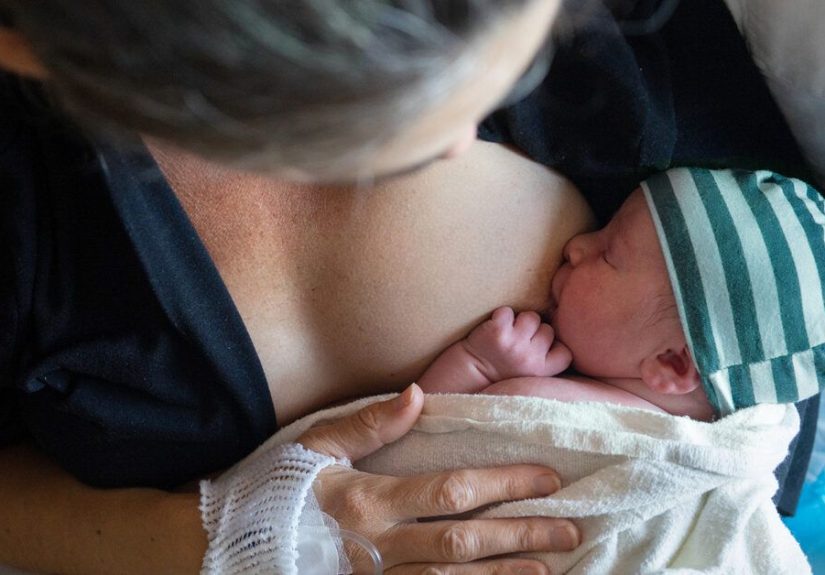
Skin-to-skin contact helps newborns regulate temperature, calm down, and prepare for feeding. After some C-sections, immediate skin-to-skin is possible. In other cases, hospital routines, anesthesia effects, or the baby’s needs may delay it. If you miss the first hour, do not panic. Skin-to-skin is not a one-time magic coupon that expires. You can do it later and often.
Sleepiness in Parent or Baby
Medication, a long labor, or the surgery itself can make both parent and baby sleepy. A sleepy newborn may latch briefly, doze off, and then wake up acting shocked that milk did not magically appear. Gentle waking techniques, frequent attempts, hand expression, and lactation support can help.
Hospital Separation
If your baby needs special care or you are recovering from anesthesia, you may be separated. When direct breastfeeding is delayed, hand expression or pumping can help stimulate supply and provide colostrum for your baby.
The First Hour: Helpful, But Not the Whole Story
Many breastfeeding guides talk about the “golden hour,” the first hour after birth when skin-to-skin contact and early feeding may support breastfeeding. It is a valuable goal. But after a C-section, the golden hour can look different. Sometimes it is golden. Sometimes it is fluorescent, noisy, and full of blood pressure cuffs.
If you are planning a C-section, ask your birth team ahead of time whether skin-to-skin can happen in the operating room or recovery room. Ask whether routine newborn procedures can wait if the baby is stable. Ask whether your support person can help keep the baby safely positioned while you are still numb or shaky.
If your C-section was unexpected and early skin-to-skin did not happen, focus on what comes next. Hold your baby skin-to-skin as soon as possible. Nurse frequently. Ask a nurse or lactation consultant to watch a full feeding. Breastfeeding is not ruined because the opening scene went off-script.
Best Breastfeeding Positions After a C-section
The best breastfeeding position after a C-section is the one that protects your incision, supports your back, and helps your baby latch deeply. You do not win extra parenting points for suffering in a position that feels like a poorly designed yoga pose.
Football Hold
The football hold, also called the clutch hold, is a favorite after C-section because the baby rests along your side instead of across your incision. Place a pillow beside you, tuck your baby under your arm with their feet pointing toward the back of the chair or bed, and support the baby’s shoulders and neck. Bring the baby to the breast rather than leaning your body down to the baby.
This position can also work well for parents with larger breasts, small babies, twins, or babies who need more head support during latch practice.
Side-Lying Position
Side-lying can be a lifesaver when sitting upright feels impossible. Lie on your side with your baby facing you, belly to belly. Use pillows behind your back, between your knees, and near your incision area if needed. This position lets you rest while feeding, but safety matters: after nursing, place your baby back in a safe sleep space if you feel sleepy.
Laid-Back Nursing
In a laid-back position, you recline comfortably while your baby lies on your chest at an angle that avoids pressure on your incision. Gravity helps keep the baby close. This can be especially soothing for newborns who prefer more body contact.
Cross-Cradle With a Pillow Barrier
Some parents like the cross-cradle hold because it gives good control of the baby’s head and body. After C-section, place a firm pillow over your abdomen to protect the incision. Think of the pillow as a tiny security guard for your belly.
How Often Should You Breastfeed?
Newborns commonly breastfeed 8 to 12 times in 24 hours. Some sessions are long. Some are short. Some feel productive. Some feel like your baby just came to the breast to gossip. This variation is normal.
Frequent feeding helps build milk supply. Watch for early hunger cues such as stirring, rooting, sucking on hands, opening the mouth, or turning the head. Crying is a late hunger cue, and a very upset baby may latch less easily. If your baby is sleepy after a C-section birth, you may need to wake them for feeds until your pediatrician confirms weight gain is on track.
Signs your baby may be getting enough milk include audible swallowing, relaxed hands after feeding, contentment after nursing, steady weight gain after the early newborn weight loss period, and enough wet and dirty diapers. If your baby feeds fewer than eight times per day, cannot stay latched, seems constantly unsatisfied, has fewer diapers than expected, or appears increasingly yellow, call your pediatrician or lactation consultant promptly.
What If Your Milk Comes In Late?
Mature milk often increases around days 3 to 5 after birth. After a C-section, it may take a little longer for some parents. This delay can be frustrating, especially when everyone keeps asking, “Has your milk come in yet?” as if you are waiting for a delayed package.
If milk seems slow to increase, focus on milk removal. Nurse often. If your baby is not latching well, hand express or pump. Hand expression can be especially useful in the first days because colostrum is thick and produced in small amounts. Even drops count. Those drops can be collected on a spoon, syringe, or small cup with help from hospital staff.
Do not judge supply by pump output in the first few days. A pump may not collect much colostrum, but your body may still be making exactly what your baby needs. If supplementation is medically recommended, ask how to protect breastfeeding at the same time. A lactation consultant can help you create a plan that may include nursing first, supplementing if needed, and pumping or hand expressing to keep stimulation strong.
Pain Medication and Breastfeeding
Many common postpartum pain medications are compatible with breastfeeding, and taking prescribed pain relief can make breastfeeding easier. When pain is controlled, you can sit, hold your baby, breathe deeply, and recover with less tension.
Acetaminophen and ibuprofen are commonly used after delivery, but always follow your own clinician’s instructions. If stronger pain medicine is prescribed, use it exactly as directed and ask what side effects to watch for in your baby, such as unusual sleepiness, poor feeding, limpness, or breathing concerns. Codeine and tramadol are generally not recommended while breastfeeding because of the risk of serious infant side effects.
Do not stop pain medicine out of guilt without talking to your healthcare team. White-knuckling recovery does not make milk holier. It usually just makes feeding harder.
Protecting Your Incision While Nursing
Your incision needs time and respect. Before feeding, gather supplies: water, phone, burp cloth, pillows, medication if due, snacks, and anything else you do not want to reach for once the baby is latched. A small basket near your bed or chair can prevent the classic postpartum dilemma of being trapped under a nursing baby while your water bottle sits three feet away, mocking you.
Use pillows to raise your baby to breast height. Avoid hunching. Keep your shoulders relaxed. If coughing, laughing, or sneezing hurts, hold a pillow gently against your abdomen for support. Wear loose clothing that does not rub the incision. Call your healthcare provider if the incision becomes increasingly red, swollen, painful, warm, opens, leaks fluid, smells unusual, or if you develop a fever.
When to Ask for Lactation Help
Ask early. You do not need to wait until your nipples are staging a protest. A lactation consultant, postpartum nurse, pediatrician, midwife, or breastfeeding support counselor can help with latch, positioning, milk transfer, pumping, supplementation plans, nipple pain, engorgement, and sleepy-baby strategies.
Get help quickly if breastfeeding is very painful, your nipples are cracked or bleeding, your baby cannot stay latched, you hear clicking throughout feeds, your baby has too few wet or dirty diapers, your baby continues losing weight after the first several days, or your milk has not increased by day 5 and your baby seems unsatisfied.
Also reach out if you feel overwhelmed, tearful, detached, panicky, or unable to sleep even when the baby sleeps. Postpartum emotional health matters. A difficult birth, emergency surgery, sleep deprivation, and feeding stress can pile up fast. Support is not a bonus feature; it is part of recovery.
Practical Tips for Breastfeeding After a C-section
Use a Feeding Station
Create a nursing area with pillows, water, snacks, nipple cream if recommended, burp cloths, diapers, wipes, pain medicine schedule, and a charger. Your future self will applaud.
Let Others Handle the Lifting
When possible, ask your partner, family member, or nurse to bring the baby to you. You can focus on positioning and latch instead of performing a careful abdominal maneuver every two hours.
Feed Before the Baby Is Furious
A calm baby usually latches more easily than a baby who has reached “tiny opera singer” mode. Responding to early hunger cues can make feeds smoother.
Alternate Positions
Switching between football hold, side-lying, and laid-back nursing can reduce pressure on sore spots and help drain different areas of the breast.
Protect Your Sleep
Breastfeeding after surgery takes energy. Let someone else handle burping, diaper changes, meal prep, laundry, and visitor management when possible. Visitors who want to hold the baby can also bring food, take out trash, or load the dishwasher. That is not rude; that is civilization.
Experience Section: What Breastfeeding After a C-section Really Feels Like
Many parents describe breastfeeding after a C-section as a mix of tenderness, determination, confusion, and comedy. One moment you are gazing at your baby’s perfect eyelashes. The next, you are trying to arrange five pillows, avoid your incision, remember which breast was last, and determine whether the baby is hungry or simply offended by air.
A common experience is feeling behind at the beginning. Maybe other parents seem to be nursing smoothly while you are still waiting for feeling to return to your legs. Maybe your baby needed observation, or you were too nauseated to try feeding right away. This can create guilt, but guilt is not useful milk-making equipment. What helps more is frequent contact, repeated attempts, and skilled support.
Another real experience is surprise at how emotional feeding can be. A painful latch may feel personal, even though it is usually a mechanics issue. A sleepy baby may make you worry that your body is not enough. A small amount of expressed colostrum may look unimpressive until someone reminds you that newborn stomachs are tiny and colostrum is concentrated. In those first days, confidence often arrives in drops too.
Some parents find that the football hold becomes their best friend. It keeps baby feet away from the incision and gives a better view of the latch. Others prefer side-lying because sitting upright makes their abdomen ache. Many rotate positions depending on the time of day. Daytime may be football hold in a chair; nighttime may be side-lying with another adult nearby to help place the baby safely back in the bassinet.
Milk coming in after a C-section can feel dramatic. Breasts may suddenly feel full, warm, heavy, or tender. The baby may gulp, sputter, or cluster feed. Cluster feeding can make parents think their supply is disappearing, when often the baby is placing a very enthusiastic order for tomorrow’s milk. Still, if the baby is not gaining, diapers are low, or feeds feel endless and ineffective, professional support is important.
Partners and family members often underestimate how much help is needed. Breastfeeding may be something only one body can do, but recovery is a group project. The support person can track feeding times, refill water, bring snacks, change diapers, wash pump parts, manage visitors, and remind the recovering parent to take medication on schedule. The baby may be attached to the breast, but the whole household is attached to the mission.
There may also be grief if the birth did not go as planned. Some parents feel proud of their C-section. Others feel shaken, disappointed, or disconnected from the birth experience. These feelings can coexist with love for the baby. Breastfeeding may become healing for some, stressful for others, and both on the same day. A healthy feeding journey should include the parent’s physical and emotional well-being, not just ounces and latch scores.
Over time, many C-section parents find a rhythm. The incision becomes less tender. Getting out of bed becomes less like solving a puzzle. The baby wakes more effectively. Latch improves. Milk supply responds to frequent feeding. The early days may be messy, but messy beginnings can still grow into steady breastfeeding relationships.
The most important experience-based lesson is this: do not measure success by perfection. Measure it by support, responsiveness, recovery, and flexibility. Breastfeeding after a C-section is not about proving toughness. It is about feeding your baby while also protecting the body that brought that baby into the world.
Conclusion
Breastfeeding after a C-section may require extra patience, positioning, and support, but it is very possible. Start skin-to-skin as soon as you can, nurse or express milk frequently, protect your incision, manage pain wisely, and ask for lactation help early. Your body is recovering from surgery while learning a brand-new feeding relationship, so give yourself the same gentleness you would offer a friend.
If breastfeeding goes smoothly, wonderful. If it takes time, that is normal too. If your baby needs temporary supplementation, you can still support milk supply and continue breastfeeding with guidance. The goal is not a perfect first week. The goal is a fed baby, a healing parent, and a plan that respects both.