Table of Contents >> Show >> Hide
- What Is Chilled Tomato, Watermelon, and Basil Soup?
- Why Tomato, Watermelon, and Basil Work So Well Together
- The Best Ingredients for a Flavorful Chilled Soup
- Easy Chilled Tomato, Watermelon, and Basil Soup Recipe
- How to Balance the Flavor Like a Pro
- Serving Ideas for Every Summer Occasion
- Delicious Variations
- Nutrition Benefits in a Bowl
- Food Safety and Storage Tips
- Common Mistakes to Avoid
- Experience Notes: What Making This Soup Teaches You
- Conclusion
Some summer recipes politely suggest refreshment. Chilled Tomato, Watermelon, and Basil Soup kicks the kitchen door open, turns off the stove, and says, “Friend, we are not sweating over dinner today.” This bright, cold soup sits somewhere between a classic tomato gazpacho and a juicy watermelon salad that decided to become elegant enough for a dinner party.
The idea sounds unusual for about three seconds: tomatoes and watermelon in the same bowl? Then your brain remembers that both are juicy, red, lightly sweet, and happiest when served cold. Add fresh basil, a splash of vinegar, good olive oil, a little salt, and maybe a whisper of garlic, and suddenly the combination makes perfect sense. It is sweet, savory, tangy, herbal, and refreshing without being bland. In other words, it tastes like summer got a blender and a culinary school scholarship.
This guide walks through how to make a smooth, flavorful chilled tomato watermelon soup, how to balance sweetness and acidity, what toppings work best, how to store it safely, and how to serve it for lunch, appetizers, picnics, brunches, or those evenings when turning on the oven feels like a personal betrayal.
What Is Chilled Tomato, Watermelon, and Basil Soup?
Chilled Tomato, Watermelon, and Basil Soup is a no-cook cold soup made by blending ripe tomatoes, seedless watermelon, basil, olive oil, vinegar or citrus juice, and seasonings. It is inspired by gazpacho, the famous Spanish cold soup traditionally made with tomatoes, peppers, cucumber, bread, vinegar, and olive oil. This version leans lighter and fruitier, using watermelon to soften the tomato’s acidity while keeping the soup crisp and refreshing.
The result is not dessert. It is not a smoothie wearing a tiny soup hat. It is a savory chilled soup with natural sweetness, bright acidity, and a garden-fresh finish. When balanced correctly, the watermelon does not overpower the tomatoes. Instead, it makes them taste juicier, rounder, and more summery.
Why Tomato, Watermelon, and Basil Work So Well Together
Tomatoes bring savory depth
Ripe tomatoes are the backbone of this recipe. They provide acidity, umami, color, and that sun-warmed flavor that makes people at farmers markets suddenly become poets. Beefsteak, heirloom, Roma, Campari, or cherry tomatoes can all work, but the best choice is simple: use the ripest tomatoes you can find.
If your tomatoes smell like nothing, they will probably taste like nothing. Look for tomatoes that feel heavy for their size, give slightly under gentle pressure, and smell fresh and sweet near the stem end. Overly firm supermarket tomatoes can still work, but they may need extra vinegar, salt, or a spoonful of tomato paste to help the flavor stand up.
Watermelon adds body and natural sweetness
Watermelon is more than a picnic fruit that stains napkins. In this chilled soup, it provides liquid, body, and a clean sweetness that balances tomato acidity. It also helps create a silky texture without heavy cream. Seedless watermelon is easiest, but if your melon has seeds, remove as many as possible before blending.
The best watermelon for soup should be juicy and sweet but not mushy. If it is bland, the soup will taste shy. If it is overripe and grainy, the texture may suffer. Taste a cube before blending. The cook’s tax is real, and in this case, it is delicious.
Basil adds the “fresh garden” moment
Fresh basil gives the soup its aromatic lift. It turns the flavor from “cold tomato and melon” into “something I would happily serve in a chilled glass at a summer party.” Basil has a sweet, peppery, slightly floral flavor that pairs beautifully with tomatoes and plays nicely with watermelon.
Add basil with a careful hand. Too little and the soup feels flat; too much and it can taste grassy. A small handful is usually enough for a blender batch, with extra leaves saved for garnish.
The Best Ingredients for a Flavorful Chilled Soup
Core ingredients
- Ripe tomatoes: Use about 4 cups chopped tomatoes. A mix of heirloom and cherry tomatoes gives excellent flavor.
- Seedless watermelon: Use about 3 cups cubed watermelon. Chill it first for the freshest taste.
- Fresh basil: Use 1/3 to 1/2 cup loosely packed leaves, plus more for garnish.
- Cucumber: Optional, but recommended for a classic gazpacho-style crispness.
- Red bell pepper: Adds sweetness and color without making the soup heavy.
- Garlic or shallot: Adds savory backbone. Use a small amount so it does not shout over the fruit.
- Extra-virgin olive oil: Rounds the flavor and improves mouthfeel.
- Vinegar or lime juice: Red wine vinegar, sherry vinegar, white balsamic vinegar, or lime juice all work.
- Salt and black pepper: Essential for waking up the sweet and acidic flavors.
Optional toppings
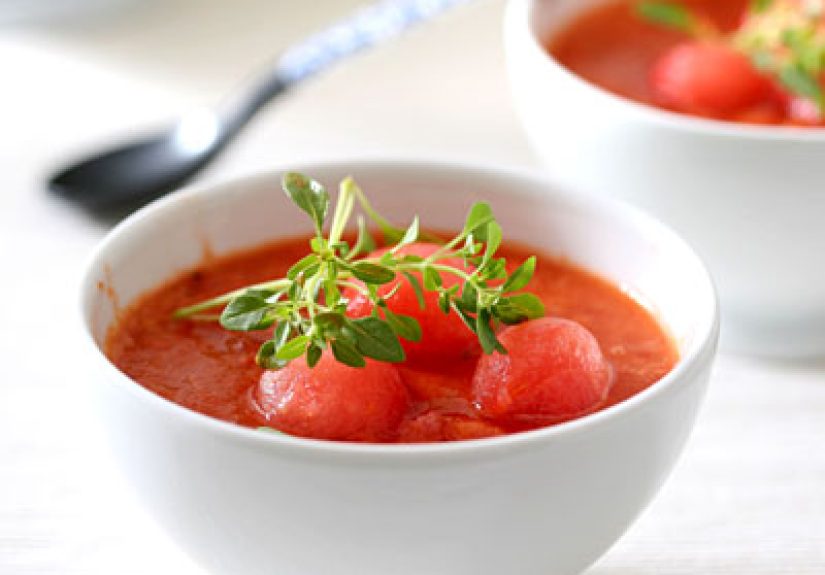
Toppings make this soup feel restaurant-worthy without requiring restaurant-level patience. Try diced cucumber, tiny watermelon cubes, crumbled feta, avocado, toasted almonds, basil oil, microgreens, cherry tomatoes, cracked pepper, or a drizzle of olive oil. For crunch, add homemade croutons just before serving.
Easy Chilled Tomato, Watermelon, and Basil Soup Recipe
Ingredients
- 4 cups ripe tomatoes, chopped
- 3 cups seedless watermelon, cubed
- 1 small cucumber, peeled if waxed or thick-skinned, chopped
- 1/2 red bell pepper, chopped
- 1 small shallot, chopped
- 1 small garlic clove
- 1/3 cup fresh basil leaves, loosely packed
- 2 tablespoons extra-virgin olive oil, plus more for serving
- 1 1/2 tablespoons red wine vinegar or sherry vinegar
- 1 tablespoon fresh lime juice, optional
- 3/4 teaspoon kosher salt, plus more to taste
- 1/4 teaspoon freshly ground black pepper
- Optional: pinch of cayenne or a few slices of jalapeño
Instructions
- Prep the produce. Wash the tomatoes, cucumber, bell pepper, and basil. Chop everything into blender-friendly pieces.
- Reserve a little texture. Set aside a few tablespoons of diced tomato, cucumber, and watermelon for garnish if you like a chunky finish.
- Blend the base. Add tomatoes, watermelon, cucumber, bell pepper, shallot, garlic, basil, olive oil, vinegar, lime juice, salt, pepper, and optional heat to a blender.
- Puree until smooth. Blend for 45 to 60 seconds, or until the soup looks silky. If your blender is small, work in batches.
- Taste and adjust. Add more salt for flavor, vinegar for brightness, olive oil for richness, or watermelon for sweetness.
- Chill thoroughly. Transfer the soup to a covered container and refrigerate for at least 2 hours. Four hours is even better.
- Serve cold. Stir before serving. Ladle into bowls or small glasses and garnish with basil, olive oil, diced produce, feta, avocado, or croutons.
How to Balance the Flavor Like a Pro
The secret to great chilled tomato watermelon soup is balance. Cold temperatures mute flavor, so the soup should taste slightly bold before chilling. If it tastes perfectly seasoned at room temperature, it may taste quiet after a few hours in the refrigerator.
If the soup tastes too sweet
Add more tomato, vinegar, lime juice, salt, or a small piece of cucumber. A pinch of black pepper or jalapeño also helps pull the soup back into savory territory.
If the soup tastes too acidic
Add more watermelon, a drizzle of olive oil, or a few extra basil leaves. You can also blend in a small piece of red bell pepper for gentle sweetness.
If the soup tastes flat
It probably needs salt or acid. Add salt in small pinches, blend, and taste again. Then add vinegar or lime juice a teaspoon at a time. Flat gazpacho is not a tragedy, but it is a missed opportunity.
If the texture is too thin
Add more tomato, cucumber, bell pepper, or a few ice cubes and blend again. For a richer version, blend in a small piece of avocado or a slice of day-old bread. Bread is traditional in some gazpacho styles and gives the soup a fuller body.
Serving Ideas for Every Summer Occasion
This chilled tomato, watermelon, and basil soup can be served as a starter, side dish, light lunch, or party appetizer. For a casual lunch, pour it into bowls and pair it with grilled cheese, avocado toast, a cucumber sandwich, or a simple salad. For a dinner party, serve it in small cups with a basil leaf and a tiny drizzle of olive oil. It looks fancy, but the blender did most of the work. Let the blender enjoy its applause.
For brunch, serve the soup in small chilled glasses alongside quiche, fruit salad, and toasted sourdough. For a picnic, pack it in a thermos or sealed jar and keep it cold in a cooler. Add crunchy toppings only right before serving so they do not become sad little rafts.
Delicious Variations
Spicy watermelon gazpacho
Add jalapeño, serrano pepper, cayenne, or a dash of hot sauce. Start small. You want a pleasant kick, not a soup that files a noise complaint.
Creamy avocado version
Blend half an avocado into the soup for a creamier texture. This version is especially good with lime juice and cilantro, though basil still works beautifully.
Feta and basil bowl
Top each bowl with crumbled feta, torn basil, olive oil, and cracked pepper. The salty feta makes the watermelon taste even sweeter and the tomatoes more intense.
Elegant appetizer shots
Pour the chilled soup into small glasses and garnish with a cucumber cube, a basil leaf, or a tiny skewer of watermelon and cherry tomato. This is ideal for summer parties because guests can sip it without needing a spoon.
Extra-herby garden version
Add a little mint, parsley, or chives with the basil. Mint makes the soup cooler and brighter, while chives add a gentle onion note.
Nutrition Benefits in a Bowl
This soup is naturally light, hydrating, and full of colorful produce. Tomatoes and watermelon both contain lycopene, the pigment that gives many red fruits and vegetables their vivid color. Tomatoes also bring vitamin C, potassium, and plant compounds, while watermelon contributes water, natural sweetness, and refreshing texture.
Because this recipe uses olive oil, it has a more satisfying mouthfeel than a simple juice-based soup. Olive oil also helps carry flavor, making basil more aromatic and tomatoes taste rounder. The recipe is naturally vegetarian and can be vegan if you skip cheese-based toppings. It is also dairy-free, gluten-free if no bread or croutons are added, and easy to adapt for different diets.
Food Safety and Storage Tips
Because this is a cold, ready-to-eat soup, clean handling matters. Wash produce under running water before cutting. Use a clean cutting board and knife, especially if your kitchen has recently handled raw meat, seafood, or eggs. Once blended, refrigerate the soup in a covered container.
Keep the soup cold until serving. If you are serving it outdoors, place the container over ice or return it to the cooler between pours. For best quality, enjoy it within 2 to 3 days. Stir before serving because natural separation is normal. If the soup smells sour in a bad way, looks fizzy, or tastes off, do not try to rescue it with extra basil. Basil is powerful, but it is not a superhero.
Common Mistakes to Avoid
Using bland produce
This recipe is simple, which means every ingredient matters. If the tomatoes and watermelon lack flavor, the soup will not magically become exciting. Use ripe, fragrant produce whenever possible.
Skipping the chill time
Technically, you can drink it right after blending. Emotionally, you should not. Chilling allows the tomato, watermelon, basil, vinegar, and olive oil to settle into one clean, refreshing flavor.
Adding too much garlic
Raw garlic gets louder as it sits. One small clove is plenty for most batches. If you love garlic, add more carefully. This is soup, not a vampire defense strategy.
Forgetting the acid
Vinegar or citrus juice keeps the soup from tasting like cold produce puree. Acidity sharpens the flavor and makes the sweetness feel intentional.
Over-blending basil
Basil can darken when bruised too aggressively. Blend just until smooth, then garnish with fresh leaves for color and aroma.
Experience Notes: What Making This Soup Teaches You
The first time you make Chilled Tomato, Watermelon, and Basil Soup, you may feel suspicious. That is normal. Watermelon has spent most of its life being invited to fruit salads, popsicles, and backyard cookouts. Tomatoes, meanwhile, have been busy starring in pasta sauce, salsa, sandwiches, and soups with more serious resumes. Putting them in the same blender feels like arranging a meeting between two coworkers who have never spoken but somehow share the same calendar.
Then the blender starts, the color turns coral-red, and the smell changes everything. The tomato brings that earthy, green, sun-warmed aroma. The watermelon adds a clean sweetness. The basil floats above it all like a tiny Italian vacation. Suddenly, the combination does not seem odd. It seems obvious.
One of the best experiences with this soup is learning how much flavor changes after chilling. Right after blending, it may taste sharp or slightly uneven. After two to four hours in the refrigerator, the edges soften. The garlic becomes less separate. The vinegar stops waving a flag. The basil settles into the background. The soup becomes smoother, cooler, and more confident. It is a good reminder that not every recipe improves through effort. Some improve through patience, which is very convenient if your main cooking goal is “do less.”
This soup is also a great lesson in seasoning. Because tomatoes and watermelon vary so much, the exact amount of salt and vinegar will never be identical from batch to batch. A super-sweet watermelon may need extra vinegar. A very acidic tomato may need more olive oil or melon. A watery tomato may need a stronger garnish. Cooking this soup trains you to taste, adjust, and trust your palate instead of obeying a recipe like it is a parking ticket.
Serving it can be surprisingly fun. In bowls, it feels like a light lunch. In small cups, it becomes an appetizer that makes people ask questions. Add feta, and it leans Mediterranean. Add jalapeño, and it becomes bold and zippy. Add avocado, and suddenly it feels creamy without cream. Add toasted croutons, and you get crunch against coolness, which is basically summer texture therapy.
It is especially satisfying on extremely hot days. You know those days when the sidewalk looks personally offended by the sun? This soup belongs there. It is cold but not heavy, flavorful but not fussy, and colorful enough to make a plain table look styled. It also makes good use of produce that might otherwise sit around waiting for inspiration. Half a watermelon, a few ripe tomatoes, and a bunch of basil can become something memorable in minutes.
The final experience is perhaps the most important: this soup makes healthy eating feel generous instead of dutiful. It does not taste like a compromise. It tastes like the season doing what it does best. No stove, no cream, no complicated technique, no dramatic cleanup. Just ripe produce, a blender, a chill in the fridge, and a bowl that tastes like summer remembered to bring a spoon.
Conclusion
Chilled Tomato, Watermelon, and Basil Soup is the kind of recipe that proves simple ingredients can still have personality. Ripe tomatoes provide savory depth, watermelon adds juicy sweetness, basil brings fragrance, and vinegar sharpens everything into focus. Serve it as a light lunch, a colorful appetizer, or a cooling side dish when the weather is too hot for anything that requires oven mitts.
The best version starts with great produce, gets seasoned boldly, chills thoroughly, and finishes with toppings that add contrast. Whether you keep it smooth and elegant or load it with feta, avocado, cucumber, and croutons, this cold summer soup is refreshing, flexible, and far more exciting than its short ingredient list suggests.