Table of Contents >> Show >> Hide
- What Exactly Is the GJ-11?
- Why Analysts Think It Could Be Operational
- Why the GJ-11 Matters More Than a Typical Drone Story
- The Taiwan Angle: Why This Drone Gets So Much Attention
- Could the GJ-11 Go to Sea?
- How This Compares With the U.S. Approach
- Reasons to Be Skeptical
- What the GJ-11 Says About China’s Bigger Strategy
- Why Following the GJ-11 Feels Like Watching a Quiet Revolution
- Conclusion
For years, China’s GJ-11 looked like one of those mysterious defense projects that existed somewhere between parade prop, aerospace rumor, and “we’ll believe it when it flies.” Now, that blurry line is getting a lot sharper. Recent satellite imagery, official Chinese footage, and a steady drip of military analysis suggest the GJ-11 stealth drone may be moving out of the prototype phase and into something much more serious: real-world operational use, or at least the dress rehearsal for it.
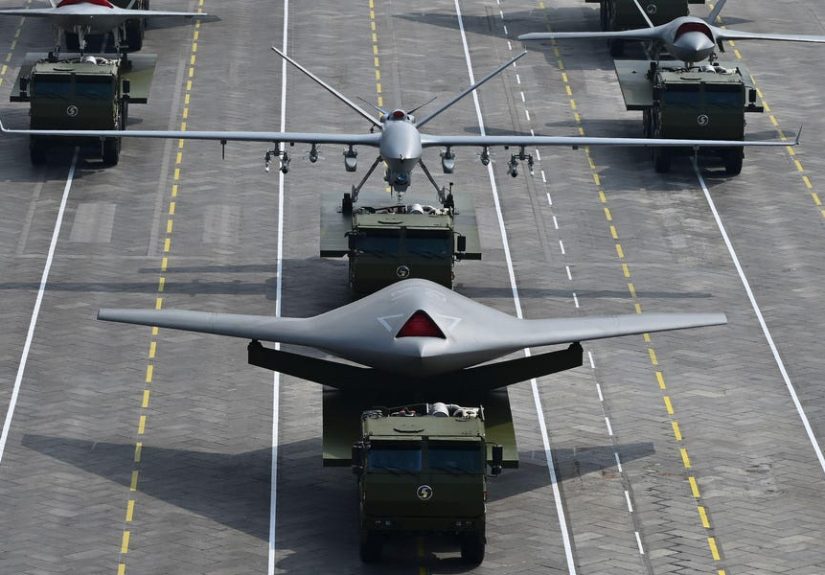
That matters because the GJ-11 is not just another drone with a fancy paint job. It is a flying-wing unmanned combat air vehicle, or UCAV, built for low observability, long-range strike, and potentially for teaming with crewed aircraft. In plain English, this is the kind of aircraft designed to sneak in, hit defended targets, gather intelligence, and make enemy air-defense planners very uncomfortable. If China is indeed fielding it, the GJ-11 could become one of the most important pieces in Beijing’s expanding airpower puzzle.
And yes, the name sounds like something a Bond villain would order from an aerospace catalog. But behind the cool silhouette is a bigger story about how the People’s Liberation Army is trying to fuse stealth, autonomy, precision strike, and naval aviation into one future-facing package. The GJ-11 is not just hardware. It is a hint about where Chinese military doctrine is going next.
What Exactly Is the GJ-11?
The GJ-11, often linked to the earlier “Sharp Sword” demonstrator, is a stealthy, tailless UCAV with a flying-wing design. That shape is not an accident. Flying wings are attractive for stealth aircraft because they reduce radar reflections and can provide more internal space for fuel and weapons. Instead of hanging bombs and sensors all over the outside like a Christmas tree that lost its sense of restraint, a stealth aircraft hides key gear inside the airframe.
That is exactly what has made the GJ-11 so interesting to analysts. Public displays have shown twin internal weapons bays, suggesting the drone is intended to carry precision-guided munitions while keeping its radar signature low. The broad assumption among defense watchers is that the aircraft is designed for deep-penetration strike, intelligence, surveillance, reconnaissance, and possibly electronic warfare. In other words, it is meant to go where slower, louder, or more visible drones would have a much worse day.
The GJ-11 also fits neatly into a broader Chinese trend. Beijing has spent the last decade investing heavily in unmanned systems at multiple tiers, from reconnaissance drones to more advanced combat designs. The GJ-11 sits at the high end of that ladder. It is the sleek, dangerous sibling that shows up late, says very little, and immediately changes the mood of the room.
Why Analysts Think It Could Be Operational
The key word in this story is could. Nobody outside China has released a neat little certificate reading, “Congratulations, your stealth drone is now fully operational.” Defense analysis rarely works that way. Instead, analysts build a case from public evidence, patterns, deployments, imagery, and official hints. On that score, the GJ-11 has become a lot harder to dismiss as a mere concept.
1. The timeline is getting harder to ignore
A prototype linked to the program first flew in 2013. A more refined public version appeared in China’s 2019 military parade with a stealthier rear design and a cleaner low-observable shape. By 2021, mockups at the Zhuhai airshow showed internal weapons bays carrying what appeared to be precision air-to-ground munitions. That is not the path of a paper airplane project. That is the path of a system moving through visible stages of maturation.
2. Satellite imagery changed the conversation
The most eye-catching development came from satellite imagery showing GJ-11 airframes at Shigatse Air Base in Tibet during 2025. That was significant for two reasons. First, the drones were not sitting in some obscure test corner that screams “science fair, please do not touch.” They appeared at an active dual-use military-civilian airport. Second, Shigatse is strategically located near India and within a broader geography that matters for regional contingencies.
That does not prove full operational deployment, but it strongly suggests operational testing or a semi-operational status. In military terms, that is a very big step. Systems do not usually get parked at a meaningful base in a meaningful location just because somebody liked the way they looked in a parade.
3. Official flight footage added another clue
Chinese media later released footage showing the GJ-11 flying alongside a J-20 stealth fighter and a J-16D electronic warfare aircraft. That pairing is the opposite of random. It hints at future concepts where stealth drones work with advanced fighters and jamming aircraft as part of a networked strike package. It also suggests Chinese planners are interested in manned-unmanned teaming, where drones expand the reach, survivability, and striking power of crewed aircraft.
Even if the footage alone does not confirm full front-line service, it pushes the aircraft one notch closer to operational credibility. At minimum, it shows that the GJ-11 is not stuck in the world of mockups and patriotic renderings anymore.
Why the GJ-11 Matters More Than a Typical Drone Story
Most drone stories focus on quantity: how many, how cheap, how expendable. The GJ-11 is different because it is about quality. This is not a bargain-bin quadcopter with delusions of grandeur. It is a stealth UCAV with strategic implications.
If China can field a platform like the GJ-11 in meaningful numbers, it gains a tool for attacking defended targets without risking pilots in the cockpit. That could matter in a Taiwan scenario, in contingencies involving Japan, or in any crisis where Beijing wants to push further into contested airspace. A stealth drone can scout, strike, jam, designate targets, or simply force the other side to burn time and weapons trying to find and stop it.
There is also the psychological effect. Air defense works best when defenders know what is coming, from where, and in what numbers. A low-observable drone throws sand in those gears. It complicates radar tracking, compresses decision time, and creates uncertainty. A defender does not just have to ask, “What is that?” but also, “What is it carrying?” and “What else is flying with it?” That kind of confusion is useful all by itself.
The Taiwan Angle: Why This Drone Gets So Much Attention
The GJ-11 is especially relevant to discussions about Taiwan because its design seems well suited for the opening phase of a high-end conflict. A stealth drone could help locate air defenses, strike command nodes, gather targeting data, and create gaps for follow-on forces. If paired with electronic warfare assets such as the J-16D and protected by stealth fighters like the J-20, it becomes part of a broader suppression-and-penetration package.
This is why so many analysts view the GJ-11 as more than a technical curiosity. In a Taiwan contingency, Beijing would likely prioritize blinding, confusing, and overloading defenses early. The GJ-11 fits that playbook almost too neatly. It could scout ahead, pass targeting data, deliver precision weapons, or act as part of a coordinated wave of manned and unmanned aircraft. That does not guarantee success, but it raises the complexity of the challenge for Taiwan and any outside force responding to a crisis.
For U.S. planners, the concern is not just one drone model. It is the ecosystem around it: stealthy aircraft, long-range missiles, electronic warfare, data links, and the growing possibility that China is learning how to knit those capabilities together faster than many outsiders expected.
Could the GJ-11 Go to Sea?
This may be the most intriguing part of the story. Public reporting and imagery have fueled persistent speculation that China is developing a navalized version of the GJ-11 for use on aircraft carriers or large amphibious assault ships. Attention has focused especially on the Type 076, a new large-deck amphibious ship associated with catapult capability and heavy drone use.
The naval logic is easy to understand. A stealthy carrier-capable drone could extend the reach of the fleet, scout ahead of manned aircraft, support anti-ship targeting, conduct ISR, and potentially carry weapons without exposing a pilot. That would be a serious leap in naval aviation, especially in the Western Pacific where distance, survivability, and sensor reach matter almost as much as raw firepower.
To be clear, the public evidence does not confirm a mature carrier-based GJ-11 force. But mockups near shipbuilding and training areas, references to possible naval variants, and the broader Chinese push toward drone-heavy maritime operations all point in the same direction. China appears determined to make unmanned aviation part of its future sea-based airpower. The GJ-11 may be one of the aircraft meant to help make that happen.
How This Compares With the U.S. Approach
Here is where the story gets even more interesting. China appears to be publicly pushing ahead with a stealth flying-wing combat drone, while the United States has emphasized a somewhat different model through Collaborative Combat Aircraft. In the American vision, drones work closely with crewed fighters and remain under tighter human control rather than operating as independent stealth raiders in the classic UCAV mold.
That does not necessarily mean China has chosen the better path. Autonomy is hard. Carrier operations are hard. Stealth maintenance is hard. Combining all three without wrecking reliability, cost, or doctrine is really hard. Defense history is full of machines that looked unstoppable in theory and then demanded a support ecosystem the size of a small city.
Still, China’s visible progress has sparked an uncomfortable question in U.S. defense circles: did Washington step away too quickly from the flying-wing stealth UCAV concept? If the GJ-11 proves genuinely useful, that question will get louder.
Reasons to Be Skeptical
It is worth pumping the brakes before declaring the dawn of robot air supremacy. Public evidence can show us shapes, deployments, and concepts, but it cannot easily reveal the hidden parts that matter most: software maturity, sensor fusion, secure communications, maintenance demands, sortie generation, and pilot-operator training. A stealth drone is only as dangerous as the network, doctrine, and logistics behind it.
There is also a long tradition in defense reporting of mistaking visibility for readiness. A drone can appear in a parade, a promo video, or even at a base without being fully integrated into combat units. “Could be operational” is a fair headline because it captures the uncertainty. “Definitely changing the balance of power tomorrow morning” would be a bit much.
Even so, the skepticism cuts both ways. The GJ-11 does not need to be perfect to matter. It only needs to be good enough to complicate planning, absorb defensive attention, and widen China’s options in a crisis. Military capability often becomes strategically meaningful before it becomes fully polished.
What the GJ-11 Says About China’s Bigger Strategy
The GJ-11 is best understood not as an isolated gadget but as part of a larger Chinese effort to modernize around information dominance, long-range strike, and system-on-system warfare. Beijing is not simply trying to copy the drone age. It is trying to shape a version of it that works with its own doctrine, geography, and priorities.
That means stealth drones paired with advanced fighters, missile forces, naval platforms, and electronic warfare assets. It means trying to extend targeting range while reducing pilot risk. It means creating more ways to probe, confuse, and pressure an adversary before the first crewed strike package even arrives. The GJ-11 may still carry unanswered questions, but its role in that bigger strategic picture is becoming easier to see.
And that is why the aircraft matters. Not because one drone by itself rewrites the future, but because it shows how China may be assembling the future piece by piece.
Why Following the GJ-11 Feels Like Watching a Quiet Revolution
There is an odd experience that comes with following a program like the GJ-11. Unlike a traditional fighter jet, which usually arrives with a loud rollout, glossy photos, and a mountain of official talking points, the GJ-11 has emerged in fragments. First a prototype. Then a cleaner public model. Then weapons bays. Then satellite sightings. Then flight footage. It is like trying to understand a movie by catching every third scene, and yet the plot somehow keeps getting clearer.
That piecemeal reveal is part of what makes the GJ-11 story so compelling. For defense analysts, every new image becomes a miniature crime scene. What changed in the exhaust? Are those real panel lines or a mockup? Why this base? Why these companion aircraft? Why now? The experience is less like reading an official brochure and more like solving a technical mystery with a flashlight, three satellite pictures, and an unhealthy level of interest in wing geometry.
For military planners, the experience is less fun and more sobering. A system like the GJ-11 forces uncomfortable thought experiments. What happens if these drones can survive long enough to help cue missiles? What happens if they start operating in coordinated groups? What happens if a navalized version expands China’s maritime ISR and strike options? None of those questions require science fiction. They require only a platform that works well enough, often enough, to matter.
There is also a broader emotional shift in how people react to aircraft like this. Ten years ago, stealth drones still felt experimental, almost futuristic. Now they feel increasingly normal. That is the real experience of watching the GJ-11 story develop: the future stops feeling hypothetical. It starts feeling logistical. Not “Could anyone build this?” but “How many, where, and with what doctrine?” Once a technology enters that phase, the strategic conversation changes fast.
And for observers across the Indo-Pacific, that change is not abstract. The GJ-11 sits at the intersection of several live regional anxieties: Taiwan, maritime competition, India-China tensions, carrier modernization, and the race to blend autonomy with conventional airpower. Watching the drone move from mysterious prototype to possible operational asset feels a bit like watching storm clouds gather over a map everyone already studies too closely.
None of this means the GJ-11 is unstoppable. It may still face serious hurdles in autonomy, maintenance, communications resilience, and combat integration. But the experience of tracking it over the past decade leaves one clear impression: China is not dabbling here. It is experimenting, iterating, displaying, testing, and gradually normalizing a class of capability that many countries still talk about as tomorrow’s problem.
That is why the GJ-11 keeps attracting so much attention. It is not just a stealth drone. It is a signal. It suggests that the next era of airpower may belong not only to the fastest fighter or the smartest missile, but to the side that best combines crewed aircraft, uncrewed systems, sensors, electronic warfare, and speed of adaptation. In that contest, the GJ-11 looks less like a curiosity and more like a preview.
Conclusion
China’s GJ-11 stealth drone is still wrapped in uncertainty, but the direction of travel is hard to miss. The public evidence increasingly suggests the aircraft has moved well beyond the concept stage and may now be in semi-operational or early operational use. That alone makes it important. Add in its stealth design, internal weapons bays, possible teaming role with advanced fighters, and potential naval future, and the GJ-11 starts to look like one of the most consequential unmanned combat aircraft programs in the world.
The safest conclusion is also the most serious one: the GJ-11 may not yet be fully understood, but it no longer looks theoretical. And in defense planning, the moment a capability stops looking theoretical is the moment everyone else has to start paying closer attention.