Table of Contents >> Show >> Hide
- Why This Classic Green Bean Casserole Still Works
- Classic Green Bean Casserole Recipe
- Ingredient Notes That Actually Matter
- Tips for the Best Green Bean Casserole
- How to Make It Ahead Without Losing the Crunch
- Storage and Reheating
- Easy Variations on the Classic
- What to Serve With Green Bean Casserole
- Troubleshooting a Less-Than-Perfect Casserole
- Kitchen Experiences and Real-Life Lessons From Making Classic Green Bean Casserole
- Final Thoughts
Some dishes arrive at the table wearing a tuxedo. Others show up in sweatpants and somehow become the life of the party. Classic green bean casserole is absolutely the second one. It is creamy, cozy, salty, crunchy, and gloriously unfussy. It belongs at Thanksgiving, yes, but it also deserves random Tuesdays, potlucks, and any dinner where you want a side dish that says, “Relax, I’ve got this.”
If you grew up in America, chances are you already know the magic formula: green beans, cream of mushroom soup, milk, and crispy fried onions. That combination became famous for a reason. It hits nearly every texture note at once. You get tender beans, velvety sauce, savory mushroom flavor, and a crisp onion topping that practically crackles when the spoon dives in. It is comfort food with a little crunch and zero identity crisis.
This version keeps the soul of the classic green bean casserole recipe intact while giving you enough detail to make it taste polished, not sleepy. You will get the traditional method, practical tips, make-ahead guidance, storage advice, easy variations, and the kind of troubleshooting help that saves holiday side dishes from becoming swampy. Nobody wants a beige vegetable tragedy. We are here to prevent that.
Why This Classic Green Bean Casserole Still Works
Green bean casserole became a classic because it solved a very American kitchen problem: how do you make something warm, tasty, affordable, and easy with pantry staples? The answer turned out to be brilliant in its simplicity. The original Campbell’s version, developed in 1955, leaned on ingredients families already had around: canned green beans, condensed cream of mushroom soup, milk, and fried onions. That easy formula stuck, and decades later, it still shows up on holiday tables everywhere.
What makes it endure is balance. The casserole is rich, but the green beans keep it from feeling too heavy. The cream sauce is familiar and savory, but the onion topping adds crunch and contrast. It is simple enough for beginner cooks and nostalgic enough for seasoned ones who have been making it since casserole dishes were apparently a personality trait.
Modern recipes often add scratch-made mushroom sauce, fresh green beans, garlic, thyme, Parmesan, or extra cheese. Those versions can be wonderful, but the classic formula keeps winning because it is dependable. It asks very little and gives a lot. Honestly, that is the kind of friendship we all need.
Classic Green Bean Casserole Recipe
Yield, Time, and Texture Goals
This recipe makes about 6 to 8 side-dish servings. Expect about 10 minutes of prep time and roughly 35 to 40 minutes total bake time. The goal is a casserole that is creamy but not soupy, hot all the way through, and crowned with deeply golden crispy onions.
Ingredients
- 2 cans condensed cream of mushroom soup, 10.5 ounces each
- 3/4 cup whole milk
- 1/2 teaspoon black pepper
- 1 teaspoon soy sauce
- 4 cans cut green beans, about 14.5 ounces each, drained well
- 1 1/3 cups crispy fried onions, divided
- Optional: 1/2 cup shredded sharp Cheddar or Parmesan for a richer finish
How to Make It
- Preheat the oven. Set your oven to 350°F. Lightly grease a 1 1/2- to 2-quart baking dish.
- Build the sauce. In a large bowl, whisk together the cream of mushroom soup, milk, black pepper, and soy sauce until smooth. The soy sauce is not there to make the casserole taste like stir-fry. It is there to quietly deepen the savory flavor like a culinary ninja.
- Add the green beans. Stir in the drained green beans until they are evenly coated. If you are using cheese, fold it in now.
- Add some crunch to the middle. Stir in about 2/3 cup of the crispy fried onions. This gives the casserole flavor throughout instead of leaving all the fun on top.
- Transfer and bake. Spoon the mixture into the baking dish and spread it evenly. Bake uncovered for 25 to 30 minutes, or until the casserole is hot and bubbling around the edges.
- Top and finish. Sprinkle the remaining fried onions over the top. Return the dish to the oven and bake for 5 to 10 more minutes, until the onions are golden brown and the casserole is bubbly.
- Rest briefly. Let it stand for 5 minutes before serving. This helps the sauce settle so you get a creamy scoop instead of a lava slide.
What It Should Look Like
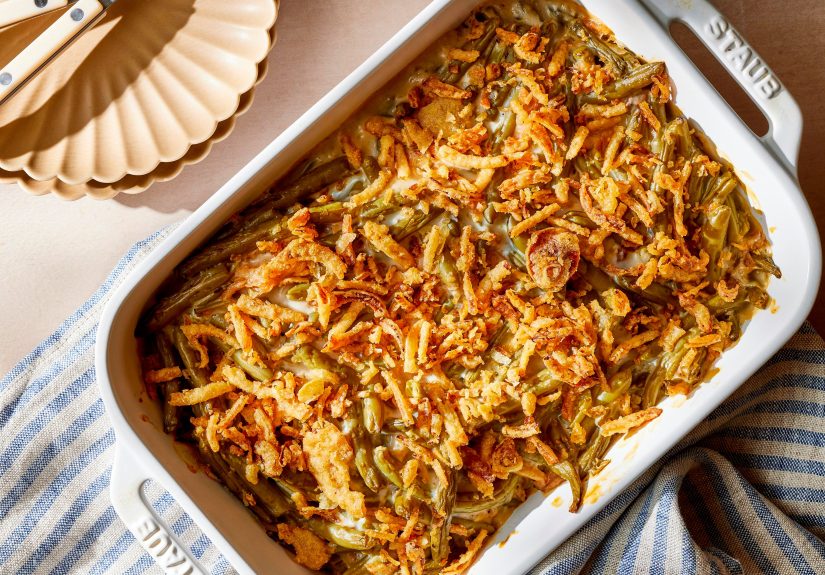
A great classic green bean casserole recipe should be creamy enough to coat the beans, but not so loose that it puddles across the plate. The top should be golden and crisp, and the edges should bubble slightly. When you scoop into it, you want a soft interior and a crunchy cap. That contrast is the whole point.
Ingredient Notes That Actually Matter
Green Beans
Canned green beans are the most traditional choice, and they absolutely work. They give you the nostalgic texture people expect from the classic casserole. Just drain them well so the sauce does not get watery. If you want a fresher bite, use fresh or frozen green beans instead. Blanch fresh beans until tender-crisp, then shock them in ice water before adding them to the casserole. Frozen beans should be thawed and patted dry if they seem extra icy.
Cream of Mushroom Soup
This is the iconic backbone of the dish. It provides creaminess, salt, mushroom flavor, and the specific old-school personality that makes this casserole feel like a holiday side rather than just “green beans in a pan.” If you want to go homemade, you can, but then you are drifting toward a deluxe casserole. Delicious, yes. Classic-classic? Slightly less.
Milk
Milk loosens the soup so the casserole bakes into a silky sauce instead of a paste. Whole milk gives the richest texture, but 2% works fine. Heavy cream can be used if you want more richness, though that moves the dish from classic comfort into special-occasion velvet robe territory.
Crispy Fried Onions
These are non-negotiable in spirit, even if some people swap in breadcrumbs or homemade shallots. Fried onions deliver the signature crunch and a sweet-savory finish that makes the casserole instantly recognizable. Use some in the filling and save the rest for the top. That two-stage approach keeps the casserole flavorful all the way through.
Tips for the Best Green Bean Casserole
Drain the Beans Thoroughly
If your casserole turns watery, the beans are often the culprit. Canned green beans hold a surprising amount of liquid, and even frozen beans can release moisture. Let them drain well, and do not be shy about patting them dry with paper towels if they look especially wet.
Do Not Burn the Onions
The final bake goes fast. Fried onions can move from deeply golden to “well, that smells expensive” in a few minutes. Start checking around the 5-minute mark after topping the casserole.
Season Carefully
Condensed soup and fried onions already bring a fair amount of salt. Add black pepper and a little soy sauce, but taste the sauce before salting more. This is not the place for reckless seasoning.
Use the Right Dish
A shallow casserole dish helps the topping crisp more evenly and lets the sauce heat through faster. If you pile everything into a dish that is too deep, you may get an overbrowned top and a lukewarm middle, which is the culinary equivalent of sending mixed signals.
How to Make It Ahead Without Losing the Crunch
One reason this dish remains a holiday favorite is that it is wonderfully make-ahead friendly. You can mix the soup, milk, seasoning, and green beans, spread the mixture into your baking dish, cover it, and refrigerate it for up to 24 hours before baking. This can be a game changer when the oven is fighting for its life on Thanksgiving.
The main rule is simple: hold back most or all of the crispy fried onions until the end. If they sit in the casserole overnight, they lose their crunch and become soft. That is not a crime, but it is a missed opportunity. Add them right before the final bake or during the last few minutes so they stay crisp and golden.
If baking from cold, add a little extra time, usually 5 to 10 minutes, to ensure the center is fully heated. You want it hot and bubbling, not politely warm.
Storage and Reheating
Leftover green bean casserole stores surprisingly well. Let it cool slightly, then refrigerate it within two hours. Cover tightly and keep it in the refrigerator for up to 3 to 4 days. For reheating, use a 350°F oven if you want to revive some texture, or microwave individual servings for convenience.
If the casserole seems thick after chilling, a small splash of milk stirred in before reheating can help loosen the sauce. If you are reheating a large portion, covering it loosely with foil for part of the bake can keep the top from getting too dark before the middle warms through.
For food safety, leftovers should be reheated until hot throughout. If you are checking with a thermometer, 165°F is the safe target. That might sound very official for a side dish with fried onions on top, but food safety and comfort food can absolutely coexist.
Easy Variations on the Classic
Use Fresh Green Beans
Want a brighter color and firmer bite? Blanch fresh green beans for 4 to 5 minutes, then shock them in ice water. Dry them well and use them in place of canned beans. The casserole will feel a little fresher and slightly more upscale, but still familiar.
Add Mushrooms
Sautéed mushrooms deepen the savory flavor beautifully. Cook them until their moisture evaporates before adding them, or they may water down the sauce.
Make It Cheesy
A handful of Cheddar, Swiss, Gruyère, or Parmesan can make the casserole richer and more crowd-pleasing. Cheese is never mandatory, but it is often persuasive.
Boost the Flavor
Try a pinch of garlic powder, a few thyme leaves, a splash of Worcestershire sauce, or a little Dijon mustard in the sauce. These additions do not hijack the dish; they just make it taste more layered.
What to Serve With Green Bean Casserole
This casserole plays well with roast turkey, glazed ham, meatloaf, roast chicken, mashed potatoes, stuffing, cranberry sauce, biscuits, and sweet potatoes. It especially shines next to foods that are salty, savory, or slightly sweet. On a holiday table, it acts like the dependable friend who gets along with everyone and still has enough personality to be remembered.
You can also turn it into a fuller meal by pairing it with rotisserie chicken and a crisp salad. Suddenly the “holiday side” becomes a weeknight dinner hero, and nobody complains.
Troubleshooting a Less-Than-Perfect Casserole
Too Watery
This usually means the beans were not drained enough, or extra vegetables released moisture. Bake a little longer uncovered, and next time dry the beans more thoroughly.
Too Thick
Add a splash more milk before baking or reheating. The sauce should be thick enough to coat, but not stiff enough to stand at attention.
Too Salty
Skip added salt, use low-sodium soup if you prefer, and avoid overdoing salty mix-ins. If it is already baked, serve it with plain mashed potatoes or unsalted turkey to balance things out.
Soggy Topping
The onions probably went on too early or sat too long in the dish before baking. Save part of the topping for the last few minutes next time. Crunch delayed is crunch denied.
Kitchen Experiences and Real-Life Lessons From Making Classic Green Bean Casserole
There is something oddly comforting about the experience of making green bean casserole, even when the kitchen is chaotic and every burner is occupied. It is not a glamorous dish. Nobody makes it for applause the way they do a towering layer cake or a golden roast with dramatic pan juices. But that is exactly why it is so lovable. Green bean casserole tends to sneak into the meal quietly and then disappear from the table before you realize how many people went back for seconds.
One of the biggest lessons this dish teaches is that convenience and comfort are not enemies. Home cooks sometimes feel pressured to make every single component from scratch, especially around the holidays. But classic green bean casserole proves that smart shortcuts can still create something deeply satisfying. Opening cans is not culinary failure. It is time management with a casserole dish.
Another common experience is discovering how personal the “right” version can be. Some families swear by canned beans because that softer texture is what tastes like childhood. Others insist on fresh green beans for a brighter bite and a little more structure. Some people sneak in cheese. Others act as if cheese in green bean casserole is a federal offense. This is part of the dish’s charm: it is traditional, but still flexible enough to reflect the cook behind it.
Many home cooks also learn, often the hard way, that toppings have feelings. Put fried onions on too soon, and they lose their glorious crunch. Forget them entirely, and the casserole tastes incomplete, like a joke without the punchline. Timing matters. The best casseroles are usually the ones made by cooks who understand that the final few minutes are where the magic happens.
There is also the beautiful reality that this recipe is generous to imperfect kitchens. It can be mixed in one bowl, baked in one dish, and adapted on the fly when you realize you are short on milk, forgot the pepper, or bought the wrong size beans. It is forgiving, which is more than can be said for many holiday recipes with stronger opinions and weaker manners.
Perhaps the most memorable part of the experience, though, is the nostalgia. Even people who joke about green bean casserole being retro or overly beige usually smile when it lands on the table. It reminds them of grandparents, crowded dining rooms, foil-covered leftovers, or that one relative who always brought the same dish and somehow never got replaced. In a food culture obsessed with reinvention, there is something refreshing about a recipe that survives because it does not need to prove anything. It just needs to be hot, creamy, and topped with crunchy onions. That is not flashy, but it is deeply reassuring.
Final Thoughts
The best classic green bean casserole recipe is not the one with the fanciest ingredient list. It is the one that arrives at the table hot, creamy, and crowned with crisp onions, then disappears spoonful by spoonful while people say things like, “I probably shouldn’t, but…” This dish has survived for generations because it delivers exactly what people want from comfort food: familiar flavor, simple prep, and the kind of nostalgia that tastes even better the next day.
Whether you stick to the old-school version or make a few smart upgrades, green bean casserole earns its place. It is easy to make, easy to love, and just dramatic enough on top to keep life interesting. For a side dish built on pantry staples, that is a pretty impressive legacy.