Table of Contents >> Show >> Hide
- The Post That Should Have Been Simple
- Why The Roast Hit So Hard
- Women Are Not Quietly Succeeding. They Are Outgrowing The Old Script
- The Internet Did Something Rare: It Chose The Right Villain
- What This Says About Masculinity, Academia, And Public Praise
- Experiences This Story Brings To The Surface
- Conclusion
Some stories arrive on the internet like a lightning strike. Others arrive like a man wandering into a celebration, grabbing a microphone nobody offered him, and announcing, with the confidence of a guy who definitely has an opinion about “high-value females,” that a woman’s success is somehow less impressive because he personally is not impressed. This story belongs very much to the second category.
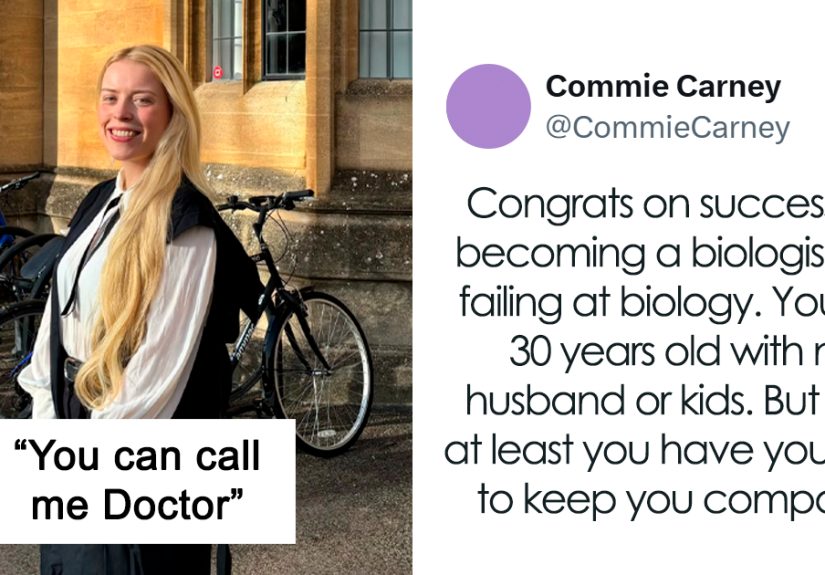
What began as one woman celebrating the completion of her PhD quickly turned into something much bigger: a public roast of old-fashioned sexism, a reminder that women’s success does not require male approval, and a wildly entertaining example of the internet occasionally using its powers for good instead of chaos. For once, the timeline did not just dunk on bad behavior. It turned a smug insult into a full-scale celebration of women in academia, research, medicine, science, and every other field where women keep showing up, excelling, and ruining the tired fantasy that ambition belongs mostly to men.
If that sounds dramatic, good. The original backlash was dramatic too. But the response was smarter, funnier, and far more revealing. Because beneath all the memes, jokes, and expertly seasoned sarcasm, this viral moment exposed something real: a lot of people are still deeply uncomfortable when women succeed publicly, speak confidently, and attach a hard-earned title to their names without apologizing for it.
The Post That Should Have Been Simple
The spark was straightforward. A young woman finished the kind of brutal, brain-bending, coffee-dependent academic marathon that ends with a doctoral defense. She shared the news online. She was proud. She had every right to be. Instead of receiving only congratulations, she attracted the sort of weirdly personal criticism that tends to appear whenever women celebrate anything larger than a decent sourdough loaf. Suddenly, strangers were not discussing her research. They were discussing her value as a woman, her future, her family plans, and whether any man would care about her achievement.
That last part is what made the backlash so absurd. The man at the center of the mockery was not arguing about the quality of her work. He was not offering a critique of doctoral education. He was not even pretending to discuss ideas. He reduced the entire accomplishment to a male desirability test, as if the point of earning a PhD were to make some random guy whistle approvingly from the cheap seats.
And that is exactly why the internet lit him up.
People immediately recognized the insecurity beneath the insult. Instead of treating him like a serious thinker, they treated him like what he looked like: a man publicly short-circuiting at the sight of a woman achieving something difficult. The roast was fast, merciless, and, frankly, deserved. But the best part was that the conversation did not stay centered on him for long. It pivoted toward women’s success, women’s credentials, women’s brilliance, and the ridiculousness of measuring any of it against male ego.
Why The Roast Hit So Hard
The phrase “fragile beta” spread because it captured the energy perfectly. The issue was never the degree. The issue was fragility. A woman had succeeded in a visible way, claimed her title, and looked happy about it. For some people, that was somehow intolerable. Not because success is offensive, but because female confidence still rattles anyone whose worldview depends on women staying small, grateful, and slightly self-conscious at all times.
This is the old script. A man can announce a promotion, a funding round, a new certification, or a professional milestone and be seen as driven. A woman does the same thing and suddenly the room fills with unpaid sociologists of femininity asking whether she is “too much,” “too ambitious,” “too career-focused,” or somehow failing an invisible exam on softness and sacrifice. The internet reaction landed because people are tired of pretending that double standard is subtle.
There was also a delicious irony at work. A PhD represents years of research, revision, discipline, failure, feedback, persistence, and intellectual stamina. It is not a participation trophy. So when a woman posts that she earned one and a stranger responds by essentially saying, “Yes, but would men clap?” he is not making a serious point. He is confessing that he cannot imagine female achievement outside the orbit of male validation. That is not criticism. That is a worldview revealing itself in public, shoelaces untied, confidence overinflated, and logic nowhere to be found.
When ambition becomes a target
Women who achieve visibly often get hit with the same exhausting package of assumptions. If she is accomplished, she must be cold. If she is proud, she must be arrogant. If she is child-free, or simply not discussing children at that moment, people project a whole tragic little story onto her life. If she is attractive, her intelligence gets doubted. If she is not trying to perform attractiveness at all, her appearance becomes a target. It is a no-win setup built on the idea that women should always be explainable in terms that make other people comfortable.
That is why this story resonated so widely. People did not just see one rude comment. They saw a familiar pattern. They saw how quickly a woman’s academic success was dragged into a debate about her body, her future, her “market value,” and her relationship to men. And they responded by rejecting the whole framework.
Women Are Not Quietly Succeeding. They Are Outgrowing The Old Script
This is where the story becomes bigger than one viral post. The backlash looked old-fashioned because, statistically speaking, it is. In the United States, women now outpace men in college completion among young adults. Women have also earned the majority of master’s and doctoral degrees in recent years, and in major professional pipelines such as medicine, their presence keeps growing. The reality is not that women are “starting to do well.” The reality is that women have been doing well for a long time, and the numbers no longer fit the old fantasy that serious academic or professional prestige naturally belongs to men.
That does not mean the work is finished. Far from it. Women continue to face uneven representation in some STEM fields, especially in areas like physics, engineering, and computer science. And even where women dominate degree attainment, leadership and pay often lag behind. That is one of the most revealing parts of this whole conversation: women can win the credentials race and still get told to prove they deserve the microphone.
In other words, the pipeline is real, but power does not automatically flow from it. Women can earn degrees in huge numbers and still be underrepresented among top earners, senior decision-makers, and public authority figures. That gap matters. It explains why some people still react to a woman with a title as if she has skipped a line that was never supposed to include her. She has not skipped anything. She studied, worked, defended, published, revised, survived committee comments, and kept going. The discomfort comes from the watcher, not the woman.
Success is not the same as acceptance
That difference is crucial. It is possible for women to be thriving on paper and still be treated with suspicion in public. A woman can be the expert in the room and still be mistaken for the assistant. She can be the one with the doctorate, the data, the grant, the clinical training, the technical knowledge, and the results, and still hear somebody ask whether she is planning on “settling down” as if that is the more urgent credential.
That is why the viral response mattered. It did not just defend one woman. It pushed back against the idea that women must negotiate for the right to be proud of what they have done. It reminded people that female success is not some quirky little exception story anymore. It is a normal part of modern professional life, even if some corners of the internet still react like they just saw a Victorian bicycle fly past their window.
The Internet Did Something Rare: It Chose The Right Villain
Social media does not always distinguish between bad ideas and bad haircuts. But in this case, the judgment was unusually clear-eyed. The backlash against the commenter was not just anger. It was comedic clarity. People understood that the fastest way to puncture this kind of smug misogyny was not to beg for fairness. It was to laugh at the insecurity powering it.
And then something even better happened. The moment turned outward. Women began sharing their own achievements, degrees, milestones, careers, and victories. Instead of letting the conversation stay trapped in one man’s bitterness, the internet flipped the energy into communal celebration. The insult got repurposed into a joke format that highlighted women’s academic and professional accomplishments rather than diminishing them. That is why the story felt so satisfying. The response did not merely say, “Leave her alone.” It said, “Actually, let us look at the degree. And the research. And the title. And the woman who earned it.”
That is a much better use of public attention.
What This Says About Masculinity, Academia, And Public Praise
At its core, this story is not about one mean reply. It is about what happens when public praise for women collides with people who still believe female excellence should come wrapped in modesty, self-deprecation, and a disclaimer that she is not “trying to intimidate anyone.” When a woman says, in effect, “I did something hard, and I’m proud of it,” the healthiest response is simple: congratulations. The unhealthy response is to translate that pride into a threat.
That translation happens constantly. A woman’s confidence becomes arrogance. Her competence becomes emasculation. Her independence becomes a personal insult. Her title becomes evidence that she has somehow betrayed a softer script. That is why the “fragile beta” label stuck. It named the reflex behind the comment: not disagreement, not analysis, but panic dressed up as judgment.
There is also an uncomfortable lesson here for academia and workplaces more broadly. Women are not just fighting for access anymore. Many already have the degrees, the training, and the credentials. The challenge is recognition without penalty. Too often, women are welcomed into high-performance spaces only on the condition that they do not appear too aware of their own talent. The minute they celebrate publicly, somebody tries to yank the conversation back toward likability, marriageability, motherhood, or male comfort.
That cultural reflex is exactly what people roasted in this story. And good. It needed roasting.
Experiences This Story Brings To The Surface
What makes a viral moment like this so sticky is that many women recognize the feeling immediately, even if they have never defended a dissertation. They know what it is like to share good news and watch the room tilt strangely. A man posts about getting promoted, and the comments fill with handshakes, flames, and applause emojis. A woman posts about finishing graduate school, launching a company, winning an award, or buying a home on her own, and suddenly there is a side conversation about whether she is “too focused on work,” whether she is “still feminine,” whether she is “trying to prove something,” or whether her personal life should now be opened like a folder for public inspection. The achievement is real, but so is the reflex to reframe it as a problem.
Many women know the smaller versions of this too. The professor who praises a male student as brilliant and a female student as hardworking, as if one has natural authority and the other merely admirable stamina. The office meeting where a woman gives the answer, silence follows, and then two minutes later a man repeats it and gets treated like he just invented electricity. The family gathering where a daughter talks about research, residency, law school, or a new role, and someone immediately asks when she plans to slow down, marry, or have kids. None of these moments is as spectacular as a viral pile-on. That is exactly why they matter. They are ordinary. They accumulate.
Women in male-dominated fields often describe another version of the same experience: being encouraged to excel, but only up to the point where excellence becomes too visible. Be competent, but not intimidating. Be accomplished, but not proud. Speak up, but not too directly. Dress professionally, but do not invite commentary. Be friendly, but not unserious. Be authoritative, but somehow never “bossy.” It is a crooked obstacle course with moving signs, and the rules change depending on who is judging. That is why a story about one woman’s PhD could travel so far so fast. It was never just about one woman’s PhD.
There is also the emotional whiplash of public celebration turning into public defense. A woman shares a milestone expecting joy, and within hours she is forced to explain why the milestone matters at all. She is defending her field, her timeline, her choices, her intelligence, her body, or her right to want the life she wants. The conversation shifts from “Congratulations” to “Debate your existence.” That is exhausting. It is also familiar. Plenty of women have learned to under-post, under-sell, or soften their wins because they know success can trigger scrutiny faster than sympathy.
But the hopeful part of stories like this is just as real. Women also know what it feels like when solidarity shows up. The friend who comments first and loudly. The mentor who says, “Put the title in your bio.” The coworker who redirects the room. The strangers online who turn mockery into momentum. The younger girls who see a woman proudly claim a hard-earned credential and quietly think, maybe I get to do that too. That is the deeper reason the internet’s response mattered. It created a public record of celebration stronger than the insult. It reminded women that they do not need to edit their achievements down to a socially acceptable volume. Sometimes the correct response to a ridiculous attempt at minimization is not a polite explanation. Sometimes it is to keep the title, keep the win, keep the joy, and let the insecure people tell on themselves.
Conclusion
In the end, the most important part of this story is not the man who tried to diminish a woman’s PhD. There will always be somebody volunteering a bad take from the bleachers. The important part is what happened next. The internet refused to center his insecurity. It turned the moment into a celebration of women’s success, women’s intellect, and women’s right to enjoy what they have earned without attaching a disclaimer for male comfort.
That is why this story resonated so widely. It was funny, yes. It was petty in the healthiest possible way, absolutely. But it also captured a cultural shift that feels increasingly undeniable: women are not waiting for permission to succeed, and more people are done pretending that female ambition needs softening, apologizing, or translation. The title matters. The work matters. The woman matters. And if that bothers somebody, well, that sounds like a him problem with a very long comment history.