Table of Contents >> Show >> Hide
- Why a Clipboard Is Perfect for an Upcycle
- Before You Start: Choose the Right Clipboard
- Best Clipboard Upcycle Ideas That Actually Look Good
- How to Upcycle a Clipboard Step by Step
- Design Styles to Try
- Smart Ways to Use Clipboards in Real Rooms
- Mistakes to Avoid
- Why This DIY Works So Well for SEO-Worthy Home Content and Real Homes
- Experience: What I Learned From Doing a Clipboard DIY Upcycle More Than Once
- Conclusion
There are two kinds of clipboards in this world: the ones that live heroic lives in classrooms, offices, and workshops, and the ones sulking in a drawer under three dead pens, a mystery charger, and a receipt from a sandwich you barely remember buying. This article is for the second group. A clip board DIY upcycle is one of the easiest, cheapest, and most satisfying ways to turn a plain object into something useful, decorative, and just a little smug about how organized it looks.
The beauty of the humble clipboard is that it already comes with a job description: hold stuff. That means it is halfway to becoming wall art, a family command center, a recipe holder, a photo display, a mail station, a homework hub, or a stylish catch-all for the papers that reproduce in your kitchen like rabbits. Even better, clipboards are simple to paint, cover, decoupage, label, and hang. You do not need a workshop, a power tool collection, or the spirit of a reality TV craft champion. You need a plan, a few basic materials, and the willingness to give a boring object a second act.
Why a Clipboard Is Perfect for an Upcycle
When people think about upcycling, they often jump straight to dressers, ladders, crates, or antique windows. Those are great, but a clipboard has some sneaky advantages. It is compact, inexpensive, easy to thrift, easy to store, and already designed to display paper cleanly. The built-in clip makes it ideal for anything you want to swap out often, from seasonal printables to grocery lists to children’s artwork to weekly meal plans.
That flexibility is the secret sauce. A framed print is lovely, but changing it out can feel like a tiny home-improvement project. A clipboard says, “Relax, I was made for this.” One minute it is holding a botanical print in a hallway. The next, it is displaying a chore chart in the mudroom. By next month, it is wearing a holiday printable and acting like this was always the plan.
Clipboards also work beautifully in groups. A single upcycled board can make a nice accent, but three to nine arranged on a wall create a budget-friendly gallery, a paper organizing station, or a command center with distinct categories like incoming mail, invitations, receipts, school forms, and “important documents I will definitely not lose this time.”
Before You Start: Choose the Right Clipboard
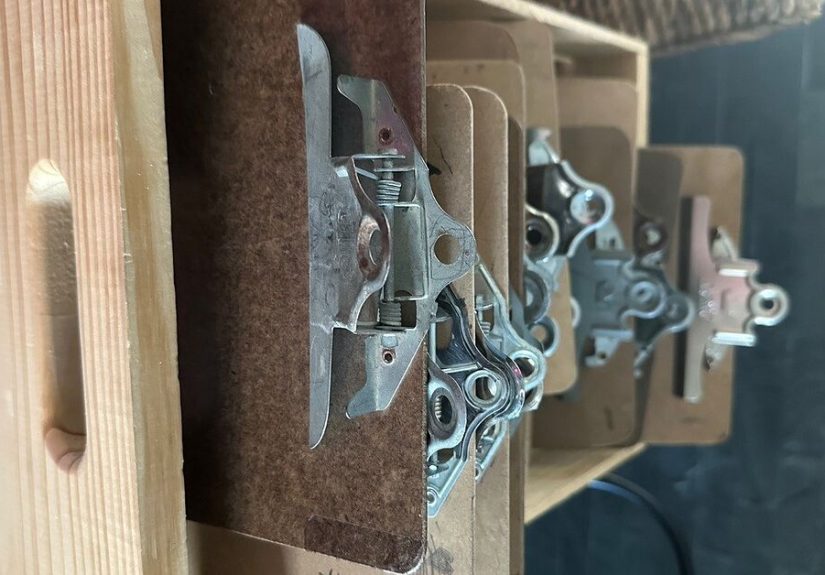
Not all clipboards are created equal. Some are basic hardboard. Some are smooth wood. Some are metal or plastic. Some have a charmingly vintage look, while others scream “office supply aisle, aisle seven, no feelings.” Pick your board based on the final purpose.
Wood or hardboard clipboards
These are the easiest for painting, decoupage, and covering with fabric or paper. They are ideal for farmhouse, cottage, traditional, and kid-friendly styles.
Plastic clipboards
These work well for practical spaces like kitchens, homework stations, and craft rooms. They are durable and easy to wipe down, though they may need more surface prep before paint or glue behaves.
Metal clipboards
These can lean industrial or modern. They are especially good in offices, lockers, workshops, or dorm rooms where function matters just as much as style.
If you are thrifting, inspect the spring in the clip, check for warping, and make sure the surface is not flaking apart. A little wear is fine. Major structural drama is less charming.
Best Clipboard Upcycle Ideas That Actually Look Good
1. Clipboard wall art
This is the classic for a reason. Paint or cover the board, hang it, and clip in printable art, family photos, postcards, quotes, kids’ drawings, pressed flower prints, menus for parties, or seasonal graphics. It is affordable, changeable, and far less precious than traditional framing.
2. Family command center
Mount several clipboards vertically and assign each one a task: bills to pay, school papers, grocery list, weekly calendar, and event invitations. Add labels and place the setup near the kitchen or entryway so paper clutter stops migrating across every flat surface in your home.
3. Kitchen recipe board
Upcycle one clipboard specifically for recipes. Hang it near the prep zone, clip on printed recipes, and stop pretending that balancing your phone against a salt shaker is a stable cooking system.
4. Homework or art station
Use one board per child for homework, reading logs, spelling words, or current artwork. This makes it easy to display what matters now without taping everything to the refrigerator until your fridge begins to resemble a community bulletin board.
5. Office inspiration board
A decorated clipboard can hold to-do lists, project briefs, mood boards, color palettes, client notes, or motivational quotes that are only a little cheesy. Mounted on the wall, it keeps the desk cleaner while still letting you see what you need.
6. Photo display gift
Mini clipboards attached to a wood board or arranged in a set make charming gifts for parents, grandparents, teachers, or graduates. The real magic is that the photos can be changed later, so the gift keeps evolving instead of becoming permanent shelf wallpaper.
How to Upcycle a Clipboard Step by Step
Step 1: Clean it like you mean it
Wipe away dust, oil, sticker residue, and mystery grime. If the surface is glossy or especially smooth, lightly scuff-sand it so paint or adhesive has a better chance of bonding. This is not glamorous, but neither is watching your beautiful finish peel off like a bad sunburn.
Step 2: Pick a finish that fits your style
You have options, and this is where the fun begins:
- Paint: Great for solid color, color blocking, stripes, stenciling, or chalkboard surfaces.
- Contact paper: Fast, clean, and beginner-friendly. Marble, floral, linen-look, or vintage-inspired patterns all work.
- Fabric: Softens the look and makes a clipboard feel more custom. Cotton works especially well.
- Decoupage: Perfect for scrapbook paper, wrapping paper, book pages, maps, sheet music, or printed designs.
- Mixed media: Paint the base, then add labels, ribbon, trim, or a touch of metallic detail.
Step 3: Apply carefully
If you are painting, do thin coats and let each one dry. If you are using paper or fabric, cut it neatly, apply adhesive or decoupage medium evenly, smooth out bubbles, and wrap edges if desired for a finished look. A credit card, brayer, or even careful finger smoothing can help remove wrinkles.
Step 4: Seal the surface
A topcoat matters, especially for boards that will be handled often. It protects your design from scratches, fingerprints, and that tragic moment when a coffee splash turns your masterpiece into abstract expressionism. Choose matte, satin, or gloss depending on the look you want.
Step 5: Upgrade the hardware if needed
The metal clip can be left alone for a functional look, or painted for extra style if the product allows it. You can also add ribbon, leather cord, twine, or a wall hanger. For grouped displays, keep spacing consistent so the arrangement looks intentional rather than “I got excited and eyeballed it.”
Design Styles to Try
Farmhouse clipboard
Use chalk paint, distressed edges, cream or sage tones, and maybe a printed botanical or a grain sack-inspired pattern. It feels homey without trying too hard.
Modern minimal clipboard
Go matte black, crisp white, soft greige, or muted clay. Pair with monochrome prints, simple typography, or line art.
Vintage office vibe
Use old maps, ledger pages, sheet music, kraft paper, brass-toned accents, or worn leather loops for hanging. This style looks especially great with thrifted boards.
Bright craft-room energy
Think cheerful color, polka dots, striped washi tape, labels, and playful printables. It is practical, but it also says, “Yes, I own more markers than any adult reasonably should.”
Kids’ art display
Paint each clipboard a different color and label them by child, theme, or week. This is one of the easiest ways to rotate artwork without covering every wall in tape.
Smart Ways to Use Clipboards in Real Rooms
Entryway
Clip mail, reminders, permission slips, and appointment cards. Add a small basket below for keys or pens and suddenly your entryway is pulling its weight.
Kitchen
Use a clipboard for a meal plan, shopping list, favorite recipes, or a rotating print that adds charm without taking up counter space.
Home office
Display project notes, deadlines, weekly goals, client paperwork, or inspirational images. Wall-mounted clipboards free up desk space and keep visual clutter under control.
Laundry room or mudroom
Turn a clipboard into a chore tracker, stain-removal cheat sheet, family schedule, or sports-practice command board.
Bedroom or dorm
Use one as a mood board, photo display, quote board, or rotating art frame. It is renter-friendly, flexible, and much cheaper than collecting a pile of matching frames.
Mistakes to Avoid
- Skipping surface prep on slick boards and then wondering why nothing sticks.
- Using thick coats of paint or glue, which leads to drips, wrinkles, and bubbles.
- Ignoring the edges. Neat edges make a project look finished instead of rushed.
- Forgetting function. If the clip is hard to open after decorating, the project may look pretty but it has lost the plot.
- Overdecorating. A clipboard is naturally simple, and that is part of its charm.
Why This DIY Works So Well for SEO-Worthy Home Content and Real Homes
The best DIY projects do more than look cute on the internet. They solve a real problem. A clip board DIY upcycle works because it blends storage, display, personalization, and budget-conscious decorating. It can be done in under an hour or stretched into a weekend project with painted details, custom art, and grouped wall installations. It also fits nearly every home style, from cottage to modern to classroom-core, which may or may not be an official design term, but honestly, it should be.
More importantly, this is a project people actually finish. You are not building a deck. You are not refinishing a piano you found on the curb. You are updating a small object with a big usefulness factor. That makes it beginner-friendly, renter-friendly, and refreshingly low on drama.
Experience: What I Learned From Doing a Clipboard DIY Upcycle More Than Once
The first time I upcycled a clipboard, I was wildly overconfident. I had one plain board, one sheet of pretty paper, one bottle of glue, and the kind of optimism usually seen in people who have watched exactly two crafting videos and now believe they are artisans. I did not sand the surface. I used too much adhesive. I slapped the paper on crooked, tried to fix it, made it worse, and then spent ten minutes smoothing bubbles that looked like they had unionized. In other words, it was a very educational afternoon.
What saved the project was the fact that clipboards are forgiving. Once everything dried, I trimmed the edges, added another thin topcoat, and clipped in a print. From three feet away, it looked intentional. From six feet away, it looked great. That is one of the best lessons this project teaches: perfection is optional, but usefulness is immediate. Even my “learning experience” clipboard ended up hanging in the kitchen for months, holding recipes and shopping lists like a champ.
After that, I made a second version with a much better plan. I cleaned the board first, lightly sanded it, painted the edges, and used fabric instead of paper. That single switch changed everything. The fabric wrapped more neatly, the texture looked richer, and the clipboard instantly felt less like office supply and more like decor. I added a simple label at the bottom, hung it near my desk, and used it for weekly priorities. It looked polished enough to stay out in the open, which turned out to be the whole point. When something is attractive, you are more likely to use it.
I have also learned that grouped clipboards are where the real magic happens. One board is cute. Three boards are a system. Five boards are a lifestyle. In a small workspace, I once used a row of clipboards to separate task lists, inspiration pages, current drafts, receipts, and notes I needed to keep visible. It reduced desk clutter almost immediately because loose papers finally had a home. There was also something satisfying about swapping pages in and out without tape, thumbtacks, or flimsy magnets losing their will to live.
The most charming version I made was a photo display using mini clipboards. I painted them in soft neutral tones, clipped in black-and-white family photos, and attached them to a narrow wood board. It became one of those pieces people actually comment on. Not because it was fancy, but because it was easy to understand and easy to imagine using in their own homes. That is another thing I have noticed about clipboard upcycles: they feel approachable. Guests do not say, “Wow, that must have cost a fortune.” They say, “Wait, I could make that.”
Perhaps my favorite part of working with clipboards is that they invite change. Frames ask for commitment. Clipboards encourage experimentation. You can switch from artwork to calendars, from holiday prints to kid drawings, from menus to quotes, from practical to decorative and back again. That flexibility means the project stays relevant instead of becoming yesterday’s craft tucked into a closet. For anyone who gets bored easily or likes to redecorate without spending much, that is a huge win.
So yes, I have made a wrinkled one, a polished one, a practical one, and a giftable one. Every time, the result reminded me that a good DIY upcycle does not need to be complicated to be clever. Sometimes all it takes is a clipboard, a little imagination, and enough restraint not to use seventeen different ribbons because “more is more.” Usually, less is better. Except with clipboards. With clipboards, one somehow turns into five, and honestly, I stand by that.
Conclusion
A clip board DIY upcycle is proof that small projects can deliver big payoff. With a little paint, paper, fabric, or decoupage, an ordinary clipboard can become wall art, an organizing station, a recipe board, a kid-friendly display, or a polished office accessory. It is inexpensive, customizable, and easy to refresh whenever your style or needs change. In a world full of overcomplicated DIY promises, this one is refreshingly practical: it looks good, works hard, and gives forgotten supplies a second life. That is a smart upcycle any day of the week.