Table of Contents >> Show >> Hide
- The Instagram Post That Set the Internet to Cowboy Conspiracy Mode
- Why Cole Hauser’s Voice Mattered More Than the Rumor Mill
- The Huge Spinoff News: From Industry Chatter to an Actual Next Chapter
- The Title Drama Was Very Yellowstone, Actually
- What the Beth and Rip Spinoff Appears to Be About
- Why Fans Were Always Going to Follow Rip Wheeler Anywhere
- Beth and Rip Are the Franchise’s Emotional Engine Now
- So What Does Cole Hauser’s Instagram Moment Mean in Hindsight?
- Experiences Around the Hype: Why This Story Hit Fans So Hard
- Conclusion
In the world of Yellowstone, silence is never just silence. It is a loaded stare across a fence line, a half-finished sentence, or a cowboy tipping his hat like he knows something you do not. So when Cole Hauser took to Instagram and shared heartfelt reflections as the flagship series was winding down, fans did what fans do best: they grabbed their phones, zoomed in emotionally, and started connecting dots like detectives in denim.
Hauser’s message did not arrive with a neon sign reading, “Spinoff incoming.” It was more subtle than that. But subtle has never stopped the Yellowstone fan base from galloping straight into theory mode. His comments landed at a moment when the franchise was already in transition, with the main series ending, Kevin Costner’s departure still hanging over the property like a storm cloud, and Beth and Rip emerging as the couple most likely to inherit the emotional center of the universe.
Looking back now, that Instagram moment feels less like a goodbye and more like a bridge. It was the kind of post that sounded reflective on the surface but carried the unmistakable energy of a door left cracked open. And for a franchise that has built an empire on land battles, family wounds, and dramatic exits on horseback, that little crack was enough to let in a whole stampede of speculation.
The Instagram Post That Set the Internet to Cowboy Conspiracy Mode
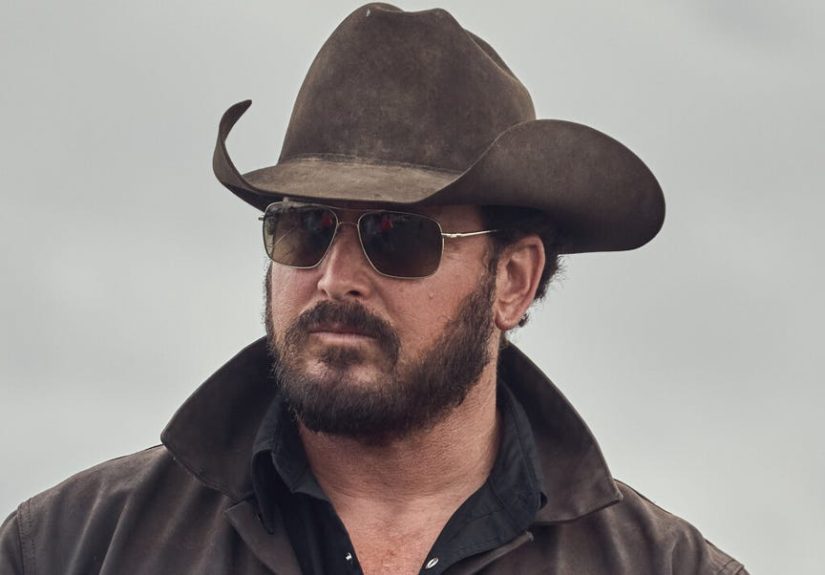
What made Hauser’s Instagram-era remarks resonate was not just the timing. It was the tone. He was nostalgic without sounding finished, emotional without sounding terminal, and grateful in a way that suggested he understood exactly how much Rip Wheeler had come to mean to viewers. He reflected on the privilege of playing the character and acknowledged the sadness of wrapping up such a long run. That kind of language hits differently when a beloved series is ending and the future of its universe is still fuzzy around the edges.
Fans were not wrong to read between the lines. Rip is not some side character who occasionally wanders through the frame looking intimidating and photogenic. He is one half of one of the franchise’s most important relationships. Beth and Rip are the rare TV couple who can be romantic, terrifying, funny, feral, and weirdly tender all within the same episode. They are chaos in matching boots. If Yellowstone were going to keep spinning after the mothership came to an end, they were always the most obvious pair to lead the charge.
So Hauser’s Instagram reflection landed like a match near dry grass. The fandom immediately started asking the obvious question: was this a farewell, or was it the kind of sentimental pause actors take right before saying, “See you in the next chapter”?
Why Cole Hauser’s Voice Mattered More Than the Rumor Mill
Rumors had been circling the franchise for months. There was talk of continuation plans. There were whispers that Beth Dutton and Rip Wheeler could anchor whatever came next. There were industry reports suggesting the broader strategy had shifted from ending Yellowstone cleanly to evolving it into a larger multi-series ecosystem. But rumors are one thing. Cole Hauser himself speaking publicly, even in a soft, reflective way, carried a different weight.
That is partly because Hauser has generally been careful about what he says. He has not treated franchise news like a confetti cannon. He tends to speak in measured, grounded language that matches Rip’s energy: direct, unsentimental, and not especially interested in marketing sparkle. So when he said the role had been an honor and described the emotional difficulty of wrapping things up, viewers paid attention. When he later suggested there was still more to come, fans paid even more attention.
In other words, his comments felt less like noise and more like signal. He was not overselling a franchise extension. He was acknowledging that the story mattered, the audience mattered, and whatever came next would need to earn that same loyalty.
The Huge Spinoff News: From Industry Chatter to an Actual Next Chapter
Soon after the final stretch of Yellowstone, trade reporting made it clear that Beth and Rip were not being put out to pasture. Reports indicated that Kelly Reilly and Cole Hauser were set to continue their roles in a new offshoot, effectively confirming what much of the fan base had suspected: the franchise was not done with its most combustible married couple.
That development made story sense. The series finale positioned Beth and Rip for a fresh start away from the original ranch, with a new property and a new version of domestic life that was never going to stay domestic for very long. This is Yellowstone, after all. Peace in this universe tends to last about as long as a ranch handshake before someone draws a metaphorical knife.
The spinoff news also made business sense. Yellowstone ended as a ratings powerhouse, and the Beth-and-Rip brand within that brand was especially potent. Viewers did not just tolerate them; they built emotional real estate there. Rip gave the series its bruised loyalty. Beth gave it its flamethrower wit. Together, they gave Taylor Sheridan’s world a love story that felt both mythic and dangerously unstable, which is catnip for appointment television.
What started as speculation evolved into a much clearer continuation plan. By 2025, Hauser was publicly discussing the project, even while correcting rumors around its title. By 2026, the rollout around Dutton Ranch had become much more visible, with official branding, a Paramount+ presence, and an increasingly defined sense of what Beth and Rip’s next chapter would look like.
The Title Drama Was Very Yellowstone, Actually
One of the funniest side quests in this whole saga involved the title. At one point, reports and executives pointed to Dutton Ranch as the likely name. Then Hauser stepped in and said, essentially, not so fast. He clarified in an interview that the project was not called that, which instantly sent fans and entertainment writers into another spin cycle.
That moment was peak franchise behavior: even the title had to arrive with a little tension, a little ambiguity, and just enough contradiction to keep everyone typing. Later, the branding around Dutton Ranch became much more public, and by early 2026 the name had gained visible traction through official channels. Whether the title evolved, shifted from a working label into a public-facing one, or simply got sorted out behind the scenes, the temporary confusion only added to the mythology.
Honestly, it was the most Yellowstone thing imaginable. Of course the spinoff title would need its own subplot.
What the Beth and Rip Spinoff Appears to Be About
The broad outline is exactly what fans hoped for and exactly what should worry those fans a little. Beth and Rip are positioned on a 7,000-acre ranch, trying to protect what they fought for while helping Carter grow into adulthood. On paper, that sounds almost peaceful. In practice, it sounds like the setup for ten fresh kinds of trouble.
Beth is not built for a quiet retirement of gardening and soft cardigans. Rip is not a man who suddenly becomes stress-free because the zip code changed. Their chemistry works because both characters carry history like a fresh bruise. Put them on a new ranch, add competition, land pressure, family expectations, and the moral elasticity that has always defined this universe, and you have a continuation that can feel familiar without being repetitive.
Carter’s role matters here, too. He is not just background wallpaper for emotional texture. He gives the story a generational angle. Beth and Rip are not only trying to survive; they are trying to shape someone else’s future. That creates a different kind of tension than the original show. It is no longer only about inheritance in the legal sense. It is about inheritance in the emotional sense: what values get passed down, what damage gets repeated, and whether these two people are capable of building something better than what they came from.
Why Fans Were Always Going to Follow Rip Wheeler Anywhere
Rip Wheeler became one of the franchise’s most beloved characters because he looks like a classic tough guy but plays like something more layered. He is loyal to a fault, violent when necessary, emotionally stunted in a way that somehow reads as romantic on TV, and completely believable as the man who would break the law for love and then fix a fence before breakfast.
Hauser deserves enormous credit for that balance. A lesser performance could have turned Rip into a collection of cowboy clichés: silent, brooding, punches walls, owns a hat. Instead, Hauser gave him a bruised interior life. Rip feels dangerous, but he also feels wounded. He can be terrifying in one scene and heartbreakingly simple in the next. That complexity made him sticky in the cultural imagination.
It also explains why Hauser’s Instagram comments carried so much emotional force. Fans were not responding only to an actor marking the end of a job. They were responding to the man who gave one of the series’ most enduring characters his gravity. When he sounded sentimental, audiences heard Rip’s entire history echoing behind him.
Beth and Rip Are the Franchise’s Emotional Engine Now
The original Yellowstone had many engines: John Dutton’s authority, Kayce’s divided loyalties, Jamie’s unraveling, and the political warfare surrounding the ranch. But by the time the dust settled, Beth and Rip had become the relationship viewers were most invested in. Not because they were healthy in any conventional, therapist-approved, green-juice way. Quite the opposite. They were fascinating because they loved each other with absolute conviction in a world where almost every institution was corruptible.
Their scenes often worked as emotional anchors amid the chaos. Beth could be all jagged edges in the boardroom or the family dining room, but with Rip, the writing often revealed the softer understructure under all that steel. Rip, meanwhile, became more than John Dutton’s enforcer whenever Beth was in the picture. He became a person with desire, protectiveness, and a sense of home that had nothing to do with property deeds.
That is why a spinoff centered on them feels less like a consolation prize and more like a logical handoff. The franchise is not merely extending itself. It is following the relationship that had already become its emotional heir.
So What Does Cole Hauser’s Instagram Moment Mean in Hindsight?
In hindsight, it reads as the perfect transitional note. It honored the end of the original series without shutting the gate on what came next. It captured the bittersweet feeling of closing one era while quietly acknowledging that the audience was not ready to leave Rip Wheeler behind. And maybe Hauser was not ready either.
That is what made the post feel real. It did not come across like a slick rollout strategy. It felt like an actor genuinely processing the end of a meaningful chapter while standing near the edge of another one. Fans picked up on that uncertainty, and in a funny way, the uncertainty became part of the appeal. In the age of overexplained franchises, a little mystery can still work wonders.
The huge spinoff news that followed did not make the Instagram moment less interesting. It made it more interesting. Suddenly the post looked like a snapshot from the exact moment the franchise was changing shape in public view.
Experiences Around the Hype: Why This Story Hit Fans So Hard
One reason this whole Cole Hauser-on-Instagram-to-spinoff-news pipeline felt so big is that Yellowstone is not just a show people watch casually while folding laundry and scrolling through recipes they will never cook. For many viewers, it became ritual television. It was the kind of series that families watched together, argued about together, and recapped like it was a weekly sporting event with more horses and better coats.
The experience of following Rip and Beth has always been unusually emotional because their relationship operates on two levels at once. On the surface, it is operatic and larger than life. Beneath that, it taps into something people instantly understand: the fantasy of being fully known by one person and still fiercely chosen. Rip and Beth do not love each other politely. They love each other like two storm systems signing a treaty. That intensity has made audiences feel protective of them in a way that goes beyond ordinary fandom.
So when Hauser spoke out on Instagram, many fans were not reacting to “news” in the traditional sense. They were reacting to the emotional possibility that a relationship they had invested in was not over. That feeling is familiar to anyone who has followed a long-running drama. You spend years with characters, and they start to occupy space in your weekly routine. Then the show ends, and it is a little like your neighborhood diner closing down. Rationally, you know it is television. Emotionally, you are still standing outside going, “Well, this is rude.”
There is also the specific experience of following franchise storytelling in the social media era. A decade ago, viewers might have waited for formal announcements and magazine covers. Now they watch Instagram captions, cast photos, interview snippets, premiere appearances, and official account rebrands like they are scanning the horizon for movement. A single sentence can kick off 5,000 comments and three dozen theory threads. Hauser’s comments fit perfectly into that ecosystem because they were personal enough to feel authentic and open-ended enough to invite interpretation.
Another piece of the experience is that Rip Wheeler has become a rare kind of TV icon: a character who appeals to traditional Western fans, prestige-drama fans, romance fans, and viewers who simply enjoy watching one extremely intense man solve problems with silence and alarming eye contact. That broad appeal means news about Hauser does not stay in one corner of the internet. It spreads across fan communities, lifestyle sites, entertainment outlets, and social media pages almost instantly.
And then there is the comfort factor. Whatever people think about Yellowstone as a cultural phenomenon, the show gave viewers a world that felt immersive and specific. It had its own rhythms, language, grudges, landscapes, and mythology. Returning to Beth and Rip in a spinoff promises not just more plot, but more time inside that world. For fans, that matters. It means the emotional house lights are not fully coming up yet.
In that sense, the reaction to Hauser’s Instagram post was never really just about one actor speaking out. It was about continuity, attachment, and the thrill of realizing that the story you thought was ending might actually just be changing ranches.